The complete set of chemical reactions that sustain a living organism. It extracts energy from the environment, builds and maintains structures, and disposes of waste, and it runs continuously from conception until death.
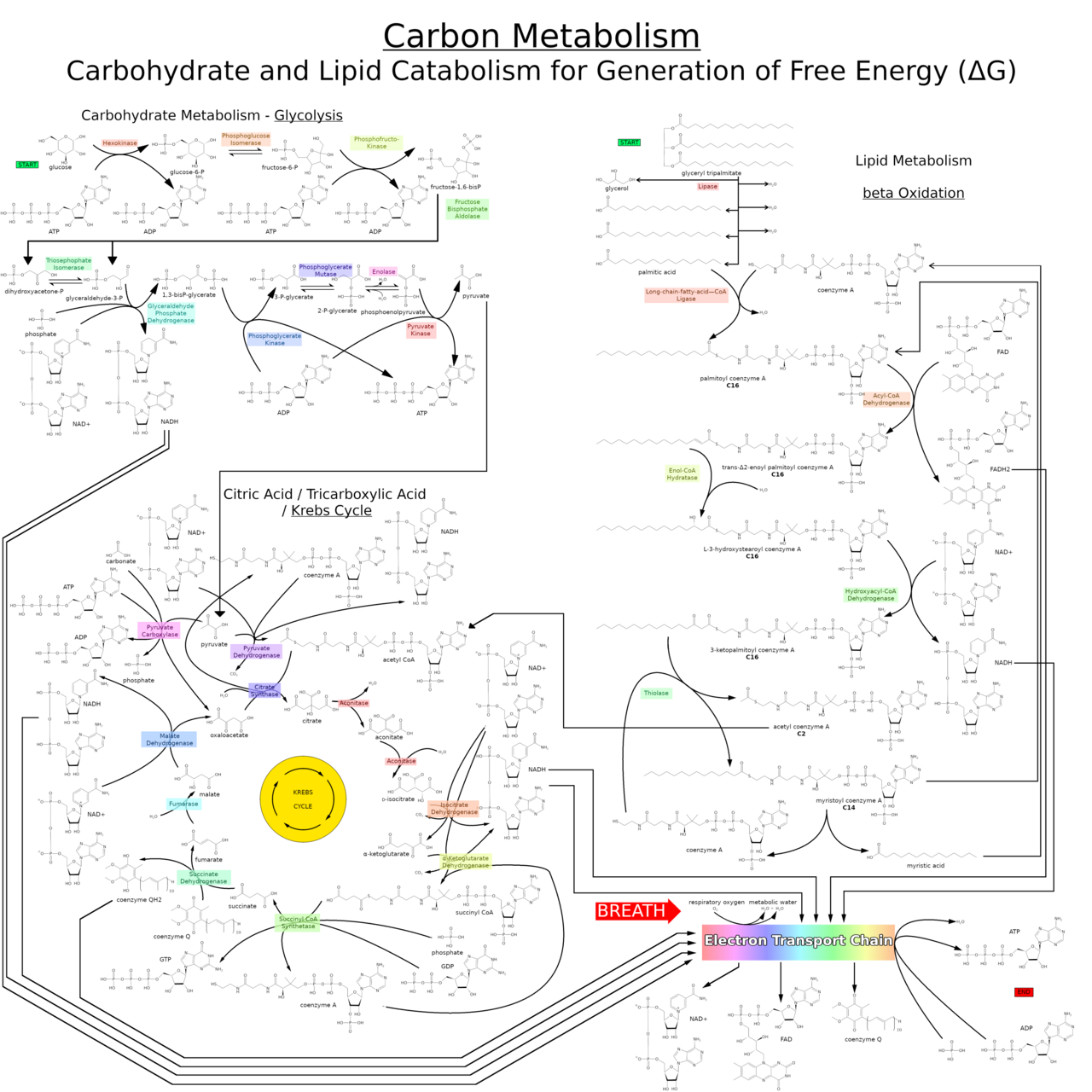
Catabolism breaks larger molecules into smaller ones and releases energy. Digestion and the oxidation of sugars and fats are catabolic.
Anabolism builds larger molecules from smaller ones and consumes energy. Synthesising proteins, nucleic acids and membranes is anabolic.
The two run simultaneously and are coupled through shared energy carriers, principally ATP. Catabolism regenerates ATP; anabolism spends it. A cell is therefore not storing energy so much as maintaining a flow, and ATP turns over extremely rapidly: a person synthesises and consumes roughly their own body weight in ATP each day, because the pool is small and recycled constantly.
Glycolysis splits glucose into two three-carbon molecules, producing a small amount of ATP and requiring no oxygen. It is present in essentially all organisms, which indicates it is very old.
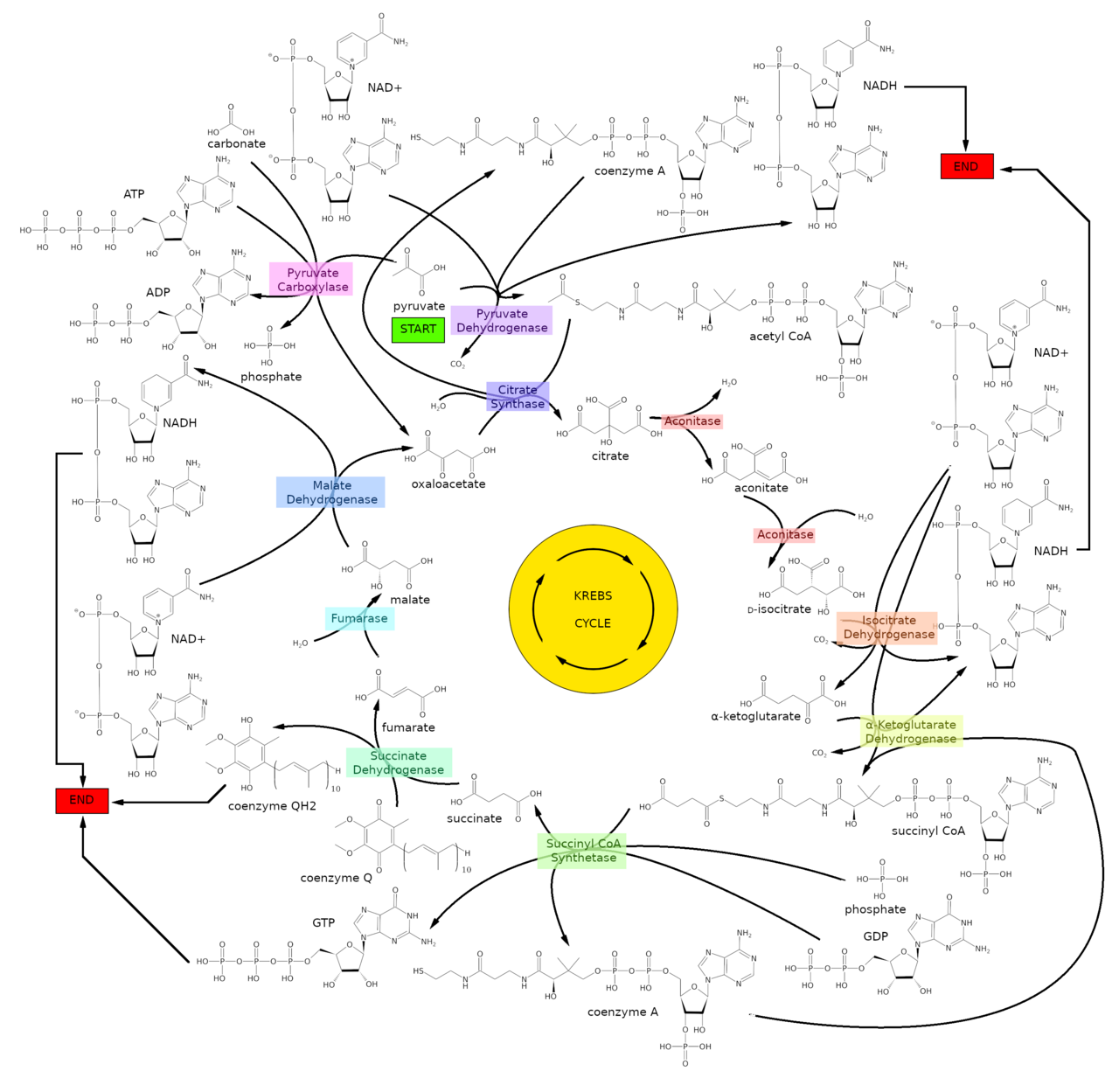
The citric acid cycle, treated in the Krebs cycle capsule, oxidises the products of glycolysis and of fat breakdown, capturing energy in electron carriers.
Oxidative phosphorylation uses those carriers to drive electrons along a chain of membrane proteins, pumping protons across a membrane. The protons flow back through an enzyme that rotates as they pass and synthesises ATP. This chemiosmotic mechanism, proposed by Peter Mitchell in 1961, was resisted for years because it was expected that energy would be transferred through a chemical intermediate rather than a gradient across a membrane, and it earned the Nobel Prize in 1978.
Oxygen's role is to accept electrons at the end of the chain. This is why oxygen is required and why its absence stops the process rather than merely slowing it.
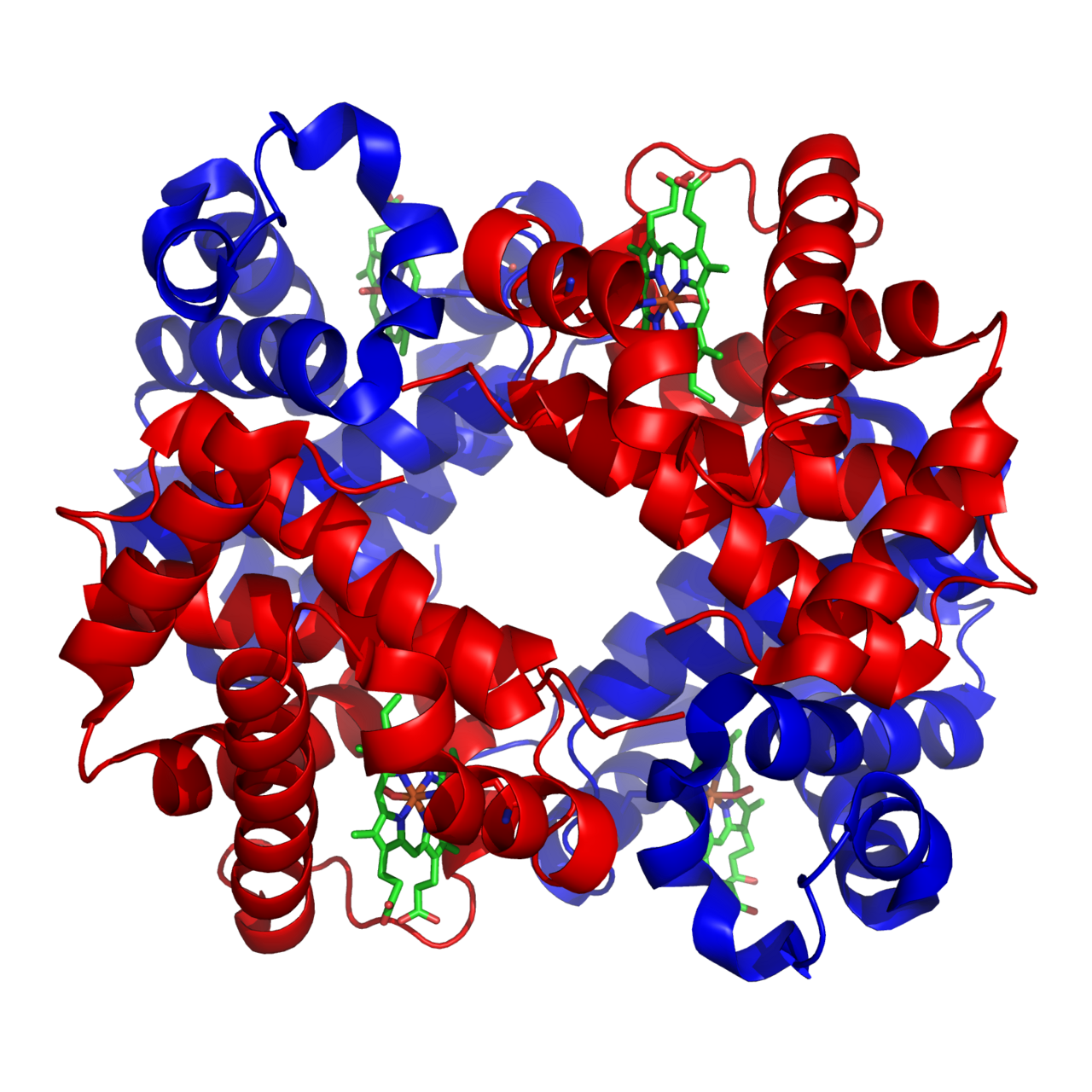
The same core reactions appear in bacteria, plants and animals, with variations. This conservation is among the strongest evidence for common ancestry, since there is no functional reason why unrelated organisms would arrive at identical multi-step sequences.
It also explains why so much has been learned from simple organisms. Work on yeast and on bacteria applies to human biochemistry because the pathways are the same, which is why model organisms are useful rather than merely convenient.
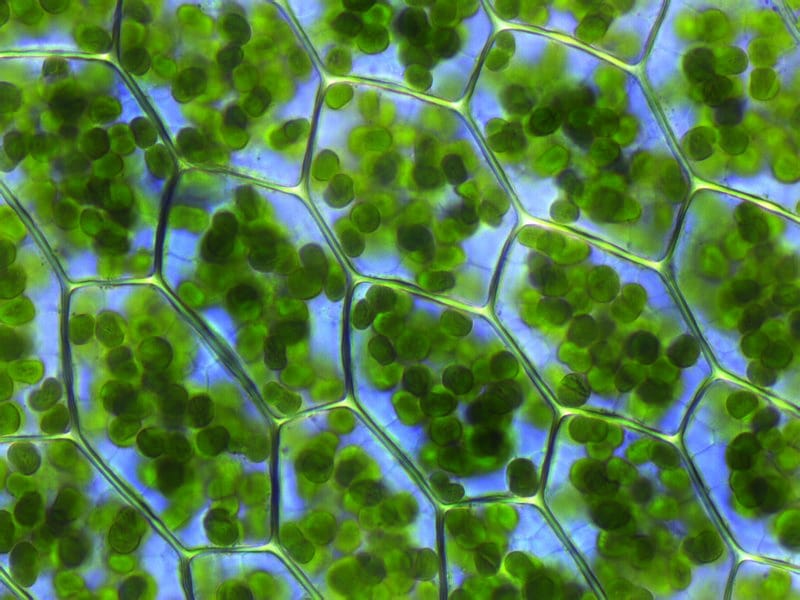
Photosynthesis is metabolism running the other way, using light energy to build sugars from carbon dioxide and water. Respiration then releases that energy. The two together form a closed cycle at the scale of the biosphere.
Basal metabolic rate is the energy required at rest to maintain body temperature, circulation, breathing and cellular maintenance. In humans it accounts for the majority of daily energy use, with physical activity a smaller and more variable share.
The brain is disproportionately expensive, using around twenty per cent of resting energy at about two per cent of body mass.
Across species, metabolic rate scales with body mass raised to a power less than one, usually quoted near three quarters. Larger animals therefore use more energy in total and less per unit of mass, which is why a mouse must eat constantly relative to its size and an elephant need not. The exact exponent and its explanation are argued about, and the general pattern is not in dispute.
Hibernation, torpor and diapause are strategies for reducing metabolic rate when conditions are poor, and they demonstrate that the rate is regulated rather than fixed.
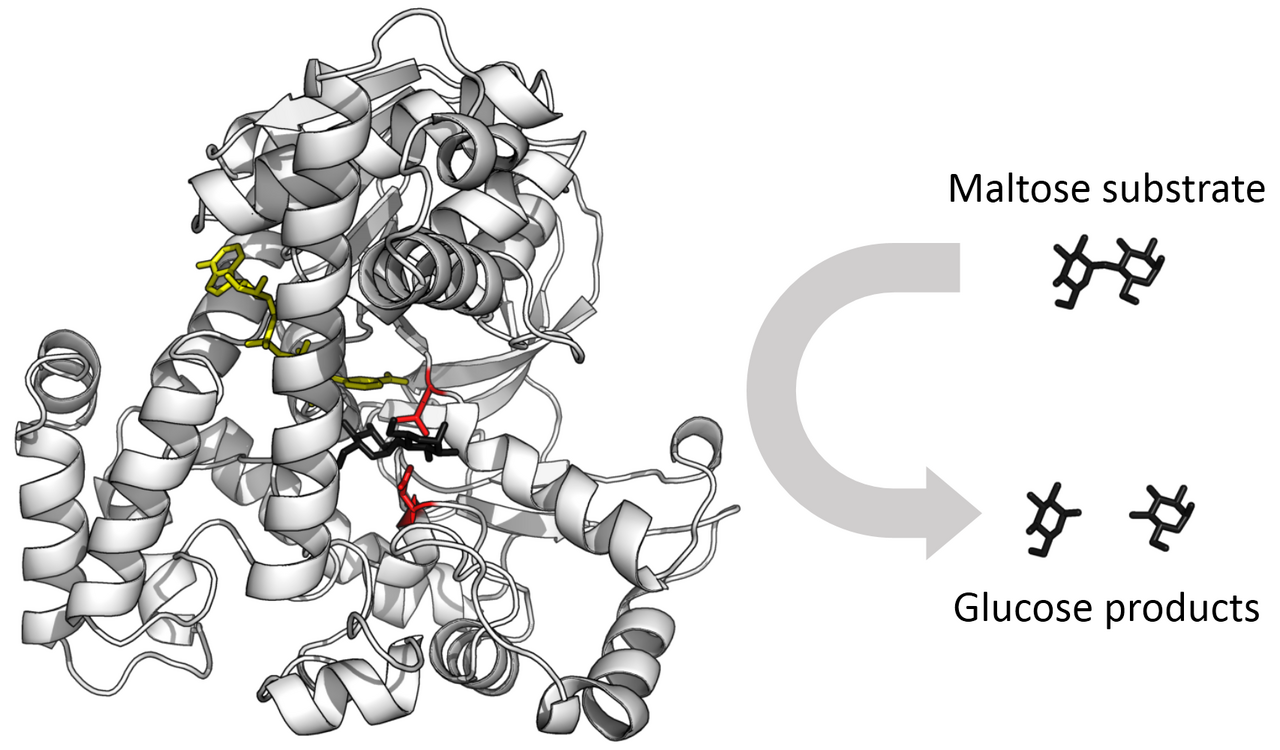
Inborn errors of metabolism are inherited deficiencies of single enzymes. Phenylketonuria, in which the enzyme processing phenylalanine is absent, causes severe developmental damage if untreated and is entirely manageable by diet, which is why newborns are screened for it in many countries.
Diabetes is a disorder of the regulation of glucose metabolism, treated in the insulin capsule.
Mitochondrial diseases affect the machinery of oxidative phosphorylation and typically hit the tissues with the highest energy demand first, which is why they commonly present with muscular and neurological symptoms.
Cancer cells frequently alter their metabolism, favouring glycolysis even where oxygen is available, which is the Warburg effect treated in its own capsule.
Metabolism is what an organism does continuously and what distinguishes a living thing from an assembly of the same molecules, since the arrangement is maintained only while the reactions run.
It is also the level at which biology and chemistry meet without remainder. Every function an organism performs, from thought to movement to growth, is ultimately a set of chemical transformations paid for by the same small energy currency.