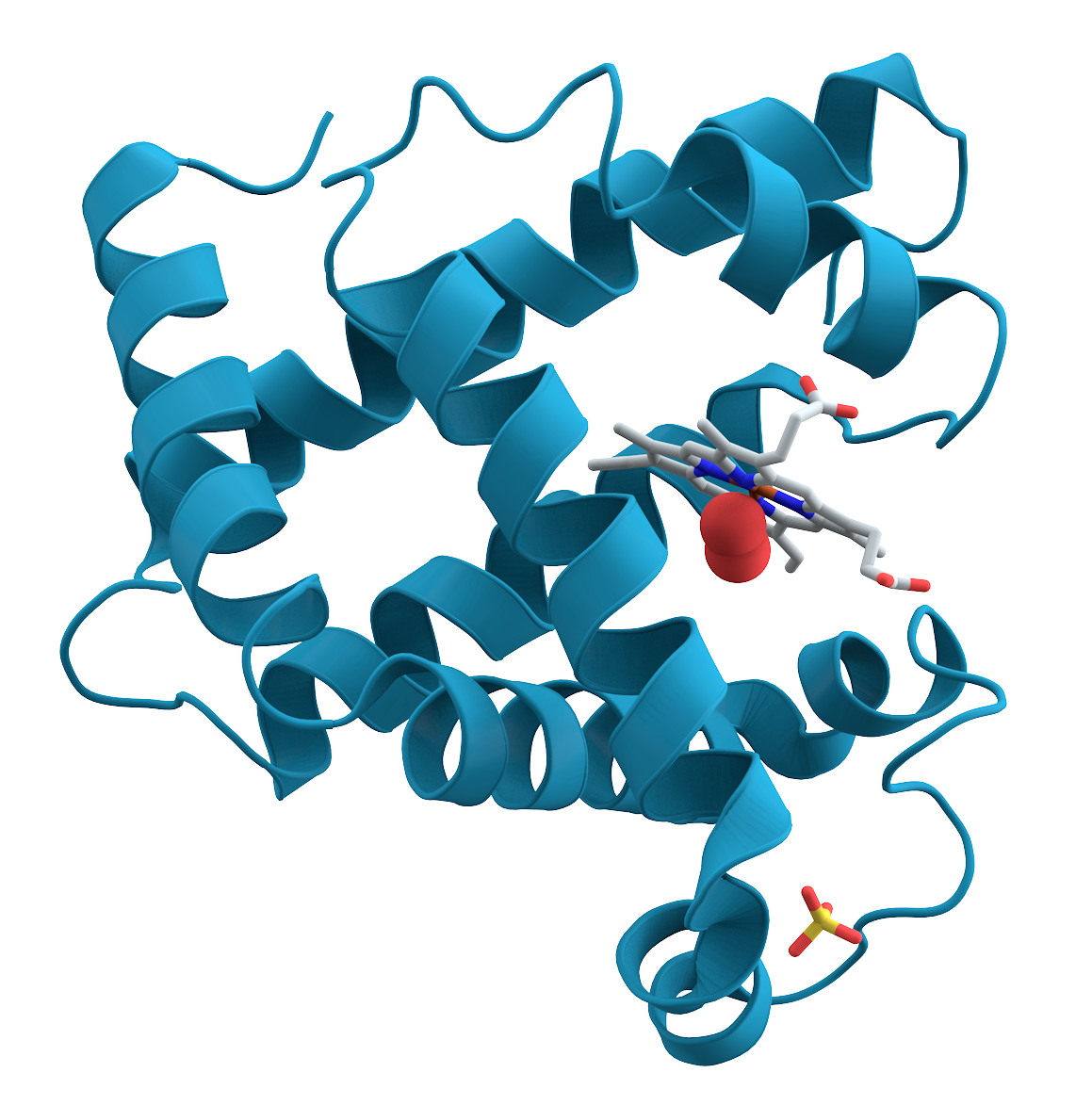
The boundary enclosing every cell, formed from a double layer of lipid molecules with proteins embedded in it. It defines what is inside the cell, controls what crosses, and its formation is one of the requirements for life having discrete units at all.
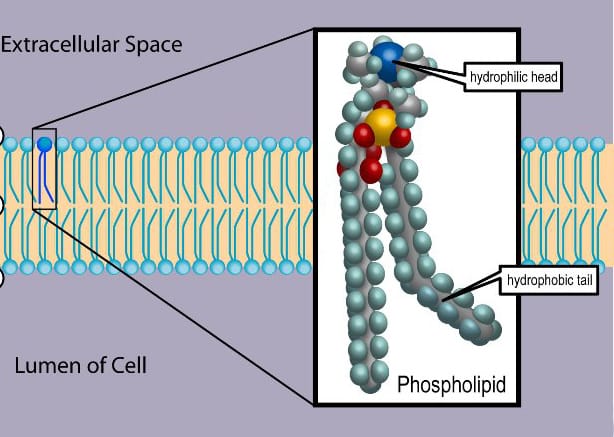
A phospholipid has a head group that interacts favourably with water and two hydrocarbon tails that do not.
Placed in water, such molecules arrange themselves so that the heads face the water and the tails are shielded from it. The stable arrangement is a double layer with tails facing inward and heads facing outward on both sides.
This happens spontaneously. No energy input and no machinery is required; it follows from the interaction between the molecules and water, and mixing phospholipids with water in a test tube produces closed vesicles.
That spontaneity matters for questions about the origin of life, since a compartment can form without anything to build it.
The bilayer is about five nanometres thick, which is thin enough that it would be invisible under a light microscope and was inferred before it was seen.
The structure was described by Singer and Nicolson in 1972 and the name captures its two essential properties.
Fluid: the lipid molecules are not fixed. They diffuse laterally within their layer, exchanging places rapidly, so the membrane behaves as a two-dimensional liquid rather than a solid sheet.
Mosaic: proteins are embedded in and attached to it, occupying a substantial fraction of its area, and they also move within the plane.
Fluidity is regulated. Cholesterol in animal membranes moderates it, reducing fluidity at higher temperatures and preventing tight packing at lower ones. Organisms living at different temperatures adjust the saturation of their membrane lipids accordingly, and this adaptation appears in the extremophiles capsule.
Fluidity is functionally necessary. Proteins must move to encounter partners, membranes must fuse and divide during transport and cell division, and a rigid boundary could do neither.
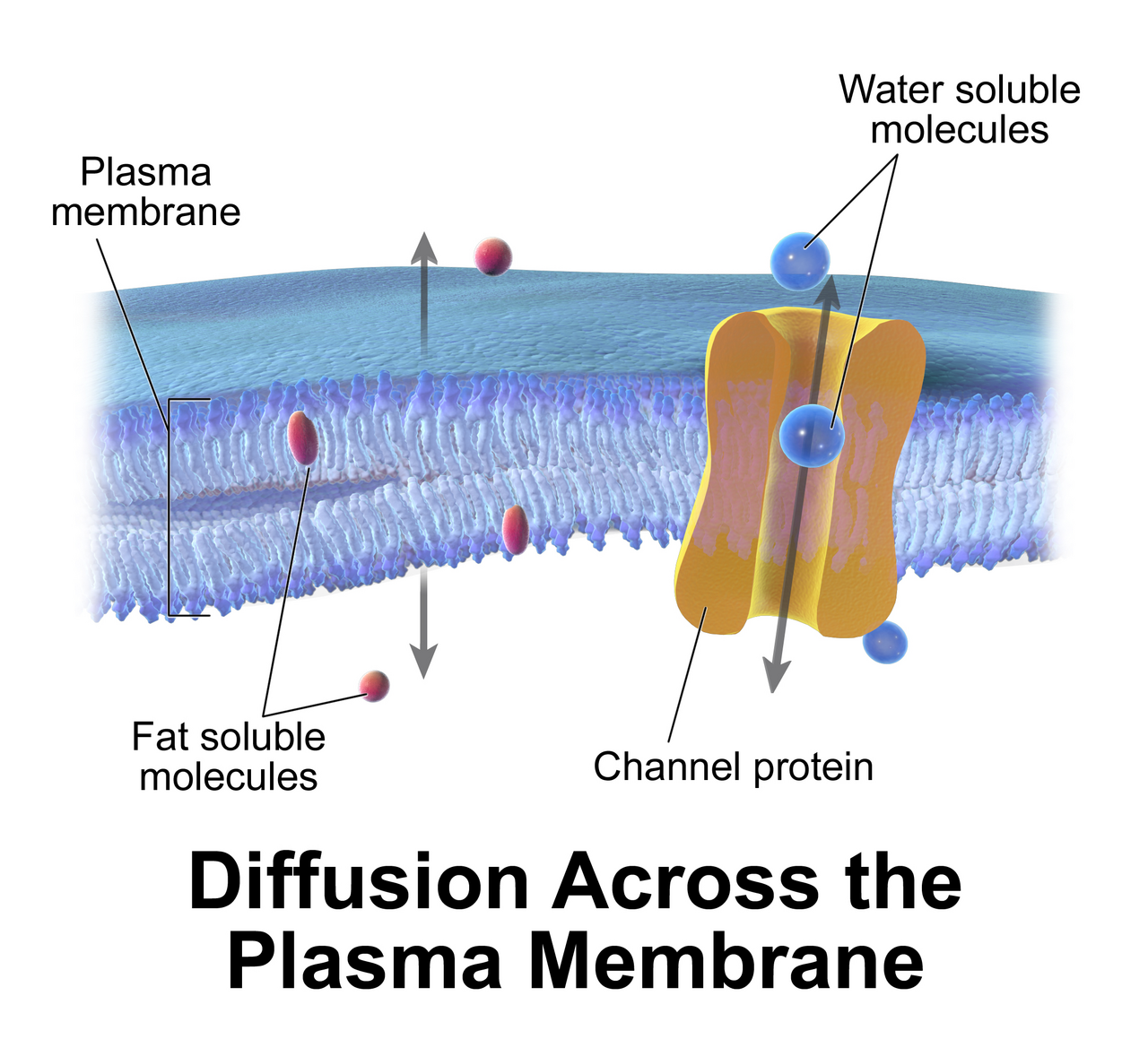
The lipid interior is the barrier. Small uncharged molecules including oxygen, carbon dioxide and, more slowly, water cross by simple diffusion.
Ions and polar molecules cannot. A charged particle entering a hydrocarbon environment is energetically prohibitive, so their movement requires proteins.
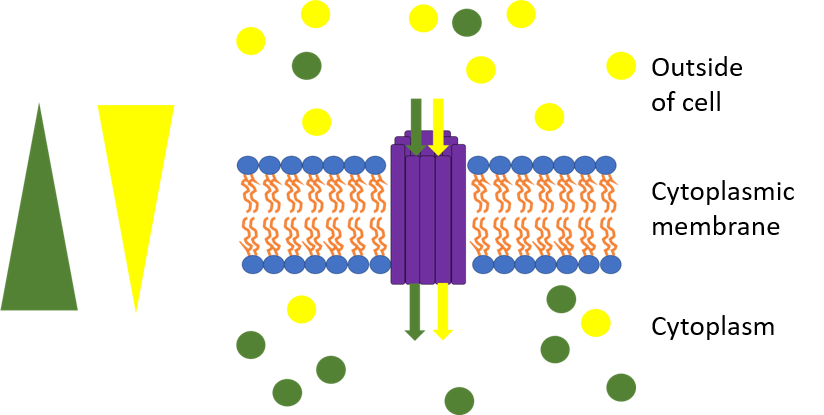
Channels form pores that allow specific ions through when open, at rates approaching free diffusion. Their opening is controlled by voltage, by binding of a molecule, or by mechanical force, which is what makes nerve and muscle signalling possible as the neuron capsule describes.
Carriers bind their substrate and change shape to release it on the other side, which is slower and more selective.
Active transport moves substances against their gradient and requires energy. The sodium-potassium pump, present in animal cells, uses a substantial share of a cell's energy budget maintaining the gradients on which signalling and secondary transport depend.
Secondary active transport couples the movement of one substance down its gradient to another moving up its own, which is how glucose is absorbed in the intestine.
Larger material crosses by vesicle. Endocytosis engulfs material into a vesicle formed from the membrane; exocytosis fuses a vesicle with the membrane to release contents outward.
Compartmentalisation extends inside the cell. Eukaryotes use membranes to create the nucleus, mitochondria, endoplasmic reticulum and other compartments, each maintaining conditions different from the cytoplasm.
Energy generation depends on membranes directly. Both respiration and photosynthesis work by pumping protons across a membrane and allowing them to flow back through an enzyme, as the metabolism capsule sets out. Without an impermeable barrier the gradient could not be maintained and the mechanism would not work.
Signalling occurs at the membrane. Receptor proteins detect molecules outside and transmit information inward without the signal itself entering, which is how most hormones act.
Recognition uses carbohydrate chains attached to membrane proteins and lipids, which identify cell type and are the basis of blood groups and of immune recognition.
Attachment to other cells and to the surrounding matrix is mediated by membrane proteins, and its failure is involved in cancer metastasis.
The membrane is what makes a cell a distinct entity rather than a region of solution, and every definition of life that requires an organism to be separate from its environment depends on something performing this function.
It is also where a large fraction of drug targets are found. Membrane receptors, channels and transporters are the targets of a substantial proportion of prescribed medicines, precisely because they are accessible from outside the cell and control what the cell does.