A transitional fossil shows a mixture of features from an ancestral group and a descendant one. Their absence was Darwin's own stated difficulty with his theory. They have since been found in large numbers, including several predicted in advance and then located deliberately.
A transitional fossil is not a direct ancestor of anything living. The chance that any given fossil is a literal ancestor rather than a close relative of one is small, and paleontology does not claim otherwise.
What it shows is a combination of characteristics: an animal with a jaw joint part way between two configurations, or limbs part way between fin and leg. The claim is about the sequence of anatomical change, which fossils can demonstrate, not about individual parentage, which they cannot.
Neil Shubin's team wanted a fossil between fish and four-limbed vertebrates. They reasoned that it should be in freshwater rocks of a particular age, roughly 375 million years, and went looking on Ellesmere Island in the Canadian Arctic where such rock is exposed.
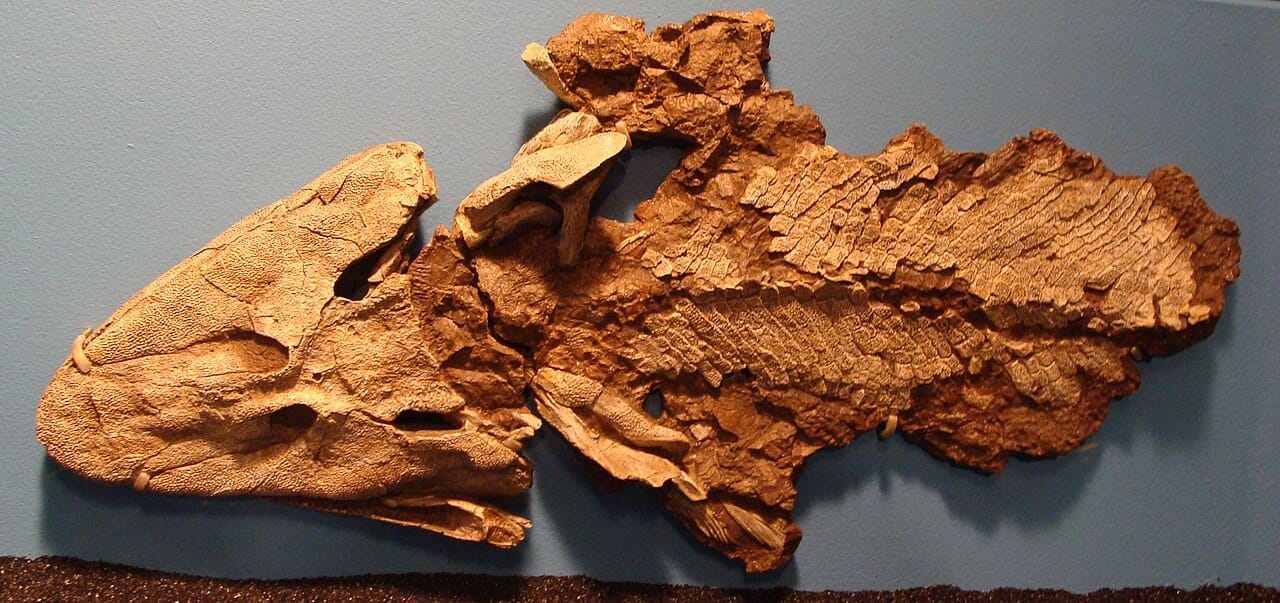
They found Tiktaalik roseae in 2004, on the fourth expedition. It has fish characteristics, gills and scales and fins, together with a mobile neck, a flattened crocodile-like head, ribs capable of supporting a body out of water, and within the fin a humerus, radius and ulna, which are the bones of a limb.
The prediction was made from the theory, the search area was chosen from it, and the fossil was where it was supposed to be. That is as strong a test as historical science offers.
The transition from a land mammal to a whale is documented by a series of fossils found mostly in Pakistan and Egypt from the 1980s onward.
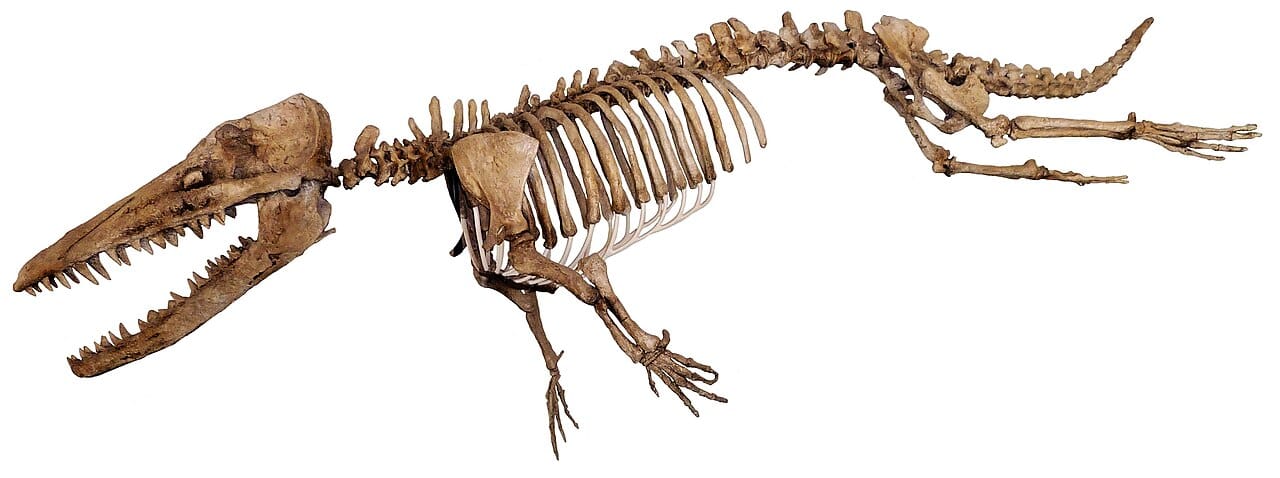
Pakicetus, about 50 million years old, is a four-legged land animal with an ear region showing the distinctive whale arrangement. Ambulocetus, slightly later, had functional limbs and probably moved like an otter. Rodhocetus had shortened legs and a broad tail. Basilosaurus, about 40 million years old, was fully aquatic and retained tiny hind limbs that could not have supported it.
Independent confirmation came from molecular biology. Genetic comparison places whales within the even-toed ungulates, closest to hippopotamuses, and the fossil ankle bones subsequently found in early whales have the distinctive double-pulley shape of that group. Two entirely separate lines of evidence converged on the same unexpected relationship.
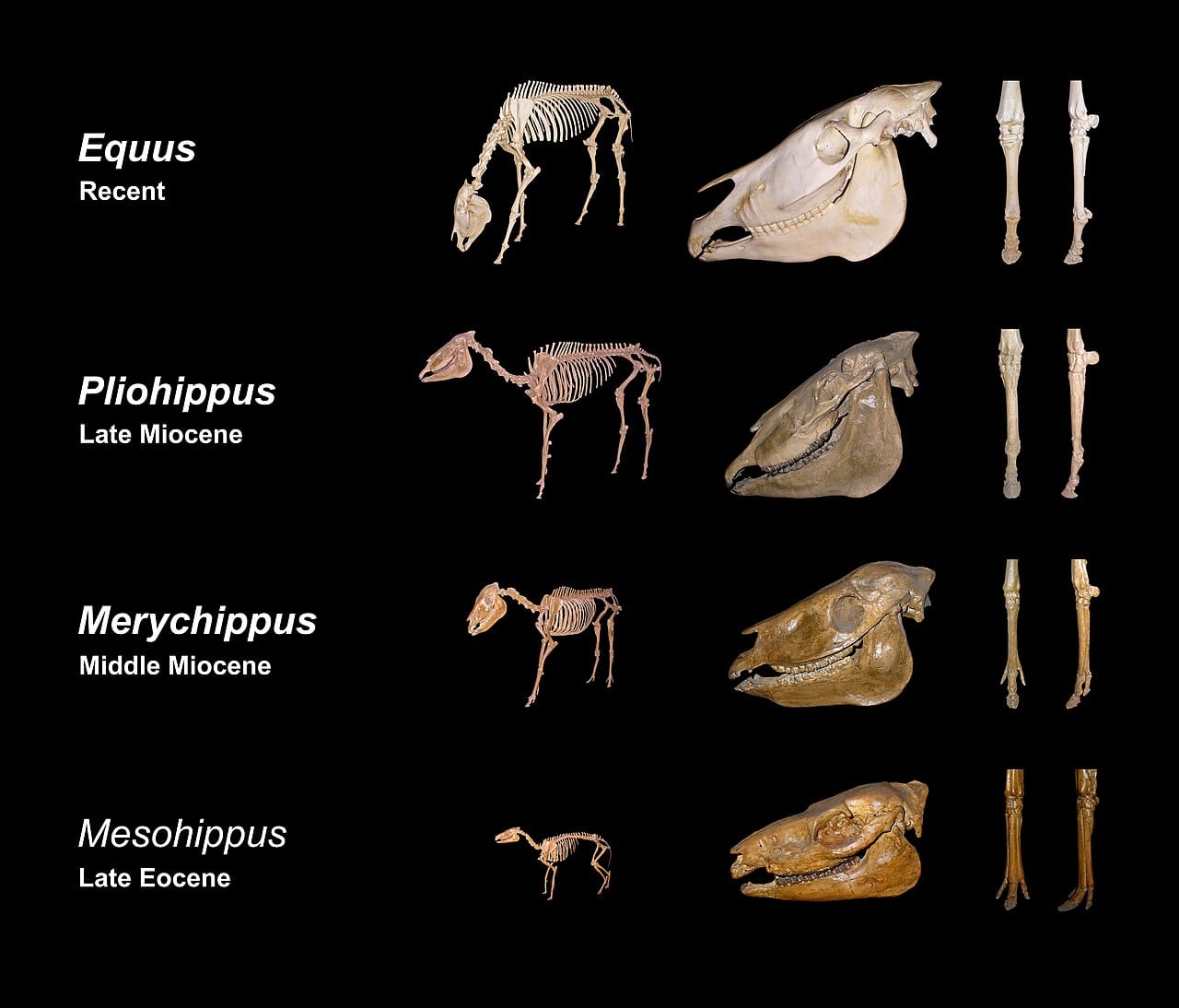
The horse lineage spans roughly 55 million years, showing changes in size, tooth structure and the reduction of side toes. It is often drawn as a straight line, which is wrong: it is a branching tree with many extinct side branches, and most of its members were not on the path to modern horses.
The mammalian jaw and ear are documented through the cynodonts, in which bones forming part of the reptilian jaw joint progressively shrink and become the malleus and incus of the mammalian middle ear. The intermediate forms have both joints operating at once, which was long thought mechanically implausible until the fossils showed it.
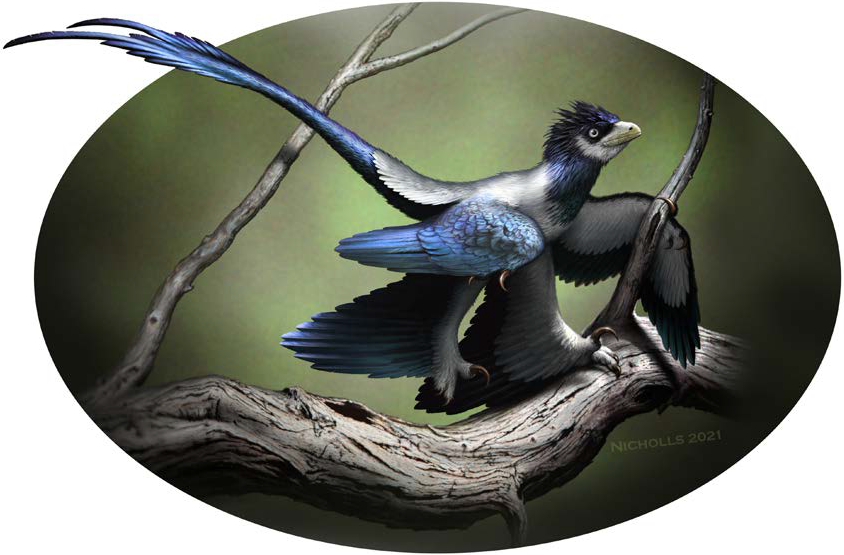
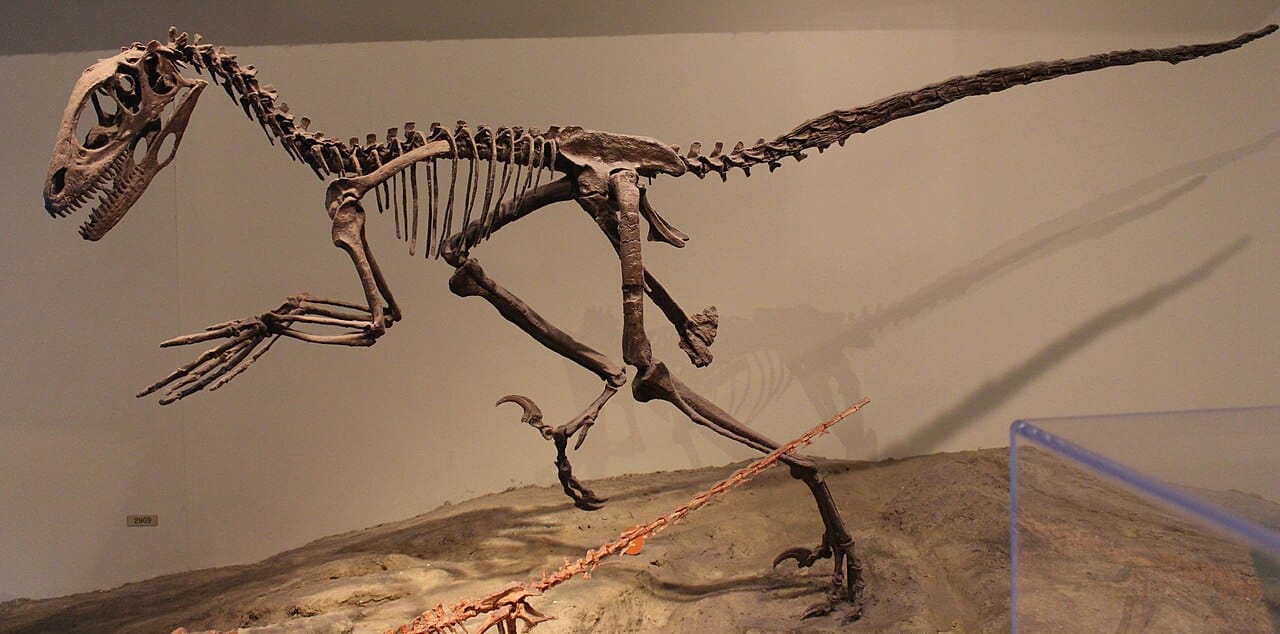
Feathered dinosaurs document the origin of birds and are treated separately.
Objections to evolution have long rested on gaps in the record. The record is genuinely incomplete, because fossilisation requires unusual conditions and most organisms leave no trace.
The difficulty with the argument is structural. Every fossil found between two forms creates two new gaps, one on each side, so the number of gaps rises as the record improves. An argument that becomes stronger the more evidence is found is not testing anything.