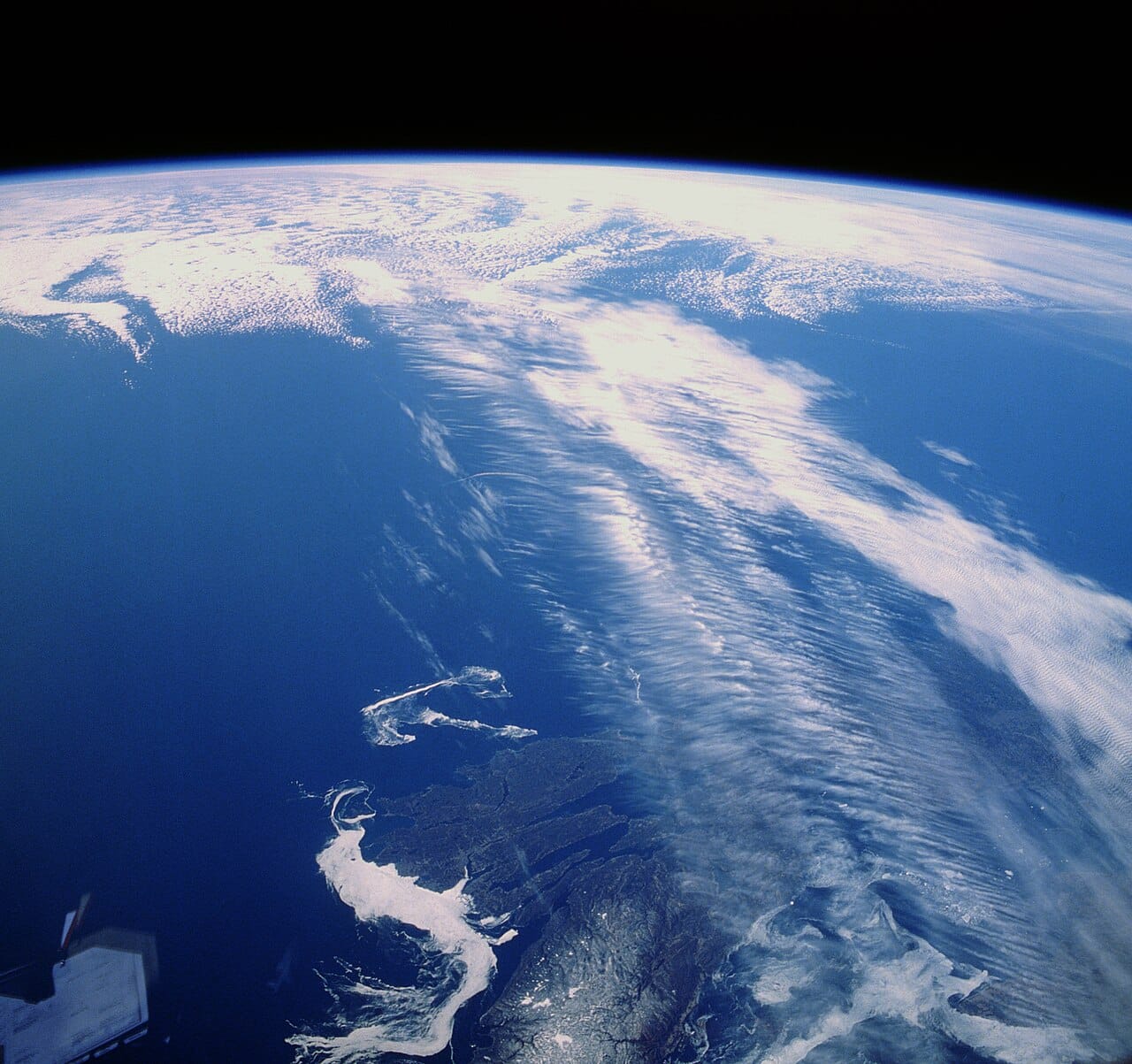
The movement of carbon between the atmosphere, oceans, land and rock. It operates on two timescales that differ by a factor of millions, and human activity has altered the fast one by transferring carbon out of the slow one.
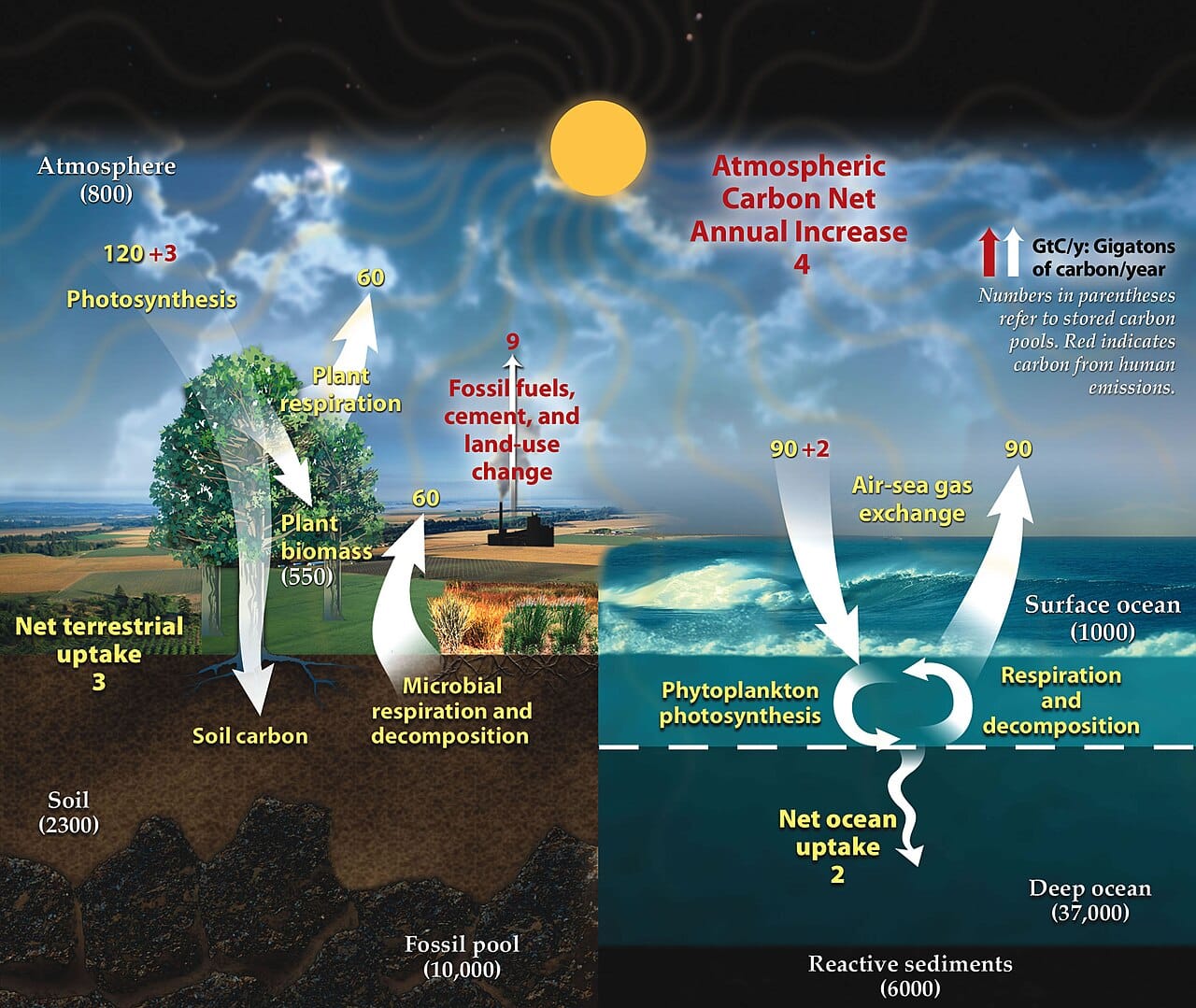
The biological cycle moves carbon between the atmosphere, living things and soil over years to centuries.
Photosynthesis removes carbon dioxide and builds it into plant tissue.
Respiration by plants, animals and microorganisms returns it.
Decomposition returns the carbon in dead material, as the fungi capsule describes, and some of it accumulates in soil.
The ocean exchanges carbon dioxide with the atmosphere across the sea surface continuously, and cold water absorbs more than warm.
Marine organisms take up dissolved carbon, and some of it sinks as dead material in what is called the biological pump.
The quantities are large and roughly balanced. The fluxes between atmosphere and land, and between atmosphere and ocean, are each far larger than human emissions, which is why the balance rather than the gross flow determines atmospheric concentration.
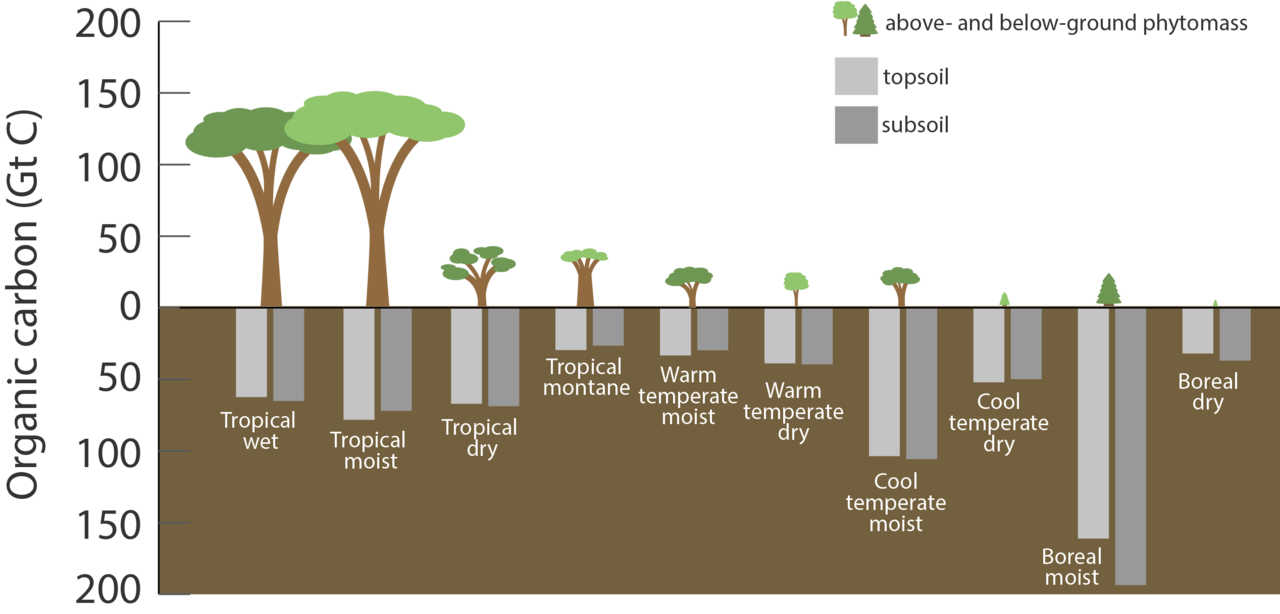
Soil holds more carbon than vegetation and atmosphere combined, which is why the soil capsule's account of degradation is directly relevant here.
The geological cycle moves carbon between rock and the surface over hundreds of thousands to hundreds of millions of years.
Weathering of silicate rock consumes carbon dioxide. Rain dissolves atmospheric carbon dioxide, forming a weak acid that reacts with rock, and the products are carried to the ocean.
Carbonate deposition removes it. Dissolved carbon is incorporated into shells and precipitates, which settle and become limestone.
Subduction carries some of that rock into the mantle.
Volcanism returns carbon dioxide to the atmosphere.
This cycle is the planet's long-term thermostat. Warmer temperatures accelerate weathering, which removes carbon dioxide faster, which cools the climate. The feedback operates over hundreds of thousands of years and is far too slow to respond to current changes.
Fossil fuels are carbon that left the fast cycle. Organic material buried without fully decomposing was transformed by heat and pressure over millions of years, and the carbon in it was removed from circulation.
Burning fossil fuels transfers carbon from the slow cycle to the fast one, at a rate that geological processes take millions of years to accomplish.
Land use change, principally deforestation, releases carbon stored in vegetation and soil.
Cement production releases carbon dioxide chemically, as the concrete capsule describes.
Roughly half of emitted carbon dioxide remains in the atmosphere. The rest is absorbed by the ocean and by land vegetation, which are together called the carbon sinks, and the fraction absorbed is measured rather than assumed.
Ocean absorption has a direct chemical consequence: dissolved carbon dioxide forms carbonic acid, lowering ocean pH, which is treated in the ocean acidification capsule. The sink is therefore not free.
The land sink has increased with rising carbon dioxide, since plants photosynthesise more in a carbon-enriched atmosphere, and whether this continues is uncertain and depends on water and nutrient limits.
Atmospheric concentration has been measured continuously at Mauna Loa since 1958 and at many sites since, and the record shows both the rise and the annual oscillation produced by the northern hemisphere growing season.
Isotopes identify the source. Fossil carbon contains no carbon-14, having decayed away over millions of years, and is depleted in carbon-13 relative to atmospheric carbon. The observed changes in both ratios match what fossil fuel combustion would produce, which is how the source of the increase is established rather than assumed.
Ice cores extend the record back hundreds of thousands of years by measuring air trapped in bubbles, showing that current concentrations exceed anything in that record.
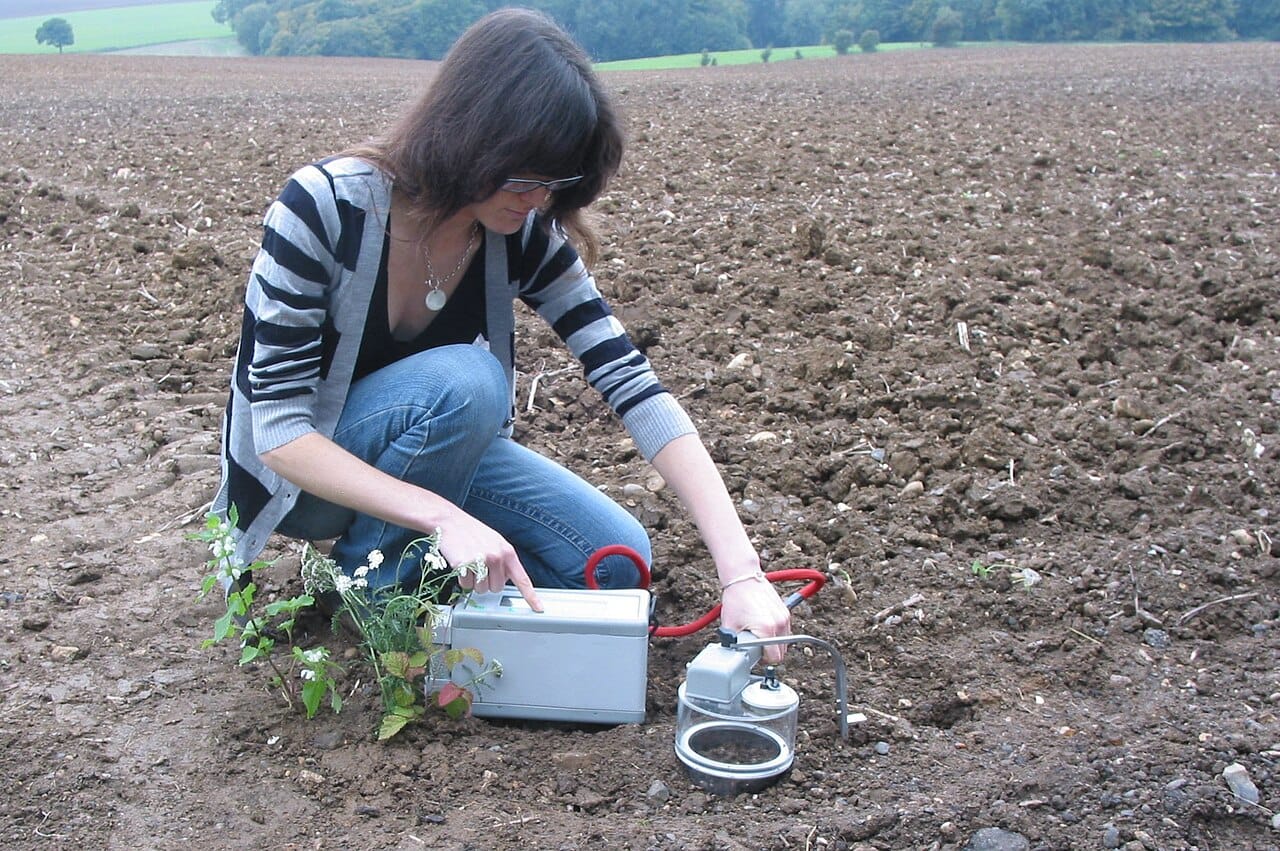
Flux measurements at towers and by satellite quantify exchange between surface and atmosphere directly.
The global carbon budget, published annually, reconciles emissions, atmospheric growth and sink uptake, and the residual between them indicates how well the system is understood.
The carbon cycle determines atmospheric carbon dioxide concentration, which is the principal control on the planet's surface temperature over long periods.
The framing that matters most is the transfer between timescales. Carbon removed from the atmosphere over hundreds of millions of years is being returned over a few centuries, and the natural processes capable of removing it again operate far too slowly to compensate, which is why the change is effectively permanent on any human timescale.