Communication using electromagnetic waves without a conductor between sender and receiver. It was the first medium to reach a mass audience simultaneously, and it remains the medium of last resort when everything else fails.
Radio waves are electromagnetic radiation, the same phenomenon as light at much longer wavelengths, and their existence was predicted by Maxwell's equations before anyone produced them.
Heinrich Hertz generated and detected them in the 1880s, confirming the prediction. Asked what use they might have, he is reported to have said none, which is among the more instructive wrong answers in the history of science.
An alternating current in an antenna radiates a wave. A wave passing another antenna induces a small alternating current in it, and that current is the received signal.
Information is added by modulating the wave. Amplitude modulation varies the wave's strength; frequency modulation varies its frequency. Frequency modulation is less affected by amplitude noise, which is why it sounds cleaner and why lightning crashes appear on the amplitude modulated band.
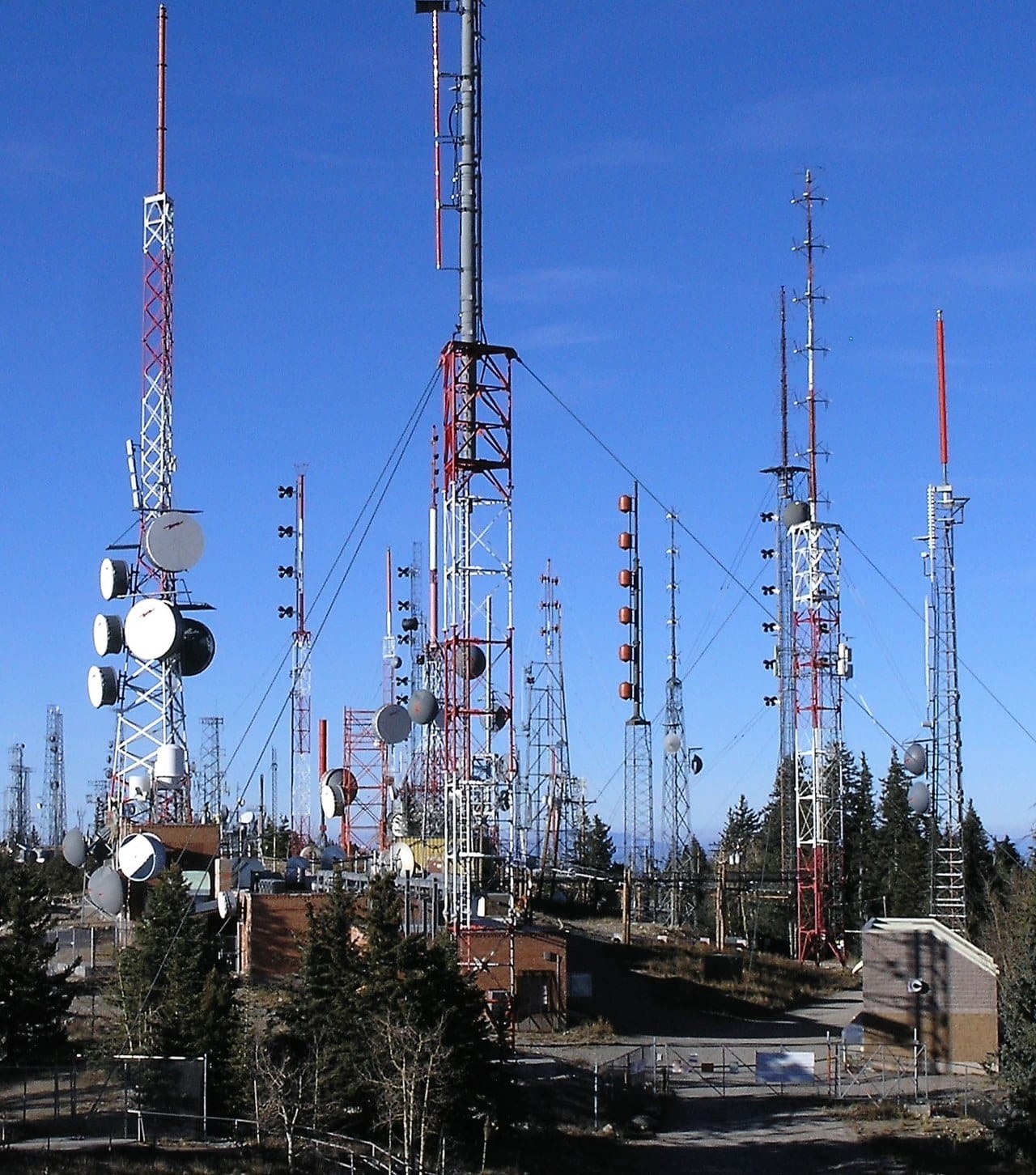
Frequency determines behaviour more than power does. Long waves follow the curvature of the Earth. Medium waves travel further at night, when the ionosphere reflects rather than absorbs them, which is why distant stations appear after dark. Short waves bounce between the ionosphere and the ground and can travel around the world. Very high frequencies travel essentially in straight lines and are limited to line of sight, which is why frequency modulated broadcasting has a horizon and shortwave does not.
Spectrum is finite and shared, which is the reason radio is regulated everywhere. Two transmitters on the same frequency in the same place interfere, so allocation is a legal question with no technical alternative.
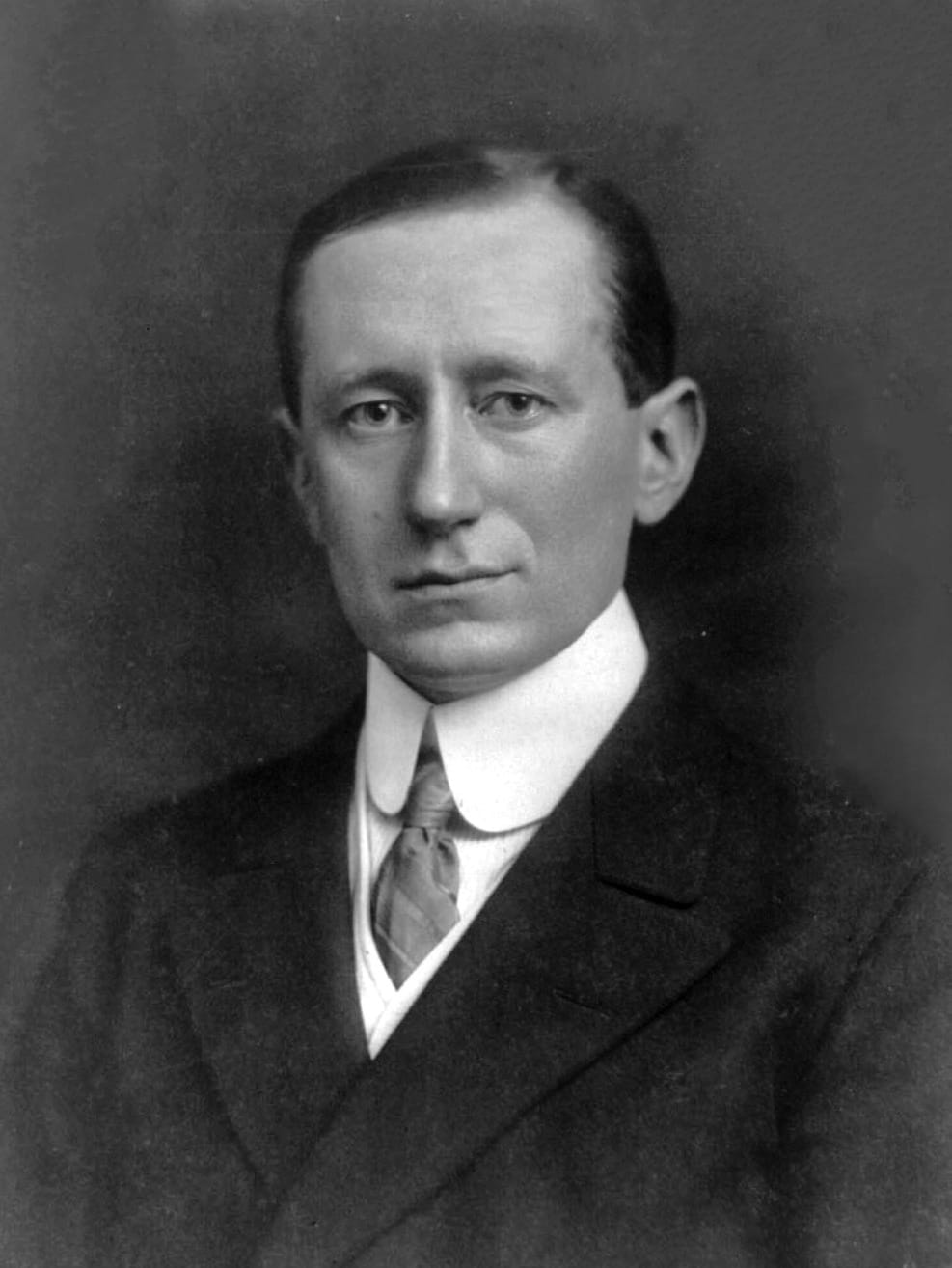
Guglielmo Marconi developed practical wireless telegraphy from the mid 1890s, extending range persistently and transmitting across the Atlantic in 1901, a claim disputed at the time and now generally accepted.
His contribution was engineering and enterprise rather than discovery. The physics was established, and several others including Oliver Lodge, Alexander Popov and Jagadish Chandra Bose worked on transmission and detection. Nikola Tesla's patents in the field were the subject of prolonged litigation.
Maritime use came first and mattered immediately. Ships could call for help out of sight of land, and the Titanic sinking in 1912 both demonstrated the value and exposed the gaps, leading to requirements for continuous watch.
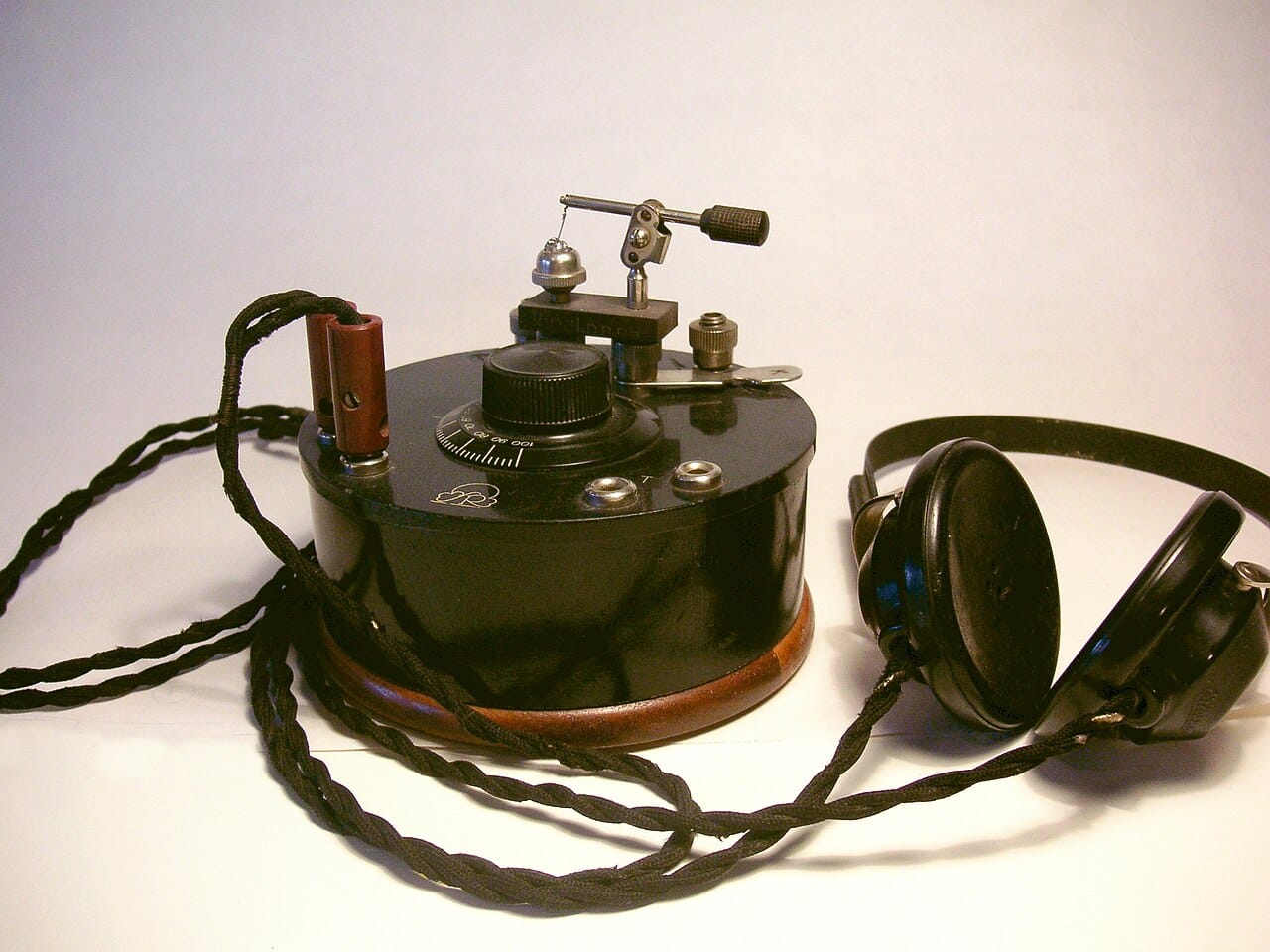
The crystal set made reception nearly free. A crystal detector, a coil and headphones require no battery, drawing energy from the signal itself, and enormous numbers were home-built in the 1920s.
Vacuum tubes made amplification possible, which produced loudspeakers, and radio became a piece of furniture that a household listened to together rather than a device one person wore headphones for.
Broadcasting as an organised activity dates from around 1920, and the growth was extraordinarily fast: within about a decade radio receivers were in the majority of households across much of North America and Europe.
Transistors made radio portable and cheap from the 1950s, which changed listening from a family activity in one room to an individual one anywhere, and made radio the first genuinely personal medium.
Simultaneity was new. For the first time an entire population could hear the same voice at the same moment, which had no precedent and was recognised as significant immediately.
Politics adapted quickly. Roosevelt's fireside chats used the intimacy of the medium deliberately, and authoritarian governments across the period built broadcasting into their apparatus, with state monopoly on transmission the norm rather than the exception.
Propaganda and jamming became instruments of foreign policy. International shortwave broadcasting across the Cold War reached audiences their governments had tried to seal off, and jamming consumed substantial resources on the other side.
Music distribution was restructured. Radio play determined what sold, which gave broadcasters power over the recording industry and produced the payola scandals when that power was bought.
The War of the Worlds broadcast in 1938 is the standard example of radio-induced panic and the standard example is largely wrong. Contemporary newspaper accounts exaggerated the reaction substantially, audience measurement showed few listeners, and the story survived because it was useful to a print industry hostile to a competitor.
Radio was expected to be displaced by television and then by the internet, and it has not been.
Its advantages are structural. It works while doing something else, particularly driving, which no visual medium can match. Receivers are cheap, use very little power and need no subscription. One transmitter serves an unlimited number of listeners at no additional cost per listener, which no networked medium does.
It is the medium that survives disaster. When power, mobile networks and internet access fail, battery radio continues, and emergency broadcasting systems in most countries depend on it for that reason.
Community radio serves populations that commercial and state media do not, in local languages and at very low cost, and it remains a primary information source across much of the world.
Digital and internet distribution have changed delivery without changing the form, and podcasting is recognisably the same activity with the schedule removed.
Radio established what a mass medium is: a single source reaching an entire population simultaneously, with the political consequences that implies, and every medium since has been understood partly by comparison with it.
It is also the most robust communication technology in existence. The physics requires no infrastructure between the parties, which is why it remains what people fall back on when the infrastructure everything else depends on stops working.