Objects formed from clay and hardened by heat. Pottery is the most abundant artefact in archaeology, it survives almost indefinitely, and it is the principal means by which sites are dated and cultures are traced.
Clay is a fine-grained sediment whose particles are plate-shaped. Wet, they slide over one another, which makes clay plastic and able to hold a shape.
Firing changes it irreversibly. Below about 600 degrees Celsius, chemically bound water is driven out and the clay can no longer be softened by wetting. Higher temperatures cause particles to fuse, producing a harder and less porous body.
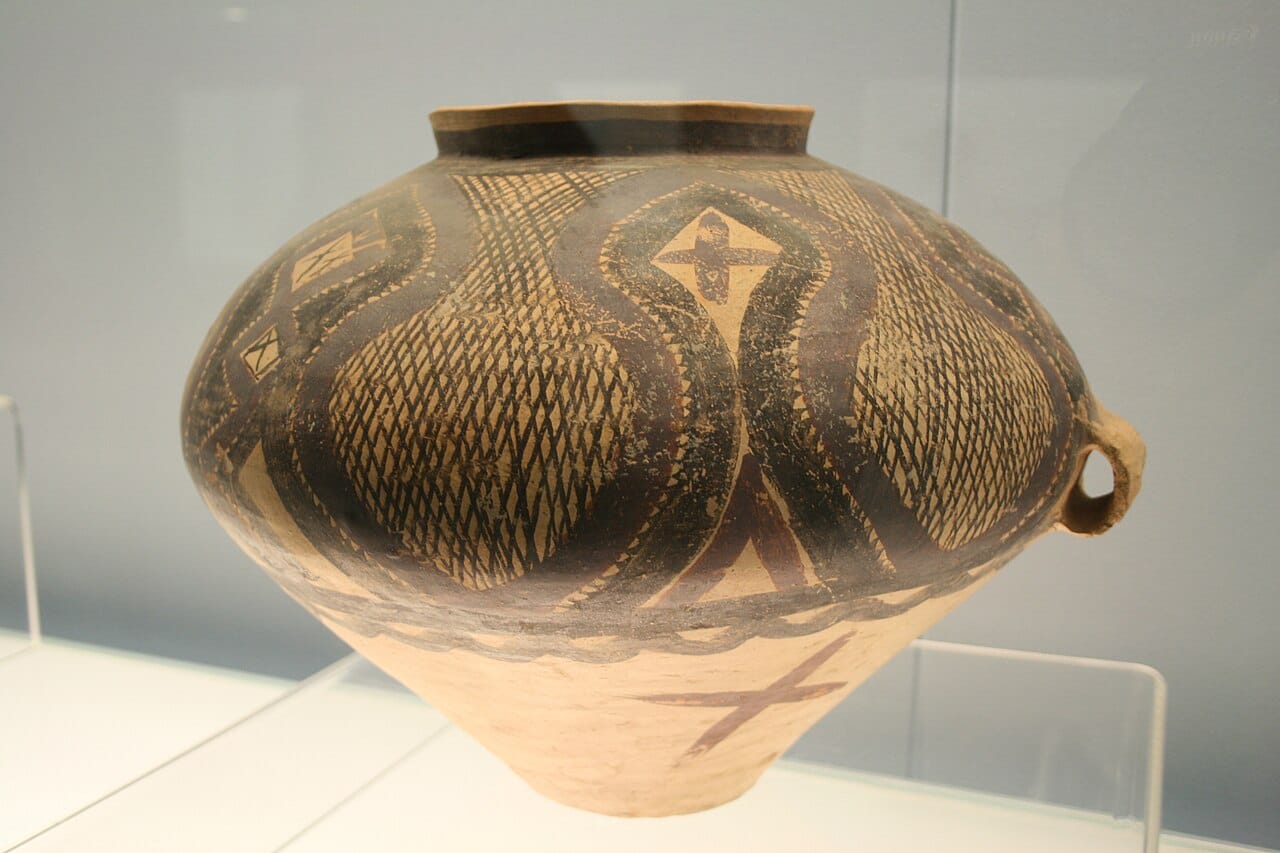
The categories follow firing temperature. Earthenware is fired lowest and remains porous, requiring a glaze to hold liquid. Stoneware is fired higher, vitrifying partially and becoming watertight without glaze. Porcelain requires the highest temperatures and specific clays, producing a hard translucent body.
Reaching high temperatures is the technical constraint. Open firing reaches perhaps 900 degrees; kilns with controlled draught reach far more, and the development of porcelain in China depended on kiln technology as much as on clay.
Pottery is nearly indestructible in the ground. It does not rot, corrode or burn, and while it breaks, the sherds survive indefinitely.
It was also produced in enormous quantity and discarded readily, being cheap and breakable, which means it accumulates.
The combination makes it the most common find on most sites after stone, and it supports several kinds of inference.
Dating comes from typology. Styles, forms and decoration change over time, and a sequence established at one well-dated site allows other sites to be placed relative to it. This was the primary dating method before radiocarbon and remains the practical one for fine chronology.
Trade is traced by composition. The mineral content of a sherd identifies the clay source, so a pot found far from where its clay was dug demonstrates exchange, and petrographic and chemical analysis have mapped trade networks in detail.
Diet and use come from residues. Lipids absorbed into the porous fabric survive and can be identified, which has established dairy consumption, the processing of particular plants, and the presence of fermented beverages.
The oldest known fired clay objects are figurines from Dolní Věstonice in the Czech Republic, around 29,000 years old, which precede pottery vessels by a long interval.
The oldest pottery vessels come from Xianrendong Cave in China, around 20,000 years old, and are associated with hunter-gatherers rather than farmers. Pottery therefore predates agriculture, contradicting the long-held assumption that it arrived with settled farming.
The potter's wheel appears in Mesopotamia in the fourth millennium BCE and transforms production rates, since a skilled thrower produces vessels far faster than hand-building allows.
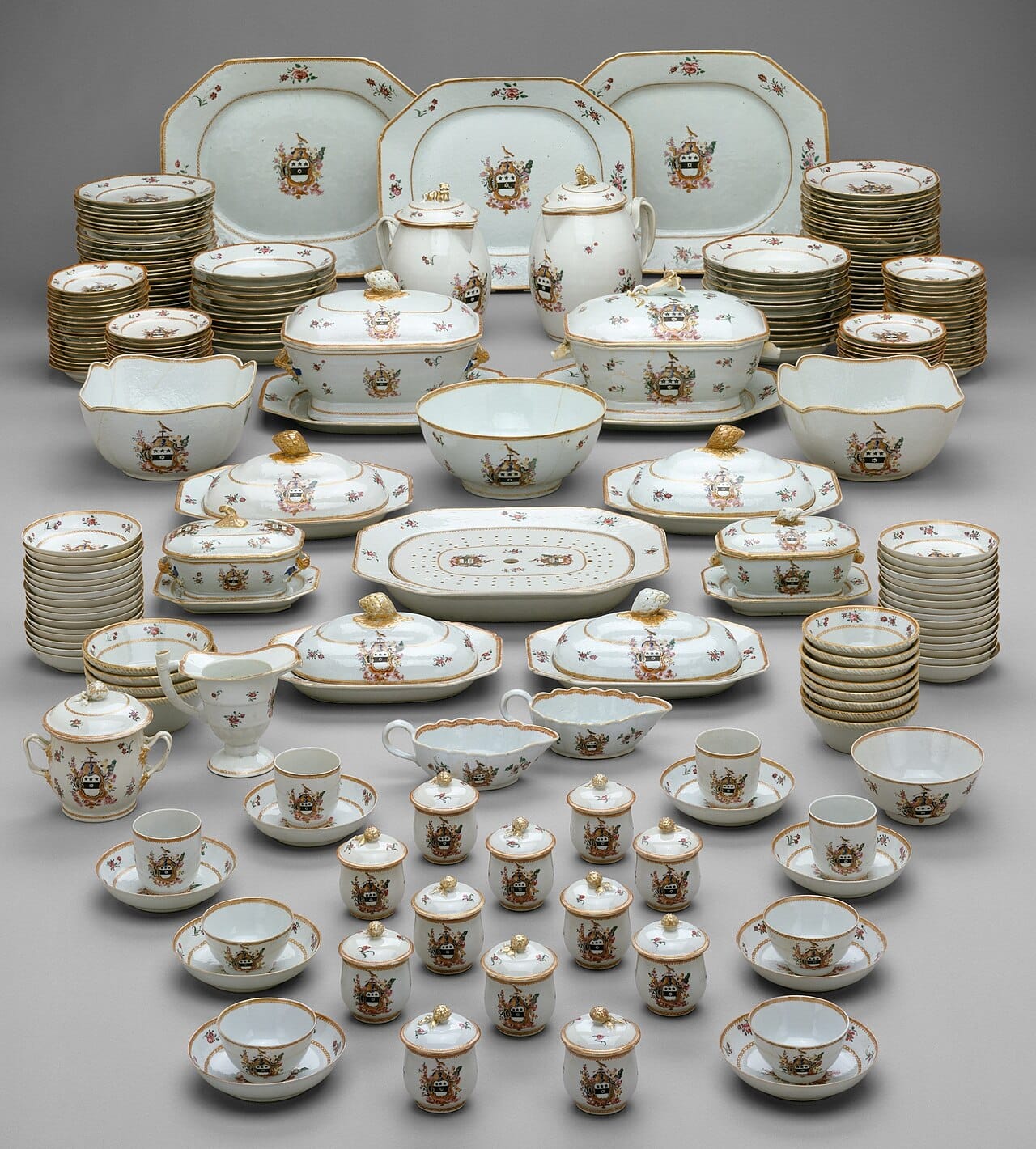
Porcelain developed in China and was not reproduced in Europe until the early eighteenth century, after prolonged and expensive attempts. The trade in Chinese porcelain was substantial enough that the material is still called china in English.
Industrial production from the eighteenth century, associated with Josiah Wedgwood among others, applied division of labour, standardisation and mechanisation, and turned tableware from a craft product into a manufactured one.
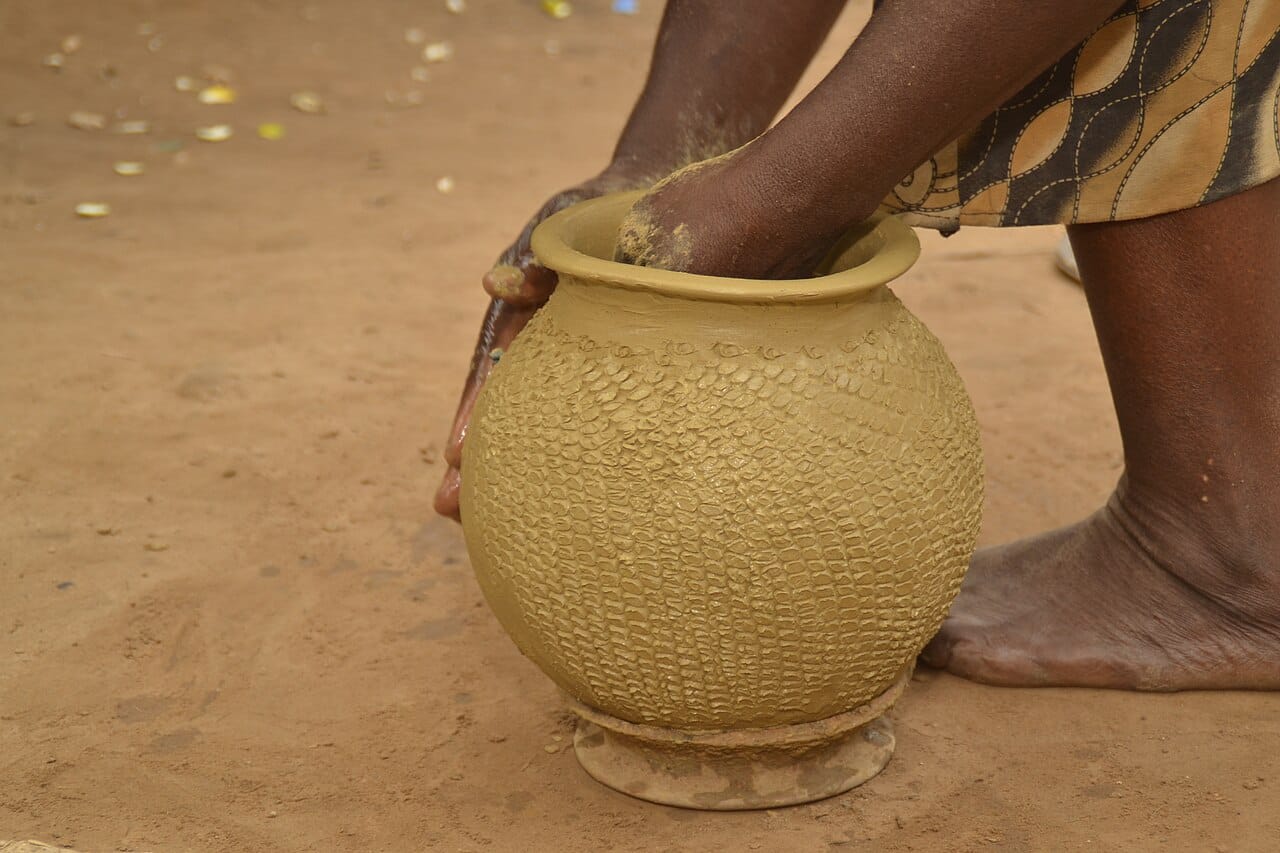
Pottery remains a working technology rather than only a heritage craft. Fired clay vessels are made and used for water storage and cooking across much of the world, and unglazed porous pots cool their contents by evaporation, which is useful where refrigeration is unavailable.
Technical ceramics extend the same material science into engineering: high-temperature components, electrical insulators, cutting tools and biomedical implants are ceramic, chosen for hardness, chemical inertness and heat resistance.
Pottery is the material through which most of prehistory is dated and most ancient trade is traced, and it holds that position not because it was important to the people who made it but because it survives when everything else has decayed.
That is worth noting in general. The archaeological record is dominated by what endures rather than by what mattered, and pottery's prominence is an artefact of preservation as much as of use.