Fabrics made from fibres. Textile production drove the first industrial mechanisation, it remains among the largest manufacturing sectors, and the sequence of operations has not fundamentally changed in ten thousand years.
Every textile passes through the same stages regardless of fibre or period.
Fibres are prepared: cleaned, separated and aligned.
Spinning twists short fibres into continuous yarn. Twist is what holds them together, since friction between twisted fibres resists them sliding apart, and this is the operation that converts a heap of fibre into something with tensile strength.
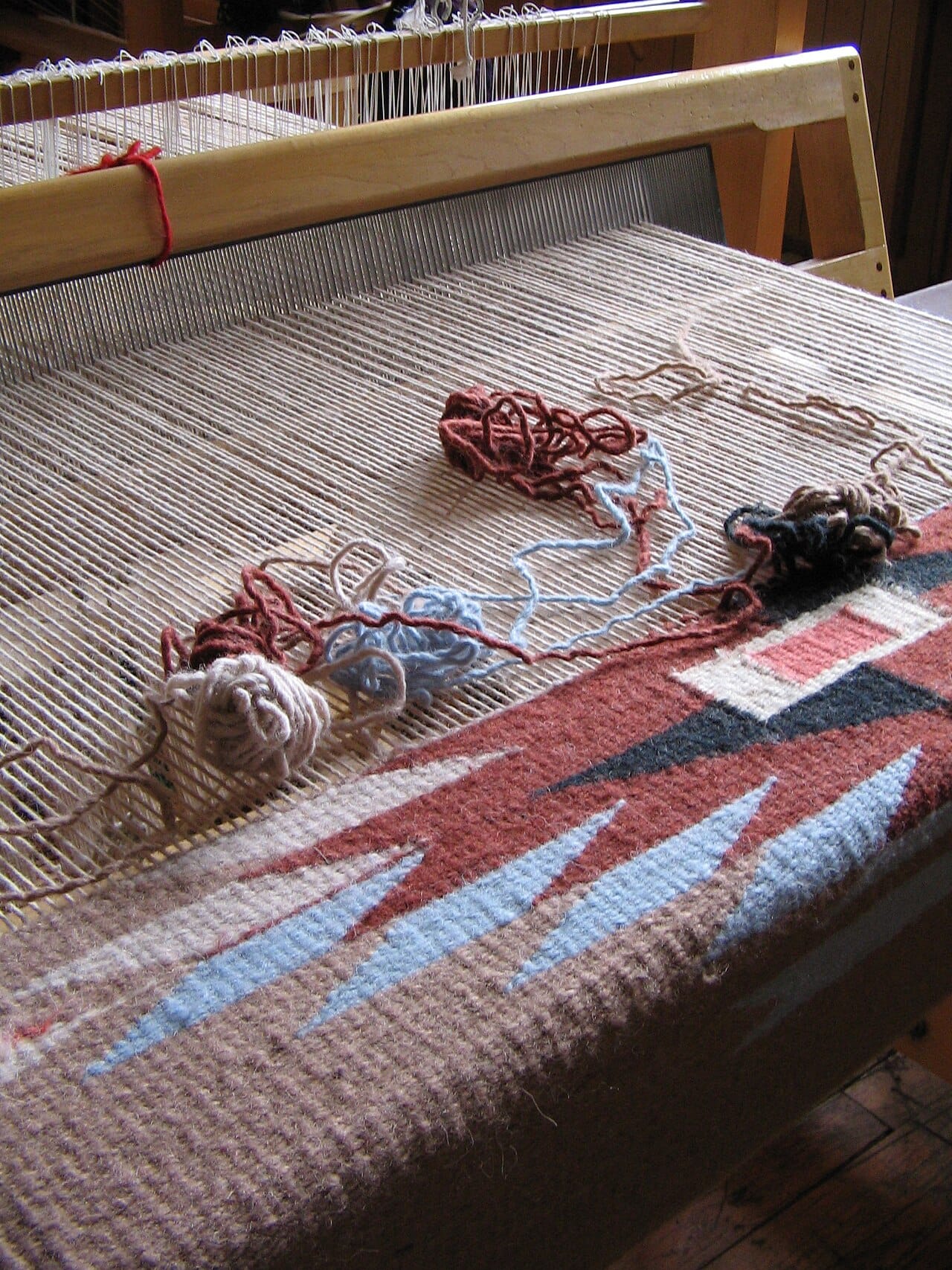
Fabric is formed. Weaving interlaces two sets of yarn at right angles: the warp held under tension and the weft passed through it. Knitting forms fabric from a single yarn in interlocking loops, which is why knitted fabric stretches and woven fabric does not. Felting and non-woven methods bond fibres without yarn.
Finishing includes bleaching, dyeing, printing and chemical or mechanical treatment.
Natural fibres divide into plant and animal.
Cotton is the dominant natural fibre, absorbent, comfortable and requiring substantial water and pesticide to grow.
Linen from flax is older than cotton in Europe and the Near East, and Egyptian linen survives from the third millennium BCE.
Wool has crimp, which traps air and insulates, and its scales allow felting.
Silk is a continuous filament produced by silkworms, exceptionally strong and fine, and its production was a Chinese monopoly for millennia protected by prohibition on export of the method.
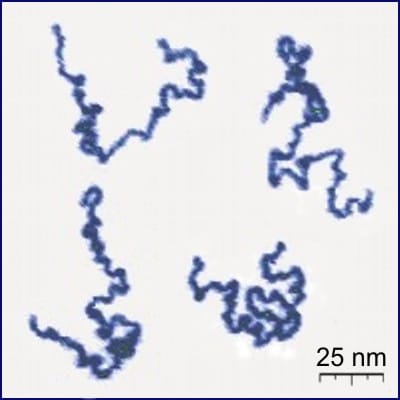
Synthetic fibres are polymers, as that capsule describes. Nylon from 1935 and polyester from the 1940s are extruded as continuous filaments and now account for the majority of world fibre production, polyester alone exceeding cotton.
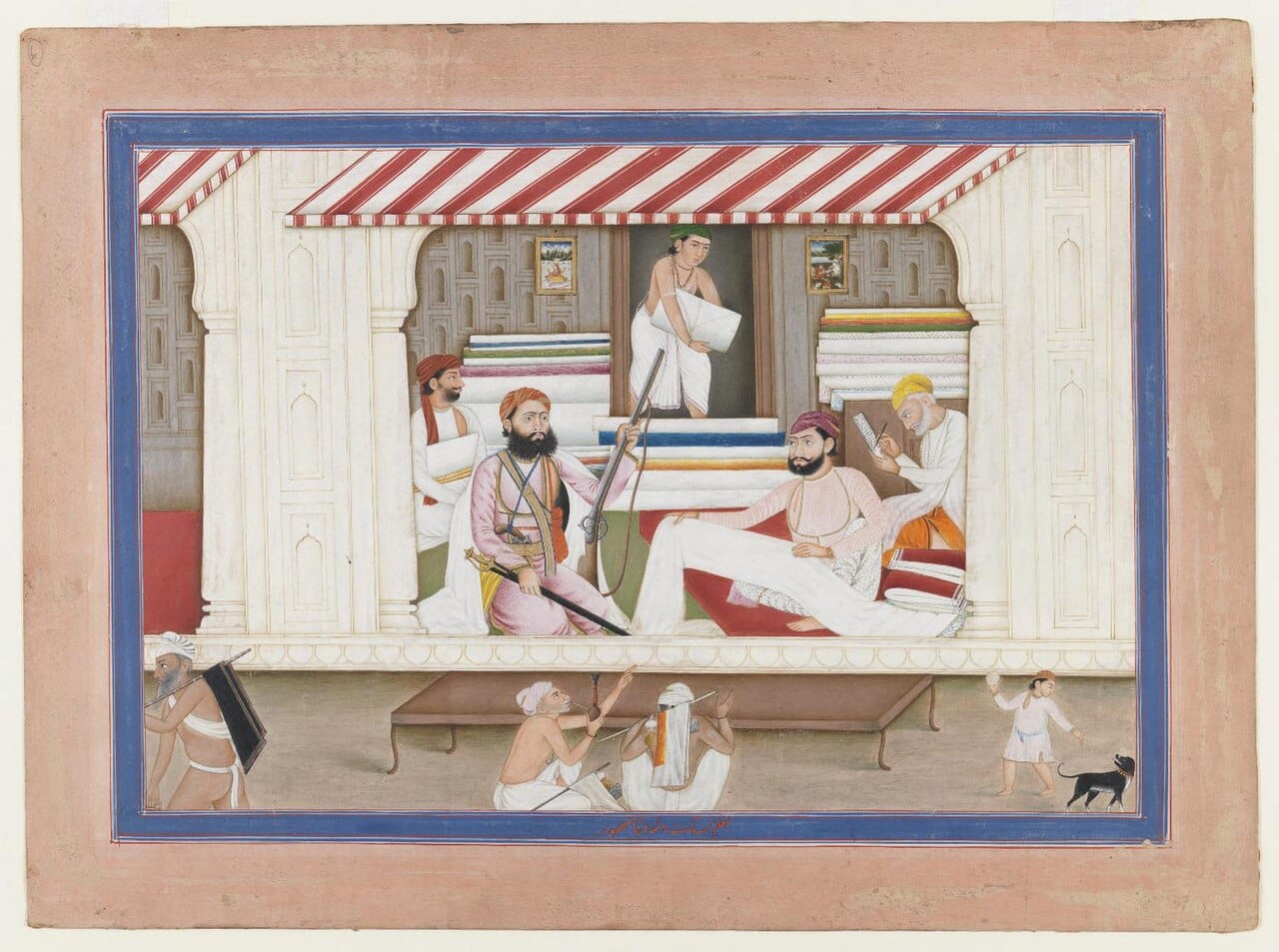
Spinning was the bottleneck. Producing enough yarn to keep one weaver working required several spinners, so any improvement in weaving increased the shortage.
The sequence of eighteenth century inventions addressed that imbalance in turn. The flying shuttle sped up weaving and made the shortage worse. The spinning jenny allowed one worker to spin several threads. The water frame and then the spinning mule mechanised spinning at scale, and the power loom mechanised weaving.
The economic conditions mattered as much as the inventions. Demand for cloth was large and elastic, the operations were repetitive and divisible, and the product was valuable relative to its bulk.
The consequences went well beyond textiles. The factory system, mechanised production, and the concentration of workers in mills were developed here first and applied elsewhere afterwards, which is why the industrial revolution is generally dated from textile mechanisation.
The Jacquard loom of 1804, which controlled patterning using punched cards, is a direct ancestor of programmable machinery, and Charles Babbage cited it in designing his analytical engine.
Colour was historically expensive and colour-fastness harder still.
Natural dyes came from plants, insects and molluscs. Tyrian purple, extracted from sea snails in quantities requiring thousands of animals per gram, was restricted to rulers by law in several societies. Indigo, madder and cochineal were traded over long distances at high value.
Synthetic dyes began with mauveine, produced accidentally by William Perkin in 1856 while attempting to synthesise quinine. He was eighteen, recognised what he had, and commercialised it.
The consequence founded the modern chemical industry. Synthetic dye manufacture created industrial organic chemistry, and several of the largest chemical and pharmaceutical companies began as dye producers.
Textile and clothing manufacture remains labour-intensive and has relocated repeatedly toward lower-cost production, which has been a route into industrial employment for many countries and has involved documented poor conditions.
The Rana Plaza collapse in Bangladesh in 2013, which killed over eleven hundred garment workers, prompted binding safety agreements and remains the reference point in arguments about supply chain responsibility.
Environmental costs are substantial. The sector is a significant consumer of water and a significant source of water pollution from dyeing and finishing, and synthetic textiles shed microfibres in washing, which is a documented source of the microplastics treated in their own capsule.
Fast fashion has increased volumes and reduced garment lifespan, and the share of textiles recycled into new textiles remains very low, since blended fibres are difficult to separate.
Textiles are among the oldest technologies and among the few present in every human society, and the operations of spinning and weaving were arrived at independently wherever fibres were available.
The industry is also the one in which mechanised factory production was invented. The organisation of work that spread to every other manufacturing sector was developed to solve a specific imbalance between spinning and weaving, which is a considerable consequence for a bottleneck in yarn supply.