Whether the people of Rapa Nui destroyed their own society by deforesting the island, or whether the collapse was caused by European contact, disease and slave raiding. The ecocide account is the famous one and the evidence has moved substantially against it.
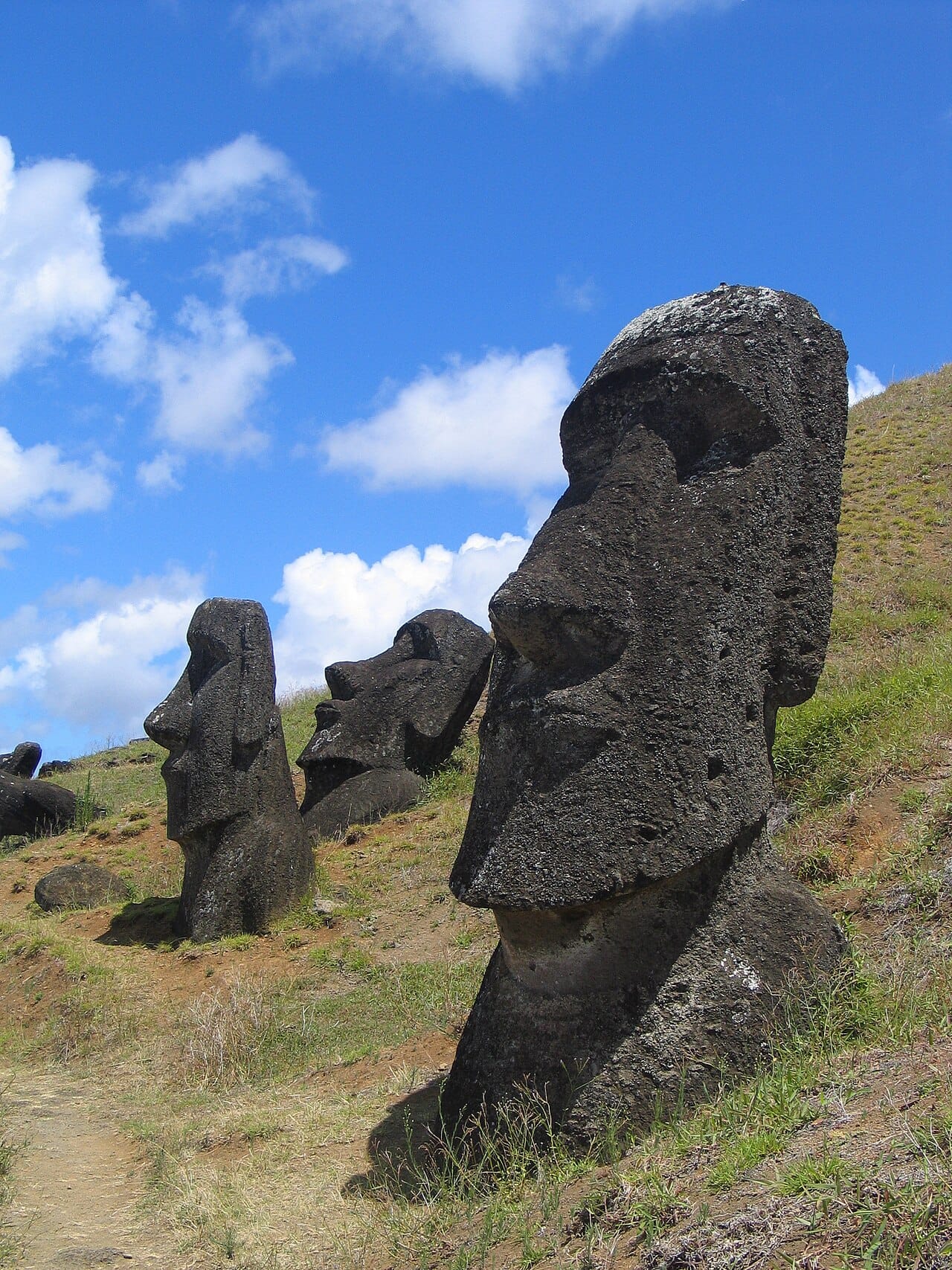
Polynesians settled Rapa Nui, one of the most isolated inhabited places on Earth, and built a society that carved and transported around nine hundred monumental statues.
The island was once forested, with a now-extinct giant palm among its dominant species, and by the time Europeans arrived in 1722 it was effectively treeless. That deforestation is established by pollen cores and by the remains of palm root casts.
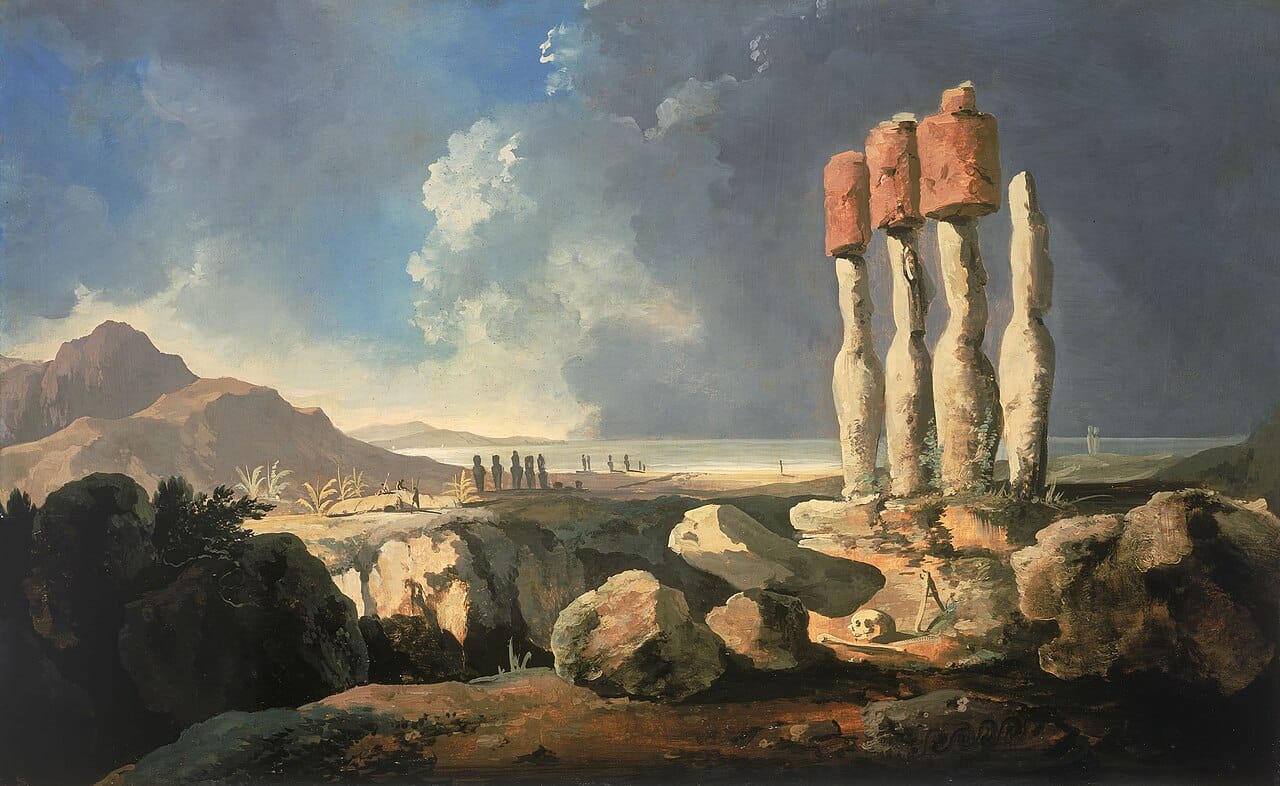
The society that Europeans encountered was smaller and organised differently from the one that had built the statues, and statue toppling occurred at some point.
The widely known version, given its fullest popular statement by Jared Diamond, runs as follows. The population grew to perhaps fifteen thousand or more, competitive statue building consumed timber for transport and rollers, deforestation followed, soil eroded, crops failed, food ran short, warfare broke out between clans, the statues were pulled down, and the population crashed before any European arrived.
As a parable it is compelling: a self-inflicted ecological catastrophe on an island small enough for the inhabitants to have seen it coming.
Several independent lines of evidence have been advanced against the sequence, principally by Terry Hunt and Carl Lipo and by subsequent work.
The Polynesian rat, which arrived with the settlers, eats palm seeds. Palm nuts recovered from the island show rat gnawing, and rats reproduce fast enough on an island without predators to prevent forest regeneration regardless of human cutting. On this account deforestation was substantially a consequence of an introduced species rather than of statue transport.
The subsistence evidence does not indicate a starving population. Lithic mulching and rock gardens, in which stones are used to retain moisture, moderate temperature and release minerals, are extensive and represent sophisticated dryland agriculture rather than desperation.
The mata'a, obsidian tools once read as spear points and cited as evidence of endemic warfare, have been analysed as agricultural and processing implements. Their shapes are poorly suited to penetrating wounds.
Skeletal evidence of violent trauma is present but at levels lower than the warfare narrative implies.
An ancient DNA study published in 2024 examined genomes from Rapanui individuals and found no evidence of the severe population bottleneck a pre-contact crash would have produced. The same work found evidence of contact with Native American populations several centuries before Europeans arrived.
The post-contact history is documented and is not in dispute.
European visits from 1722 introduced diseases to a population with no exposure to them.
Peruvian slave raids in 1862 and 1863 removed around fifteen hundred people, roughly half the remaining population, including much of the ruling and priestly class, on which the transmission of knowledge depended. Most died in Peru; the few repatriated brought smallpox.
By 1877 the population of the island was around one hundred and eleven people.
Sheep ranching in the later nineteenth century confined the remaining Rapanui to a small part of their own island.
Whatever happened before 1722, this is a demographic catastrophe of a magnitude that requires no ecological explanation at all.
The revisionist case is not universally accepted, and the disagreement has narrowed to specific questions.
Whether the pre-contact population was stable or already declining, and by how much, is argued from settlement patterns, agricultural capacity estimates and dating of construction. Estimates of peak population vary by a factor of several.
The rat and human contributions to deforestation are both accepted as real by most researchers, and their relative weight is disputed.
Whether statue toppling was pre-contact conflict or a post-contact response to social collapse and missionary activity is not settled.
Rapa Nui became the standard illustration of societal self-destruction through environmental mismanagement, and it is invoked in that role constantly. If the account is substantially wrong, a widely used parable is resting on contested foundations.
The revision also matters for who is blamed. The ecocide story attributes the destruction of Rapanui society to the Rapanui, and the documented catastrophe was inflicted from outside. Rapanui scholars and community members have made that point directly, and it is part of why the debate has been unusually pointed.