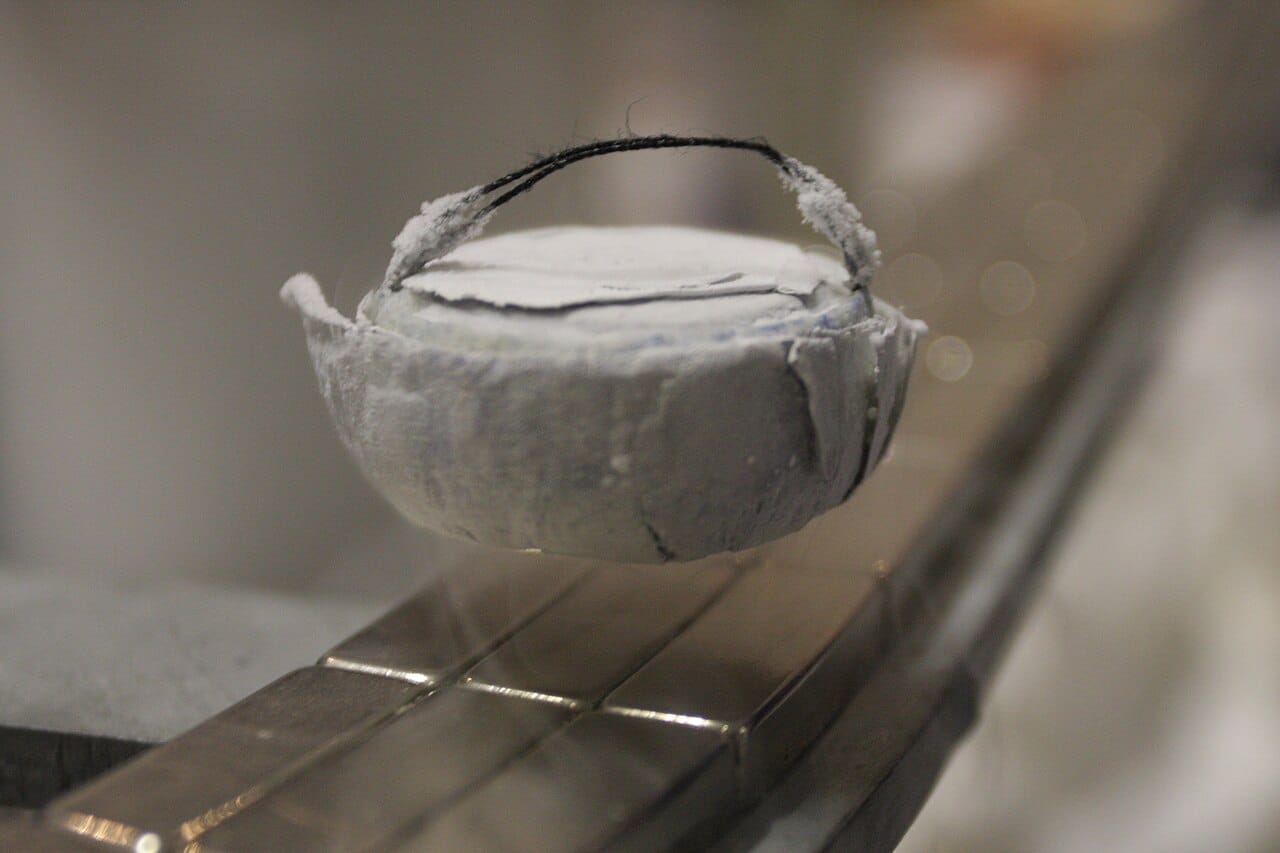
A solid that lacks the ordered internal arrangement of a crystal, formed by cooling a liquid fast enough that its atoms cannot arrange themselves. It is transparent, chemically resistant, and made from among the most abundant materials on Earth.
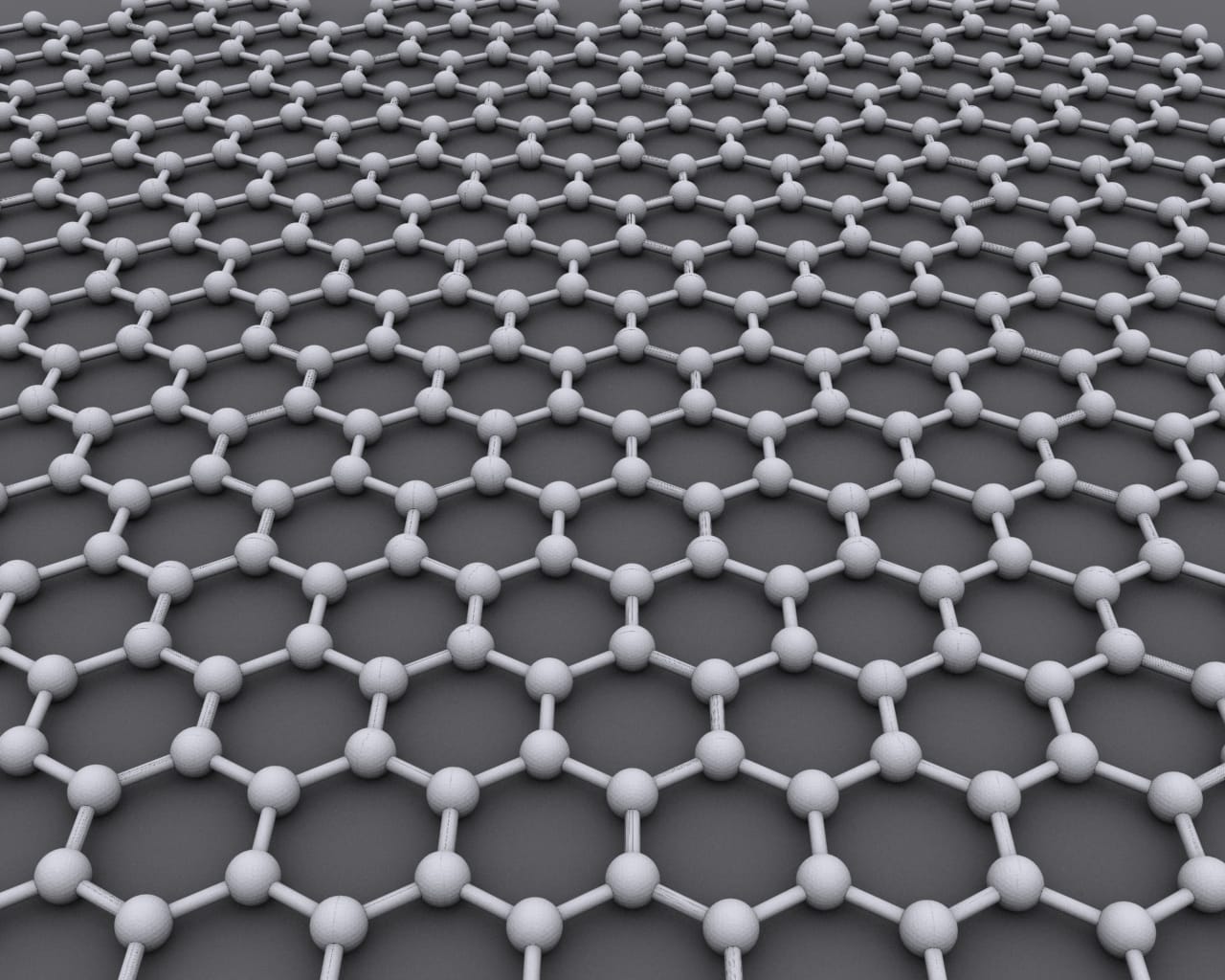
Most solids are crystalline: their atoms occupy a repeating lattice, and they melt at a definite temperature at which that lattice breaks down.
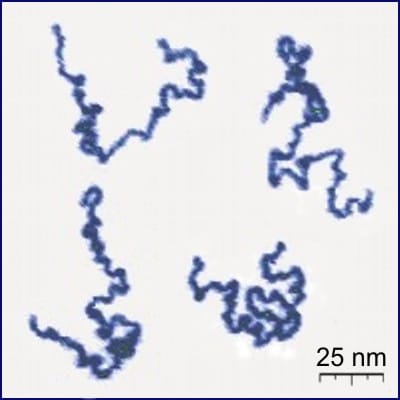
A glass has no such order. Its atoms are arranged as they were in the liquid, held in place because cooling was too rapid for them to organise. The technical description is an amorphous solid.
The consequence is that glass has no melting point. Instead it softens progressively over a range, which is what makes it workable: it can be blown, drawn and pressed while it is neither liquid nor solid.
The persistent claim that glass in old windows is thicker at the bottom because it flows over centuries is false. It is far too viscous at room temperature for measurable flow over any human timescale, and the variation in old panes comes from the manufacturing method, which produced uneven thickness that glaziers generally installed thick edge down.
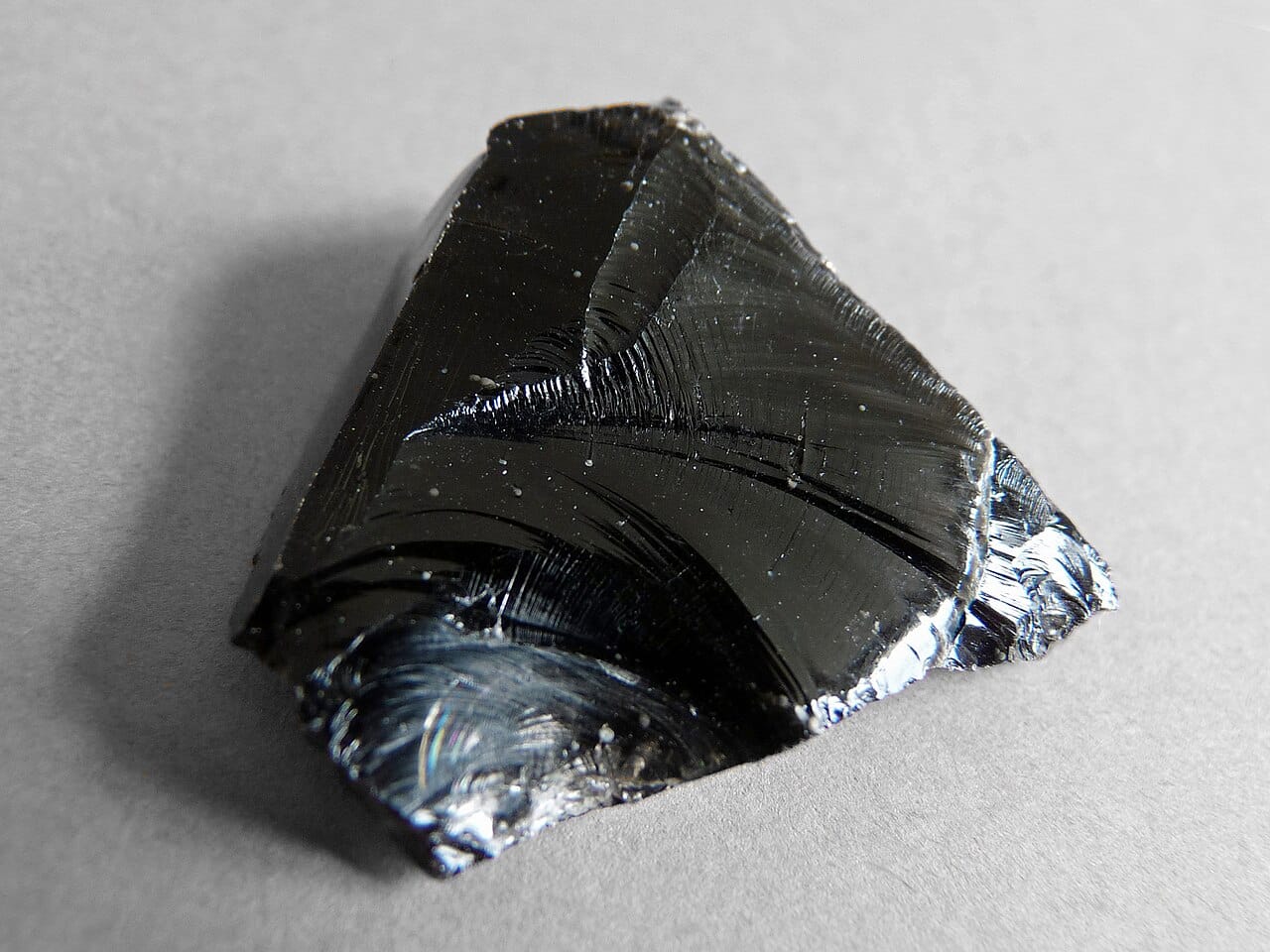
Glass occurs without human involvement wherever melt is quenched quickly.
Obsidian forms when lava cools rapidly. It fractures conchoidally to an edge sharper than surgical steel, and it was among the most valued materials in prehistory, traded over long distances, as the stone tools capsule describes.
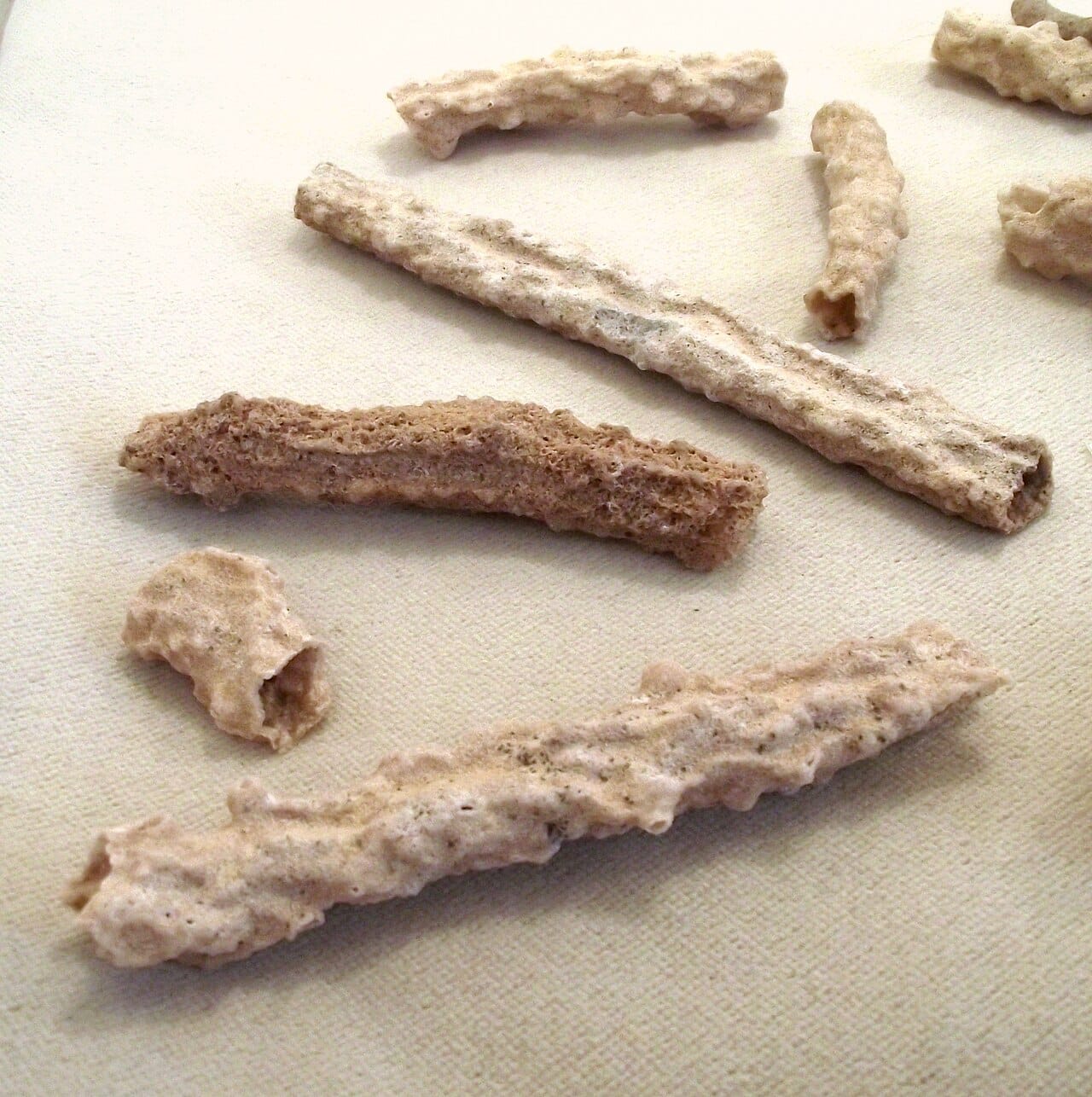
Fulgurites form where lightning strikes sand, fusing a tube along its path.
Tektites are glass formed by meteorite impact, thrown out as melt and solidified in flight.
Ordinary glass is principally silica, the same compound as quartz sand.
Pure silica makes excellent glass and requires temperatures above 1700 degrees Celsius, which was impractical historically and remains expensive.
Adding soda, historically from plant ash or natron, lowers the melting temperature substantially. It also makes the glass soluble in water, so lime is added to stabilise it. The resulting soda-lime glass is the standard material for windows and containers and accounts for most glass produced.
Other additions change properties. Boron oxide gives borosilicate glass, which expands very little when heated and therefore resists thermal shock, which is why laboratory and cookware glass is made from it. Lead oxide increases density and refractive index, giving the sparkle of cut glassware. Metal oxides colour it: cobalt for blue, chromium or iron for green, gold for red.
Glassmaking dates to at least the third millennium BCE in Mesopotamia and Egypt, initially producing beads and small vessels by forming glass around a core.
Glassblowing, developed in the Levant around the first century BCE, transformed the craft. A gather of molten glass on the end of a tube can be inflated and shaped rapidly, which made vessels quick to produce and therefore ordinary rather than precious. Roman glass became a mass-produced commodity.
Flat glass was long the harder problem. Crown glass was made by spinning a blown globe into a disc, leaving a thick centre. Cylinder glass was blown into a cylinder, cut and flattened. Both produced distortion and limited sizes.
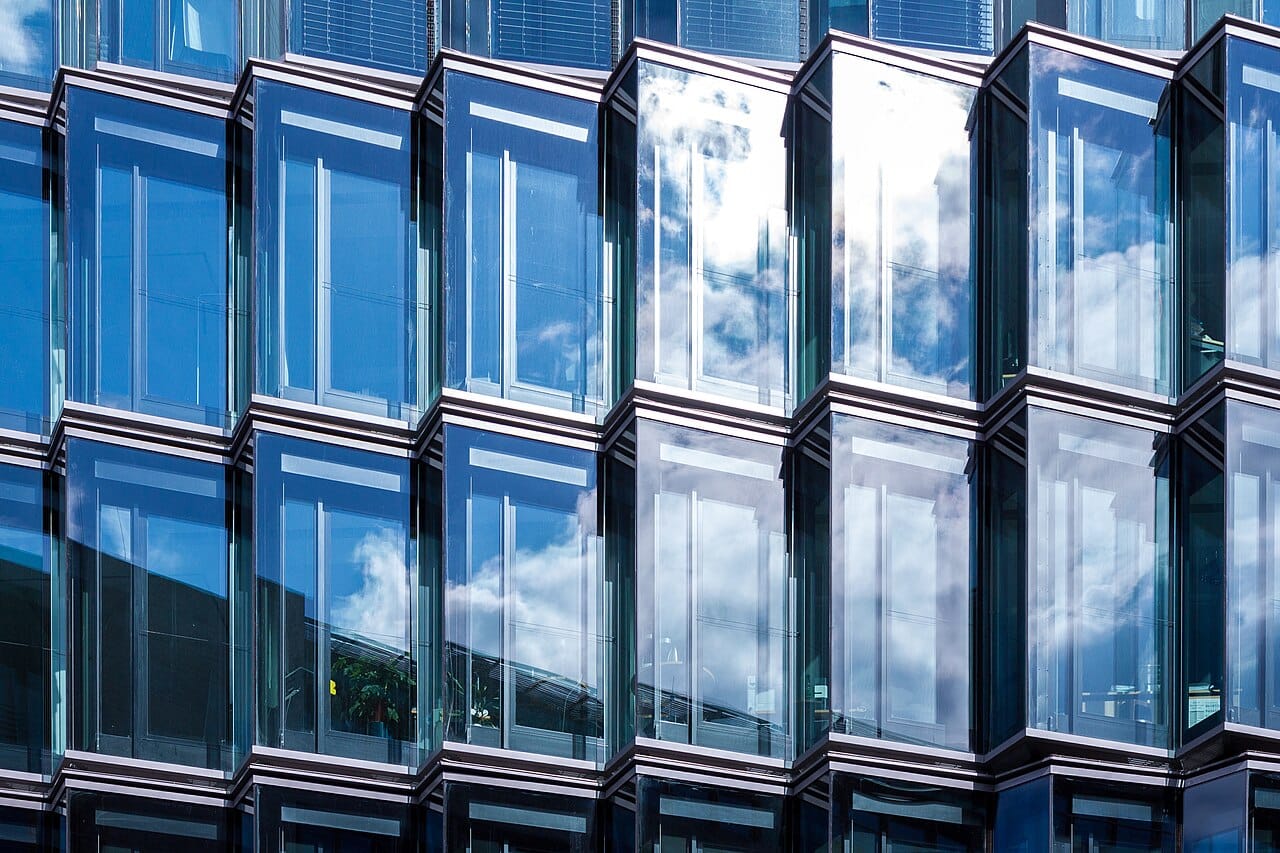
The float process, developed by Alastair Pilkington in the late 1950s, solved it by floating molten glass on a bath of molten tin. The tin surface is perfectly flat and the glass spreads to uniform thickness with both surfaces fire-polished, requiring no grinding. Essentially all flat glass is now made this way, and cheap large panes are why modern buildings look as they do.
Containers, where chemical inertness matters because glass does not react with contents or transfer flavour, and where it can be recycled repeatedly without degradation.
Windows and architecture, following the float process.
Optics. Lenses for spectacles, microscopes, telescopes and cameras depend on glass of controlled composition and homogeneity, and the improvement of optical glass was a prerequisite for much of the science described in the diffraction and cell theory capsules.
Optical fibre carries almost all long-distance data traffic. Signals travel as light through glass so pure that a kilometre of it is more transparent than a window pane, an achievement of purification rather than of design.
Laboratory ware, insulation as glass wool, fibreglass composites, and screens for displays.
Glass is the material that made observation possible at scales the eye cannot reach, in both directions, and it is difficult to identify a substitute that would have allowed the microscope and telescope to exist.
It is also a rare case of a material that is cheap, made from abundant raw material, endlessly recyclable, chemically inert and transparent, which is a combination no other substance offers.