Karl Friston's proposal that everything a brain does, and arguably everything any self-organising system does, can be described as minimising a single quantity. It is extraordinarily ambitious, extremely influential, and its proponents agree it cannot be falsified.
The principle states that any system maintaining itself against dissipation must act to minimise the difference between its predictions and its sensory input, a quantity Friston calls variational free energy.
The reasoning runs from thermodynamics. A living thing occupies a narrow set of states: body temperature within a few degrees, blood chemistry within tight bounds. Occupying a narrow range of states is, in information terms, being in a low-entropy condition, and maintaining it requires work.
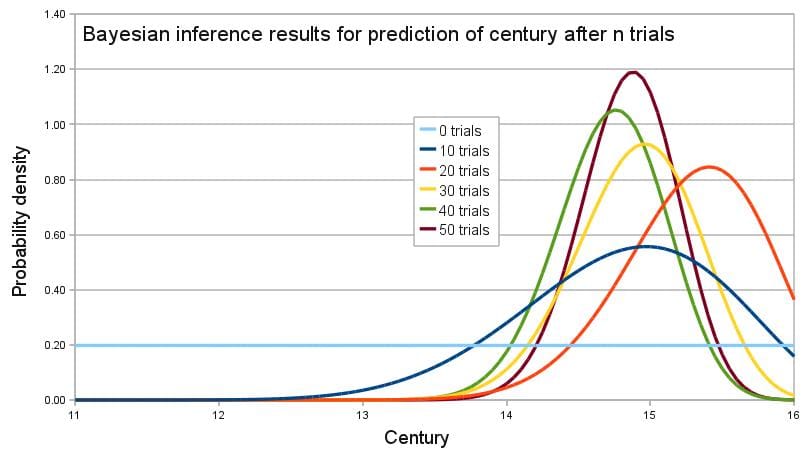
Free energy is an upper bound on surprise, in a technical sense: how improbable the current sensory input is under the system's model of the world. Minimising it therefore keeps the system in the states it expects to be in, which are the states in which it survives.
Two routes achieve this. Change the model to fit the data, which is perception. Or change the data to fit the model, by acting on the world, which is action. This second route is active inference, and it treats perception and action as the same operation in opposite directions.
The principle's appeal is unification, and the connections it makes are real.
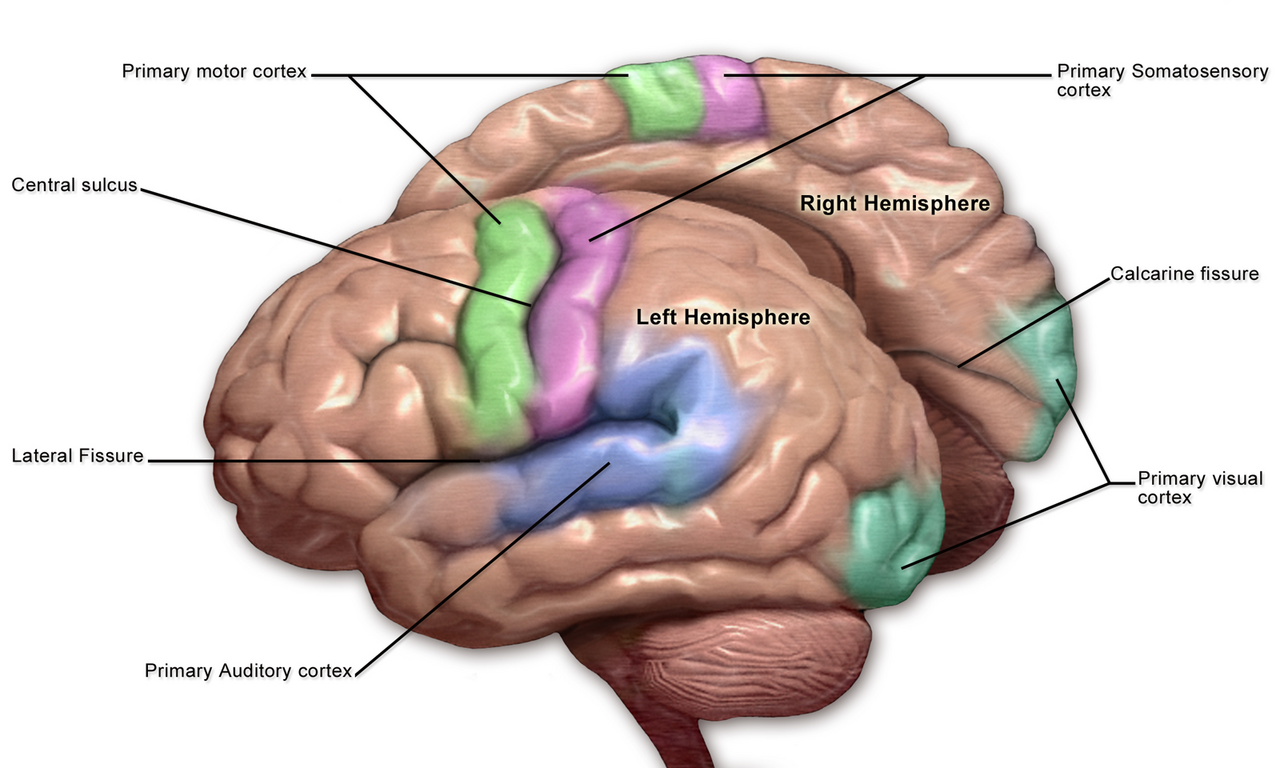
Predictive processing follows from it: the brain is not building a picture from sensory input but generating predictions and processing only the error, which explains why so much cortical connectivity runs backwards, from higher areas to lower, rather than forwards.
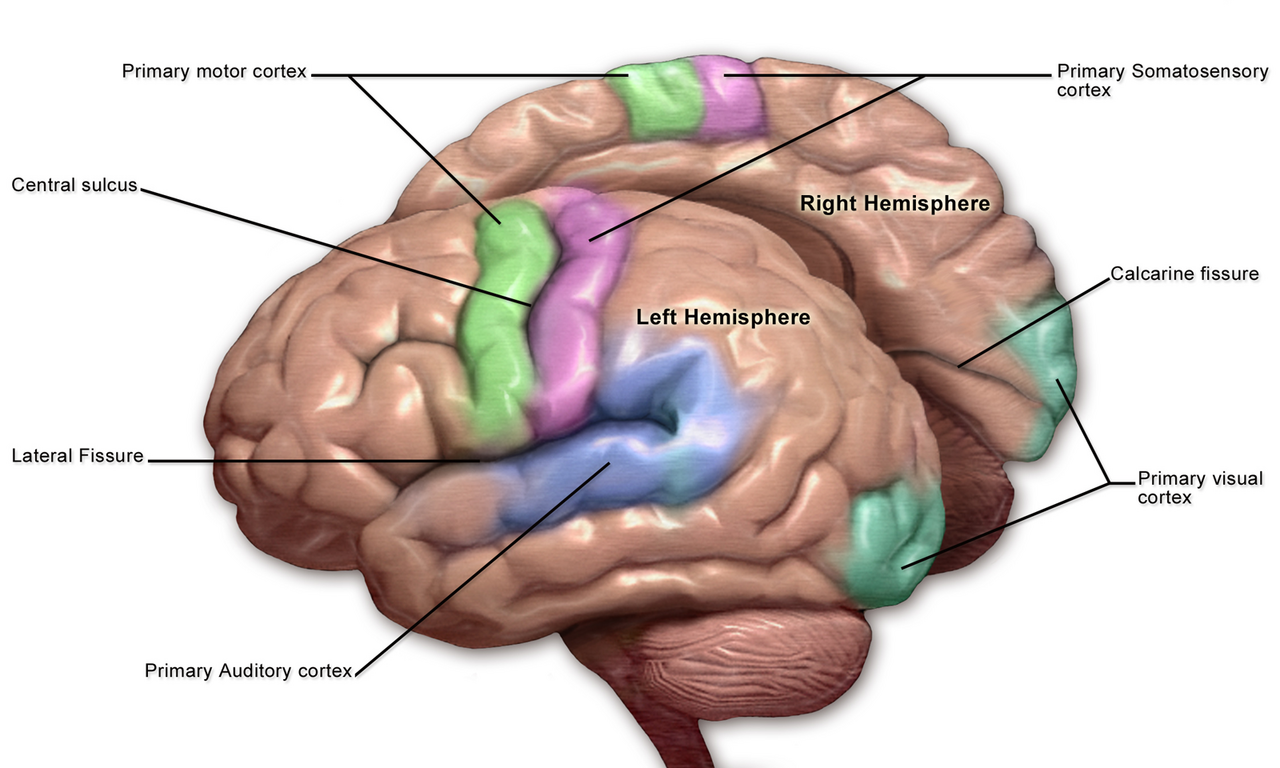
Attention becomes the weighting of prediction errors by their expected reliability. Learning becomes updating the model over longer timescales. Action becomes the fulfilment of proprioceptive predictions, which is a genuinely odd reframing: a reflex is a prediction of where the limb will be, and the muscle moves it there.
Several psychiatric conditions have been recast in these terms, with hallucination as overly strong priors overriding sensory evidence and autism as unusually low confidence in priors relative to input. These are reformulations rather than discoveries, and some have generated testable predictions.
Predictive processing on its own has substantial empirical support, independent of the larger principle. Sensory prediction errors are measurable, expectation demonstrably shapes perception, and the anatomy fits.
The central objection is that the principle cannot be tested, and its proponents agree.
Friston compares it to the principle of least action in physics: a mathematical characterisation of what any system of a certain kind must do, true by construction rather than by observation. On that reading asking for a falsifying experiment is a category error, like asking what would falsify arithmetic.
Critics accept the comparison and draw the opposite conclusion. A mathematical framework that can describe any behaviour explains none of them. If both a system doing X and a system doing the opposite of X can be written as free energy minimisation with a suitable choice of model, then the description is doing no work.
The complaint has sharpened. A 2025 critique noted that papers by Friston and collaborators in a single year applied the principle to cortical symmetry, narrative psychology, tinnitus, creativity and law enforcement, and argued that a framework accommodating that range without constraint is a vocabulary rather than a theory.
Other technical objections have been raised: that the analogy between thermodynamic free energy and the information-theoretic quantity is not admissible, that introducing goals and preferences into a mechanistic account smuggles in teleology, and that it is frequently unclear how to measure prediction error in any specific case.
The most discussed internal difficulty is simple to state. If an organism minimises surprise, the optimal strategy is to find a dark quiet room and stay there, where sensory input is entirely predictable.
Animals do the opposite. They explore, seek novelty, and take risks.
The answer offered is that organisms minimise expected free energy over time, which includes an information-gain term rewarding actions that reduce uncertainty about the model. Exploration therefore falls out of the framework rather than contradicting it.
Critics regard this as the pattern of the whole enterprise: a difficulty appears, a term is added, the framework absorbs it, and its unfalsifiability increases by exactly the amount required.
The distinction that matters is between the levels.
Predictive processing as an account of perception is empirically supported and testable, and would survive if the larger principle were abandoned.
The free energy principle as a universal characterisation of self-organising systems is a mathematical framework whose status is genuinely unclear: possibly a deep unifying insight, possibly a very general restatement that cannot be wrong and therefore cannot be informative.
It is filed as a hypothesis rather than a theory because a theory should be capable of being false, and this one is designed not to be. That is an unusual position for an idea with this much influence, and stating it plainly is more useful than treating the influence as evidence.