Giulio Tononi's proposal that consciousness is integrated information, quantifiable as a number called phi, and present wherever that number is above zero. In 2023 a large group of researchers publicly called it pseudoscience. In 2025 an adversarial collaboration tested it against its main rival and produced a draw.

The theory begins from properties Tononi takes as self-evident about experience and asks what a physical system must be like to have them.
Experience is unified: you do not perceive colour and shape separately and then combine them. Experience is also differentiated: each moment is one of an enormous number of possible experiences, and that specificity carries information.
The theory concludes that consciousness is integrated information, meaning information generated by a system as a whole over and above what its parts generate independently. Phi measures this: how much a system's causal structure is irreducible to the sum of its components.
The claims that follow are strong. Consciousness is identical to integrated information rather than caused by it. Any system with phi above zero has some experience, which is a form of panpsychism. And consciousness depends on causal architecture rather than on function, so a system could behave identically to a conscious one and have zero phi.
The theory accounts for several facts that are otherwise awkward.
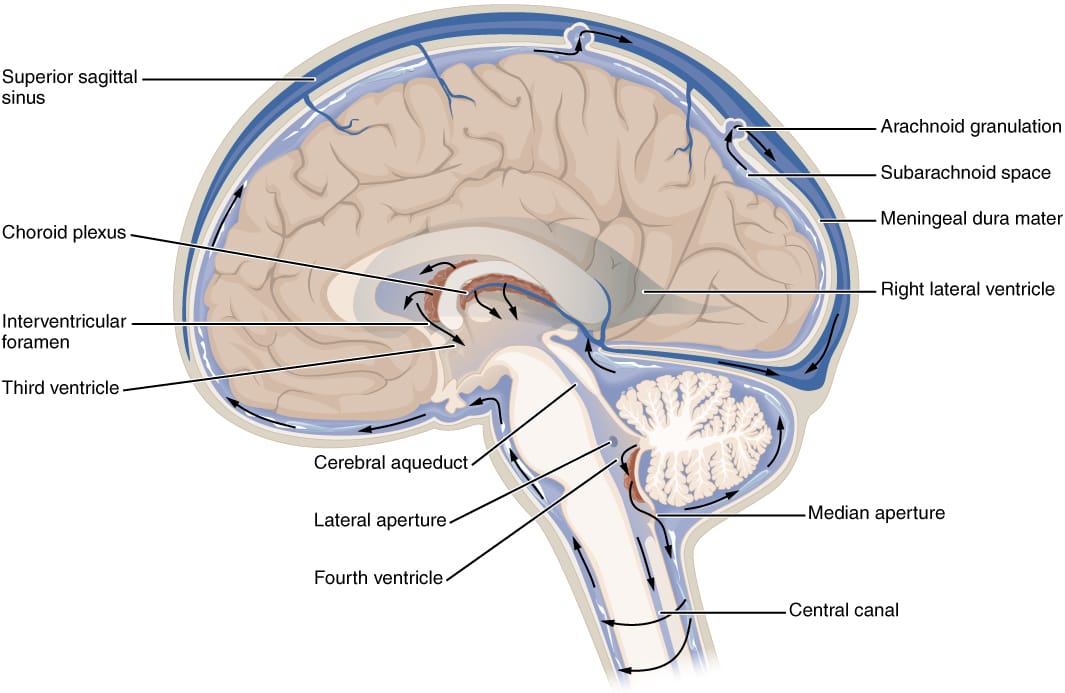
The cerebellum contains far more neurons than the cerebral cortex, and losing it does not abolish consciousness. IIT explains this: the cerebellum's architecture is largely modular, with parallel circuits that do not interact much, so its phi is low despite the neuron count. Cortex is densely interconnected and integrates.
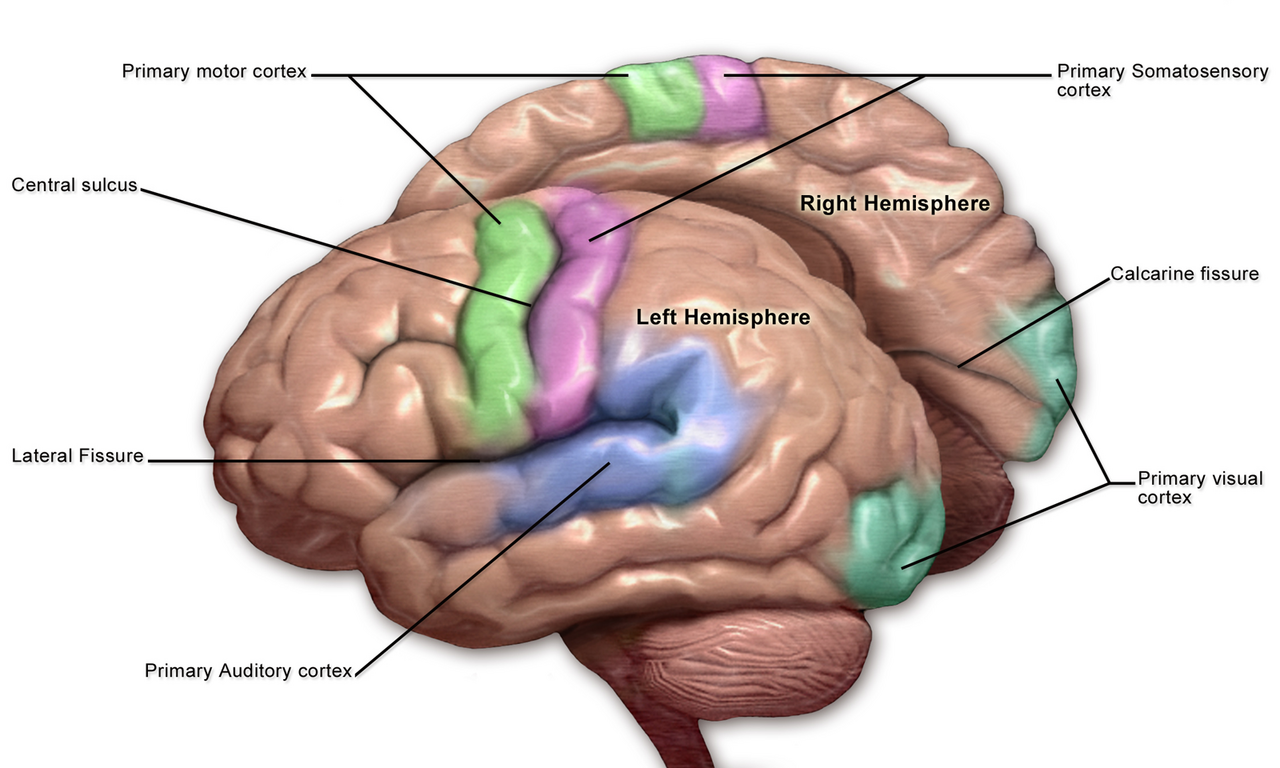
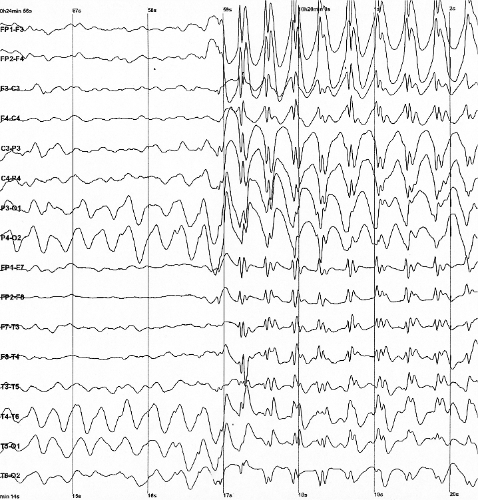
Consciousness fades in dreamless sleep, under anaesthesia and in seizures, while neural activity continues and in some cases increases. IIT attributes this to loss of integration rather than loss of activity, and the prediction is measurable.
That prediction produced the theory's most practical result. The perturbational complexity index applies a magnetic pulse to the cortex and measures how complex the resulting response is across the brain, giving a number that tracks conscious level. It reliably distinguishes wakefulness from anaesthesia and dreamless sleep, and it has detected covert awareness in some behaviourally unresponsive patients whom clinical examination had classified as unaware. That is a clinically consequential result and it came from this theory.
In September 2023, following publicity around early adversarial collaboration results, an open letter signed by well over a hundred researchers argued that IIT is not merely unproven but does not qualify as a scientific theory.
Their argument had two parts. Phi is computationally intractable, requiring calculations over every possible partition of a system, so it cannot be computed for anything approaching a brain and the tested measures are proxies rather than the quantity the theory concerns. And the theory's panpsychist implications, that simple systems and in some formulations inactive grids of logic gates have non-zero consciousness, are untestable in principle.
The letter was itself heavily criticised, including by researchers with no commitment to IIT, on the grounds that pseudoscience is a term for bad faith and that a mathematically explicit theory generating clinically useful measures does not qualify however wrong it may be. Several signatories later distanced themselves from the wording.
The episode is worth recording because it is unusual. Consciousness science has few settled results, several incompatible frameworks, and limited means of deciding between them, and the dispute made that visible.
The more interesting development is methodological.
COGITATE was designed so that proponents of IIT and of global neuronal workspace theory, its main rival, agreed in advance on experiments, on what each theory predicted, and on how outcomes would be interpreted. Predictions were preregistered. A neutral consortium ran the studies.
This is a genuine attempt to solve a structural problem in the field: theories that never make risky predictions cannot be wrong, and proponents who design their own tests find what they expect.
The results, published in 2025, favoured neither. IIT's prediction of sustained activity in posterior cortex during conscious perception was partly supported and partly not. Global workspace's prediction of a prefrontal ignition signal was likewise partly supported and partly not. Neither theory was confirmed and neither was eliminated.
That is a disappointing outcome and an informative one. It indicates that both frameworks are underdetermined by the available measurements, which is different from either being wrong.
IIT is mathematically explicit, makes some testable predictions, has produced a clinically useful measure, and rests on a core claim that cannot currently be computed or directly tested.
It is filed as a hypothesis because that is what it is: a serious, developed proposal about an unresolved question, tested more rigorously than most of its competitors and not confirmed by that testing.
The deeper difficulty is not specific to IIT. No theory of consciousness has a way of measuring the thing it is about, since experience is reported rather than observed, and every framework in the field inherits that problem. Calling one of them pseudoscience does not solve it for the others.