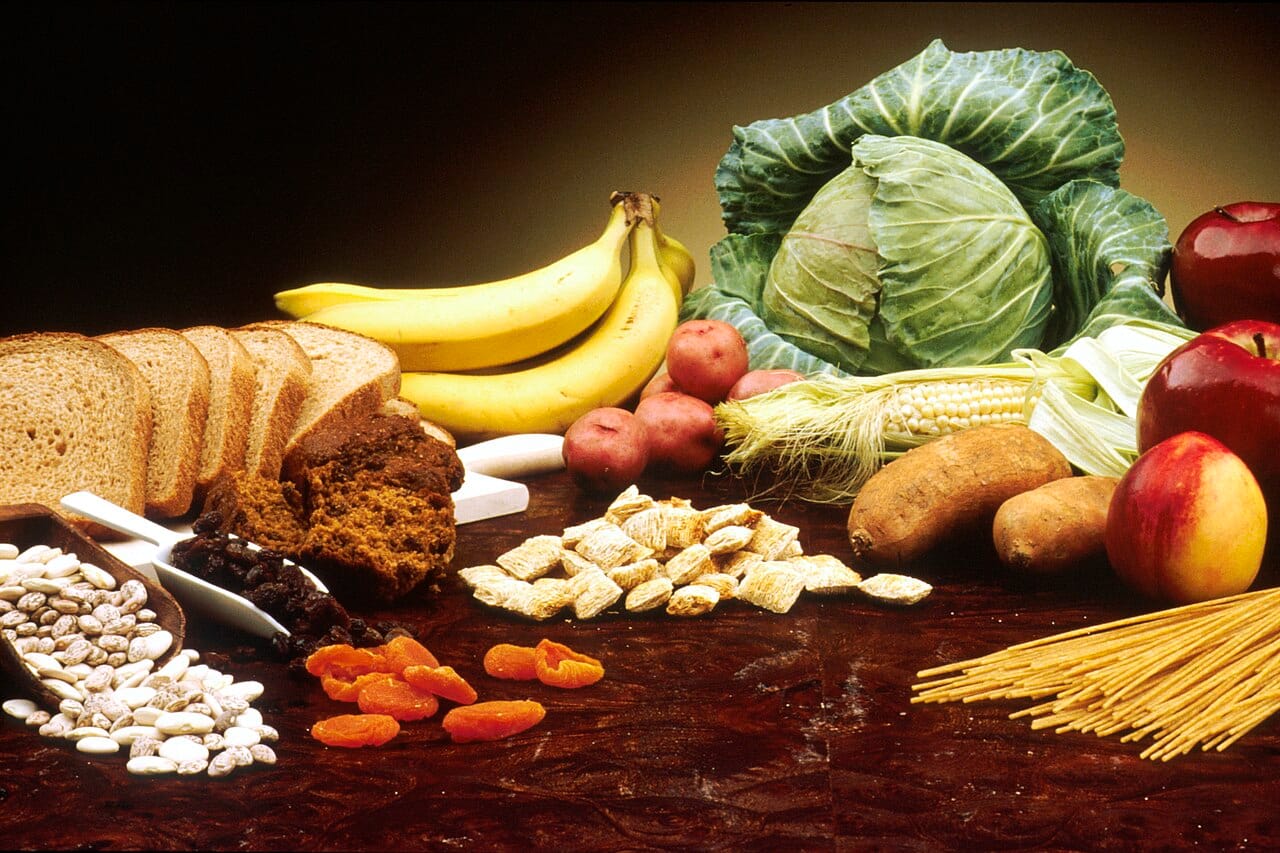
A class of molecules made of carbon, hydrogen and oxygen, comprising sugars, starches and fibre. They are the main energy source in most human diets and the most structurally varied of the major nutrients.
Monosaccharides are single sugar units. Glucose, fructose and galactose are the important ones, and glucose is what cells use directly.
Disaccharides are two units joined. Sucrose is glucose with fructose, lactose is glucose with galactose, and maltose is two glucoses.
Oligosaccharides are short chains, present in legumes and some vegetables, and many are not digestible by human enzymes.
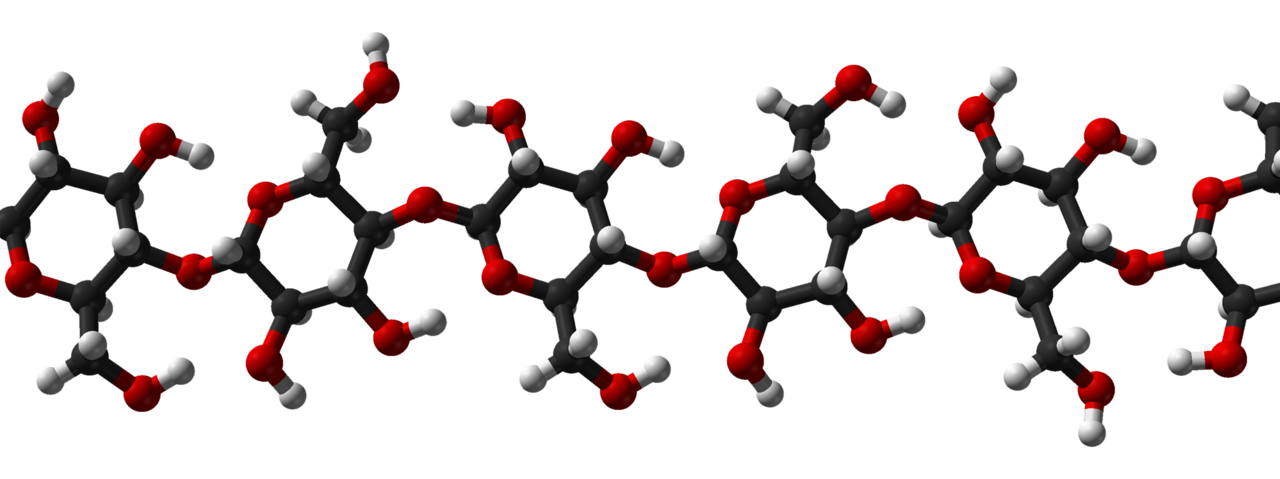
Polysaccharides are long chains. Starch is the plant storage form, glycogen the animal storage form, and cellulose the plant structural form.
The critical point is that starch and cellulose are both chains of glucose and differ only in how the units are linked. Human enzymes cleave the starch linkage and not the cellulose one, which is why one is food and the other is fibre. Ruminants extract energy from cellulose only because microorganisms in their digestive systems can break it down.
Digestion breaks polysaccharides and disaccharides into monosaccharides, which are absorbed in the small intestine. Starch digestion begins in the mouth with salivary amylase and continues in the small intestine.
Glucose entering the blood triggers insulin release, which allows cells to take it up, as the insulin capsule describes.
Excess glucose is stored as glycogen in liver and muscle, and that capacity is limited to a few hundred grams. Beyond it, surplus is converted to fat.
The brain uses glucose almost exclusively under normal conditions, consuming a substantial share of resting energy, which is why blood glucose is regulated so tightly. During prolonged fasting the liver produces ketone bodies from fat, which the brain can use for most of its requirement, so dietary carbohydrate is not strictly essential in the way that certain fats and amino acids are.
Different carbohydrate foods produce different blood glucose responses, and the difference is not predicted by whether a sugar is simple or complex.
The glycaemic index ranks foods by the rise they produce relative to a reference. Some starchy foods produce faster rises than some sugars, because the physical form of the food, its fibre content and its fat and protein content all affect digestion rate.
Glycaemic load accounts for portion size as well, since a food producing a sharp response in large quantity matters more than one eaten in small amounts.
The practical usefulness of these measures is debated. They vary between individuals substantially, and studies measuring responses in the same people to the same foods have found large person-to-person differences, which limits their value as universal guidance.
Whether carbohydrate intake should be reduced has been argued for decades and the evidence supports a more specific conclusion than either side generally states.
Total carbohydrate quantity is a weaker predictor of health outcomes than carbohydrate quality. Whole grains, legumes, fruit and vegetables are associated with better outcomes; refined grains and sugar-sweetened beverages with worse ones, and this holds across large cohort studies.
Free sugars, meaning those added to food or present in juice and syrup rather than within intact fruit, are the component with the clearest evidence of harm, and health bodies recommend limiting them specifically rather than carbohydrate generally.
Low-carbohydrate diets produce weight loss, and trials comparing them against low-fat diets at matched calorie intake generally find similar results over a year, with adherence being the stronger predictor than composition.
The carbohydrate-insulin model, which holds that carbohydrate drives fat storage through insulin and that this rather than energy balance explains obesity, has been tested in controlled feeding studies and has not been supported in the strong form. Energy intake remains the dominant factor.
Population evidence complicates simple accounts in both directions: populations with very high carbohydrate intake from unrefined sources have low rates of the diseases attributed to carbohydrate.
Carbohydrates perform functions unrelated to energy.
Cellulose is the most abundant organic polymer on Earth and the basis of paper, cotton and timber.
Chitin, a modified carbohydrate, forms insect exoskeletons and fungal cell walls.
Carbohydrate chains attached to proteins on cell surfaces are central to cell recognition, and the ABO blood groups are differences in exactly these structures.
Carbohydrates supply most of the world's dietary energy, and the cheapest calories available are almost always carbohydrate, which is why they dominate diets wherever food is scarce.
The nutritional argument about them is also a useful case study in how a category can be too broad to be useful. Lentils and sugary drinks are both carbohydrate, and advice framed at that level of generality cannot distinguish them.