The proposition that saturated fat raises cholesterol and thereby causes heart disease shaped dietary guidelines across the developed world for fifty years. Parts of it are well supported, parts are not, and the reasons the disagreement persists are as much about study design as about biology.
Ancel Keys proposed the diet-heart hypothesis in the 1950s. His Seven Countries Study, begun in 1958, followed around 12,000 men and reported that saturated fat intake correlated with cholesterol and with coronary mortality across populations.

The hypothesis fitted an established biological chain: saturated fat raises low density lipoprotein cholesterol, and LDL is found in arterial plaque. American dietary guidelines from 1980 advised reducing total and saturated fat, and most of the developed world followed.
Keys is frequently accused of selecting seven countries from twenty-two to fit his conclusion. The charge is not accurate as usually stated: the seven were chosen for the availability of reliable data and for cooperating investigators, before the results were known. The wider criticism, that the study was ecological and could not establish causation in individuals, is fair and was made at the time.
Saturated fat raises LDL cholesterol. This is measured in controlled feeding trials and is not seriously contested.

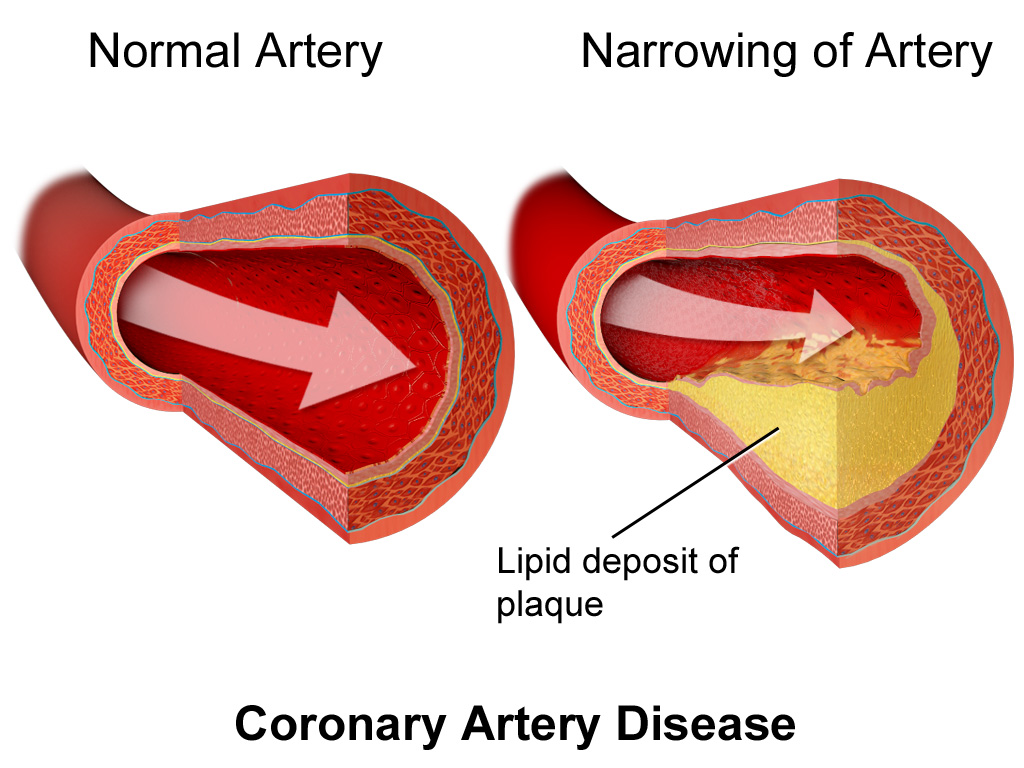
LDL cholesterol is causally involved in atherosclerosis. The evidence here is unusually strong because it does not rest on diet studies at all. Genetic variants that lower LDL from birth lower cardiovascular risk in proportion to the reduction, across many variants affecting different mechanisms, which is a design that confounding cannot easily explain. Drugs lowering LDL by different mechanisms all lower events in randomised trials.
Replacing saturated fat with polyunsaturated fat lowers cardiovascular events. This is the most consistent finding in the randomised trial literature and is the basis of the guidelines that have survived.
The trouble is that the individual links being solid does not make the whole chain hold at the level of a population's diet.
Meta-analyses of observational studies, notably Siri-Tarino and colleagues in 2010 and Chowdhury and colleagues in 2014, found no significant association between saturated fat intake and coronary heart disease. Both drew heavy methodological criticism, and both remain in the literature.
What a nutrient is replaced by turns out to matter more than the nutrient removed. Replacing saturated fat with polyunsaturated fat lowers risk; replacing it with refined carbohydrate does not, and may raise it. Guidance to cut fat, without specifying the replacement, coincided with rising refined carbohydrate intake, and that is now widely regarded as a serious error in how the advice was framed.
Several large trials found less than expected. The Minnesota Coronary Experiment and the Sydney Diet Heart Study, both of which lowered cholesterol successfully by replacing saturated fat with vegetable oil, did not reduce mortality, and in some analyses raised it. Both went largely unpublished for decades and were recovered later, which is its own problem.
Different saturated fats behave differently, and the food they arrive in matters. Dairy fat is associated with neutral or slightly favourable outcomes in several cohorts, while processed meat is consistently unfavourable. Treating saturated fat as one exposure is looking increasingly untenable.
Long-term randomised trials of diet are close to impossible. Adherence decays, blinding cannot be done, the endpoint takes decades, and the cost is prohibitive. Almost everything therefore rests on observational data.
Observational nutrition data has known weaknesses. Intake is usually self-reported through food frequency questionnaires, which are unreliable. People who eat less saturated fat also smoke less, exercise more and are wealthier, and no adjustment fully removes that. And because nutrients are eaten in combination, the effect of removing one always depends on what takes its place.
Lowering LDL lowers cardiovascular risk, and that is about as well established as anything in the field. Replacing saturated fat with polyunsaturated fat is supported by trials. Replacing it with refined carbohydrate is not.
Whether total saturated fat intake, considered on its own and without regard to what replaces it or what food it comes in, independently causes heart disease is the specific claim that has not held up cleanly. Guidelines in several countries have shifted accordingly, away from nutrient targets and toward describing patterns of eating, which is partly an admission that the nutrient-level advice outran its evidence.