The belief that a female's offspring can inherit characteristics from a male she mated with previously, even when he did not father them. It is ancient, it was briefly respectable in the nineteenth century, it is false, and it was used to justify real social restrictions on women.
Telegony holds that a previous mate leaves a lasting influence on the female, so that later offspring by a different father show his traits.
The idea appears in Aristotle and persisted through medieval and early modern writing on breeding. It was standard among livestock breeders, who would consider a valuable female permanently degraded if she had once been mated by an inferior male.
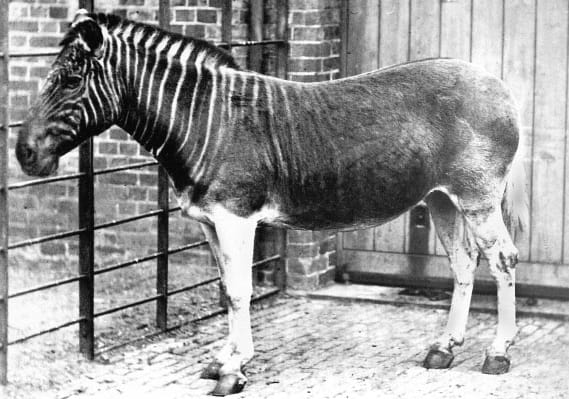
The case that made it scientifically respectable was reported to the Royal Society in 1821. Lord Morton had bred a chestnut Arabian mare to a male quagga, producing a hybrid foal. The mare was later bred to a black Arabian stallion, and those later foals were described as showing faint stripes on their legs and shoulders.
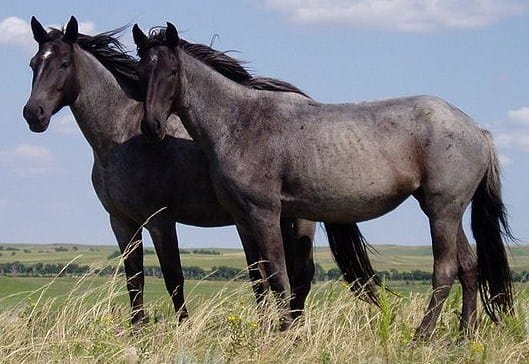
Charles Darwin cited the case in his work on variation, treating it as a genuine phenomenon requiring explanation, which is a fair reflection of the state of knowledge before heredity was understood.
The refutation is both empirical and mechanistic.
James Cossar Ewart carried out the direct test at Penycuik in Scotland between 1896 and 1901, breeding mares to zebras and subsequently to horse stallions across many pairings, and examining the later foals. He found no zebra influence. He also documented that faint striping occurs in horses with no zebra ancestry at all.
That last point disposes of the Morton case specifically. Primitive markings, including a dorsal stripe and barring on the legs, are a normal feature of horse colouring associated with the dun factor and appear sporadically in many breeds. Lord Morton observed a real pattern and attributed it to the only unusual event in the mare's history, which is an error of inference rather than of observation.
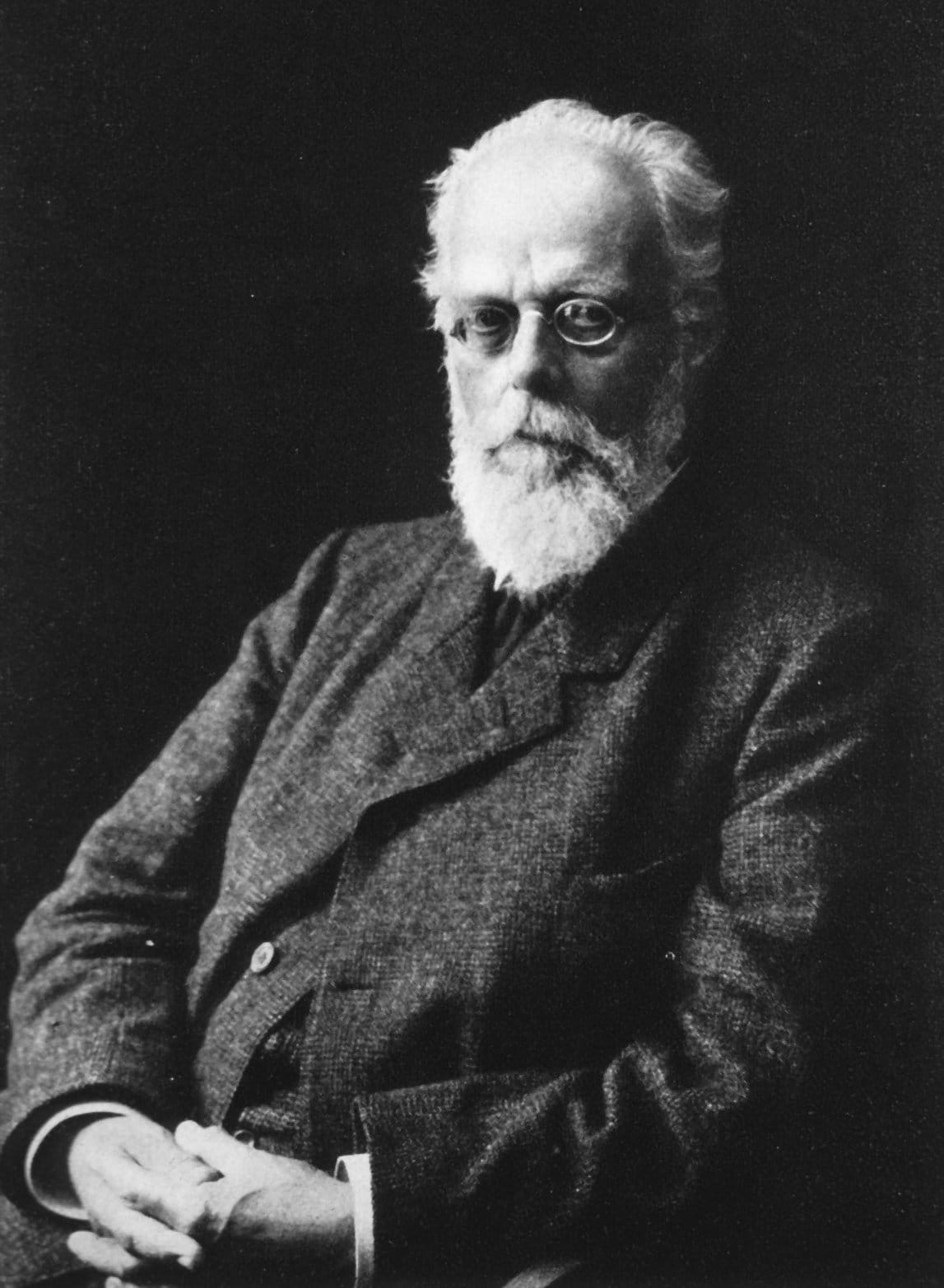
The mechanism forbids it. August Weismann's germ plasm theory, developed in the 1880s, distinguished the germ line from the body and argued that inheritance passes only through the former.
A female's eggs are her own cells, carrying her own genome. A previous mate contributes genetic material only to the specific offspring he fathers, and there is no route by which his DNA enters her germ line and is transmitted to later offspring by another male. The same reasoning that rules out telegony also rules out Lamarckian inheritance, which is treated in its own capsule.
Telegony was not an idle error. It supplied a biological justification for treating a woman's previous sexual history as permanently contaminating, and it appears in nineteenth and early twentieth century arguments against widow remarriage and in warnings about women marrying after any earlier relationship.
The doctrine placed the consequence entirely on the woman, since the same writers did not suggest a man's previous partners affected his later children. That asymmetry is a reason to be explicit that the claim is not merely unsupported but false, because it continues to circulate online in exactly its original form.
A 2014 study in the fly Telostylinus angusticollis reported that the size of a female's offspring was influenced by the condition of a previous mate, and it was reported in some coverage as evidence for telegony.
The finding does not restore the doctrine. The proposed route is that molecules in the first male's seminal fluid affected the immature eggs and thereby the offspring's size, which is a maternal-condition effect on one trait in one insect. It is not transmission of the previous male's heritable characteristics, the offspring do not carry his genes, and nothing comparable has been shown in vertebrates.
Microchimerism, in which a small number of fetal cells persist in a mother's body after pregnancy, is also sometimes offered in support. Those cells do not enter the germ line and are not transmitted to subsequent children as heritable traits.
Telegony is a compact illustration of how heredity was understood before there was a theory of it. Once inheritance was located in discrete material passed through the germ line, an entire class of beliefs about influence, contamination and blending became not merely unsupported but impossible, and telegony went with them.
It is also a reminder that a false claim about inheritance rarely stays in the barn. This one was applied to people, unequally, and long outlived the experiments that refuted it.