The organised enforcement of law and maintenance of public order by a body authorised by the state. Professional police forces are a nineteenth century invention, and what they actually do differs substantially from both public perception and their own stated purpose.
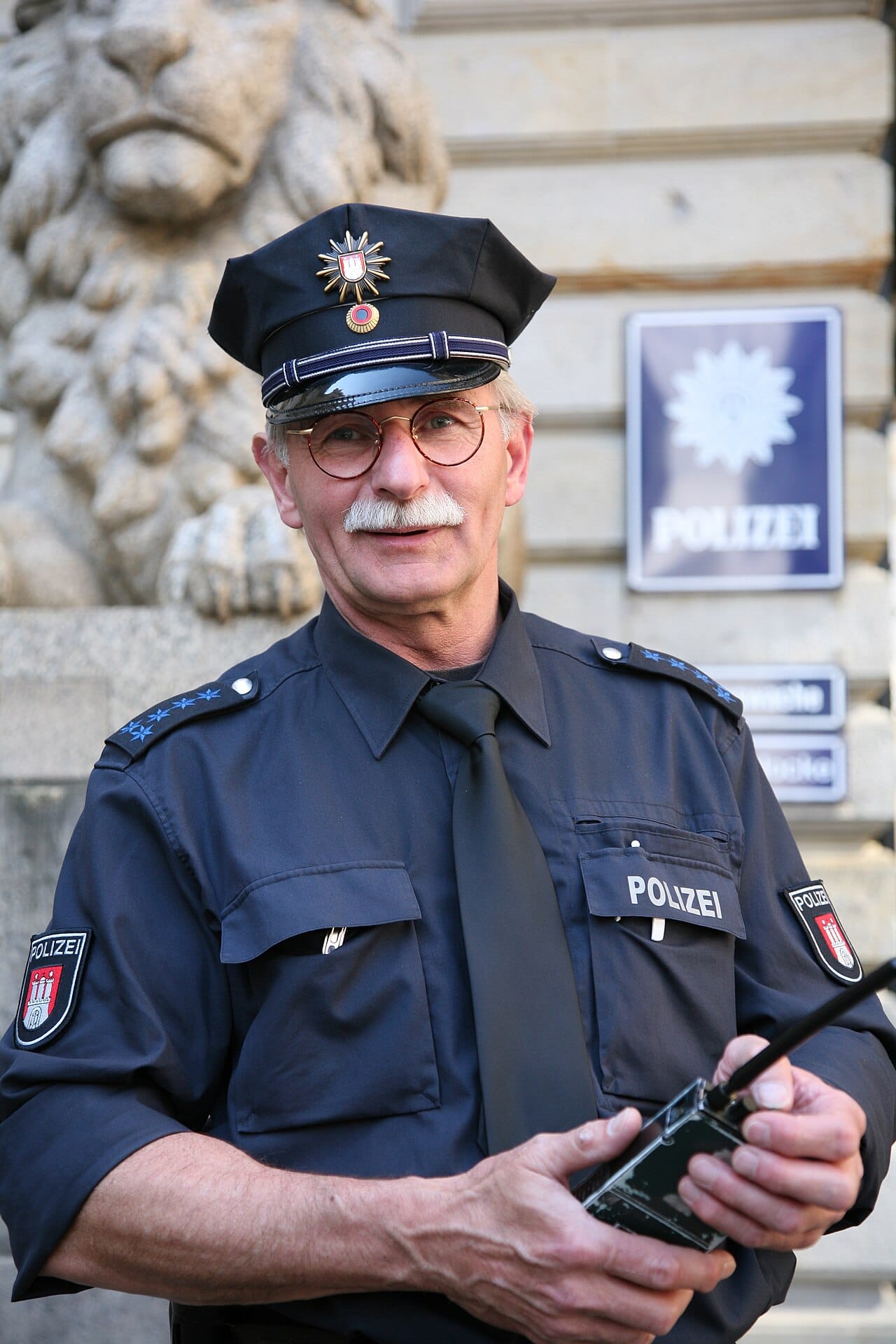
Before the nineteenth century, enforcement was handled by watchmen, parish constables, private prosecution and, in emergencies, the army. None was a professional body.
The Metropolitan Police, established in London in 1829 under Robert Peel, is the model most systems descend from. Its design decisions were deliberate and contested at the time, since a standing force was widely feared as an instrument of state control.
The features intended to answer that fear became defining. Officers wore uniforms rather than working covertly. They were unarmed. They were organised as a civilian body rather than a military one. And they patrolled visibly, on the reasoning that presence prevents offences.
The principles associated with Peel emphasise that police effectiveness is measured by the absence of crime rather than by visible enforcement, and that police depend on public approval and cooperation rather than on force.
Development elsewhere differed. Continental European forces often had military lineage and a stronger public order role, and policing in colonial settings and in the American South developed from bodies whose original function included controlling subject populations, which is documented and is relevant to institutional history.
The largest share of police time is not spent on serious crime.
Studies of calls for service consistently find that the majority concern disorder, traffic, welfare checks, mental health crises, disputes and lost property rather than violent or property offences.
This produces a persistent mismatch. Officers are trained, equipped and evaluated primarily around crime, and spend much of their time on social problems for which other services would be better suited but are unavailable, particularly outside working hours.
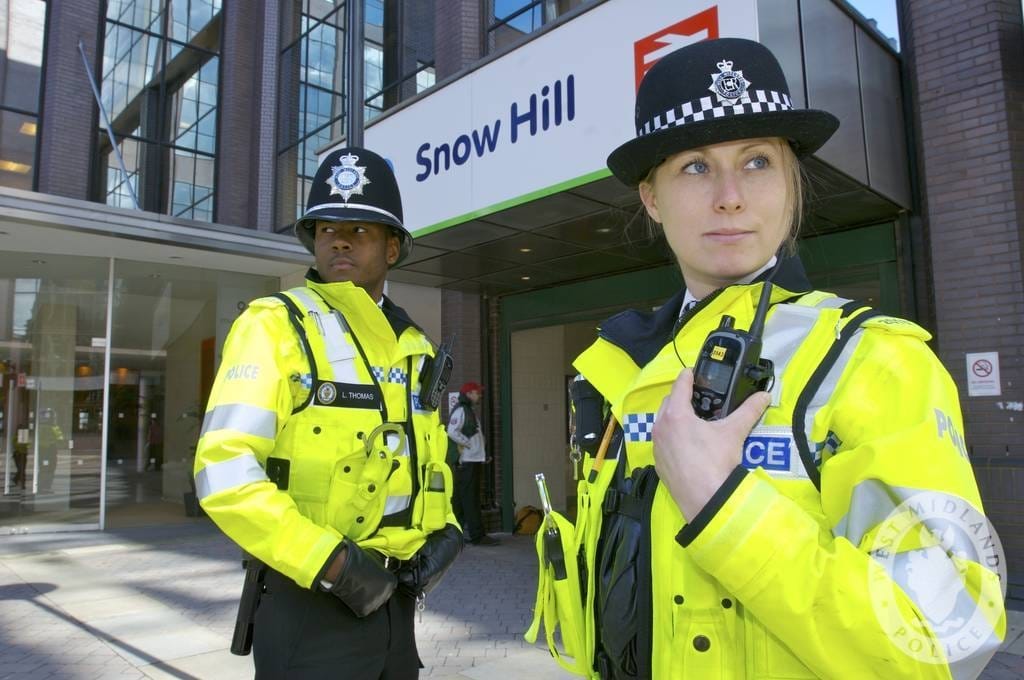
Random preventive patrol, long assumed to deter crime, was tested directly in the Kansas City experiment in the early 1970s, which varied patrol levels across areas and found no significant difference in crime or public perception of safety. The result prompted substantial rethinking of what patrol achieves.
Criminology has produced reasonably clear findings on which approaches work, and they are more specific than general strategies.
Hot spots policing concentrates resources on the small number of locations generating a disproportionate share of incidents. This has the strongest evidence base of any policing tactic, with multiple randomised trials showing reductions and limited displacement, and it follows directly from the concentration described in the routine activity theory capsule.
Problem-oriented policing analyses the specific conditions producing a recurring problem and addresses those conditions rather than responding repeatedly to incidents. It has good supporting evidence.
Focused deterrence targets the small number of individuals responsible for a large share of serious violence, combining direct communication of consequences with offers of support, and has produced measurable reductions in several cities.
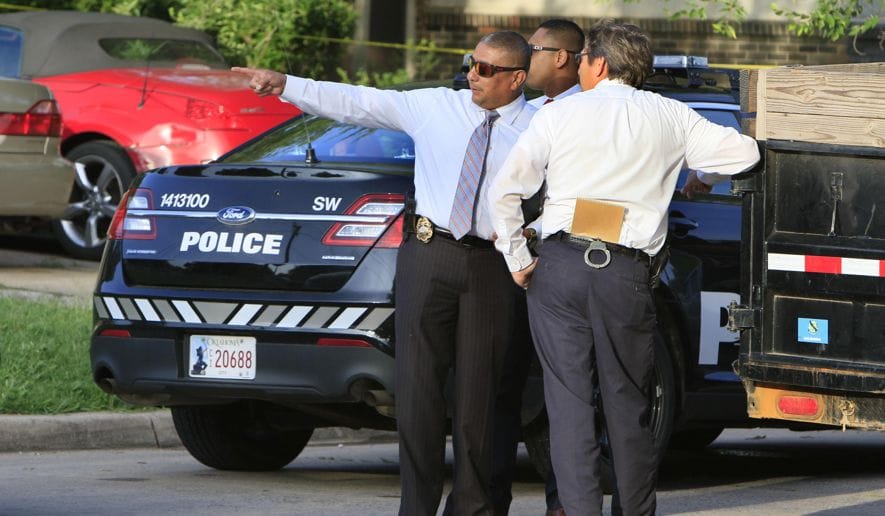
Investigation clearance rates are lower than commonly assumed. In many jurisdictions a minority of reported burglaries and robberies result in a charge, and homicide clearance rates have fallen in several countries.
Certainty of detection deters more than severity of punishment, which is one of the more consistent findings in the field and has implications for resource allocation.
Use of force, and particularly lethal force, varies enormously between countries with similar crime rates, which indicates that it reflects training, doctrine, weapon availability and legal standards rather than the level of danger.
Racial disparities in stops, searches, arrests and use of force are documented in several countries. Whether and how far they reflect discrimination rather than differences in offending or deployment is contested, and studies reach different conclusions depending on the benchmark used, which is itself the methodological crux.
Accountability mechanisms differ widely, including internal investigation, independent oversight bodies, body-worn cameras and civil liability. Evidence on body cameras is mixed, with some studies finding reductions in complaints and force and others finding no effect.
The scope of the role is the broadest current argument. Proposals to move mental health, homelessness and traffic enforcement to other agencies rest on the observation about what police time is actually spent on, and the counter-argument concerns response capability outside office hours.
Police are the part of the state that most citizens encounter directly with coercive power attached, which makes their conduct a matter of general consequence rather than a specialist question.
The evidence also gives a clearer picture than either the enforcement or abolition framings suggest: some specific tactics work, general presence works less well than assumed, and a substantial share of the institution's workload is not crime at all.