Institutions in which people are confined as punishment. Imprisonment as the standard penalty for serious crime is a comparatively recent invention, and what it is for has never been settled.
For most of recorded history, confinement was not the punishment. It was where people were held awaiting trial, execution, or payment of a debt.
The penalties themselves were corporal, capital, financial or exclusionary: flogging, mutilation, execution, fines, and banishment or transportation.
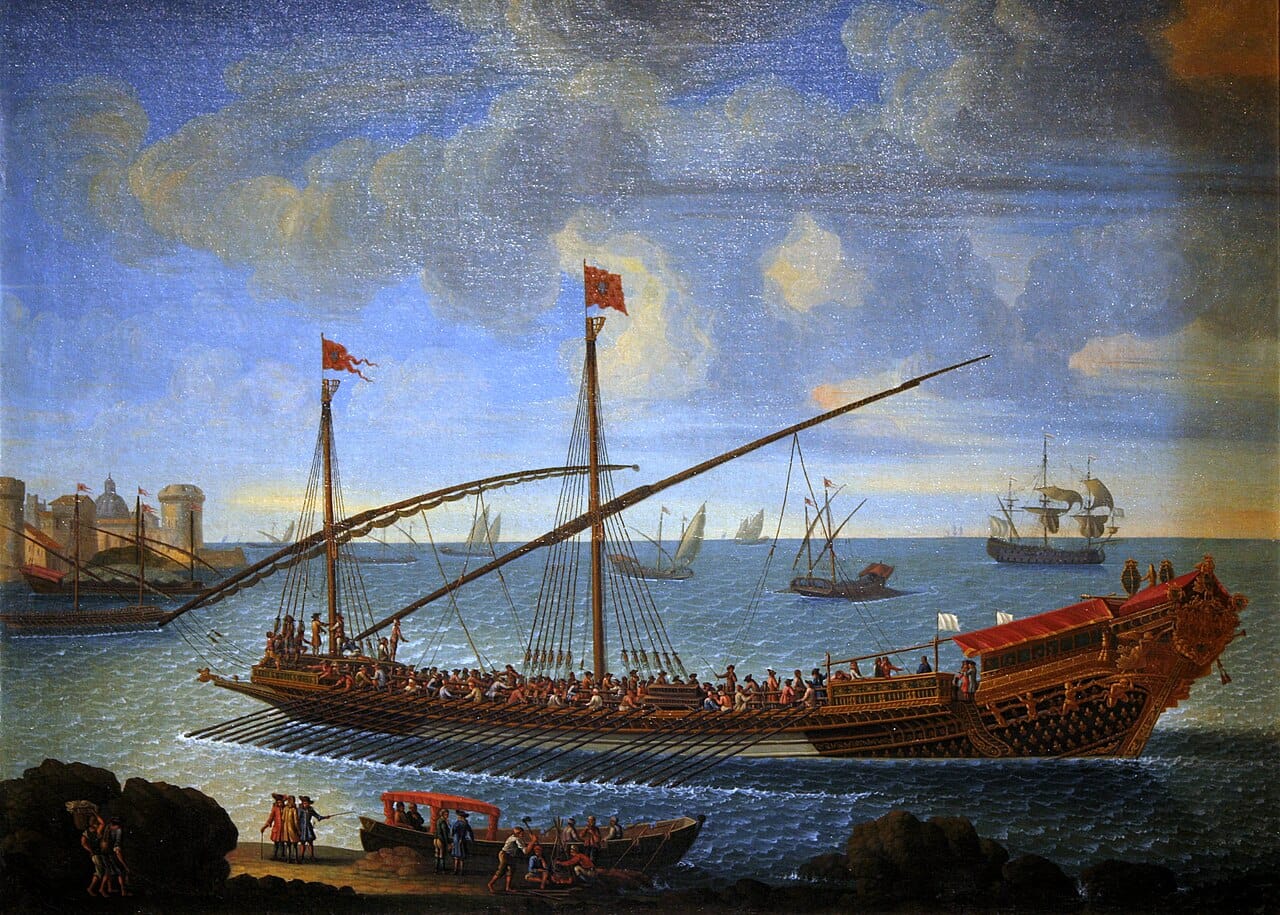
Forced labour was common, including galley service in Mediterranean states and transportation to colonies. Britain transported convicts to North America and later to Australia, and the practice ended partly because the destinations stopped accepting them.
Monasteries used confinement for penance, and this is one of the few pre-modern precedents for imprisonment intended to reform rather than merely to hold.
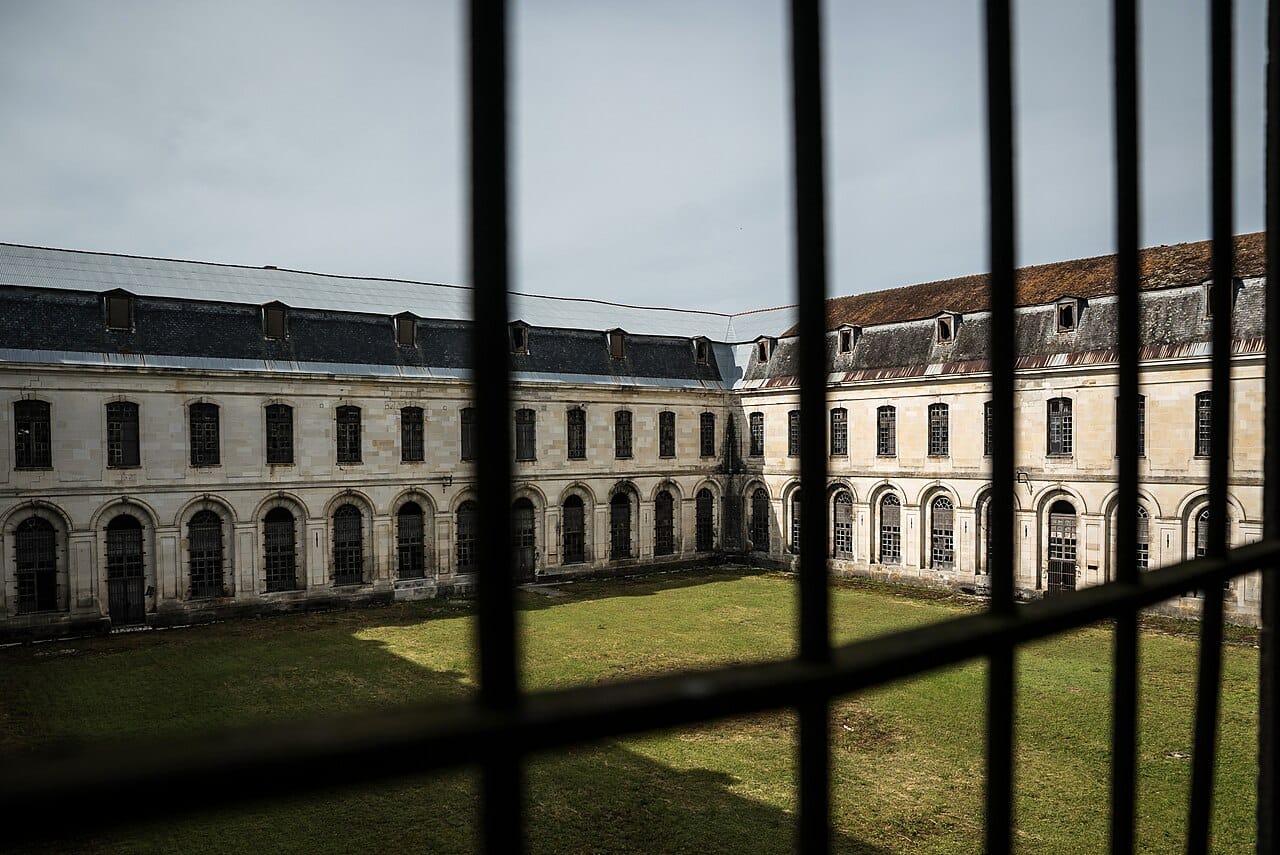
The modern prison emerged in the late eighteenth and early nineteenth centuries, and it was a reform project.
Reformers including John Howard documented the condition of existing gaols, which held debtors, the accused and the convicted together in squalor with fees charged by keepers, and argued for orderly institutions with separation, sanitation, work and religious instruction.
The word penitentiary carries the intent: a place to induce penitence. The theory was that a criminal separated from bad influences and given time to reflect would reform.
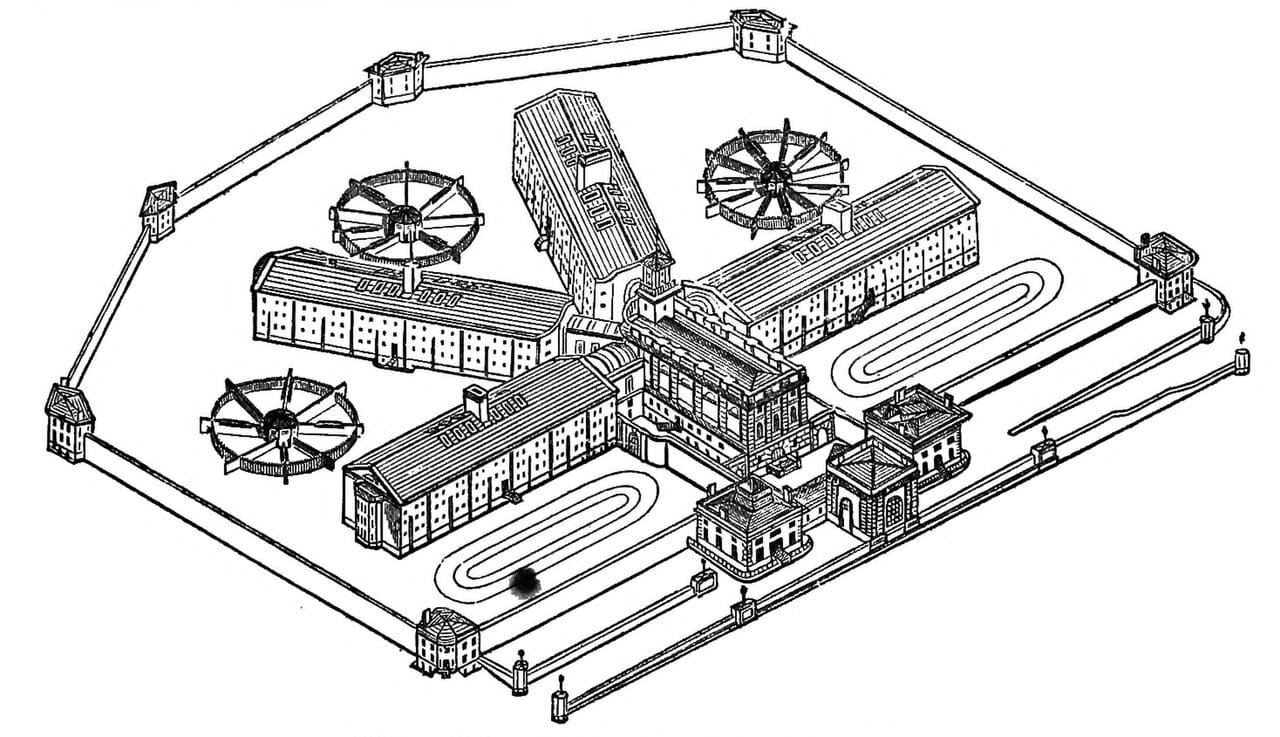
Two competing regimes developed in the United States and were exported widely. The separate system kept prisoners in solitary confinement at all times, working and worshipping alone. The silent system allowed communal work under a rule of total silence.
Both produced documented psychological harm. Solitary confinement on the scale attempted at Eastern State Penitentiary and elsewhere caused breakdowns severe enough that observers, including Charles Dickens after visiting in 1842, condemned it as worse than physical punishment. The systems were largely abandoned as general regimes, and solitary confinement persists as a disciplinary measure and remains contested for the same reasons.
Jeremy Bentham's panopticon, a design allowing a single unseen observer to watch all cells, was never built as he specified and became influential as an idea, particularly through Michel Foucault's argument that the prison exemplifies a broader shift toward discipline through observation.
Four purposes are conventionally cited, and they conflict.
Retribution holds that punishment is deserved and proportionate to the offence, independent of consequences.
Deterrence holds that punishment discourages offending, by the offender and by others. The evidence indicates that the certainty of being caught deters considerably more than the severity of the sentence, which is awkward for policies built on longer sentences.
Incapacitation holds that a confined person cannot offend against the public. This works while the sentence lasts and says nothing about afterwards.
Rehabilitation holds that the purpose is to return someone less likely to offend. Programmes with the best evidence include education, vocational training and treatment for addiction, and the effects are real and modest.
The purposes pull in different directions. Retribution and incapacitation favour long sentences; rehabilitation favours conditions and contact that long confinement erodes. Systems generally pursue all four and prioritise them inconsistently.
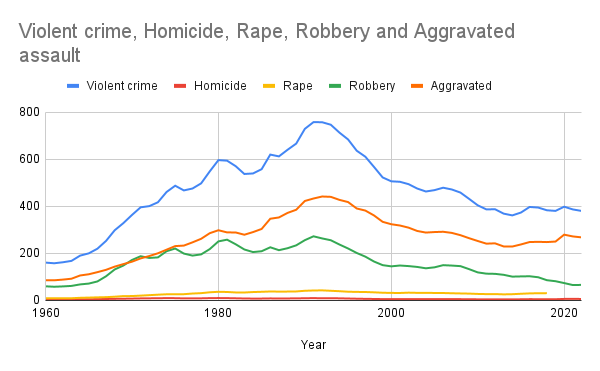
Imprisonment rates vary enormously between countries with similar crime levels, which indicates they reflect policy rather than criminality. The United States imprisons a far larger share of its population than any comparable country, a level reached through sentencing changes from the 1970s onward rather than through a corresponding rise in crime.
Reoffending rates are high in most systems, with substantial proportions reconvicted within a few years of release, and short sentences perform particularly poorly against community alternatives on this measure.
Prison populations are drawn disproportionately from poor and marginalised groups, and racial disparities in imprisonment exceed disparities in offending in several countries where both have been measured.
Conditions vary widely. Overcrowding, violence and inadequate mental health care are documented in many systems, and a substantial share of prisoners have mental illness or addiction, which has led to the observation that prisons have absorbed populations that other institutions previously held or that community services fail to reach.
Norway and some other Nordic systems operate on an explicitly rehabilitative model with lower reoffending rates, and how far that transfers to systems with different populations and social supports is argued about.
Imprisonment is the most severe penalty most legal systems now impose routinely, and it was invented recently enough that the alternatives it replaced are within documented history.
That recency is the point worth holding onto. A penalty that feels like the natural response to serious crime is roughly two centuries old as a general practice, was introduced as a humane reform, and has never resolved the question of what it is supposed to achieve.