The instrument popularly called a lie detector, which records breathing, blood pressure, pulse and skin conductance during questioning. It measures arousal accurately. Arousal is not deception, and no distinctive physiological signature of lying has ever been identified.
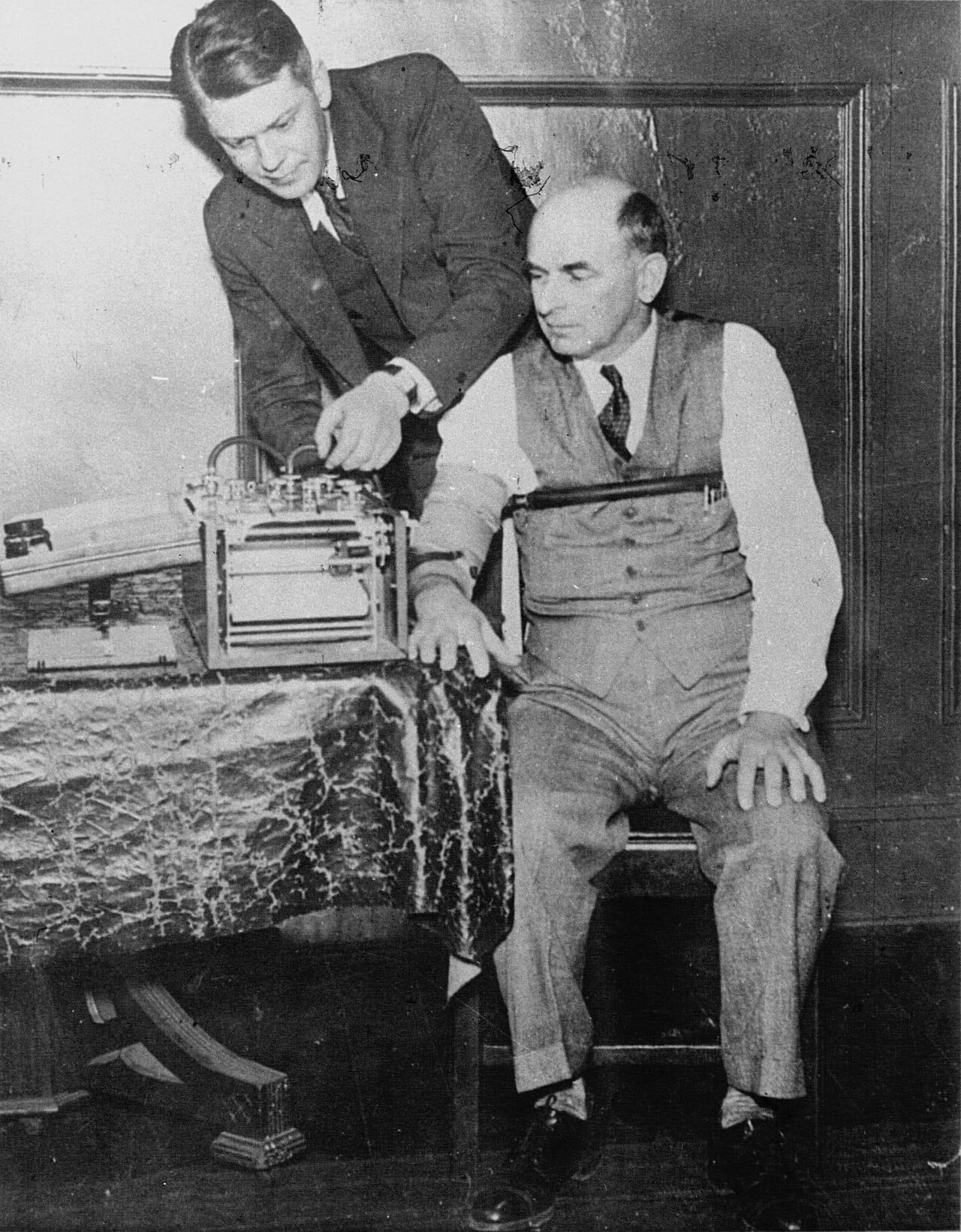
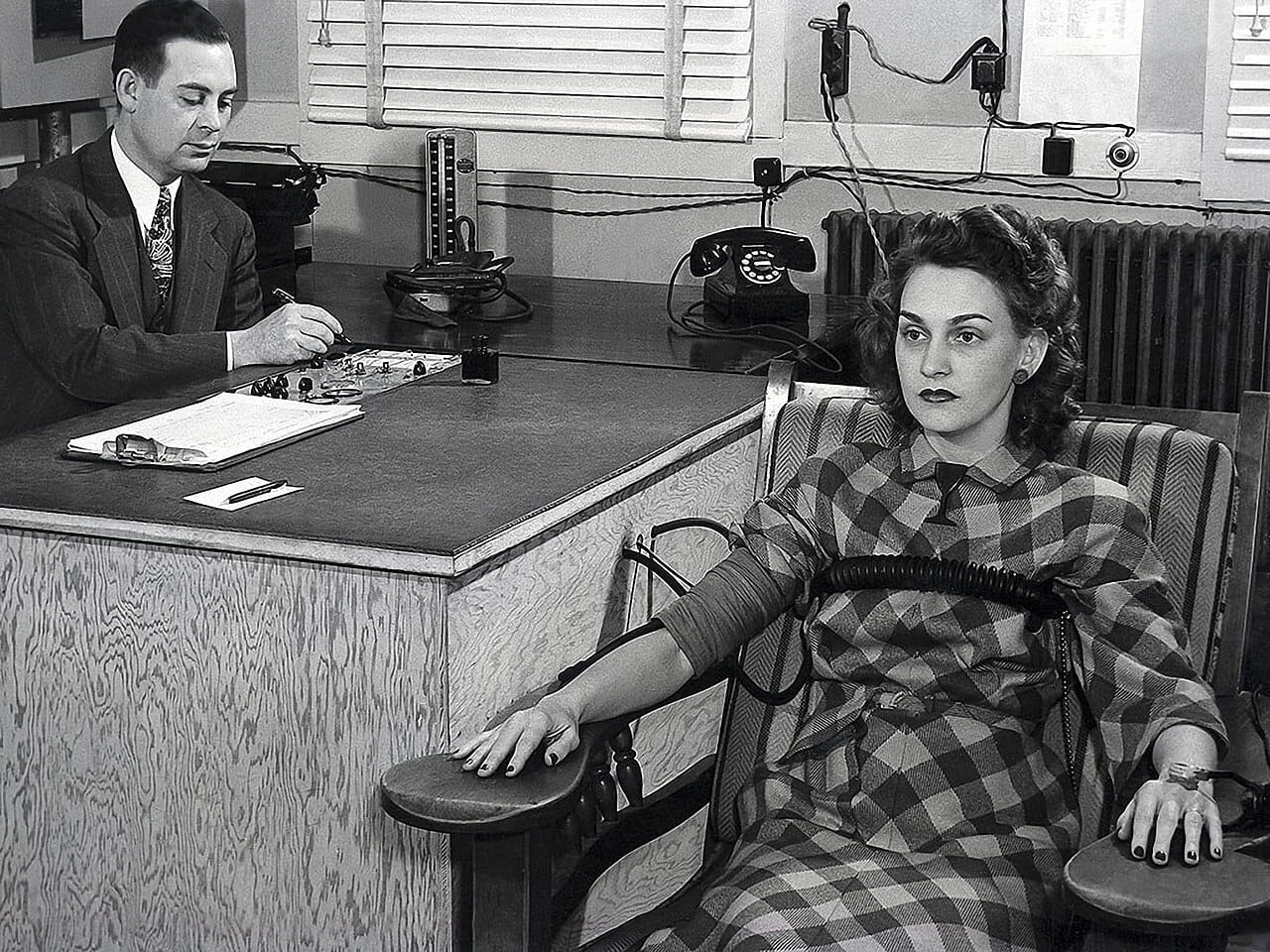
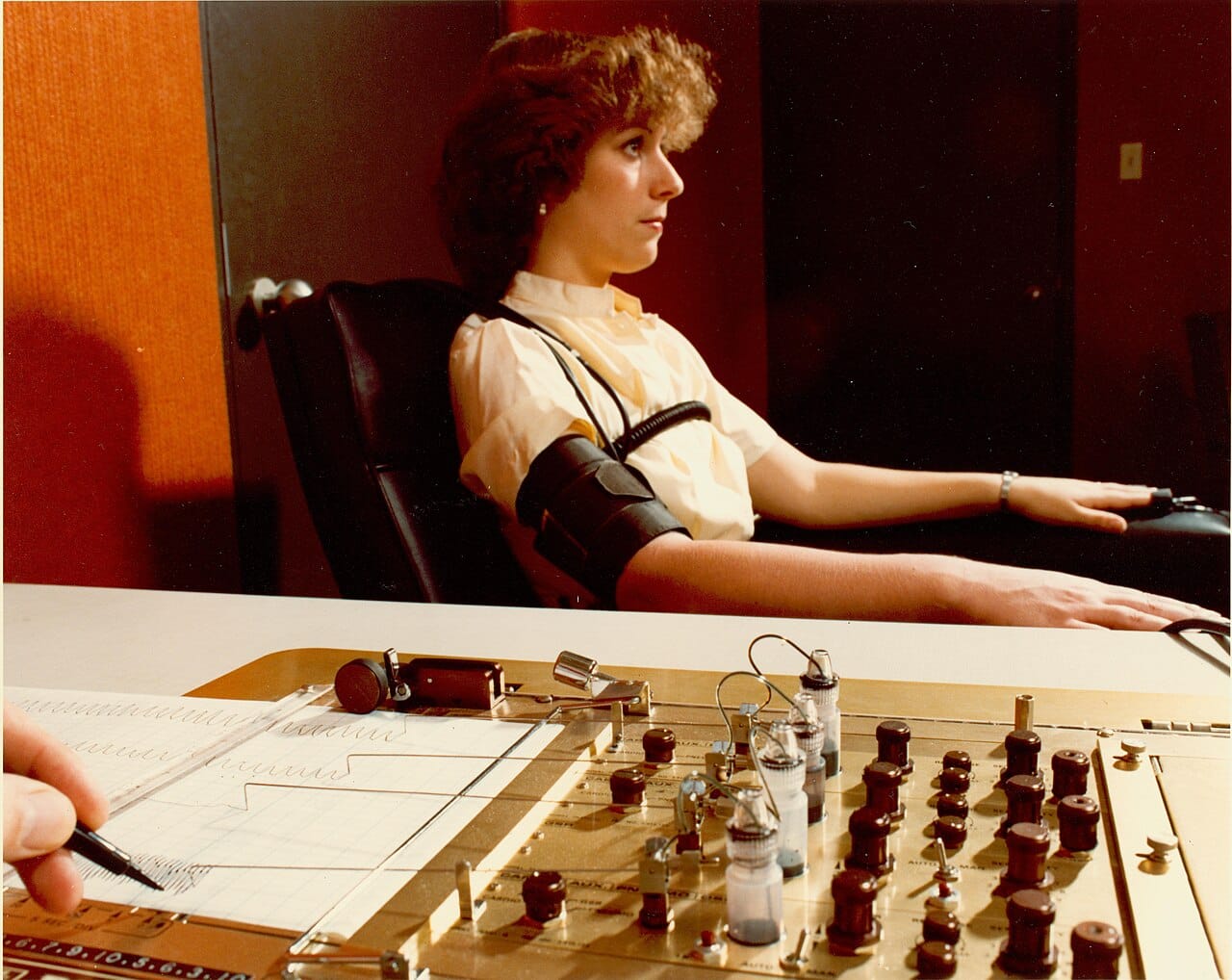
A polygraph records several physiological channels at once: respiration through chest and abdominal belts, cardiovascular activity through a blood pressure cuff, and electrodermal activity, the change in skin conductance produced by sweating, through finger electrodes.
These measurements are valid. The instrument does what it claims mechanically, and the traces genuinely reflect autonomic arousal.
The inferential step is where the problem lies. The assumption is that deception produces arousal distinguishable from the arousal produced by anything else, and there is no such distinction. Fear of being disbelieved, anger at being suspected, anxiety about the consequences of the interview, and surprise at a question all produce the same autonomic response as lying.
Because the physiology cannot identify a lie by itself, the method depends entirely on how questions are structured.
The comparison question technique, the most widely used, contrasts responses to relevant questions about the matter under investigation with responses to deliberately vague questions about probable past misconduct. The examiner infers deception when relevant questions produce larger responses than comparison questions.
The theory requires that an innocent person will be more disturbed by the comparison questions than by the accusation against them. This is a strong assumption about a person's inner state, it cannot be verified for any individual, and it has no clear empirical foundation.
The concealed information test is different and better founded. It does not attempt to detect lying at all. It presents details of a crime that only a perpetrator would recognise, mixed with plausible alternatives, and looks for a differential response to the correct item, testing recognition rather than truthfulness.
The most authoritative assessment is the 2003 review by the United States National Research Council, which examined the available literature systematically.
Its findings were specific. In controlled studies of specific incidents, polygraph testing performs better than chance, which is not a trivial result. Accuracy in real settings is well below what the field claims and the underlying research is of generally poor quality, with most studies using laboratory mock crimes in which participants face no real consequences.
The conclusion on screening was unambiguous. For detecting spies or saboteurs among a large population of mostly innocent people, the technique is unsuitable. The reason is arithmetic rather than a matter of opinion: when the base rate of guilt is very low, even a test with good sensitivity produces overwhelmingly more false positives than true ones, so the great majority of those failing are innocent. Setting the threshold to catch the guilty floods the system with false accusations, and setting it to protect the innocent lets the guilty through.
Countermeasures are a further weakness. Physical and mental techniques to alter responses during comparison questions can be learned quickly, and examiners detect them poorly.
There is no accepted physiological theory linking deception to a specific pattern, which is the difference between a measurement with a mechanism and a correlation without one.
Polygraph evidence is generally inadmissible in United States courts. In United States v. Scheffer in 1998 the Supreme Court upheld a rule excluding it, noting the absence of consensus on reliability. Most other common law jurisdictions exclude it as well.
The Employee Polygraph Protection Act of 1988 prohibits most private employers from requiring tests, following documented abuse in employment screening.
It nonetheless remains in extensive use by federal agencies for security clearance and by law enforcement, and in some jurisdictions in the monitoring of released offenders. The gap between its legal standing as evidence and its institutional use as a procedure is wide and long-standing.
The technique has a practical effect that is often mistaken for validity.
People who believe the instrument works sometimes confess, either before or during the examination. As an interrogation prop backed by a persuasive apparatus, it elicits admissions, and those admissions, rather than the traces, are what close cases.
This makes it useful to investigators while saying nothing about whether it detects deception. It also carries the corresponding risk, since a person convinced that a machine has already established their guilt is in a classic situation for producing a false confession.
Newer approaches, including functional imaging and analysis of eye movement or vocal characteristics, have been marketed as replacements. None has demonstrated accuracy sufficient for individual decisions, and functional imaging studies of deception have generally been group comparisons under laboratory conditions, which is a different problem from classifying one person.
The polygraph is the standard example of a measurement mistaken for the thing it is supposed to indicate. The instrument is not faulty; the inference from arousal to deception is, and no improvement in the sensors addresses it.
It also demonstrates how a base rate governs a screening programme regardless of test quality, an argument that applies identically to medical screening, security systems and automated fraud detection. A test can be substantially better than chance and still be useless, or harmful, for the population it is applied to.