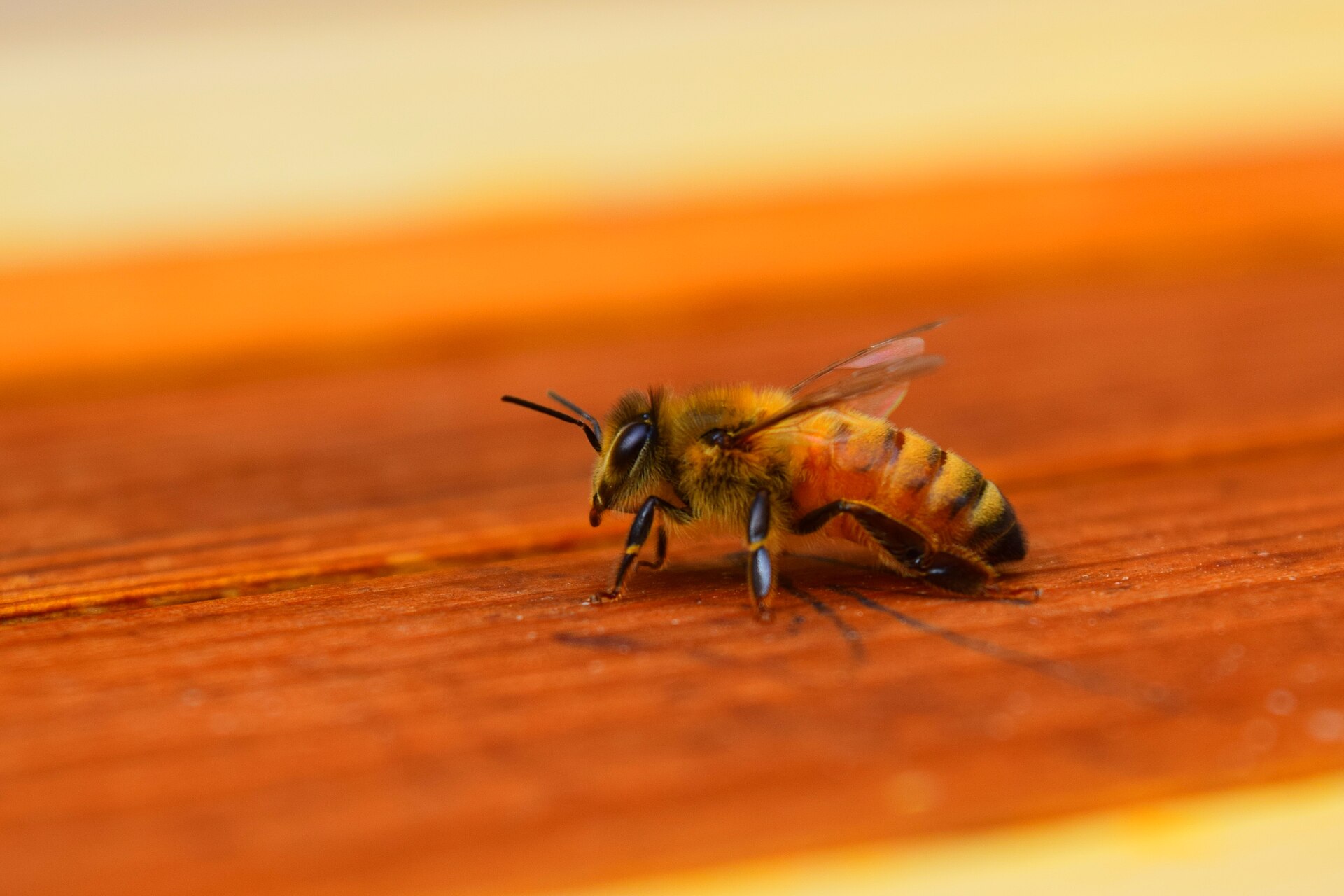
Honey bees are eusocial insects of the genus Apis, of which the western honey bee, Apis mellifera, is the one kept worldwide. They communicate the direction and distance of food by dance, they hold their nest at a near-constant temperature, and they are the most economically important insect in agriculture. They are also livestock, and confusing them with wild bees has misdirected a great deal of well-intentioned concern.
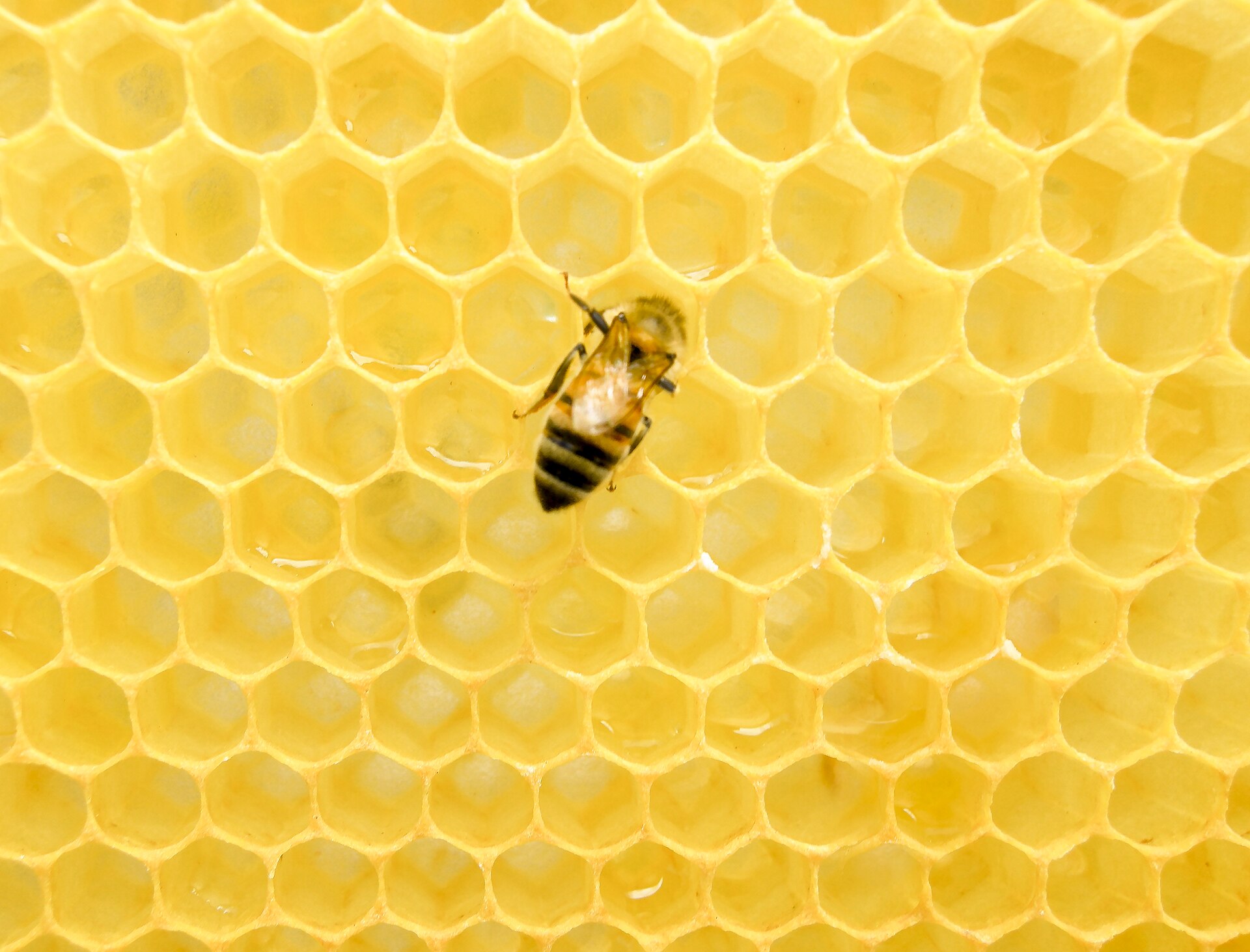
A colony is a single queen, tens of thousands of sterile female workers, and, seasonally, a few hundred male drones. The queen's role is to lay, up to around two thousand eggs a day in season; she does not direct anything.
Workers move through a sequence of jobs with age rather than being assigned: cleaning cells, then feeding larvae, then building comb and receiving nectar, then guarding, and finally foraging in the last weeks of a life that lasts about six weeks in summer. Winter bees live for months, because there is no brood to raise and no foraging to exhaust them.
Drones exist to mate and do nothing else. They cannot feed themselves or sting, they mate in flight with queens from other colonies at drone congregation areas, and mating kills them. Those that survive the season are driven out of the hive before winter.
Sex is determined haplodiploidly: fertilised eggs become females, unfertilised eggs become males. A drone therefore has a grandfather but no father.
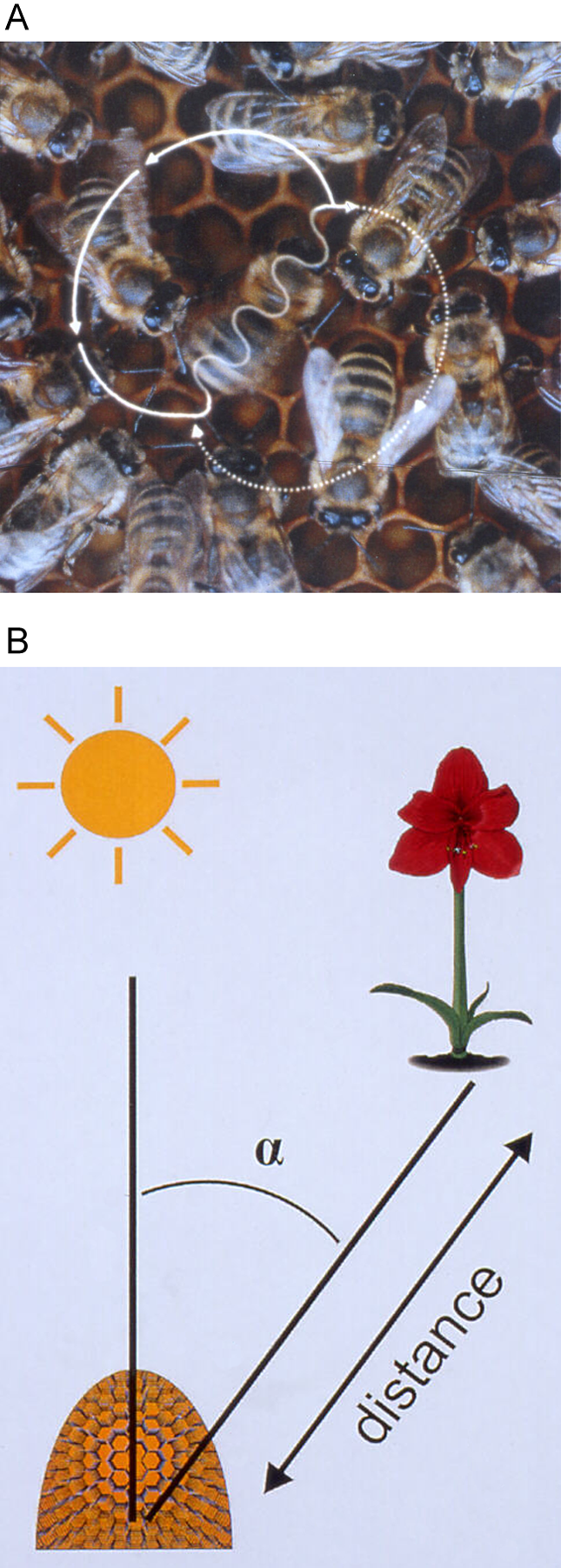
A returning forager performs a figure-of-eight on the vertical comb. The straight central run is the message: its angle from vertical equals the angle of the food from the sun, and its duration encodes distance, roughly one second per kilometre. Bees translate between a direction in the horizontal world and an angle on a vertical surface in the dark, and they compensate for the sun's movement across the sky while dancing.
Karl von Frisch worked this out from the 1940s and shared the 1973 Nobel Prize in Physiology or Medicine for it.
It was seriously challenged. From the late 1960s Adrian Wenner and Patrick Wells argued that recruits were finding food by odour alone and that the dance carried no information they used, which is a reasonable objection because the dance is performed in the dark and the followers cannot see it. The question was settled in 2005 by Riley and colleagues, who fitted bees with harmonic radar transponders and tracked their actual flight paths: recruits flew the vector the dance specified, and when displaced they flew the same vector from the new location and ended up in the wrong place by exactly the displacement. The dance encodes a vector and the bees use it.
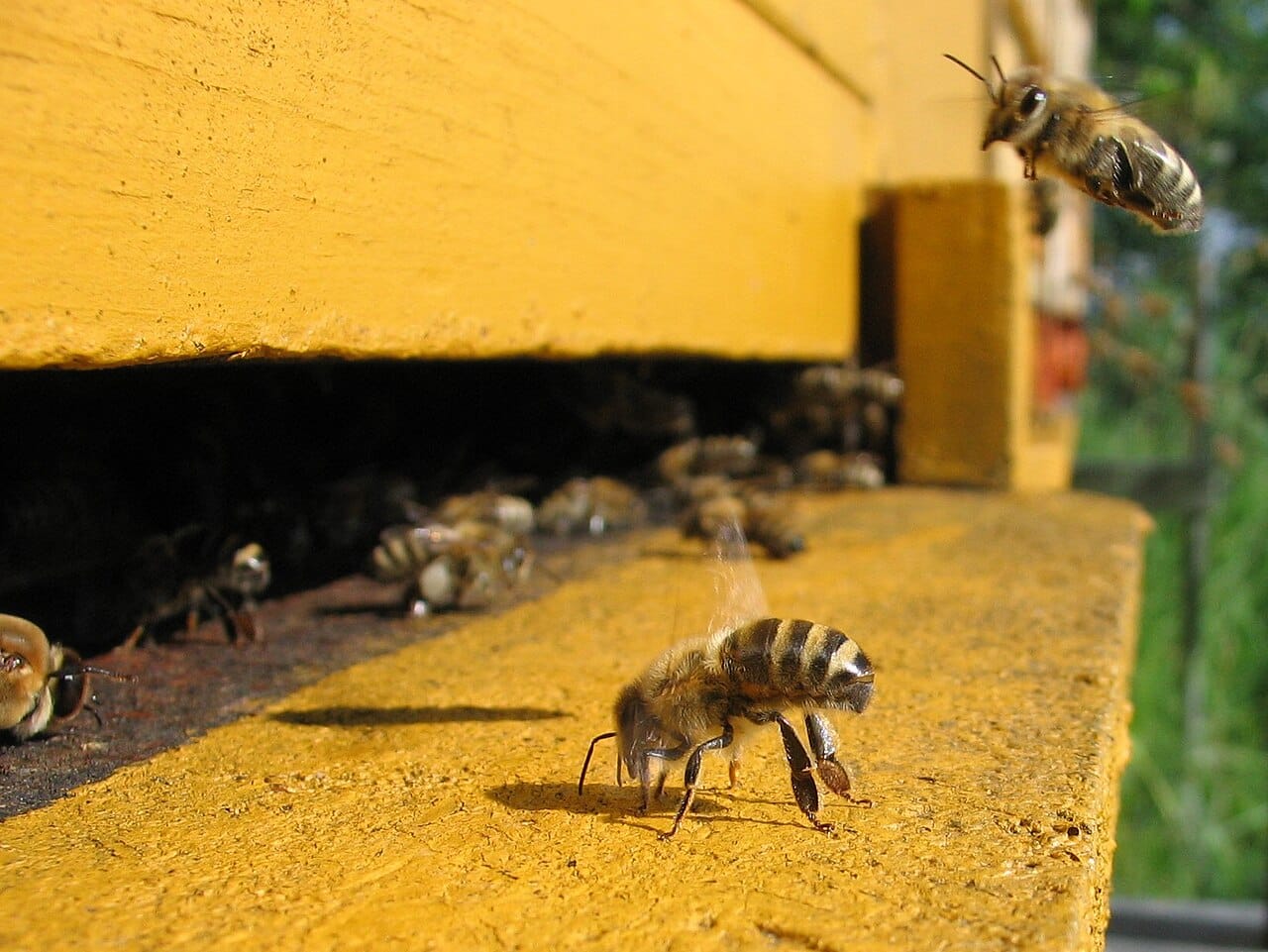
Brood must be kept at about 34 to 35 degrees Celsius, and colonies hold it there across an enormous range of outside conditions. In cold weather bees cluster and shiver their flight muscles, with the cluster tightening as temperature falls and workers rotating from the cool outside to the warm core. In heat, they fan at the entrance and spread water on the comb to cool it by evaporation.
The Japanese honey bee, Apis cerana japonica, uses the same capacity as a weapon. Against the giant hornet, which can destroy a colony, workers engulf the intruder in a ball and vibrate, raising the temperature inside to around 46 degrees. That is above the hornet's tolerance and just below their own. The introduced western honey bee has no such defence, which is why European colonies in Japan are destroyed by hornets and native ones are not.
Any female larva can become a queen. The difference is diet: larvae fed royal jelly throughout develop into queens, while those switched to worker jelly do not.
The mechanism was thought to be settled in 2011, when Masaki Kamakura reported that a single protein in royal jelly, which he named royalactin, was sufficient to induce queen development, and even produced queen-like traits in fruit flies. It was a striking, clean result.
It has not held up. Later work failed to replicate the key claims, and an alternative account gained ground: what matters may be the absence of something rather than the presence of it, with plant-derived compounds in worker diet, including a flavonoid that inhibits the relevant signalling pathway, suppressing queen development. There is also evidence that royal jelly works partly by driving larvae to eat more.
The honest position is that caste determination in honey bees is nutritional and epigenetic, and the specific trigger is unresolved.
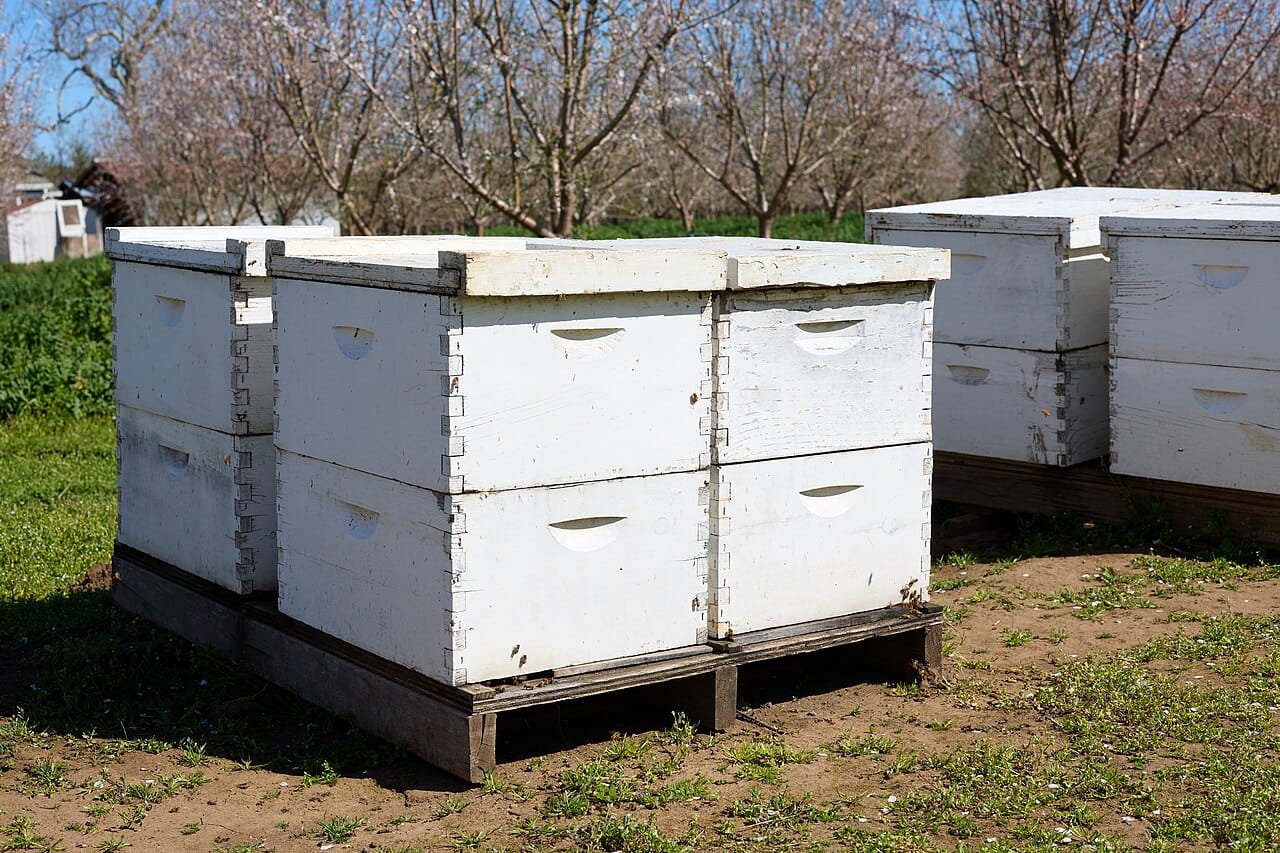
Colony collapse disorder, in which worker bees abandoned an apparently healthy hive, was widely reported from 2006 and became the public face of bee decline. As a distinct syndrome it largely subsided after about 2013 and was never satisfactorily attributed to a single cause.
What persists is high annual colony loss, generally attributed to a combination: the parasitic mite Varroa destructor and the viruses it transmits, above all deformed wing virus; pesticide exposure, with neonicotinoids the most studied and the most litigated; loss of diverse forage in monoculture landscapes; and the stress of long-distance transport.
Here is the part that is routinely inverted. The western honey bee is not endangered. Managed colony numbers globally are at or near record highs, because beekeepers replace losses. It is a farmed animal, and a farmed animal with high turnover is an economic problem, not an extinction risk.
The species genuinely declining are wild and native bees, of which there are around twenty thousand, most solitary, many specialised to particular plants, and most of them not producing honey. High densities of managed honey bees can compete with them for forage and spread pathogens to them. So keeping honey bees is, in the main, agriculture rather than conservation, and campaigns that direct concern about pollinators toward hive-keeping can work against the insects actually at risk.
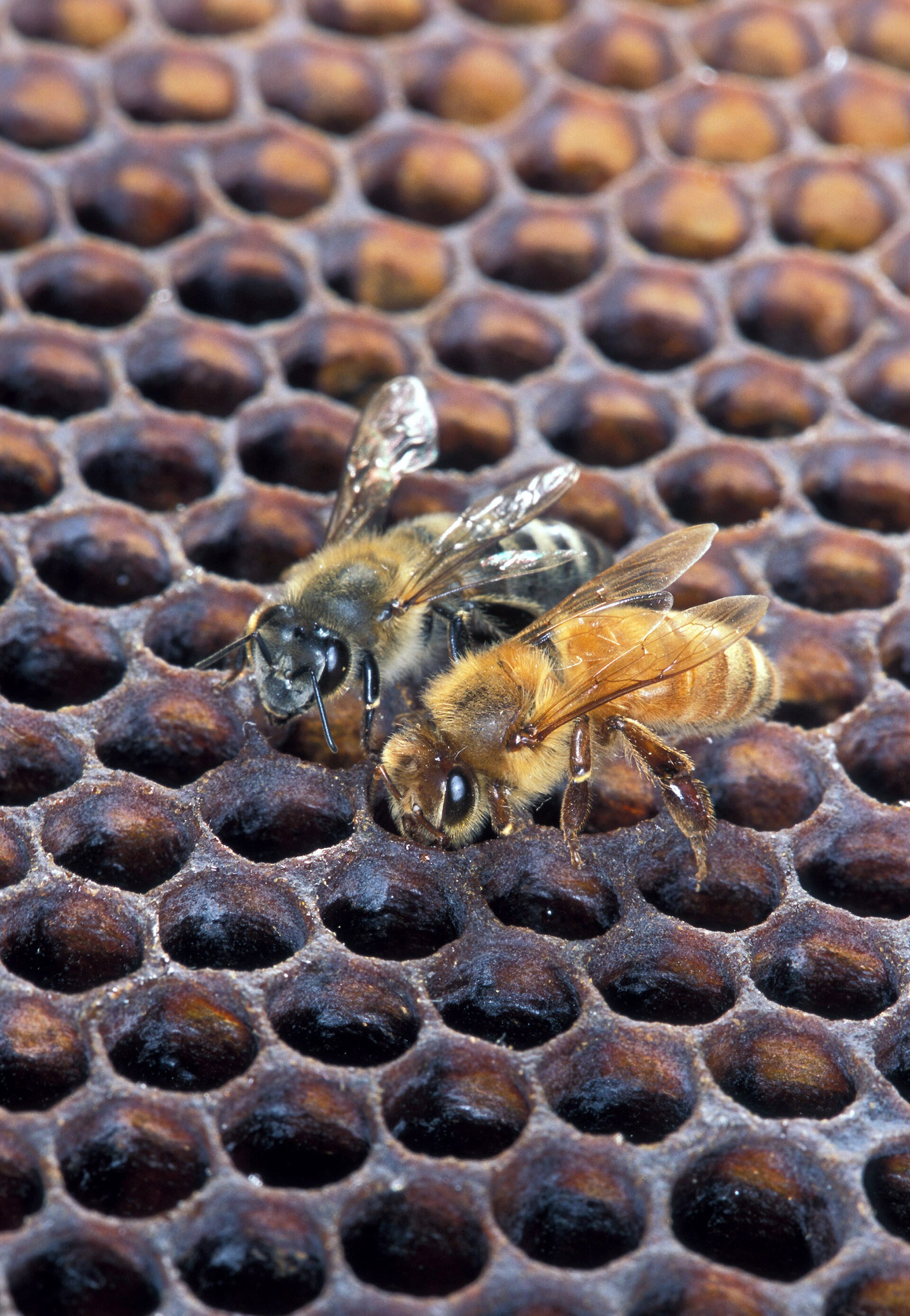
Around three quarters of leading global food crops benefit to some degree from animal pollination, and honey bees do a large share of it because they can be moved to where the crop is. That is a genuine dependency and also a fragile arrangement: an agricultural system that relies on trucking one manageable species to each bloom in turn has less margin than one with wild pollinators in the landscape already.