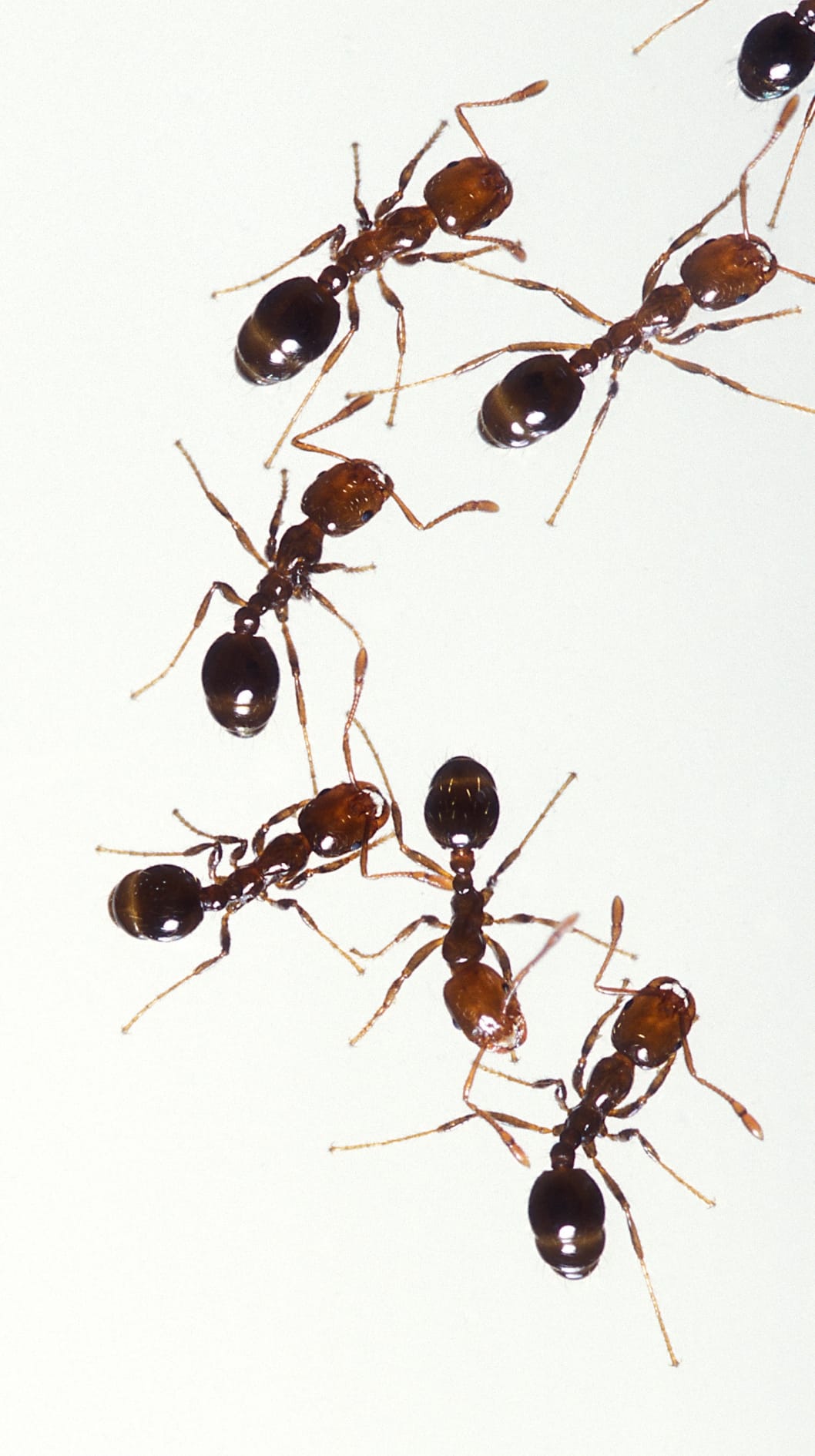
Ants are eusocial insects of the family Formicidae, with over 14,000 described species and an estimated global population around twenty quadrillion individuals. They occur on every continent except Antarctica, they farm, herd, wage war and build, and they do all of it without any individual having an overview of what is being built.
Ants are wasps, in the strict sense that they are a lineage within the aculeate Hymenoptera that became social and largely wingless. The waist, formed by one or two narrowed segments called the petiole, and the elbowed antennae are the reliable identifying features. Most ants seen are wingless sterile females.
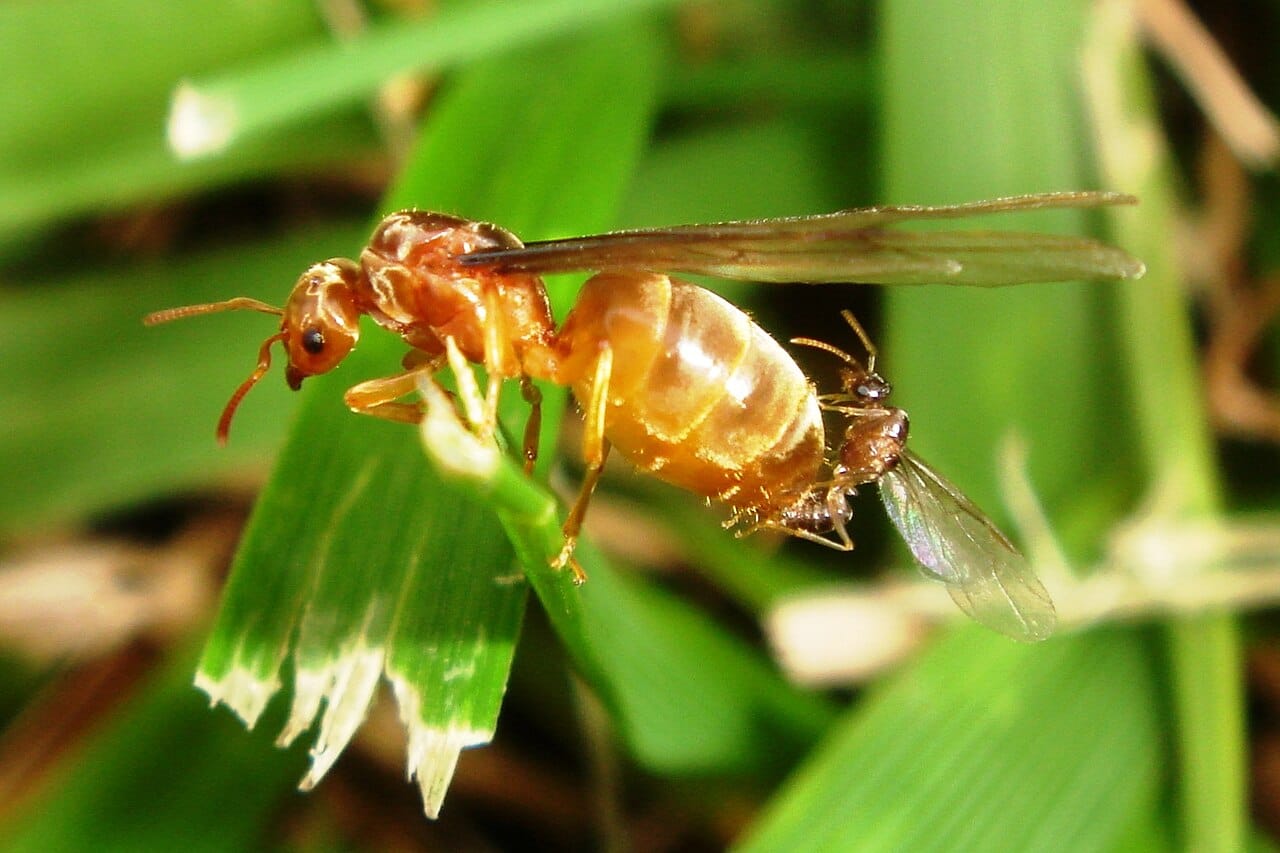
Colony size ranges from a few dozen to many millions. A colony typically has one or more reproductive queens and a large sterile female worker force, with males produced seasonally, mating once and dying.
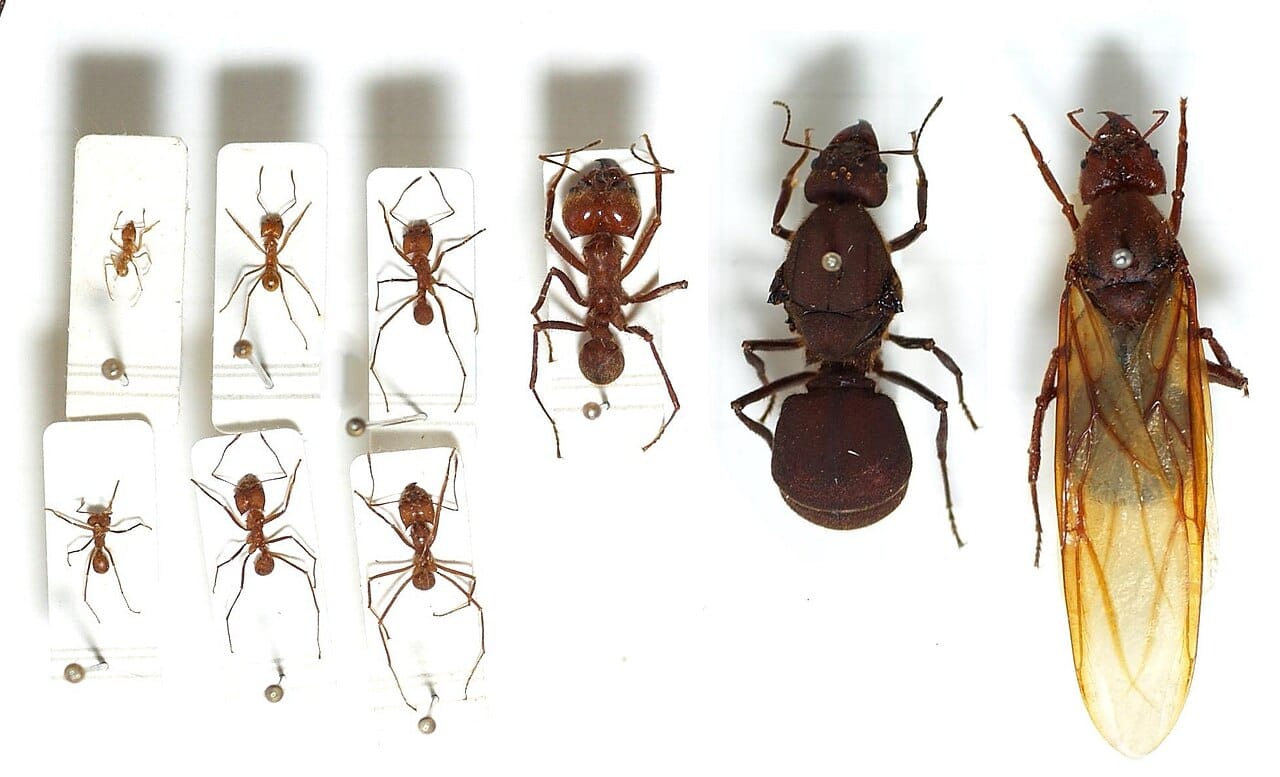
In many species workers vary in size and form, a condition called polymorphism, with large-headed majors specialised for defence or for milling seeds and smaller minors doing brood care and foraging. In leafcutters the range within one colony is extreme, and the smallest workers ride on cut leaf fragments to defend the carriers from parasitic flies.
No ant supervises. Colony-level behaviour arises from individuals following simple rules on local information, which is the standard example of self-organisation in biology.
Trail pheromones are the clearest case. A forager that finds food lays a trail on the way back; other ants follow it and reinforce it if they also find food; the trail evaporates if they do not. A short path is traversed more times per unit time than a long one, so it accumulates more pheromone, so more ants take it. The colony finds the shortest route without any ant comparing routes. This mechanism was formalised into ant colony optimisation, a family of algorithms used on routing and scheduling problems.
Other decisions work by quorum. House-hunting Temnothorax colonies send scouts to candidate sites; a scout that judges a site adequate returns and recruits another ant to it; when the number of ants encountered at a site crosses a threshold, the finders switch to carrying the rest of the colony there. The colony reliably picks the better of two nests without any individual visiting both.
Leafcutter ants of the genera Atta and Acromyrmex do not eat the leaves they carry. They cut and transport vegetation into underground chambers, chew it into a substrate, and cultivate a specific fungus on it, which is what they eat. The relationship is obligate on both sides and around 50 million years old, the fungus has been propagated clonally by ants for that entire time, and the ants weed competing fungi and carry antibiotic-producing bacteria on their bodies to suppress a specialist parasitic mould.
Many ants tend aphids and other sap-feeding insects, protecting them from predators and consuming the honeydew they excrete, and some move them to fresh plants and take them into the nest over winter.
Several species conduct raids on other ant colonies and carry off brood which then works for the raiders. In the more extreme cases, such as Polyergus, the raiders have lost the ability to feed themselves and cannot survive without captured workers.
A 2022 study in PNAS produced the most careful estimate available: about 20 quadrillion ants alive at any moment, with a total dry biomass around 12 megatonnes of carbon.
That estimate corrected a widely repeated claim in the same act. Ant biomass had often been said to equal or exceed human biomass; the 2022 figure is roughly one fifth of it, a downward revision by a factor of five to eight on earlier estimates. What remains true, and is the more meaningful comparison, is that ants outweigh all wild birds and all wild mammals on Earth combined.
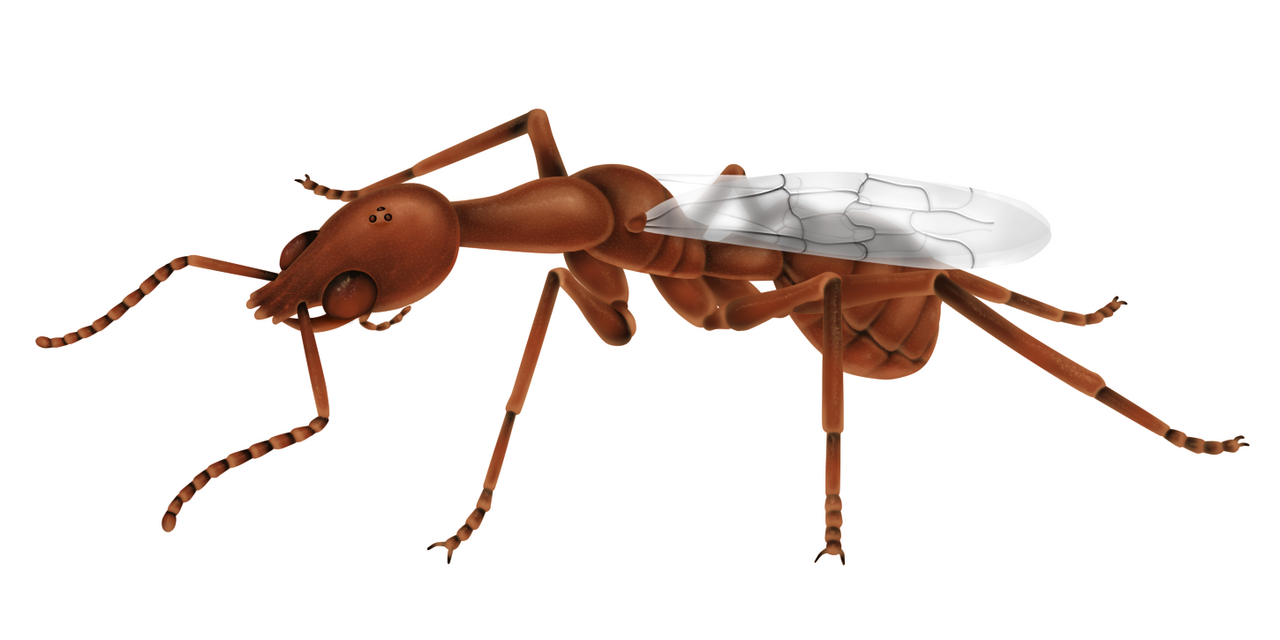
Ants evolved from wasp ancestors in the Cretaceous. The earliest forms include the hell ants, subfamily Haidomyrmecinae, with jaws that moved vertically against a horn on the head rather than horizontally, an arrangement with no living equivalent, and one specimen preserved in amber captures a hell ant in the act of gripping prey that way.
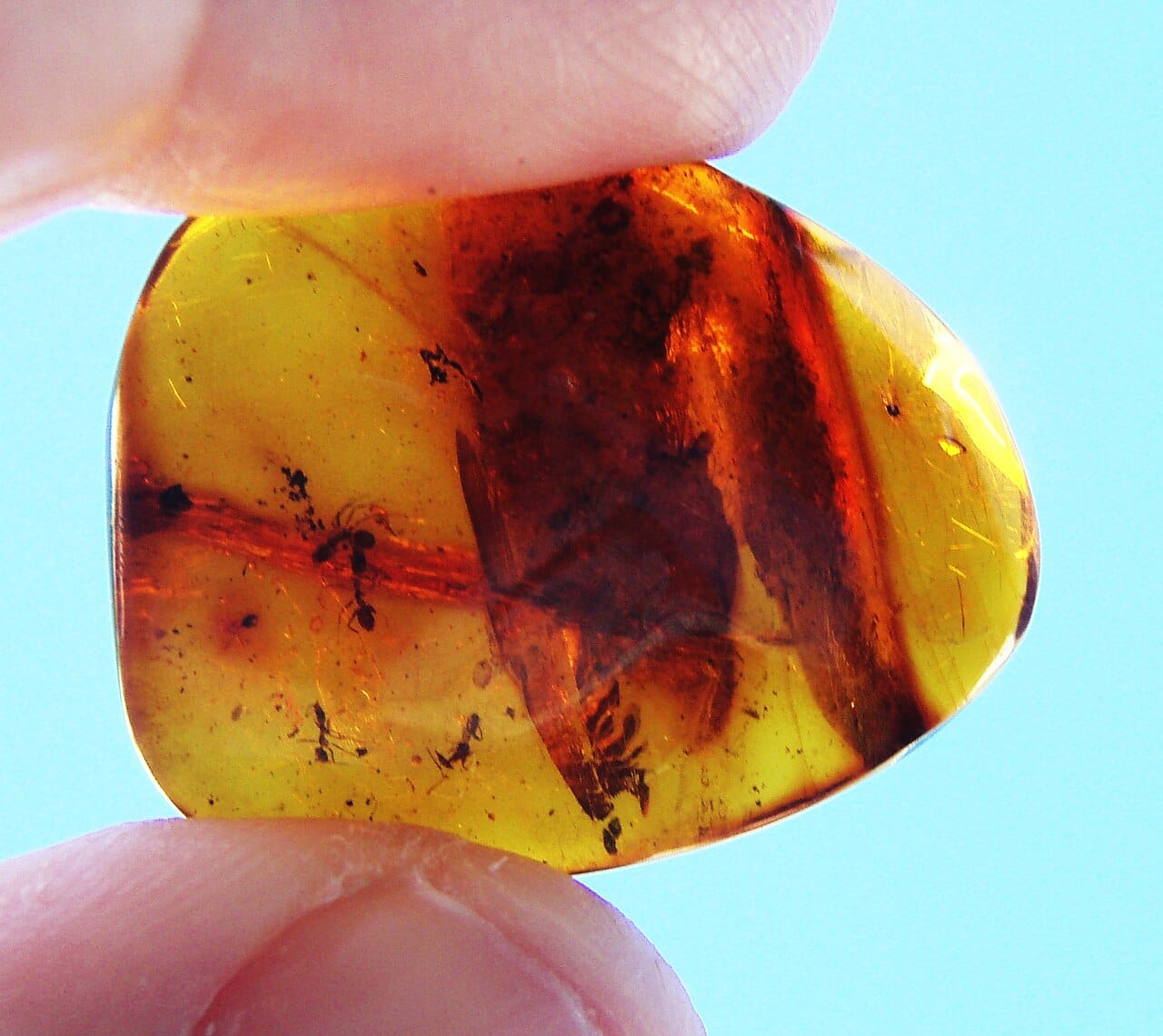
Ants were a minor component of Cretaceous insect faunas and became dominant only in the Palaeogene, and their rise appears linked to the spread of flowering plants and the food sources those brought.
A small number of ant species have become globally invasive with very large ecological effects, and they share a feature: unicoloniality, the loss of aggression between separate nests.
The Argentine ant forms supercolonies whose members do not fight each other across enormous distances, including one along the Mediterranean coast running for thousands of kilometres. Freed from territorial conflict, they invest everything in expansion and displace native ants comprehensively.
Red imported fire ants, yellow crazy ants and the little fire ant have similar records. Yellow crazy ants on Christmas Island killed a large proportion of the endemic red land crabs, and the removal of the crabs changed the forest floor, seedling recruitment and litter depth across the island.
Ants are the standard demonstration that complex, apparently purposeful structure does not require anyone to hold the plan. A leafcutter nest with fungus gardens, waste chambers and ventilation is built by individuals responding to local cues, and no ant has ever seen the nest.