Pass a current through a conductor in a magnetic field and a voltage appears across it, perpendicular to both. Discovered by a graduate student in 1879, it reveals the sign and density of the charge carriers, it is in every phone and car, and its quantum version defines the standard of electrical resistance.
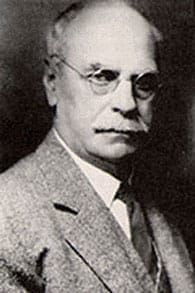
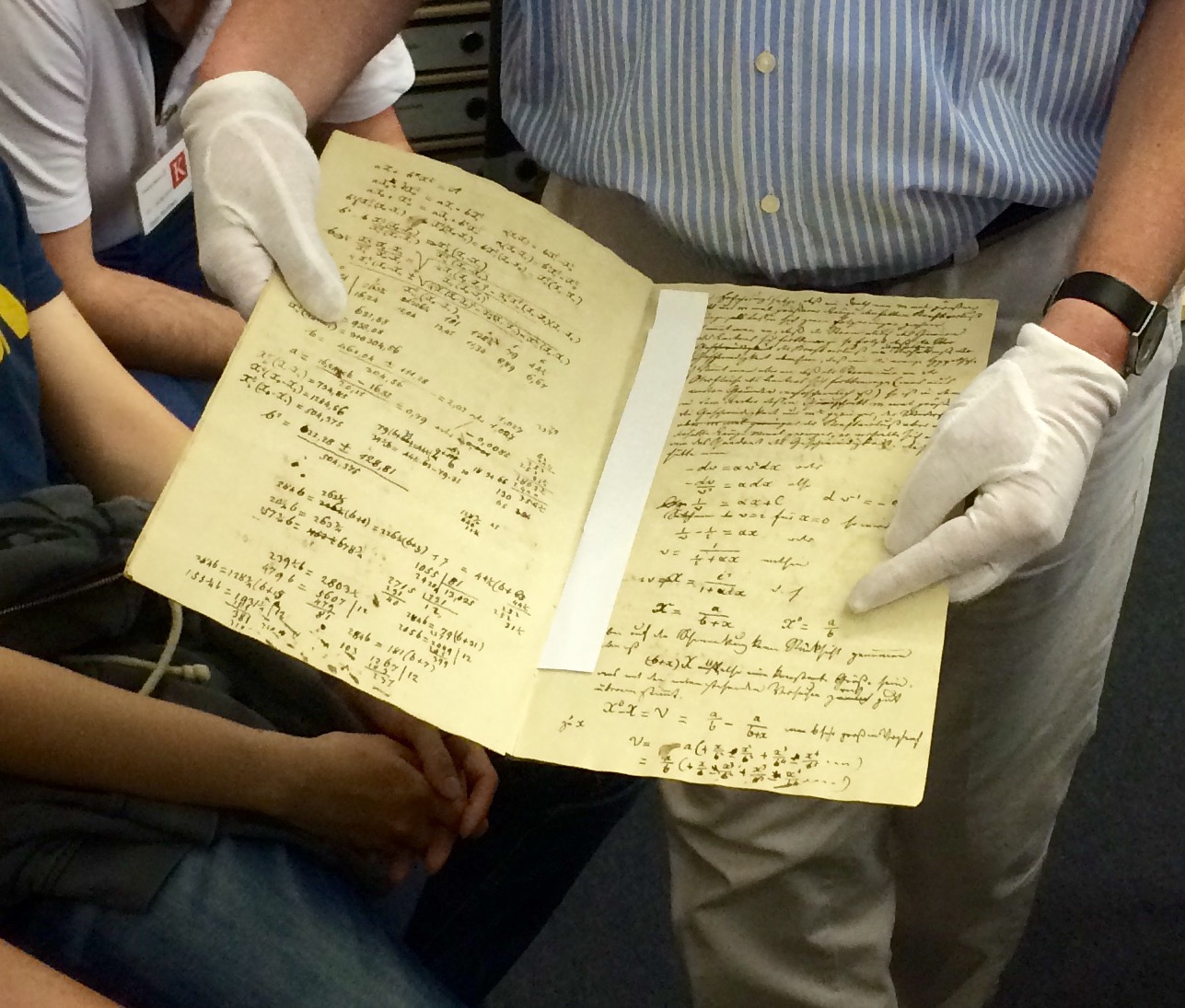
Edwin Hall was a graduate student at Johns Hopkins, testing a claim in Maxwell's treatise that a magnetic field acts on a conductor as a whole rather than on the current within it. Hall doubted it and looked for an effect on the current itself.
Moving charges in a magnetic field experience a force perpendicular to both their motion and the field. In a flat conductor carrying current across a perpendicular field, charges are pushed toward one edge. Charge accumulates there until the electric field it creates balances the magnetic force, and the resulting voltage across the conductor is the Hall voltage.
The measurement is straightforward and the information it yields is not obtainable any other way.
The sign of the Hall voltage gives the sign of the charge carriers. This was the effect's first important result and it created a puzzle that lasted fifty years.
In most metals the carriers are negative, as expected once the electron was discovered in 1897. In some metals, including zinc and cadmium, the Hall voltage has the wrong sign, implying positive carriers.
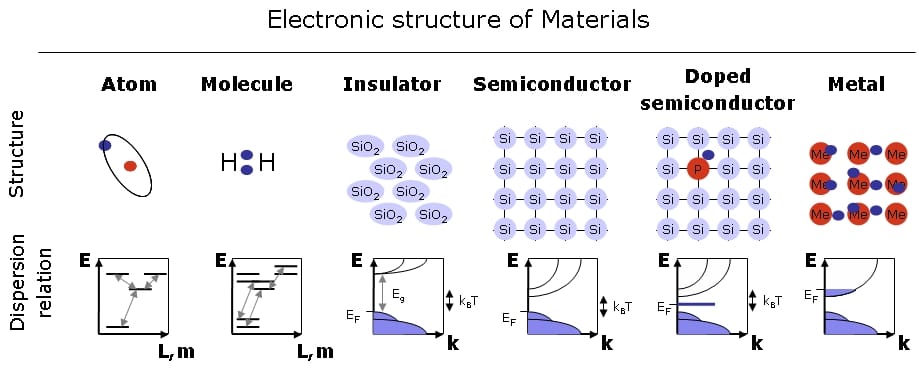
Classical physics had no account of this. Quantum mechanics did: in a nearly full electron band, the collective behaviour of the electrons is equivalent to a small number of positively charged vacancies, called holes, moving in the opposite direction. Holes are not particles; they are an accurate description of what a nearly full band does.
The magnitude of the Hall voltage gives the density of carriers. This is a direct measurement of a microscopic quantity from a macroscopic reading, and it remains the standard method for characterising a semiconductor.
Both facts are what made semiconductor engineering possible. Doping a material to produce n-type or p-type behaviour is verified by the sign of its Hall voltage, and the doping level is read from its magnitude.
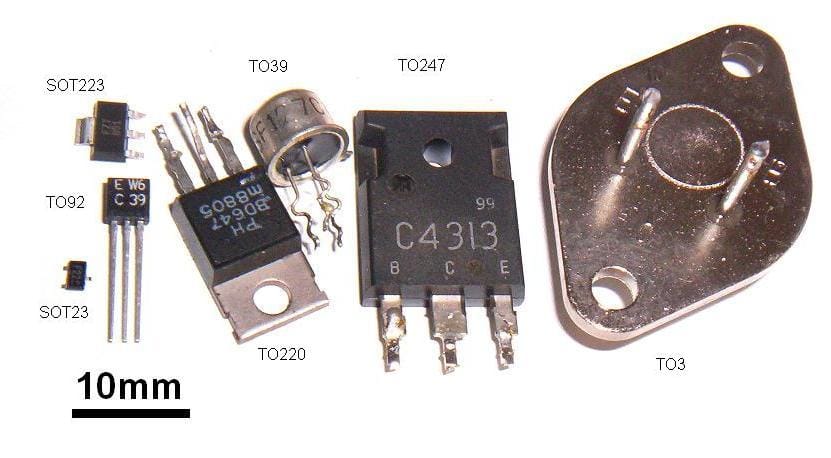
Hall sensors are cheap, robust, contactless and detect magnetic fields directly, which makes them ubiquitous in ways most people never notice.
In cars they measure crankshaft and camshaft position for ignition timing, wheel speed for anti-lock braking, and throttle position. In phones they detect whether a folding case is closed. In computers they read fan speed and detect lid closure.
They measure current without breaking the circuit, by sensing the magnetic field the current produces, which is how clamp meters work and how battery management systems in electric vehicles monitor current at high power.
Brushless motors use them for commutation, sensing rotor position to know when to switch the windings.
At very low temperature and very high magnetic field, in a two-dimensional electron layer, the Hall resistance does not vary smoothly. It steps between exactly quantised plateaus.
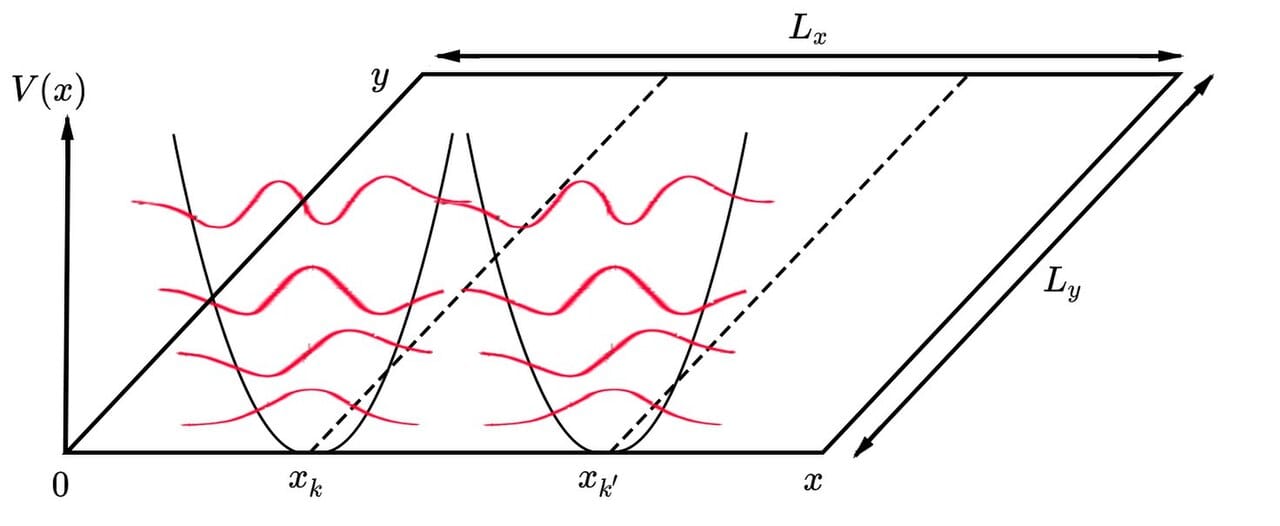
Klaus von Klitzing discovered this in 1980 and received the 1985 Nobel Prize in Physics. The plateau values depend only on fundamental constants, Planck's constant and the electron charge, and not on the material, its purity, or its geometry.
That independence is extraordinary and is what made it metrologically useful. The quantum Hall resistance is reproducible to parts in a billion across different samples and different laboratories, and it became the practical standard for the ohm. When the SI base units were redefined in 2019 to rest on fixed values of fundamental constants, the quantum Hall effect was one of the effects making that possible.
A further version, the fractional quantum Hall effect, was found in 1982 by Daniel Tsui and Horst Stormer and explained by Robert Laughlin, and involves plateaus at fractional values. The explanation requires excitations carrying a fraction of an electron's charge, which are not particles in the ordinary sense and are the basis of current proposals for topological quantum computing. That work received the 1998 Nobel Prize.
Hall's experiment was a graduate student checking a claim in a textbook that he thought was wrong. It produced a measurement technique still in daily use, a puzzle that helped establish band theory, and, a century later, a resistance standard and a route to exotic states of matter.
None of that was foreseeable from the original question, which was whether Maxwell had got something right.