Ohm's law is the basic rule governing electric circuits. It states that the current flowing through a conductor is directly proportional to the voltage across it, and inversely proportional to its resistance, a relationship usually written as voltage equals current times resistance. Simple and reliable, it is one of the first things learned in the study of electricity and one of the most useful tools in all of electronics.
The law expresses a clear and consistent relationship: increase the voltage pushing on a circuit and the current rises in proportion, while increasing the resistance that opposes the flow reduces the current. The three quantities, voltage, current, and resistance, are locked together, so that knowing any two gives the third. For ordinary conductors this relationship holds with great accuracy and has been confirmed in countless experiments.
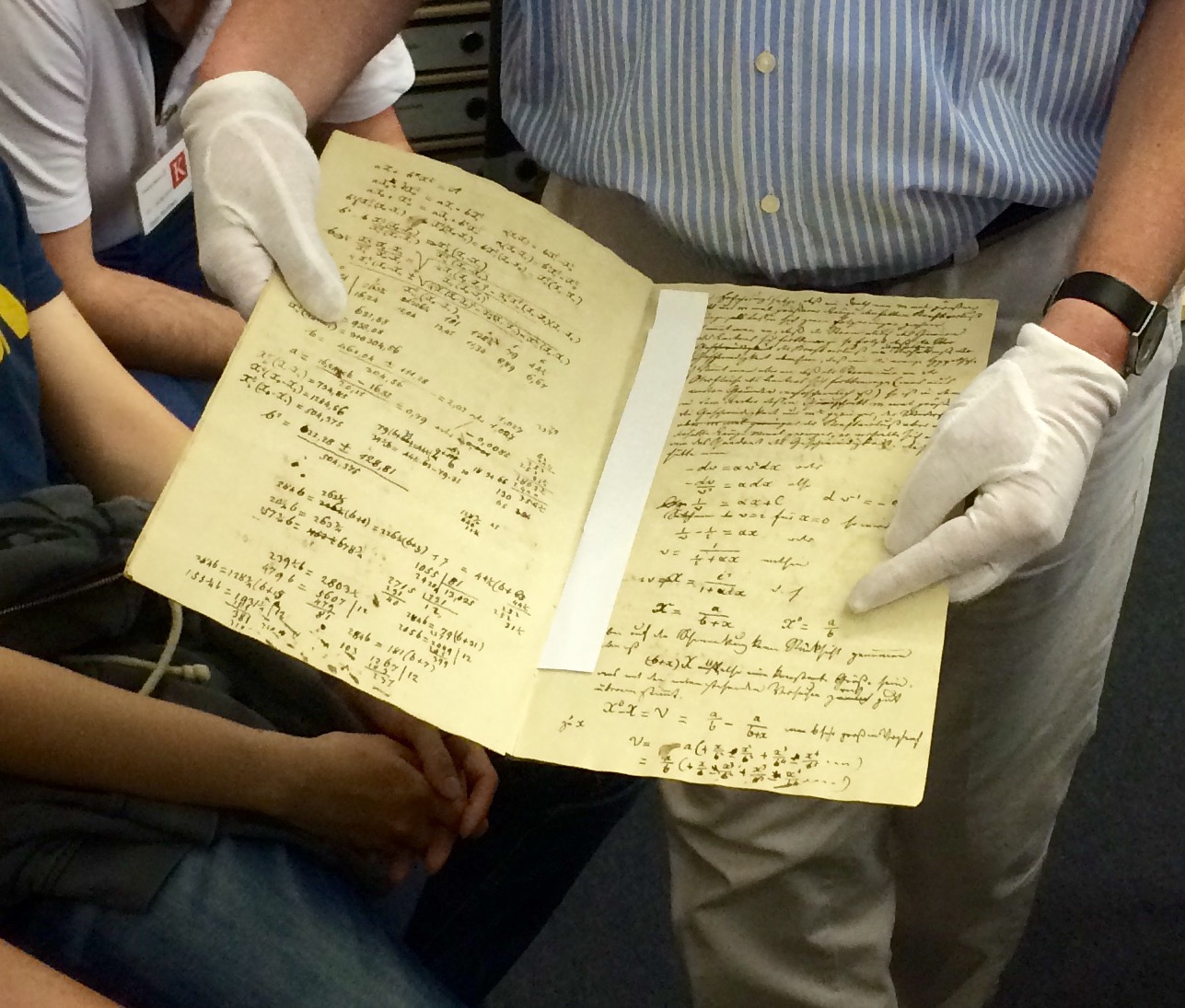
The law is named after the German physicist Georg Ohm, who established it through careful experiments in the 1820s, measuring how the current in a wire depended on the voltage driving it and the wire's properties. Remarkably, his work was poorly received at first and even dismissed by some, but it was gradually recognised as fundamental, and the unit of electrical resistance, the ohm, was named in his honour.
Ohm's law applies to materials whose resistance stays constant regardless of the voltage, which includes most metals and ordinary circuit components under normal conditions. These are called ohmic materials. Some devices, however, such as diodes and light bulbs as they heat up, do not follow the simple law, because their resistance changes with conditions. Knowing where the law applies, and where it does not, is part of understanding electricity correctly.
From household wiring to the design of computer chips, Ohm's law is the everyday workhorse of electrical engineering, used constantly to calculate currents, choose components, and keep circuits safe. Few principles are at once so simple to state and so endlessly applied, a reliable rule that has underpinned the entire age of electricity.