A kingdom of organisms distinct from plants and animals, which digest their food externally and absorb it. They decompose most of the world's dead organic matter, they supply antibiotics and bread, and they are more closely related to animals than to plants.
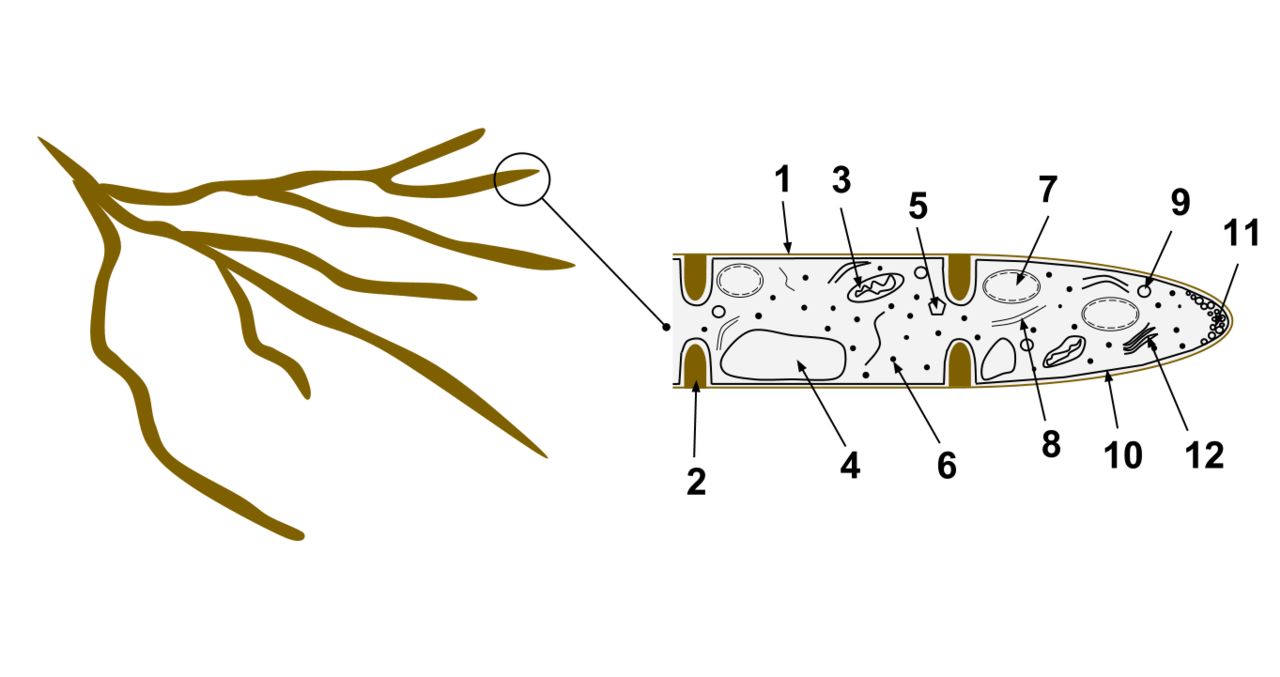
A fungus feeds by secreting enzymes into its surroundings, breaking material down outside itself, and absorbing the products. Animals digest internally; fungi digest externally and then absorb.
The body is usually a mycelium, a network of fine threads called hyphae growing through the substrate. It is diffuse rather than compact, which suits an organism that must contact its food across a wide area.
A mushroom is not the organism. It is a temporary fruiting body produced for reproduction, and the fungus itself is the network in the soil or wood, which may be very large and very old. One honey fungus mycelium in Oregon extends over several square kilometres and is estimated at thousands of years.
Cell walls contain chitin, the same material as insect exoskeletons, rather than the cellulose of plants.
Fungi do not photosynthesise. Grouping them with plants was a longstanding error corrected in the twentieth century, and molecular evidence established that they share a more recent common ancestor with animals than either does with plants.
Yeasts are single-celled fungi that reproduce by budding, and they include the species used in bread, beer and wine, treated in the fermentation capsule.
Moulds grow as visible hyphal mats and include Penicillium, the source of the first antibiotic.
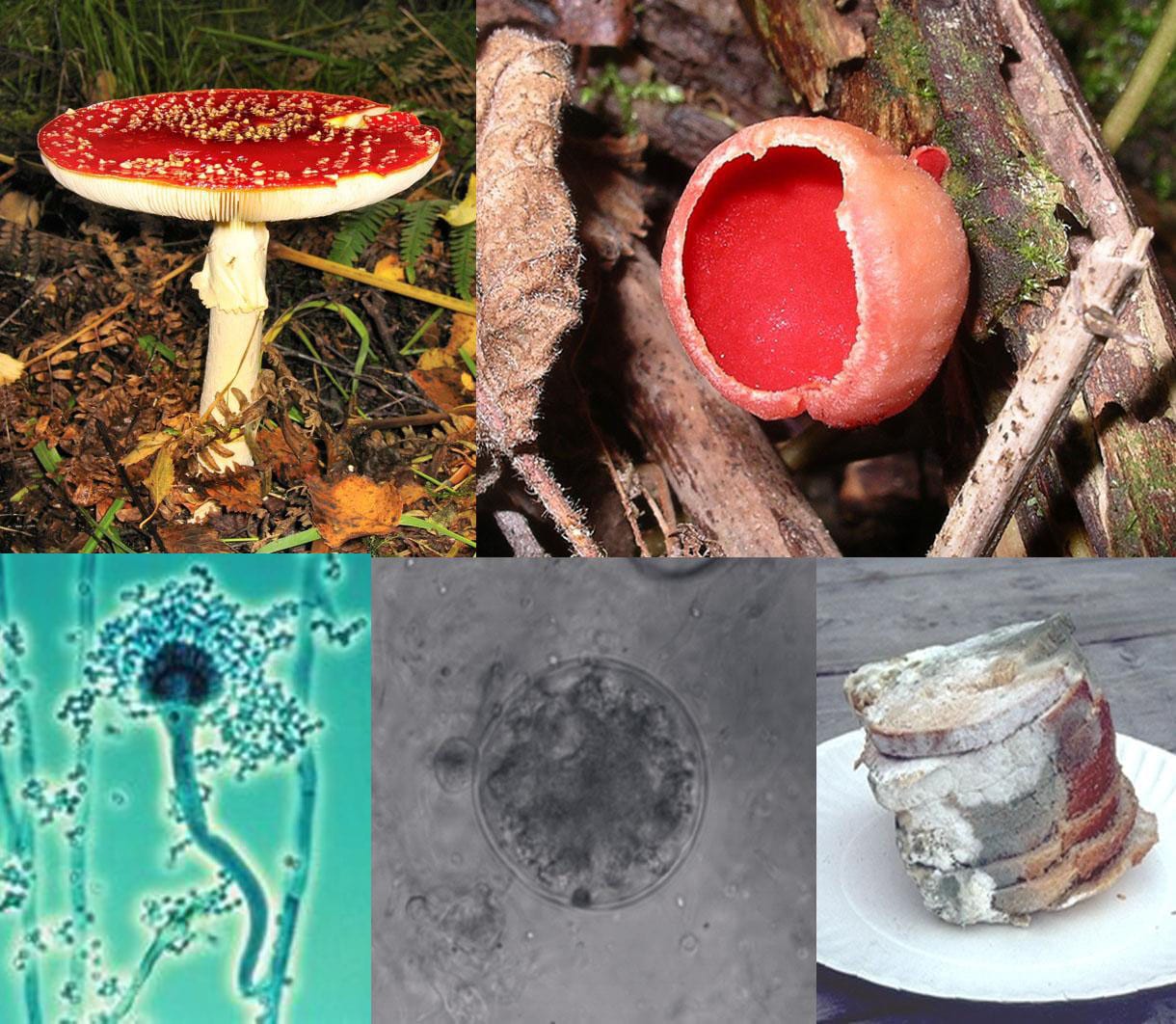
Mushroom-forming fungi produce the familiar fruiting bodies, and this group includes most edible and most poisonous species.
Lichens are not a single organism but a partnership between a fungus and an alga or cyanobacterium, and recent work has found a third partner, a yeast, in many of them. They colonise bare rock and are among the pioneers described in the ecological succession capsule.
Mycorrhizal fungi form partnerships with plant roots, described below.
Decomposition is the largest role. Fungi are the principal decomposers of wood, because they are among the few organisms producing enzymes that break down lignin, the polymer making wood rigid.
The consequence is planetary. Without fungal decomposition, dead plant material would accumulate rather than being returned to circulation, and the carbon in it would be unavailable. One hypothesis for the enormous coal deposits of the Carboniferous is that lignin-degrading fungi had not yet evolved, so fallen trees accumulated rather than rotting, though this is disputed.
Mycorrhizal partnerships involve the great majority of land plants. Fungal threads extend far beyond the reach of roots and supply the plant with water and mineral nutrients, particularly phosphorus, receiving sugars in return.
This relationship appears in the fossil record alongside the earliest land plants, and it is widely thought that plants could not have colonised land without it. The extent to which mycorrhizal networks transfer resources between plants, sometimes described as a wood wide web, is an active area where the popular account has run ahead of the evidence.
Pathogens attack plants and animals. Fungal crop diseases including wheat rusts cause substantial losses, and fungal disease has driven amphibian declines worldwide. Human fungal infections are mostly superficial and are dangerous in people whose immunity is compromised.
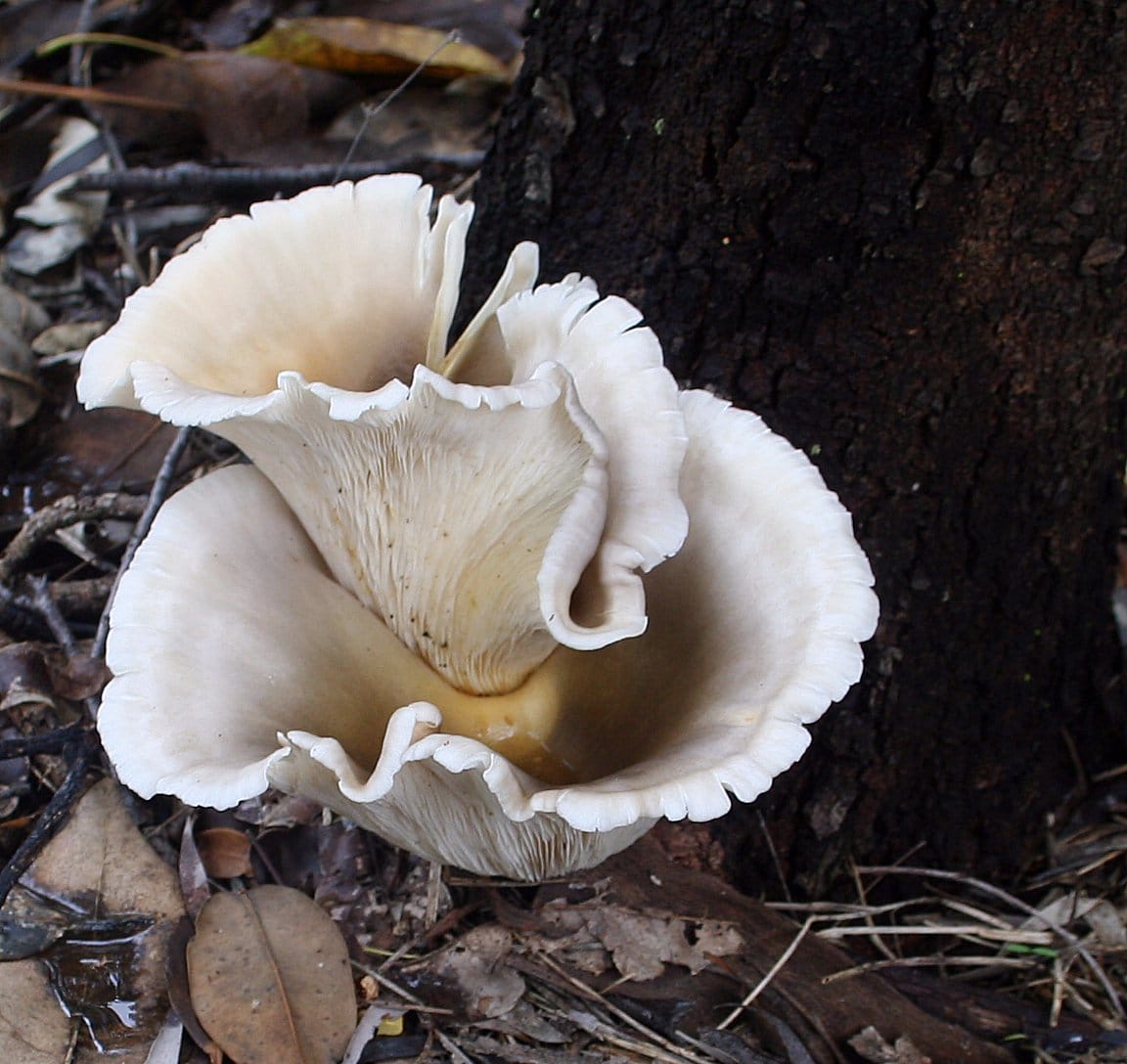
Food directly, as cultivated and gathered mushrooms, and indirectly through fermentation of bread, beer, wine, cheese, soy sauce and many other products.
Antibiotics, beginning with penicillin from a Penicillium mould, and including several later classes.
Other medicines, including the statins used to lower cholesterol and ciclosporin, the immunosuppressant that made organ transplantation practical.
Industrial enzymes and organic acids, produced by fermentation at scale.
Materials, with mycelium being grown into packaging and construction products as a substitute for plastic foam.
Bioremediation, using fungi to break down pollutants including hydrocarbons.
Around 150,000 species have been described, and estimates of the total run from around two million to several million, which would make fungi among the most species-rich kingdoms.
The gap is large because most fungi are microscopic, live inside soil or tissue, and are identified reliably only by sequencing. Environmental DNA surveys routinely find sequences matching no described species.
Fungi are the organisms that return dead material to circulation, without which the carbon and nutrients in every dead plant and animal would remain locked up.
They are also the group whose position was most badly misunderstood for longest. Classified with plants on the basis of appearance and immobility, they turned out to be closer to animals, which is a reminder that visible similarity is a poor guide to relationship.