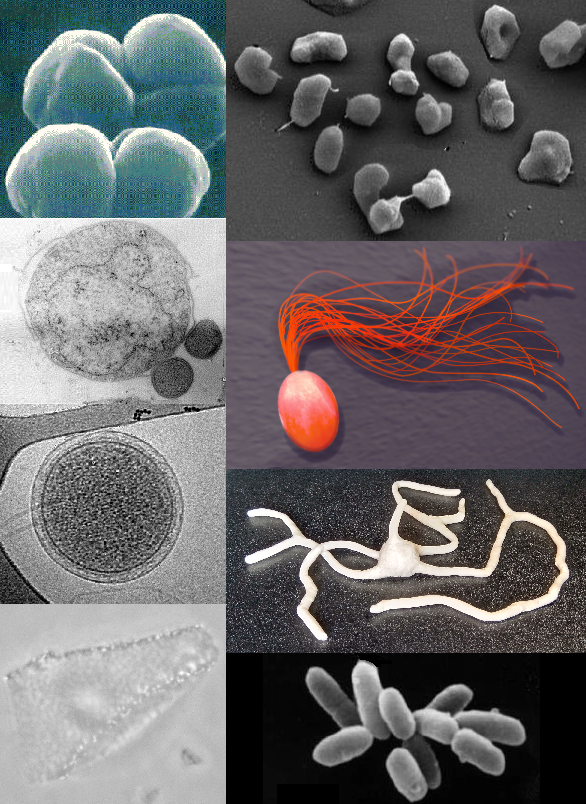
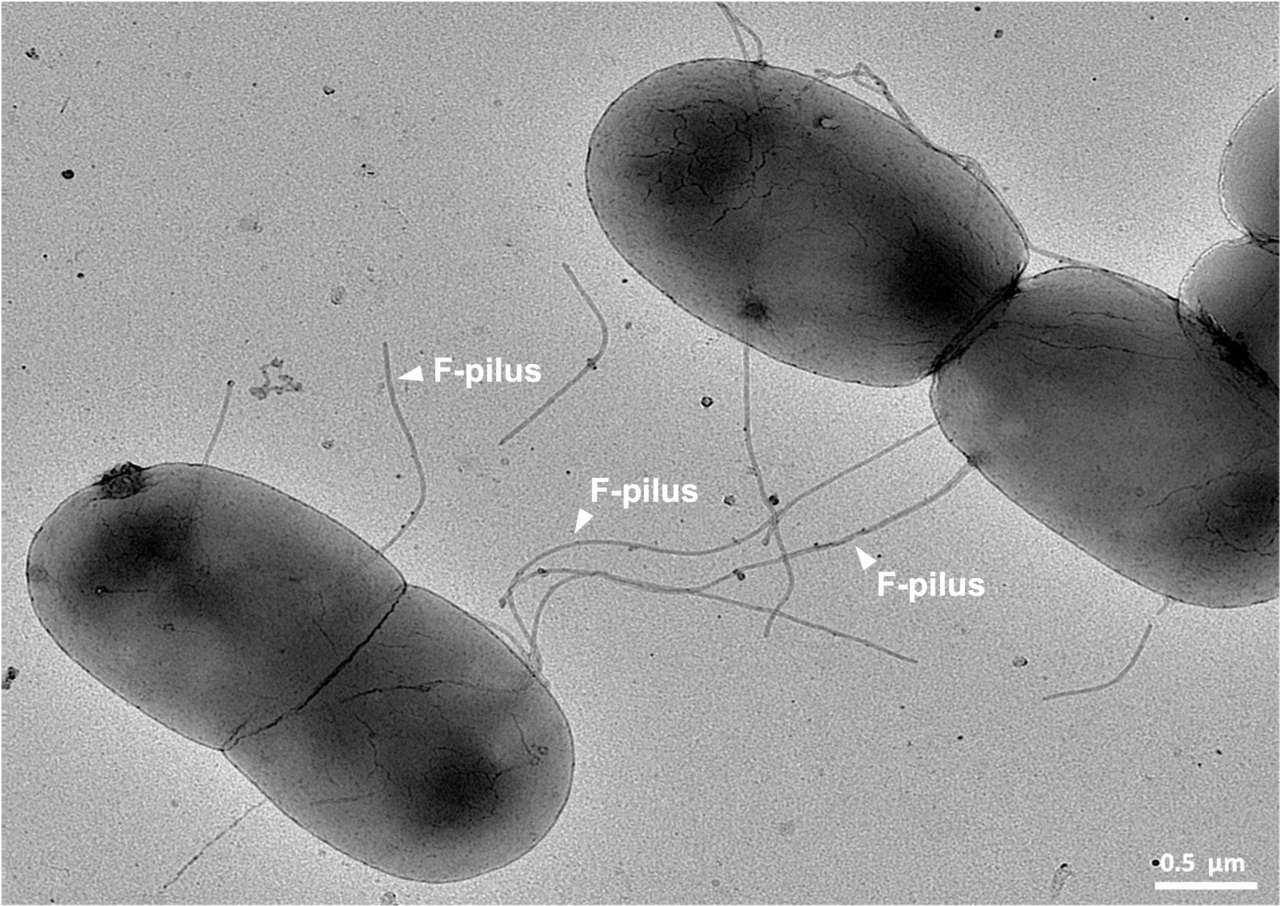
Single-celled organisms without a nucleus, present in essentially every environment on Earth, and vastly outnumbering all other forms of life. A small minority cause disease and the great majority are harmless or necessary.
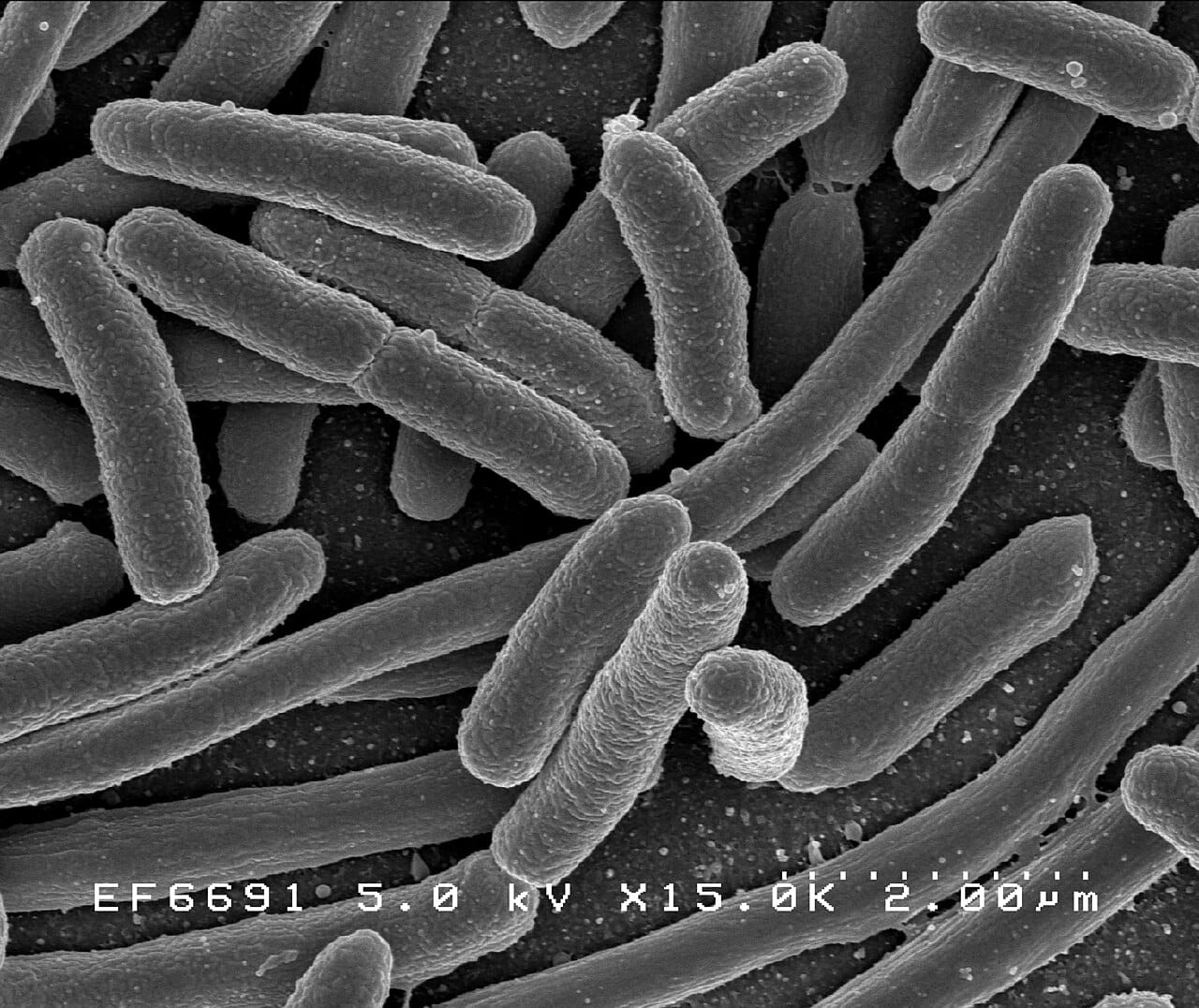
Bacteria are prokaryotes: their DNA is not enclosed in a nucleus, and they lack the internal compartments that characterise the cells of animals, plants and fungi.
A typical bacterium is one to five micrometres long, small enough that thousands fit across a millimetre.
The genome is usually a single circular chromosome, often accompanied by plasmids, small separate loops of DNA that can be exchanged between cells and which frequently carry antibiotic resistance genes.
Most are enclosed by a cell wall containing peptidoglycan, a polymer found nowhere else in nature. This is medically important because it gives antibiotics a target present in the pathogen and absent from the patient, which is what penicillin exploits.
The Gram stain divides bacteria into two groups by wall structure, and the distinction predicts which antibiotics are likely to work, which is why it remains a first step in identification more than a century after its introduction.
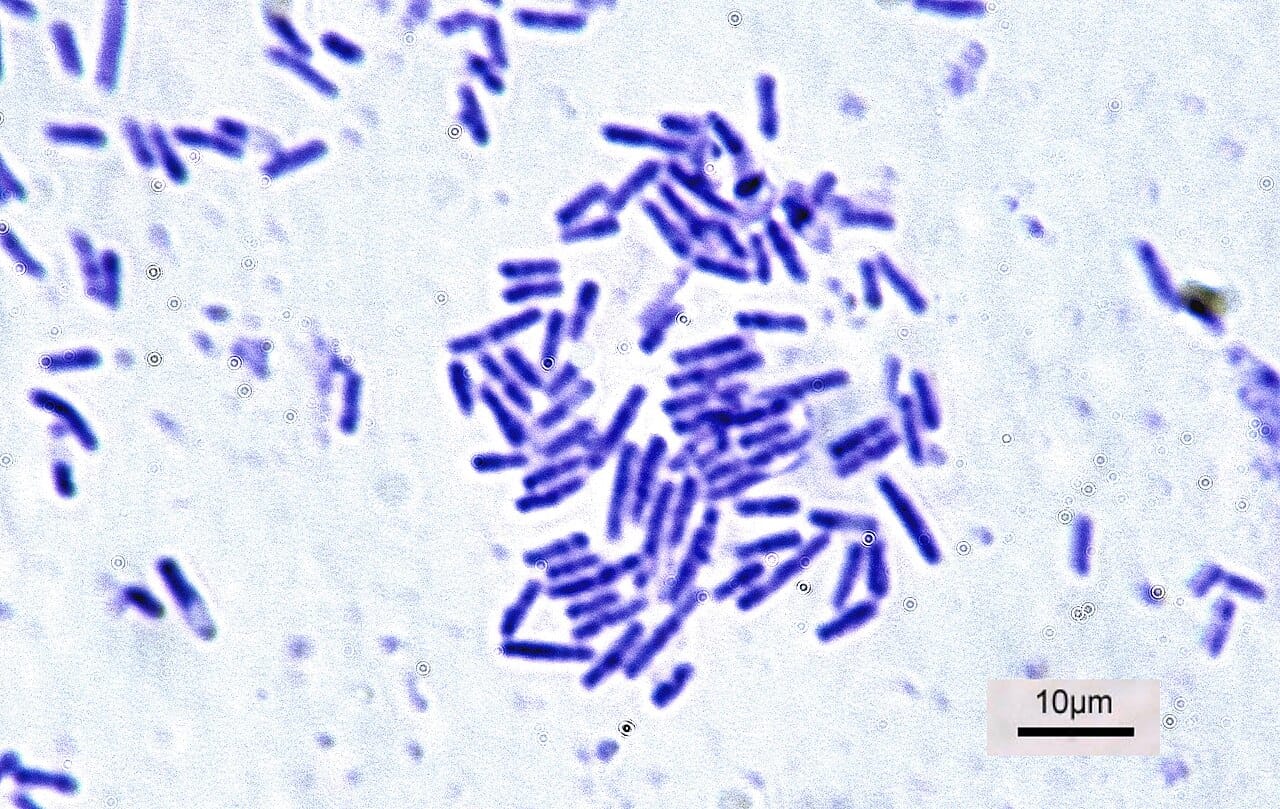
Bacteria reproduce by binary fission, dividing into two identical cells. Under good conditions some divide every twenty minutes, which is why a small contamination becomes a large population within hours.
Genetic exchange occurs without reproduction, by three routes: taking up DNA from the environment, transfer by viruses, and direct transfer between cells through a physical connection. This horizontal gene transfer, treated in its own capsule, is why a resistance gene arising in one species can appear in an unrelated one.
Metabolic diversity is their most remarkable feature. Collectively they use an enormous range of energy sources, including light, inorganic chemicals such as sulfur, iron and ammonia, and virtually every organic compound. Reactions that no other organisms perform, including nitrogen fixation, are carried out by bacteria alone.
Many form biofilms, communities embedded in a secreted matrix attached to a surface. Biofilms are substantially more resistant to antibiotics and disinfectants than free-floating cells, and they are a major problem in medical implants and in industrial systems. Dental plaque is a familiar example.
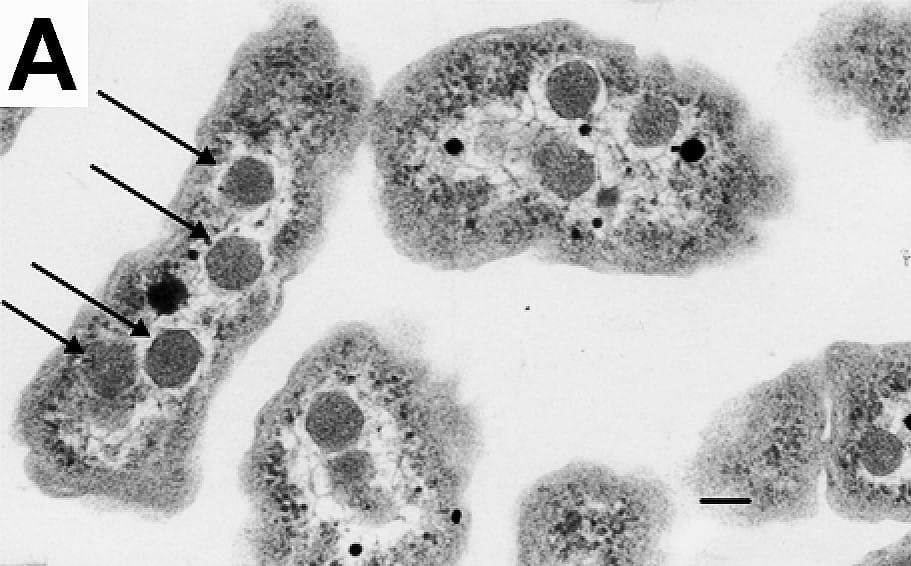
Bacteria occupy soil, water, air, rock kilometres below the surface, hydrothermal vents, ice, and the interior and surface of every plant and animal.
Estimates of their total number reach around ten to the thirtieth power of individual cells, and the deep subsurface may hold a substantial fraction of the planet's total biomass.
The human body carries a large bacterial population, concentrated in the gut. The often-repeated claim that bacterial cells outnumber human cells ten to one has been revised: current estimates put the ratio close to one to one, with the figure varying between individuals and after a bowel movement.
Nitrogen fixation converts atmospheric nitrogen into forms usable by plants, and it is performed only by prokaryotes. All nitrogen in proteins ultimately passed through this step or through the industrial process that imitates it.
Decomposition returns carbon and nutrients from dead material to circulation, and without it those elements would remain locked up.
Photosynthetic bacteria produce a large share of atmospheric oxygen, and cyanobacteria are responsible for oxygenating the atmosphere in the first place.
Mitochondria and chloroplasts descend from bacteria that were engulfed by an ancestral cell, which is the endosymbiotic theory treated separately, so complex life is built partly from bacteria.
Only a small proportion of known species cause disease in humans, and those that do are responsible for tuberculosis, cholera, plague, tetanus, syphilis and many others.
Antibiotics transformed treatment from the 1940s. They exploit differences between bacterial and human cells, targeting the cell wall, bacterial ribosomes, or bacterial DNA replication.
Resistance follows from ordinary selection. Antibiotic use kills susceptible cells and leaves resistant ones to multiply, and horizontal transfer spreads the genes between species. This is treated in the antibiotic resistance capsule and is among the more serious current threats to routine medicine, since surgery and cancer treatment depend on being able to prevent infection.
Bacteria run the chemical cycles that make the planet habitable, they constitute a large share of its living matter, and complex cells are partly built from them.
The common association with disease is a reasonable response to a real danger and a poor description of the group, since the organisms causing illness are a small subset of an enormous and mostly essential population.