The extraction of energy from sugars without oxygen. It is one of the oldest biological processes, humans have exploited it for at least nine thousand years, and it is now the basis of a large part of industrial biotechnology.

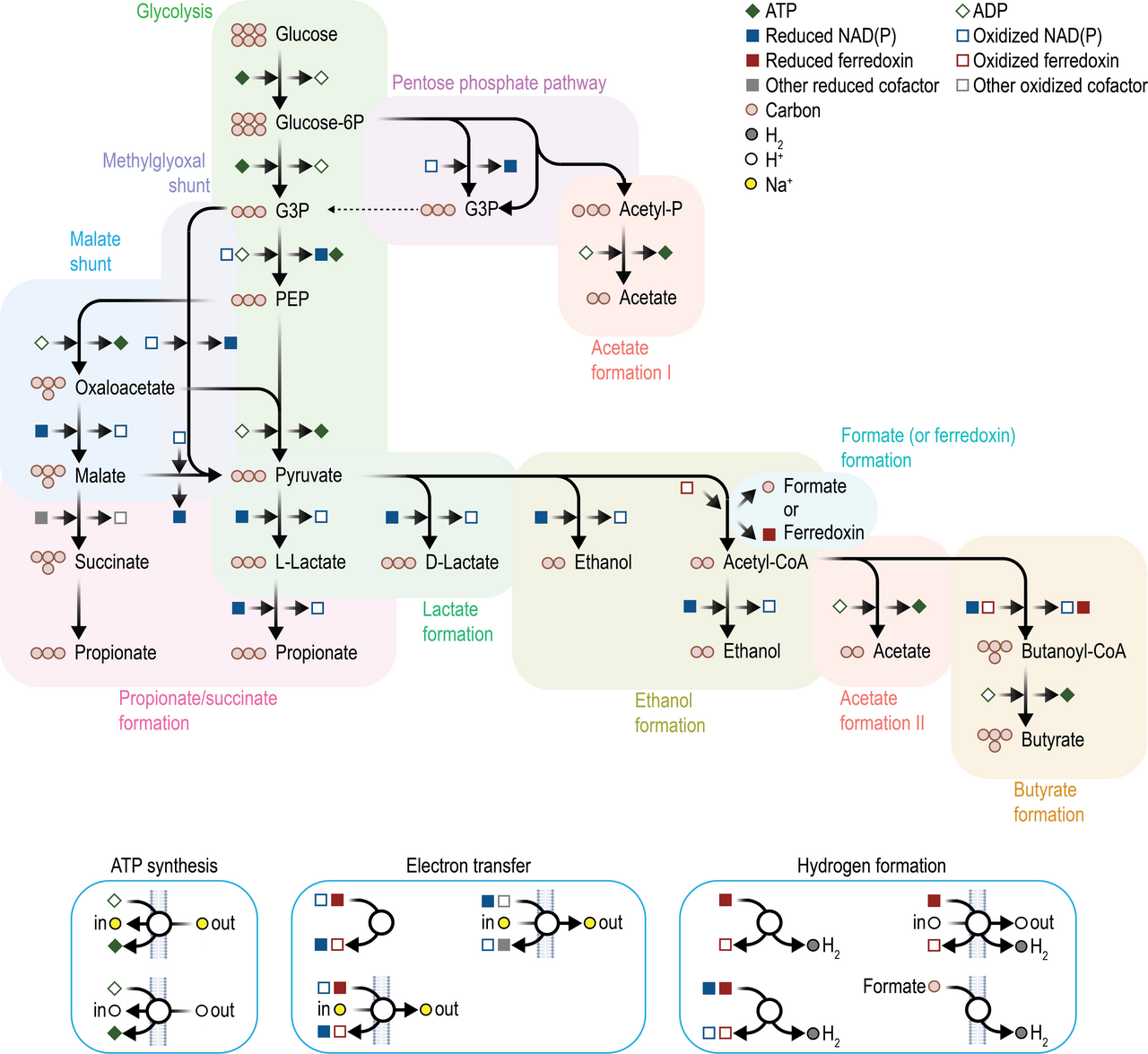
Cells break down glucose in a sequence called glycolysis, producing a small amount of usable energy and a molecule called pyruvate. This step requires no oxygen.
Glycolysis also consumes a carrier molecule that must be regenerated for the process to continue. With oxygen available, respiration handles this and extracts far more energy. Without oxygen, the cell must regenerate the carrier another way, and fermentation is that alternative.
Fermentation therefore is not a means of producing energy so much as a means of allowing glycolysis to keep running when oxygen is absent. The energy yield is small: around two units of usable energy per glucose, against roughly thirty or more from full respiration.
Two pathways matter most. Alcoholic fermentation converts pyruvate to ethanol and carbon dioxide, and is carried out by yeasts and some bacteria. Lactic acid fermentation converts pyruvate to lactate, and is carried out by various bacteria and by animal muscle under heavy exertion.
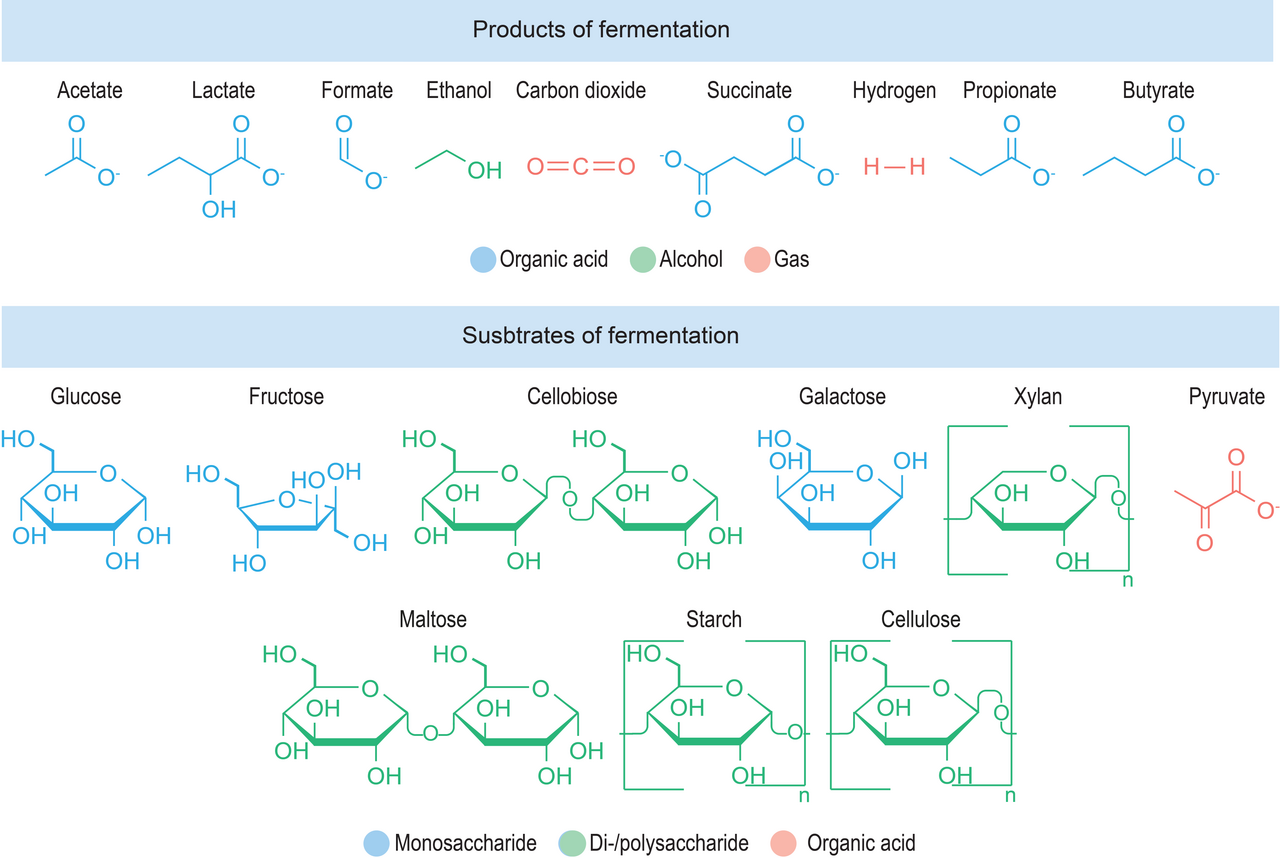
Many other pathways exist, producing acetic acid, propionic acid, butyric acid and mixed products, and which one occurs depends on the organism rather than on the substrate.
Bread rises because yeast produces carbon dioxide, which is trapped in the gluten network. The ethanol produced evaporates during baking.
Beer and wine rely on the ethanol rather than the gas, with yeast fermenting sugars from grain or grape. Distilled spirits are fermented first and concentrated afterwards, since fermentation stops when ethanol reaches a concentration the yeast cannot tolerate.
Cheese, yoghurt and other soured milk products come from lactic acid bacteria, whose acid coagulates milk proteins and inhibits spoilage organisms.
Vegetable ferments including sauerkraut and kimchi rely on lactic acid bacteria already present on the vegetables, encouraged by salt and the exclusion of air.
Soy sauce, miso, vinegar, cocoa, coffee and tea all involve fermentation at some stage, and in the case of cocoa and coffee it develops the flavour precursors without which the final product would be unrecognisable.
Preservation was the original point, and it works by several mechanisms at once.
Acid production lowers pH below what most spoilage and pathogenic organisms tolerate. Ethanol is directly antimicrobial. Salt, commonly added, selects for the desired organisms. And the deliberate organisms outcompete others for nutrients and space.
The result is that a perishable food becomes stable for months without refrigeration, which is why fermented foods appear independently in nearly every food culture.
Fermentation was assumed for most of history to be a spontaneous chemical decomposition.
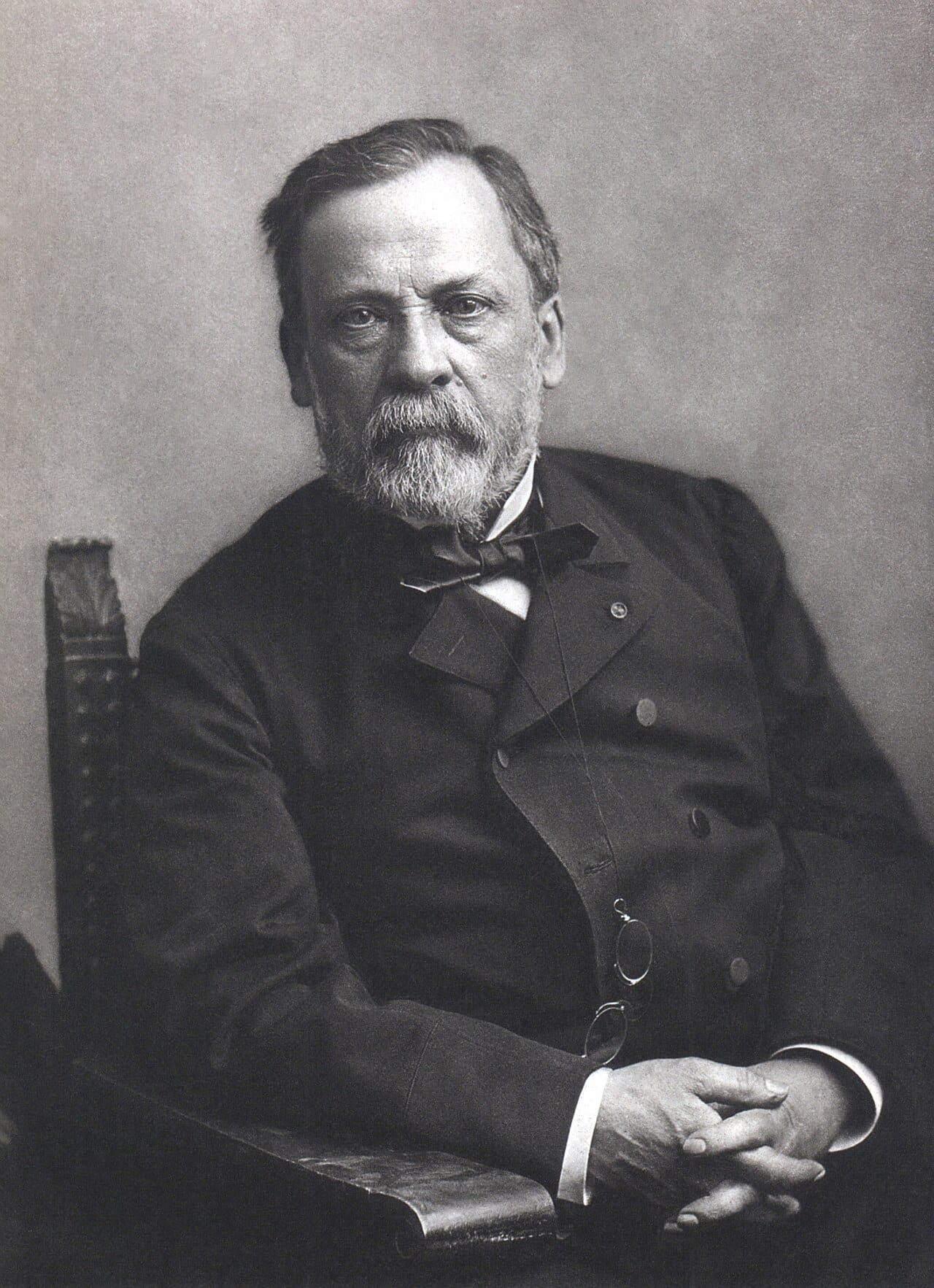
Louis Pasteur established in the 1850s and 1860s that it is caused by living microorganisms, that different organisms produce different products, and that excluding them prevents it. This work also produced pasteurisation and contributed directly to germ theory.
Justus von Liebig held that fermentation was purely chemical, and the dispute was substantial. Both were partly right, which became clear in 1897 when Eduard Buchner showed that an extract of yeast cells, containing no living cells, could still ferment sugar. The agent was a soluble catalyst, which he called zymase.
That result founded biochemistry as a discipline, by establishing that the chemistry of life could be studied outside the living cell.
Fermentation is now a manufacturing technology well beyond food.
Antibiotics including penicillin are produced by fermenting fungi and bacteria at scale, and the development of deep-tank fermentation during the Second World War is what made penicillin available in quantity.
Industrial enzymes for detergents, textiles and food processing are produced by fermentation.
Recombinant proteins, including the insulin described in its own capsule, are made by fermenting engineered microorganisms.
Bioethanol for fuel is produced by fermenting crops, and biogas from anaerobic digestion of waste, which appears in the sewage treatment capsule.
Precision fermentation, in which engineered organisms produce specific proteins such as dairy proteins without animals, is a developing commercial area.
Fermentation is the oldest deliberate use of microorganisms, practised for thousands of years before anyone knew organisms existed, and it remains among the most important. It is also where biochemistry began, since the question of whether fermentation required a living cell produced the discovery that the chemistry of life is carried out by molecules that keep working when the cell is gone.