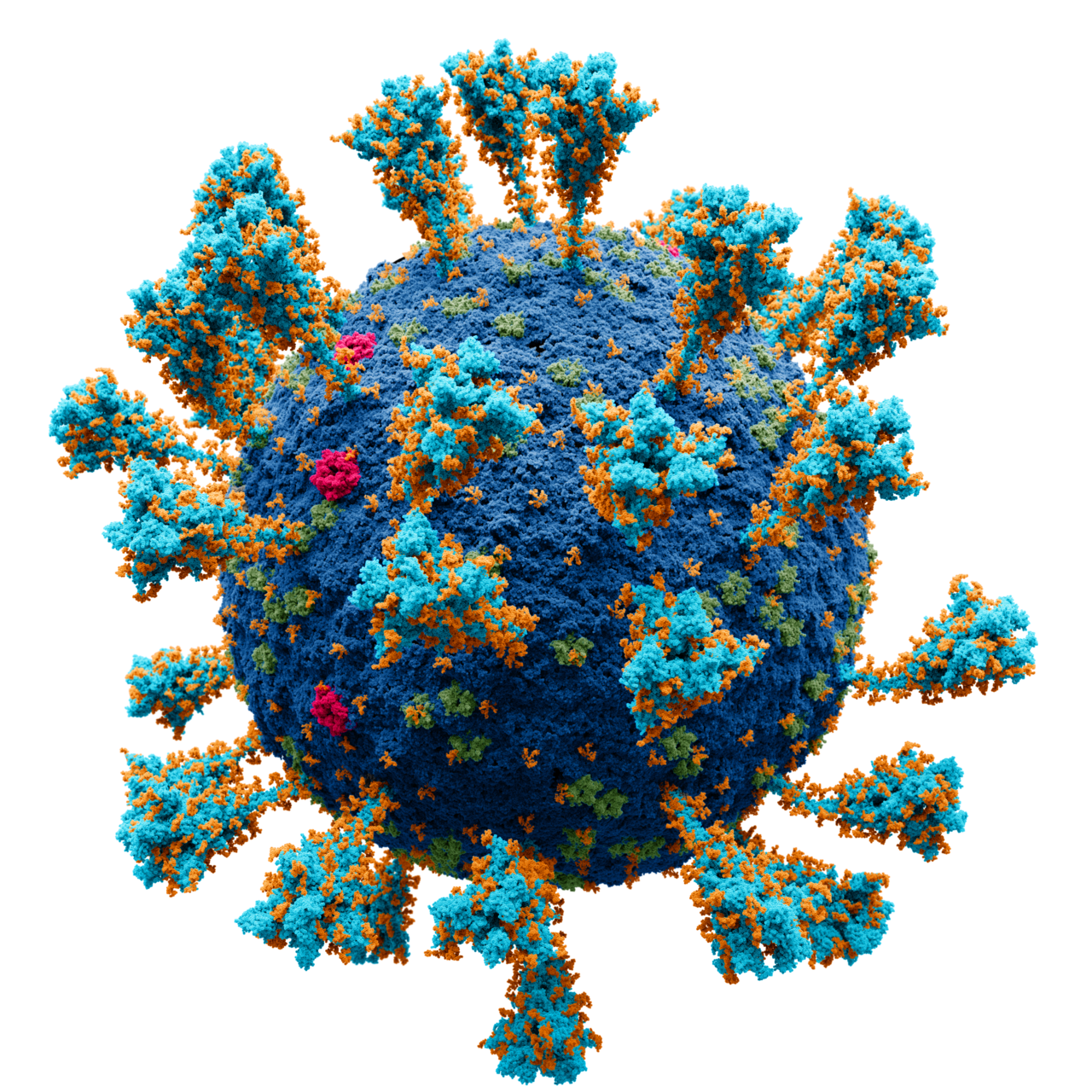
Infectious agents consisting of genetic material inside a protein coat, which reproduce only inside living cells. They are the most numerous biological entities on Earth, and whether they are alive is a genuine question treated in its own capsule.
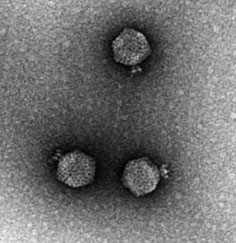
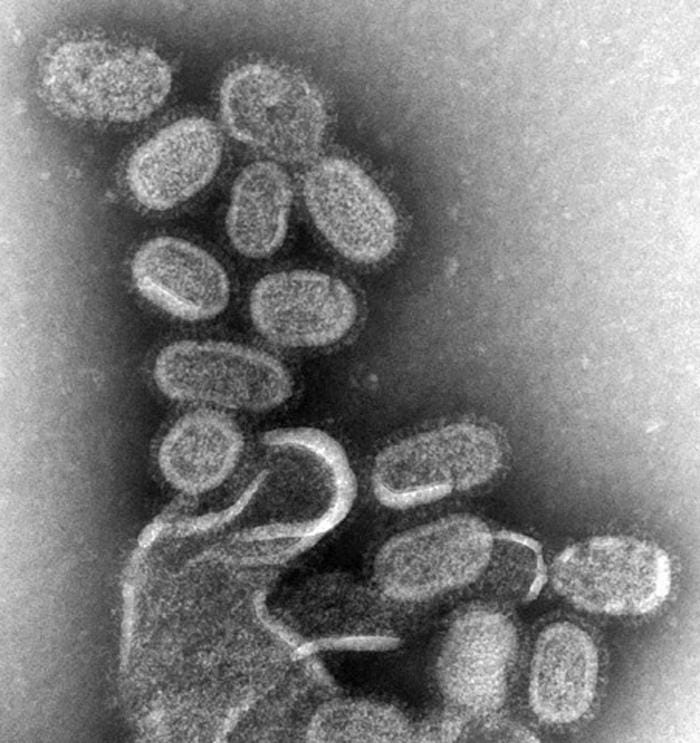
A virus particle contains a genome, either DNA or RNA, enclosed in a protein shell called a capsid. Some also have a lipid envelope taken from the membrane of the cell they left.
They are typically tens to hundreds of nanometres across, far smaller than bacteria, which is how they were first distinguished: filters fine enough to retain bacteria still passed an infectious agent.
They have no metabolism of their own. They generate no energy, synthesise no proteins, and do nothing outside a host cell. Reproduction requires taking over a cell's machinery.
Genome size varies enormously, from a few thousand bases to over two million in the giant viruses discovered from the 2000s, some of which exceed small bacteria in both size and gene count.
Attachment is specific. A virus binds a particular molecule on the cell surface, which determines which species and which tissues it can infect. Host range follows from that binding.
Entry occurs by fusion with the membrane or by being taken into the cell.
Replication uses the host's machinery to copy the genome and produce viral proteins. RNA viruses generally carry their own copying enzyme, since cells have none for RNA.
Assembly puts the components together, and many capsids self-assemble from identical subunits, which is why a small genome can specify a large structure.
Release occurs by bursting the cell or by budding through the membrane.
Some viruses instead integrate into the host genome and remain latent, replicating with the cell and reactivating later. Herpes viruses and HIV both do this, which is why those infections are lifelong.
Viruses are the most numerous biological entities known. Estimates put the number in the oceans alone at around ten to the thirtieth power, and a litre of seawater contains billions.
Bacteriophages, viruses infecting bacteria, kill a substantial fraction of marine bacteria daily, which releases their contents into the water and is a major process in ocean nutrient cycling.
They drive evolution. Viruses transfer genes between organisms, and horizontal gene transfer mediated by viruses is treated in its own capsule.
They are embedded in genomes. Roughly eight per cent of the human genome consists of sequences derived from retroviruses that integrated into germ line cells in the ancestral past. Some have been co-opted for host functions, and a protein essential to placenta formation in mammals derives from a viral gene, which is a striking case of viral sequence becoming necessary to the host.
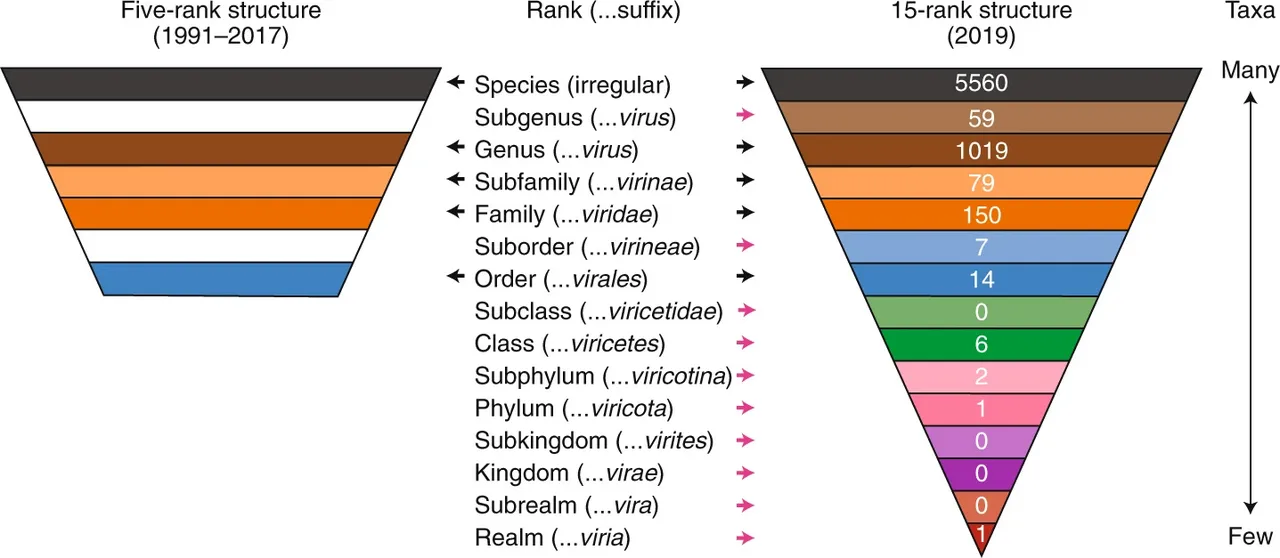
Viral diseases include influenza, measles, HIV, hepatitis, polio, smallpox and the coronaviruses.
Antibiotics do not work against them, since antibiotics target bacterial structures and processes that viruses do not have. Prescribing them for viral infections is ineffective and contributes to resistance, as the antibiotic resistance capsule describes.
Antiviral drugs target virus-specific steps, including the enzymes that copy viral genomes and the proteases that process viral proteins. They are harder to develop than antibacterials because viruses use so much of the host's own machinery, leaving fewer targets that are not also the host's.
Vaccination is the most effective control, and smallpox eradication, described in the contact tracing capsule, remains the only complete eradication of a human disease.
Mutation rates are high in RNA viruses, since their copying enzymes lack proofreading. This is why influenza vaccines are reformulated annually and why variants emerge, and it is also why some antiviral strategies work by increasing the mutation rate until the virus can no longer produce viable copies.
Zoonotic spillover, in which a virus crosses from an animal population into humans, is the origin of most new human viral diseases, and the conditions increasing its likelihood, including habitat encroachment and wildlife trade, are the subject of active surveillance.
Tobacco mosaic disease was the first case. Dmitri Ivanovsky showed in 1892 that the agent passed through filters that retained bacteria; Martinus Beijerinck in 1898 concluded that it was a new kind of agent that reproduced only in living tissue and named it a contagious living fluid.
The first virus was seen only with the electron microscope in the 1930s, and tobacco mosaic virus was among the first imaged and later the first to have its structure determined.
Viruses are the most abundant entities in the biosphere and are major agents in ocean ecology, evolution and disease, which makes their usual characterisation as pathogens a description of a small and consequential subset.
They also sit at the boundary of the definition of life, having genomes and evolving while lacking metabolism and independent reproduction. That the boundary is genuinely unclear is itself informative about how the definition was constructed.