A system in which authority is divided between a central government and regional governments, each with powers that the other cannot unilaterally remove. It is a solution to governing large or diverse territories, and the division it establishes is permanently contested.
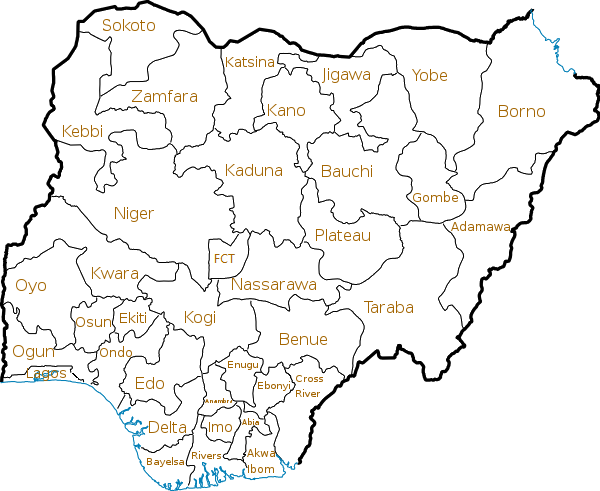
In a unitary state, regional authorities exercise powers delegated by the centre, which may alter or withdraw them.
In a federal state, both levels derive authority from the constitution directly. The centre cannot abolish the regions and the regions cannot secede unilaterally, and neither is the creature of the other.
A confederation is looser still, with the centre deriving its authority from the constituent units, which retain sovereignty. Confederations have generally proved unstable, and both the United States and Switzerland moved from confederation to federation.
Devolution transfers powers from a unitary centre to regions while leaving the centre able to reclaim them in principle, which is why the United Kingdom is a devolved unitary state rather than a federation.
A written constitution is effectively necessary, since the division of powers must be stated in a form neither level can alter alone.
An amendment procedure requiring regional consent, so that the centre cannot rewrite the division.
An umpire, generally a constitutional court, to resolve disputes about which level may act.
Regional representation in the centre, commonly through an upper chamber representing the units rather than the population. The Australian and American senates give equal representation to units of very unequal size, which is a deliberate feature and a permanent source of argument about proportionality.
Fiscal arrangements, which determine whether formal powers mean anything in practice.

Size is one reason. Governing a very large territory from a single centre is impractical, and most of the world's largest countries by area are federal.
Diversity is the other. Where a population is divided by language, religion or nationality, federalism allows groups to control matters they care most about while remaining in one state. Switzerland, Canada, India and Belgium are governed this way.
Historical formation matters. Federations frequently arise where previously separate units combine and are unwilling to dissolve into a unitary state, which describes the United States, Switzerland, Australia and Germany.
The theoretical arguments are that federalism permits policy experimentation across units, brings government closer to the governed, and divides power as a check on its concentration.
The division of powers is never settled. Every federation has a continuous history of litigation and negotiation about which level may act, and the boundary moves.
The general direction has been centralising. Federal governments have expanded their role in most federations over the twentieth century, driven by economic integration, war, and the growth of social provision, and by fiscal capacity.
Fiscal federalism is where the substance lies. Where the centre collects most revenue and regions carry most spending responsibilities, formal autonomy is limited by dependence on transfers. Conditional grants, which attach requirements to funding, are the principal mechanism by which central governments influence areas they cannot legislate on directly.
Equalisation, transferring resources from wealthier to poorer units, exists in most federations and is politically contentious in all of them.
Asymmetric federalism gives different powers to different units, as with Quebec in Canada and Kashmir historically in India, and is a practical response to particular circumstances that raises questions of equal treatment.
Secession is the extreme case. Most federal constitutions do not provide for it, and the question of whether a unit may leave has been settled by force in some cases and by negotiated process in others. Canada's Supreme Court set out in 1998 that a clear majority on a clear question would create an obligation to negotiate, which is an unusual and considered answer to a question most constitutions avoid.
The evidence is mixed and depends on what is being asked.
Federalism does appear to help hold diverse states together, and several long-standing multilingual democracies are federal.
The experimentation argument is supported in some cases, with policies tried in one unit and adopted more widely, and it also permits races to the bottom where units compete by lowering standards.
Coordination costs are real, and federal systems responded unevenly to the COVID-19 pandemic, with several showing difficulty in coordinating measures across units.
Accountability is diffused. Where two levels share responsibility for an outcome, voters have difficulty determining who is answerable, which is a recognised weakness.
Federalism is the principal constitutional device for governing territories too large or too diverse for a single government, and a substantial share of the world's population lives under it, including in the largest democracies.
Its central tension is also permanent by design. A division of authority that neither level can unilaterally change guarantees continuing dispute about where the line falls, and that dispute is the system working rather than failing.