Democratic peace theory holds that democracies do not, or almost never, go to war with one another. It is among the strongest empirical regularities anyone has claimed in international relations, and it has been called the closest thing to an empirical law in the field. Whether the regularity is real, and if so what causes it, remains disputed.
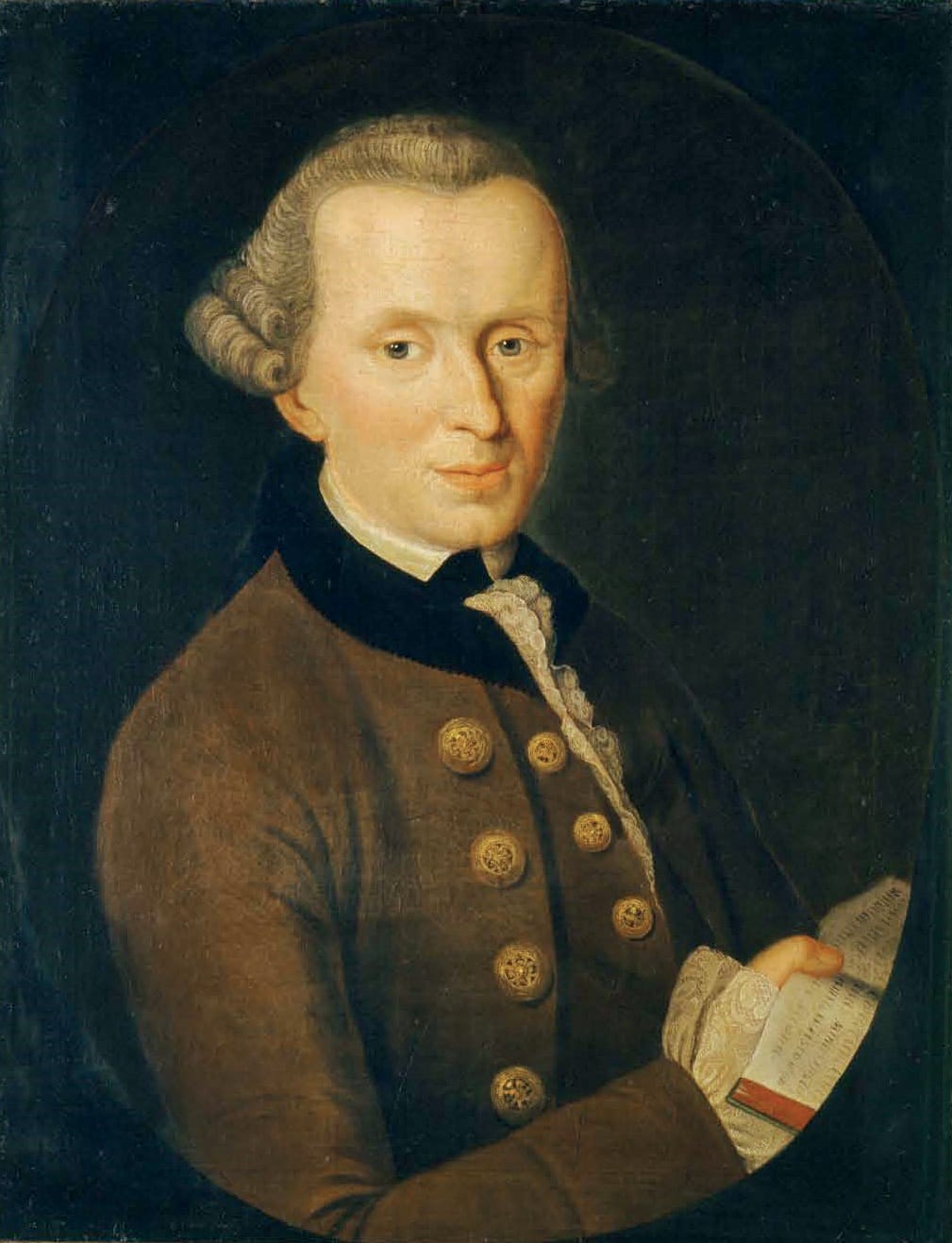
Immanuel Kant set out the intuition in Perpetual Peace in 1795, arguing that republics would be reluctant to go to war because the citizens who bear the cost would decide the question. The modern statistical version dates to the 1970s and 1980s, when researchers examining datasets of interstate wars found remarkably few, and by strict definitions none, fought between established democracies.
The claim is specifically dyadic: it says democracies rarely fight each other, not that democracies are peaceful in general. Democracies have gone to war frequently against non-democracies and have conducted a great many interventions, so the theory is not a claim about restraint as such.
Two families. The normative account holds that democracies resolve internal conflict by compromise and externalise those norms, extending to states they recognise as similar the expectation of negotiation rather than force. The structural account holds that elected leaders face audiences who bear the costs, that mobilisation is slow and visible, and that this both restrains leaders and signals resolve credibly enough that disputes settle short of war.
Definitional. The result is sensitive to how democracy and war are defined. Setting the threshold for democracy high enough, and the casualty threshold for war high enough, can remove the counterexamples. Critics argue this makes the claim partly true by construction. Candidate exceptions that get argued over include the War of 1812, the American Civil War, the Spanish-American War, the Kargil conflict, and the 2008 Russia-Georgia war, each excluded on grounds that critics regard as convenient.
Sample size. Democracies were rare before the twentieth century and clustered among wealthy states afterwards, so the number of democratic pairs with both the opportunity and the motive to fight is small. Some argue the finding is not statistically distinguishable from chance once this is accounted for.
Confounding. The democratic peace may be a Cold War artefact, since most democracies were allied against a common adversary. It may reflect trade and economic interdependence, or shared membership of institutions, or simply that wealthy states fight each other less regardless of regime type. Realist critics argue that alliance structures and the distribution of power explain the pattern without reference to domestic institutions.
Covert action. Democracies have repeatedly subverted other democracies without open war, through coups, funding, and covert operations. Whether that counts against the theory depends on whether the claim is about war specifically or about hostility generally.
This is not an academic dispute only. The theory has been invoked to justify democracy promotion as a security policy, including forcible regime change, on the reasoning that spreading democracy spreads peace. Critics note that even if the dyadic finding is sound, it says nothing about the transition period, and there is evidence that states in the process of democratising are more war-prone than either stable democracies or stable autocracies, which inverts the policy conclusion.