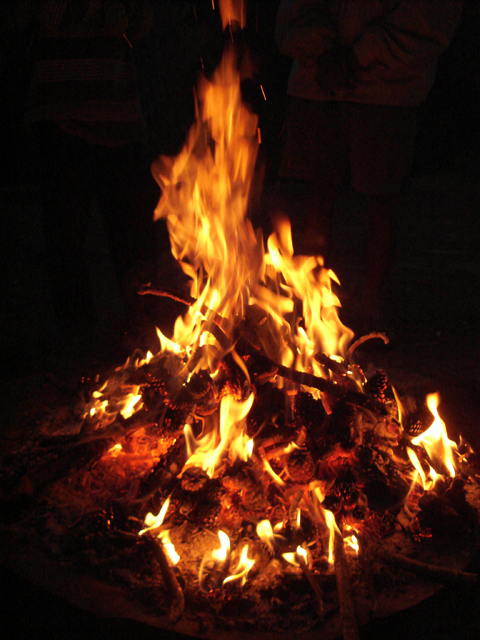
The rapid reaction of a fuel with an oxidant that releases heat and usually light. It is the oldest technology humans control, it still supplies most of the world's energy, and its chemistry was not correctly understood until the 1770s.
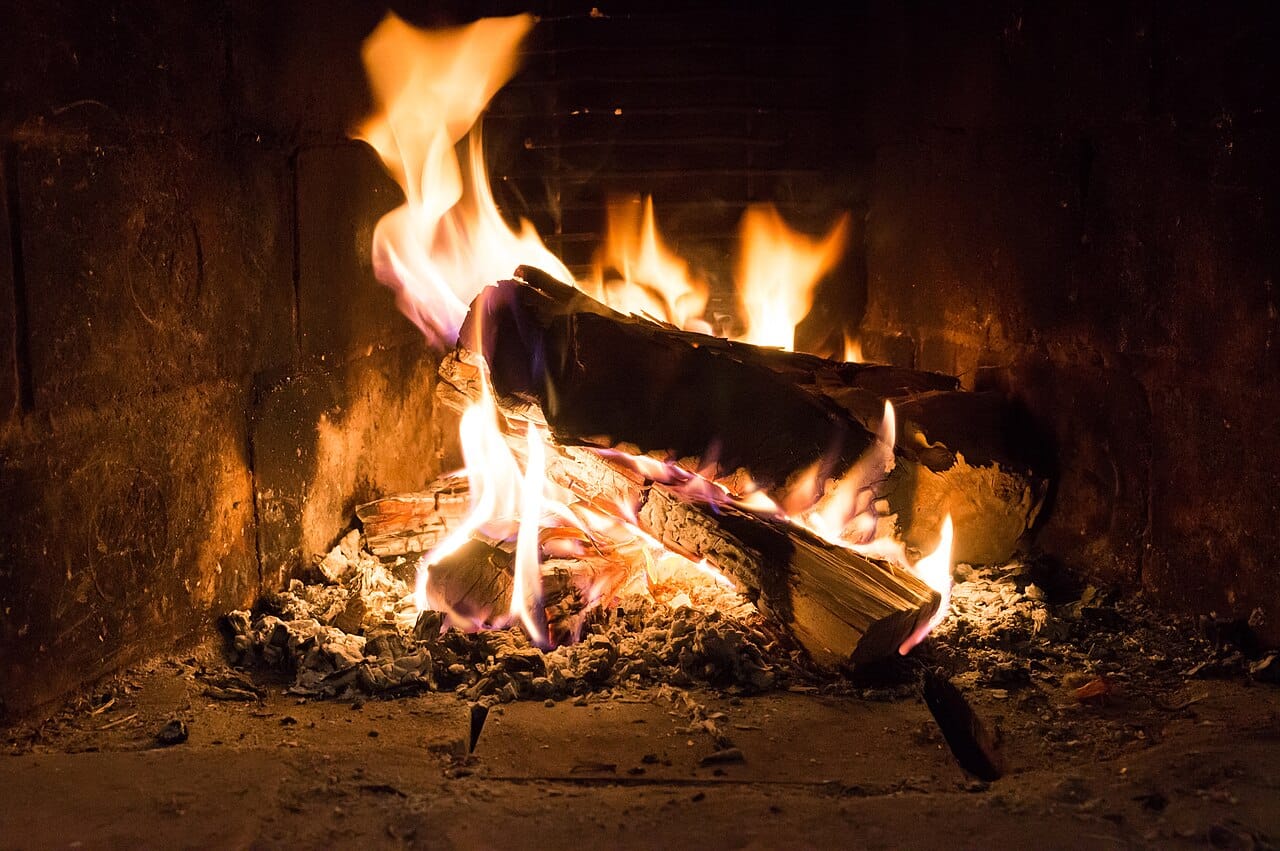
Combustion is oxidation: the fuel loses electrons to an oxidant, almost always oxygen. Bonds in the fuel and in the oxygen are broken and new, stronger bonds are formed in the products, and the difference in bond energy is released as heat.
Complete combustion of a hydrocarbon gives carbon dioxide and water. Incomplete combustion, where oxygen is insufficient, gives carbon monoxide and soot instead, which is why a badly adjusted burner produces a yellow smoky flame and a well-adjusted one a clean blue flame. Carbon monoxide is odourless and binds haemoglobin far more tightly than oxygen does, which makes incomplete combustion in an enclosed space lethal.
A flame is not the fuel itself burning. Solid and liquid fuels first vaporise or decompose, and it is the resulting gas that reacts. This is why a candle needs a wick, which draws liquid wax up to be vaporised by the heat, and why blowing out a candle leaves a trail of vaporised wax that can be relit from a distance.
Three things must be present at once: fuel, an oxidant, and enough energy to start the reaction. Removing any one stops it, which is the principle behind every method of extinguishing a fire.
Water works mainly by cooling below the temperature at which the fuel continues to vaporise. Smothering removes the oxygen. Firebreaks remove the fuel. Some extinguishing agents work by a fourth route, interrupting the chain of radical reactions that sustain the flame chemically.
Combustion is self-sustaining once started because it releases more energy than it needs to keep going. The ignition temperature is the threshold at which that becomes true.
The familiar teardrop shape of a flame is a consequence of gravity rather than of combustion. Hot gas is less dense and rises, drawing fresh air in below. In free fall there is no buoyancy, no convection, and a flame forms a sphere fed only by the slow diffusion of oxygen. Studying flames in orbit has been scientifically useful precisely because it removes a variable that cannot be switched off on Earth.
Fire was explained for most of the eighteenth century by the phlogiston theory, which held that combustible materials contained a substance released on burning. The theory is treated in its own capsule; its fatal problem was that metals gain weight when they burn, which a theory of something leaving cannot easily accommodate.
Antoine Lavoisier established in the 1770s that combustion is combination with a component of the air, which he named oxygen, and demonstrated it by careful weighing in sealed vessels. The result founded modern chemistry as a quantitative science, since the argument turned entirely on conservation of mass.
Combustion supplies the substantial majority of the world's primary energy, through coal, oil and natural gas, and it drives electricity generation, road transport, aviation, shipping, heating and most industrial heat.
Internal combustion engines and gas turbines are treated separately. Cement, steel and glass production all require temperatures reachable in practice only by burning something, which is why those industries are difficult to decarbonise.
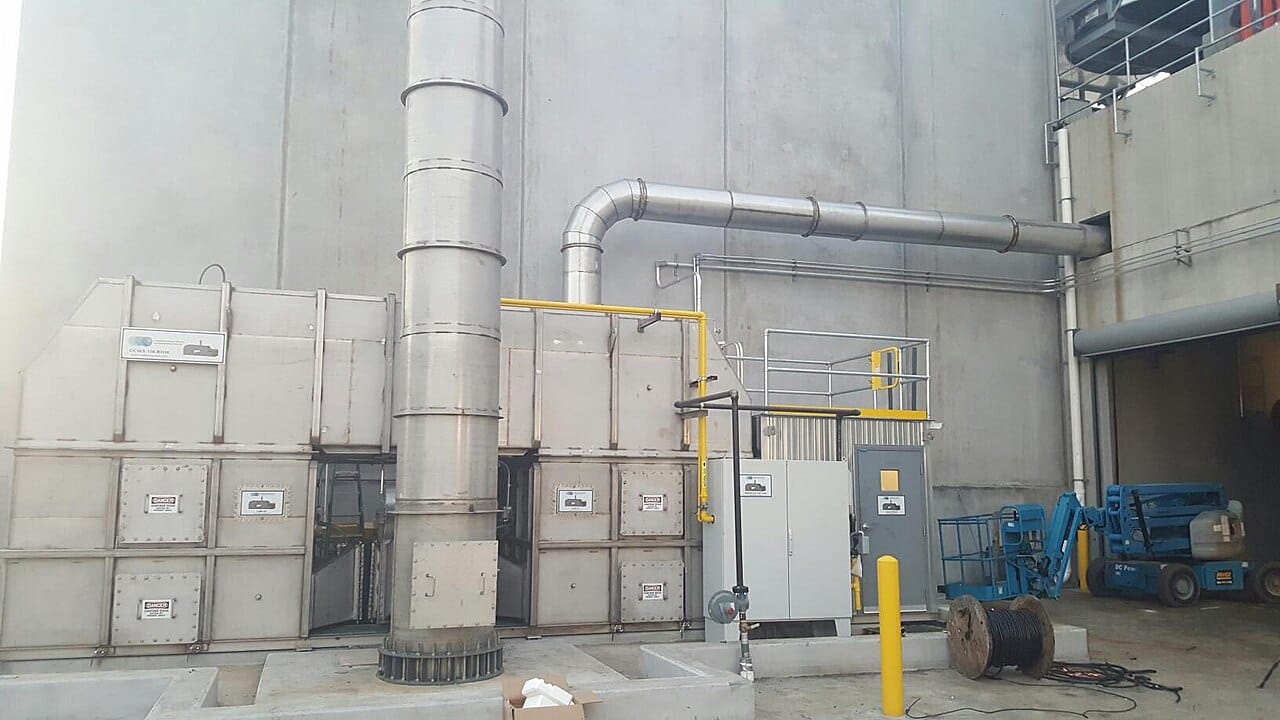
Controlled combustion is also used to destroy things deliberately. Incineration and thermal oxidisers burn waste streams and industrial vapours to convert harmful compounds into carbon dioxide and water.
Slow oxidation is the same chemistry at a different rate. Rusting and biological respiration both transfer electrons to oxygen and release energy; respiration does it in many small enzyme-controlled steps rather than in one uncontrolled release.
Combustion of fossil fuels is the principal source of the carbon dioxide driving climate change.
It is also the largest source of air pollution affecting human health. Particulate matter, nitrogen oxides and sulfur dioxide from combustion are associated with respiratory and cardiovascular disease, and indoor combustion of solid fuels for cooking remains a major cause of illness in households without access to cleaner fuels.
Control of fire is among the oldest human technologies and among the most consequential, and the reaction behind it remains the primary way the species obtains energy. Its chemistry is also the historical hinge at which chemistry became quantitative, since getting combustion right required taking mass conservation seriously enough to weigh the gases.