Using an electric current to drive a chemical reaction that would not happen on its own. It is the reverse of a battery, and it is how aluminium, chlorine and industrial hydrogen are made.
An electrolytic cell has two electrodes in a conducting liquid, connected to an external power supply that forces electrons in one side and out the other.
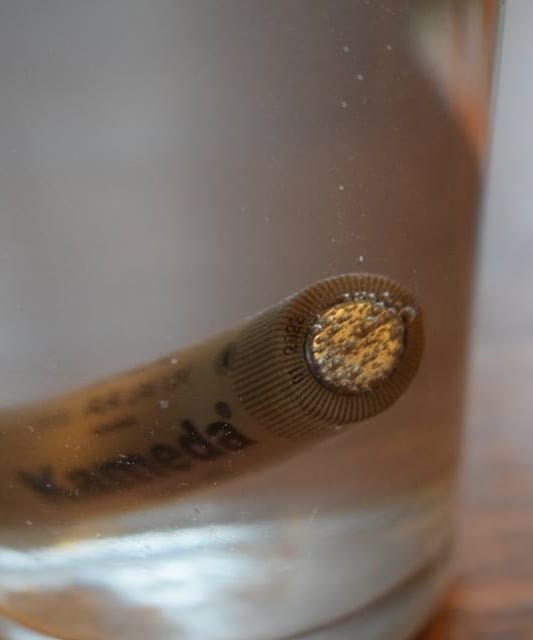
Reduction, the gain of electrons, occurs at the cathode. Oxidation, the loss of electrons, occurs at the anode. Ions in the liquid carry the current between them, so the circuit is completed by moving matter rather than by moving electrons through the solution.
The applied voltage must exceed the reaction's own thermodynamic requirement, plus an additional overpotential to overcome the kinetics at each electrode. The gap between those two numbers is where most of the wasted energy in an industrial cell goes.
Which reaction occurs is not always the one predicted by thermodynamics alone. In salt water, both chloride oxidation and water oxidation are possible at the anode, and the product depends on concentration and on electrode material because of overpotential. Industrial chlorine production depends on exactly this.
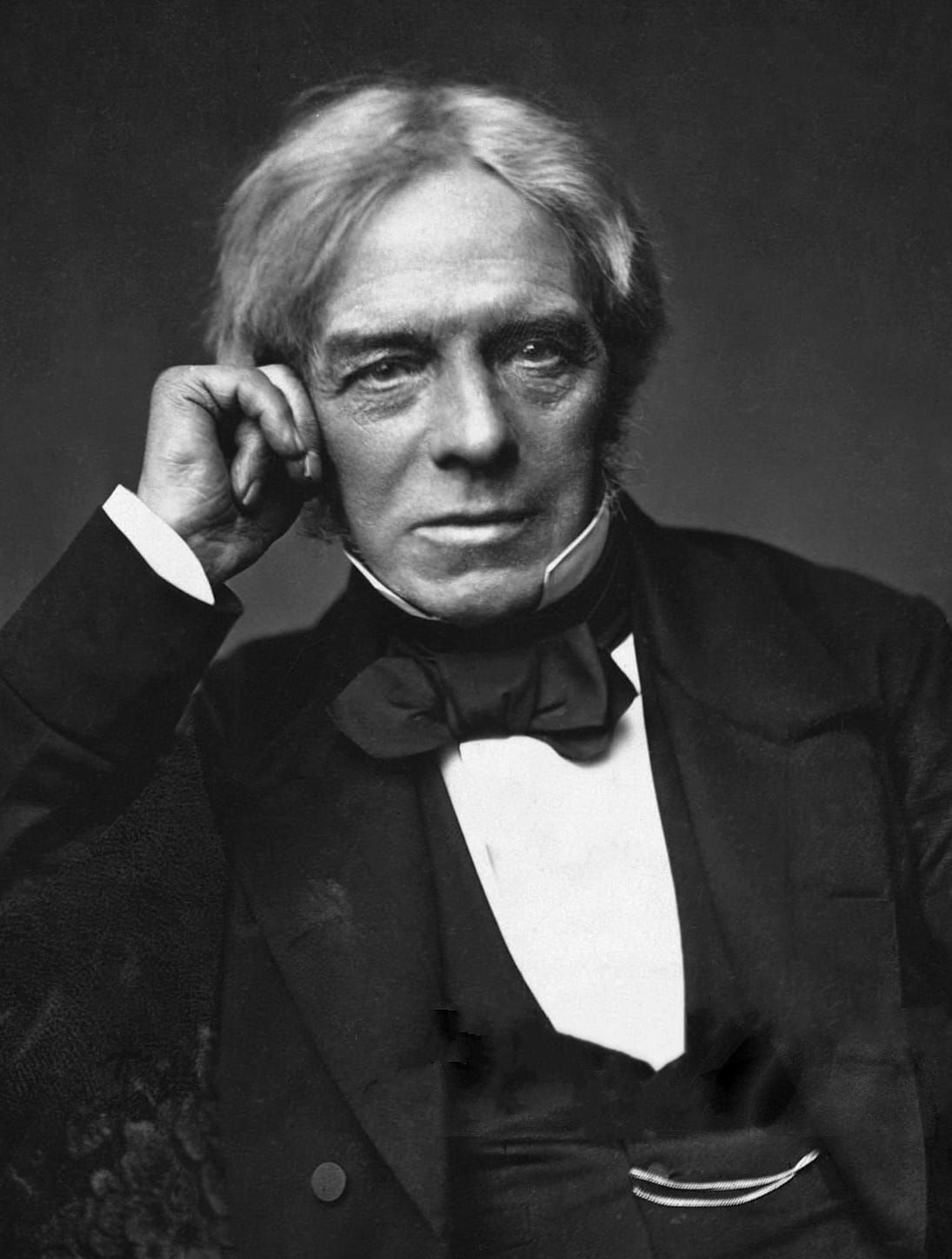
Michael Faraday established in 1833 and 1834 that the mass of substance transformed at an electrode is proportional to the quantity of electric charge passed, and that the mass produced by a given charge is proportional to the substance's equivalent weight.
The laws are exact and are still how industrial cells are metered. They also carried an implication Faraday himself did not press: if a fixed quantity of charge always liberates a fixed amount of a given element, electricity may itself be divided into fixed units. That reading was taken up later and contributed to the identification of the electron.
The Faraday constant, about 96,485 coulombs per mole, is the charge on a mole of electrons and is one of the most accurately known constants in chemistry.
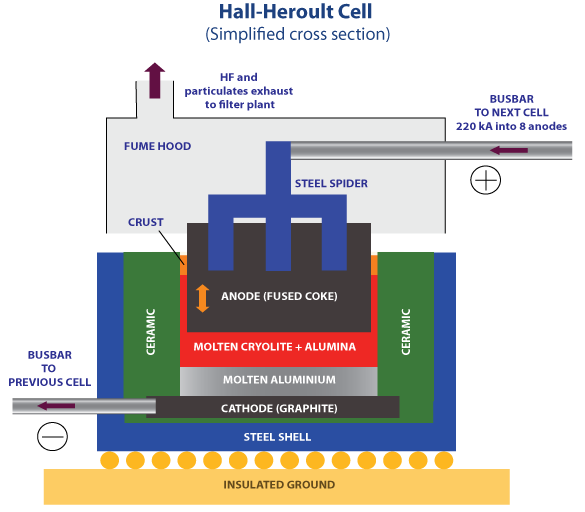
Aluminium is the largest application. The metal is bound so tightly to oxygen that no ordinary chemical reduction is practical, and aluminium was a precious metal until 1886, when Charles Hall and Paul Héroult independently found that dissolving alumina in molten cryolite gives a bath that can be electrolysed at a workable temperature. The process still consumes on the order of fourteen kilowatt hours per kilogram of metal, which is why smelters are built where electricity is cheap.
The chlor-alkali process electrolyses brine to produce chlorine, sodium hydroxide and hydrogen, three commodity chemicals from one cell, and supplies most of the world's chlorine.
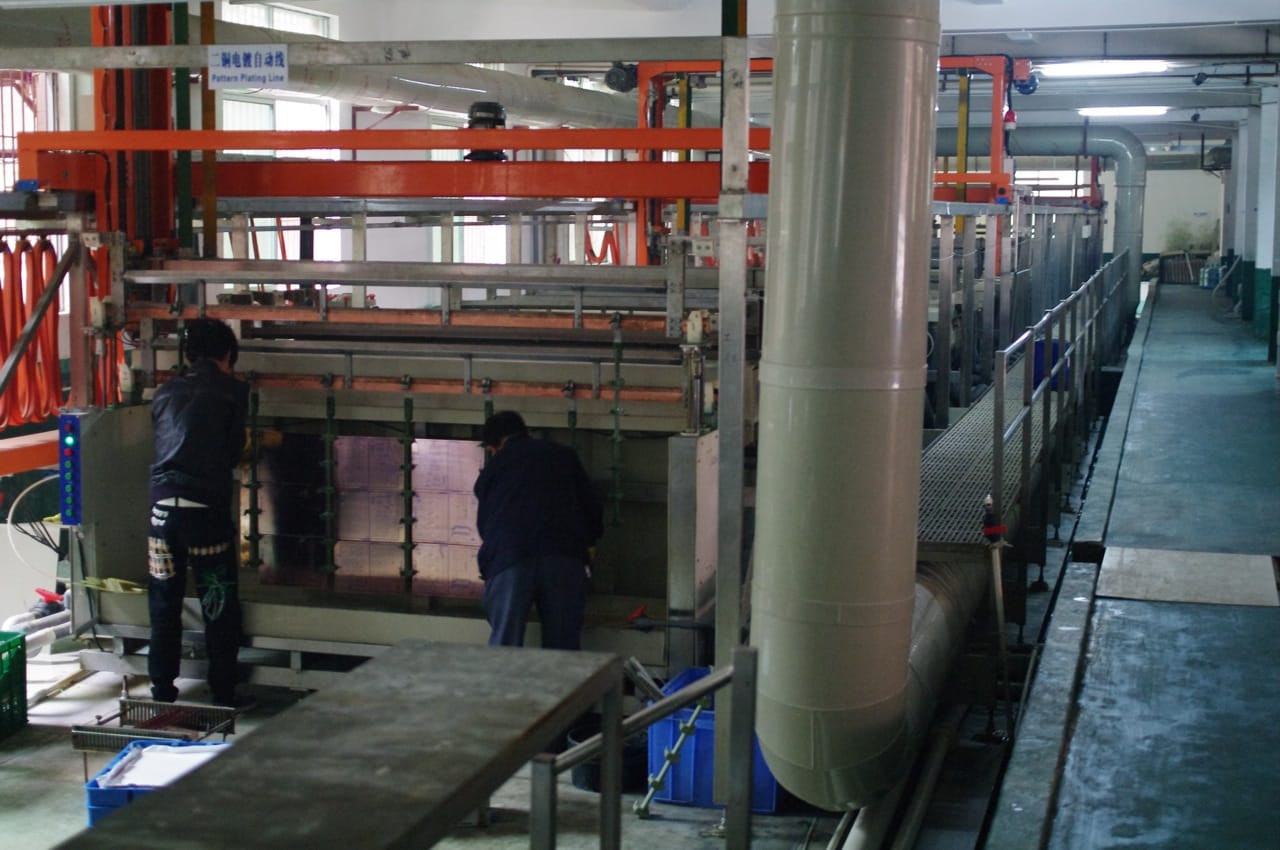
Electroplating deposits a thin metal layer onto a conducting object, for corrosion resistance, appearance or conductivity, with thickness controlled directly by the current and time. Electrorefining uses the same principle to purify copper to the very high purity that electrical conductors require, with the impurities collecting as a sludge under the anode that is itself a commercial source of silver, gold and platinum.
Anodising thickens the natural oxide layer on aluminium rather than adding a foreign metal, which is why the finish does not chip off.
Electrolysis of water produces hydrogen and oxygen, and the hydrogen carries no carbon at the point of use. Whether the whole chain is low carbon depends entirely on the electricity supplied, so hydrogen made from fossil-fired grid power is worse than making it from natural gas directly.
Three cell technologies compete. Alkaline electrolysis is the mature and cheapest option. Proton exchange membrane cells are more compact and respond quickly to variable input, which suits intermittent renewable supply, but use iridium and platinum. Solid oxide cells run hot and are more efficient in principle, and are the least commercially established.
Most industrial hydrogen today is still made by steam reforming of natural gas, and electrolytic hydrogen remains a small fraction of supply. The economics turn on electricity price and on how many hours a year the plant runs, both of which are moving.
Electrolysis is the standard method for extracting elements that resist chemical reduction, and it made aluminium a structural material rather than a curiosity. It is also the clearest laboratory demonstration that chemical change and electric charge are two aspects of the same thing.