The selection of some information for processing at the expense of the rest. It exists because the senses deliver far more than the brain can handle, and nearly every account of it is an account of how that bottleneck is managed.
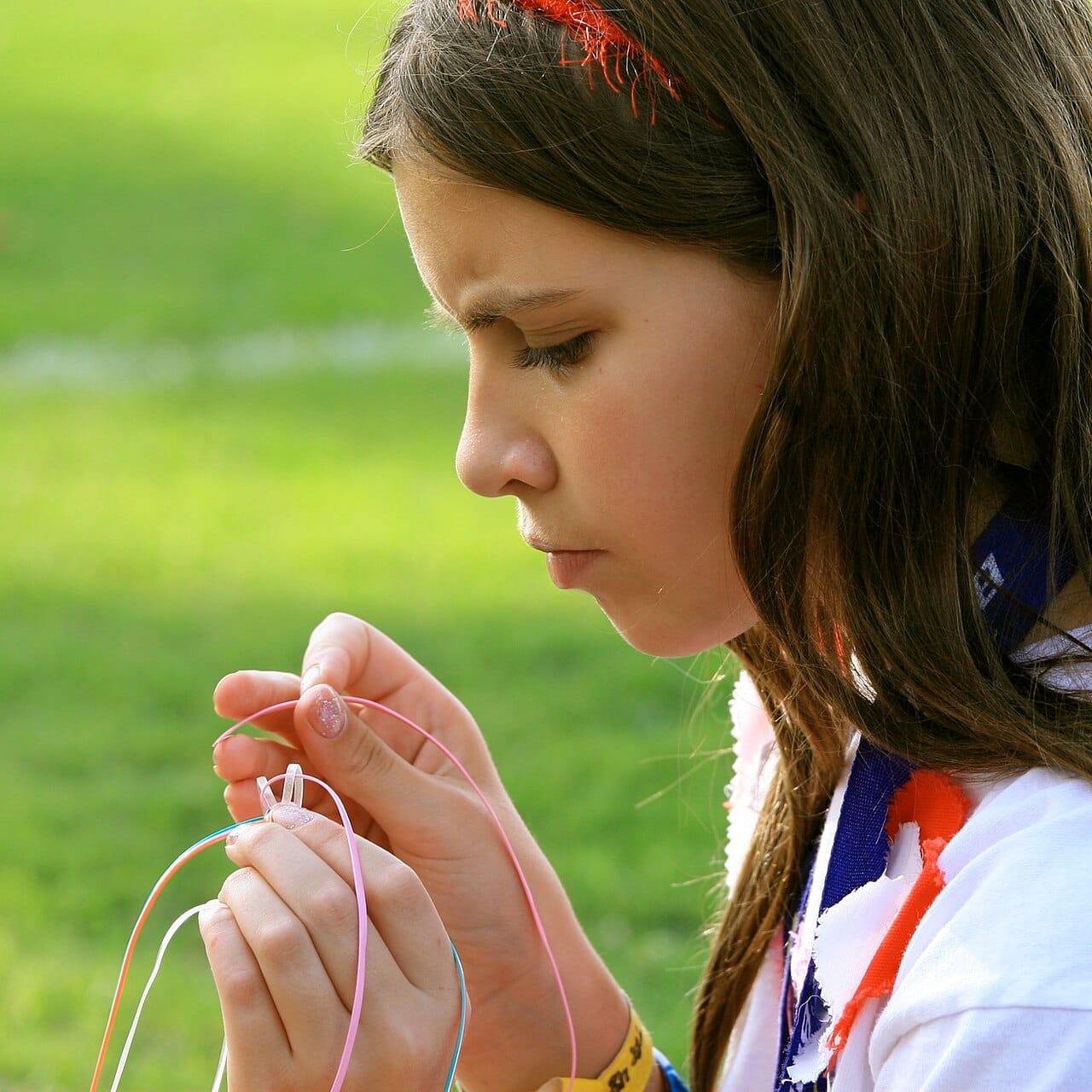
The eyes alone deliver an enormous quantity of information every second, and the capacity available for detailed processing is a tiny fraction of it. Selection is therefore mandatory rather than optional.
William James wrote in 1890 that everyone knows what attention is, and his description remains serviceable: taking possession by the mind of one out of several simultaneously possible objects, which implies withdrawal from some things in order to deal effectively with others.
Selective attention is focusing on one source while ignoring others.
Divided attention is attempting to handle more than one task at once, and its limits are the reason multitasking is generally poor.
Sustained attention, or vigilance, is maintaining focus over time, and performance declines measurably within tens of minutes on monotonous tasks.
Endogenous attention is directed voluntarily by goals. Exogenous attention is captured involuntarily by an event, such as sudden movement or a loud noise. The second overrides the first, which is useful for survival and is exploited by anything designed to interrupt.

The cocktail party effect names the ability to follow one conversation among many. Colin Cherry investigated it in the 1950s using dichotic listening, presenting different messages to each ear and asking participants to repeat one.
Participants could do this well, and afterwards knew almost nothing about the unattended message, not even the language it was in. That suggested selection occurred early, before meaning was extracted.
The picture was complicated by a robust finding: participants notice their own name in the unattended channel. That requires the unattended input to have been processed for meaning at least far enough to detect a match, which an early filter should have prevented.
The resolution is that filtering is graded rather than absolute. Unattended input is attenuated rather than blocked, so highly salient material can still get through.
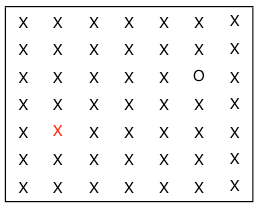
Visual search reveals how selection operates. When a target differs from surrounding items by a single basic feature, such as colour, it is found in roughly the same time regardless of how many other items are present, an effect described as popping out.
When the target is defined by a combination of features, such as a red vertical bar among red horizontal and green vertical bars, search time increases with the number of items, which indicates items are being checked in sequence.
The standard interpretation is that basic features are registered in parallel across the whole field, and that binding features together requires attention applied to each location.
Attention can also be directed without moving the eyes, which was demonstrated by cueing a location and measuring faster responses to targets appearing there.
Inattentional blindness is the failure to notice a fully visible object when attention is engaged elsewhere. The best-known demonstration asked viewers to count basketball passes; about half failed to notice a person in a gorilla suit walking through the scene.
Change blindness is the failure to notice large changes to a scene when the change coincides with a visual interruption. In one demonstration an experimenter asking for directions was replaced by a different person during a brief obstruction, and many participants did not notice.
Both findings undermine the intuition that visual experience is a complete representation of what is in front of us. What is available is much sparser than it feels.
Attention is closely tied to the frontal and parietal networks, and it is one of the functions most sensitive to disruption.
Hemispatial neglect, usually following right parietal damage, leaves patients unable to attend to the left side of space. They may eat from one side of a plate and shave one side of the face, and the deficit is one of attention rather than of vision, since the visual pathways are intact.
Attention deficit hyperactivity disorder involves difficulties with sustained attention and with inhibiting responses to distraction, and it is better characterised as dysregulation than as an absence of attention, since intense focus on engaging material is common.
Fatigue, sleep loss and stress all degrade attentional control, which is why they degrade nearly every other cognitive measure too.
Attention determines what enters awareness and therefore what can be remembered, learned or acted upon, which makes it the gateway to most of cognition. Its limits also have direct practical consequences: driving while conversing, monitoring an automated system for rare failures, and designing anything intended to be noticed all run into the same fixed capacity.