The claim that messages flashed too briefly to be consciously seen can compel people to buy things. It rests on a single 1957 demonstration that its author later admitted he had fabricated, and it produced legislation in several countries before that admission.

In 1957 James Vicary, a market researcher, announced that over six weeks he had flashed the messages Eat popcorn and Drink Coca-Cola onto the screen of a cinema in Fort Lee, New Jersey, for a three thousandth of a second at a time, far below the threshold of conscious perception.
He reported that popcorn sales rose by 57.5 per cent and Coca-Cola sales by 18.1 per cent.

The response was immediate and enormous. Vance Packard's book The Hidden Persuaders, published the same year, had already primed the public to see advertising as a covert manipulation of the unconscious, and Vicary's figures appeared to confirm it.
The reaction was regulatory. The practice was banned in the United Kingdom and in Australia, the American National Association of Broadcasters prohibited it, and the Federal Communications Commission indicated that a licensee using it would put its licence at risk. A technique that had produced one unpublished result was outlawed across several countries within a few years.
The claim never had any supporting documentation. Vicary produced no data, no protocol and no independent verification, and the manager of the cinema later said that no such test had taken place there.
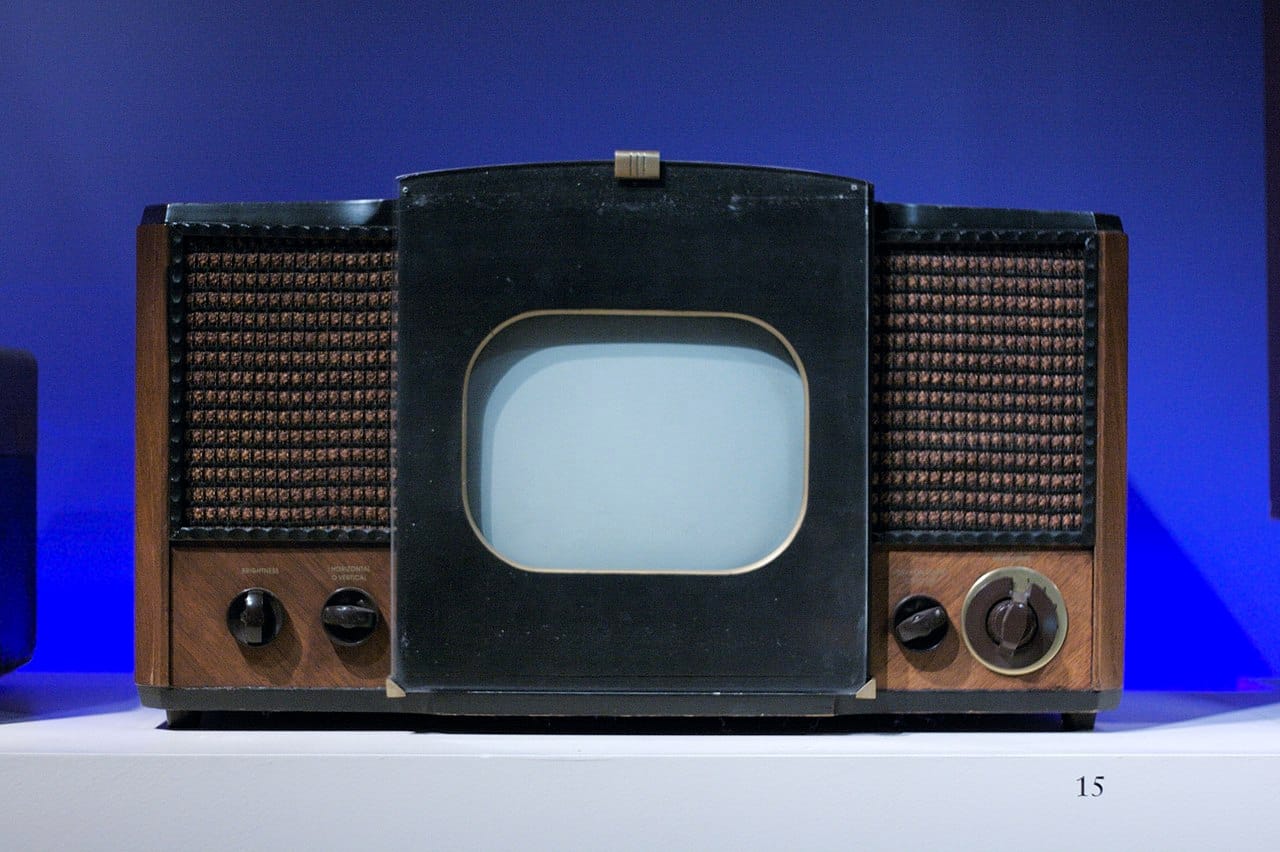
The first serious test was public. In 1958 the Canadian Broadcasting Corporation flashed the message Phone now several hundred times during a national programme. Call volumes did not rise. Viewers had been told an experiment was under way and were invited to write in with what they thought the message had been; nobody identified it, though many reported feeling hungry or thirsty.
In a 1962 interview with Advertising Age, Vicary conceded that the study was a gimmick, that the amount of data was too small to mean anything, and effectively that the claim had been fabricated to attract business to his struggling firm.
Later academic attempts to reproduce anything resembling the reported effect failed. A 2006 review of the affair found no evidence that the original study had been conducted at all.
The specific claim is dead and the underlying phenomenon is not, and conflating the two is the most common error in both directions.
Subliminal perception is real and well demonstrated in the laboratory. A word presented too briefly for conscious identification, and masked, can still influence subsequent processing, so that a related word is recognised marginally faster. This is masked priming, it replicates, and it is a standard tool in cognitive psychology.
The effects are small, they last seconds rather than hours, and they shift the speed or ease of a response rather than creating a desire.
The strongest demonstration of anything resembling behavioural influence comes from work by Johan Karremans and colleagues in 2006, in which subliminal exposure to a drink brand increased the chance of choosing it, but only among participants who were already thirsty. The effect required a pre-existing goal, which is close to the opposite of Vicary's claim that the message creates the want.
Reviews of subliminal advertising in real conditions find no evidence of commercially meaningful effects. Cinema and television viewing involve competing attention, delay before any purchase, and countless other influences, none of which apply in a controlled laboratory task.
Surveys continue to find that a majority of the public believes subliminal advertising is used and works.
Three things sustain it. The story is memorable and the retraction is not, which is a general property of corrections. The belief is unfalsifiable in ordinary experience, since a technique that works without awareness cannot be detected by the person it acts on. And it offers an explanation for one's own consumption that requires no self-examination.
Advertisers have occasionally exploited the belief for publicity, which recycles it, and the related claim of backmasked messages in music belongs to the same family and fails the same tests.
The affair is a case study in evidence-free regulation. Laws were passed in several countries on the strength of an unpublished result from a single interested party, and they remained after the author had admitted the fabrication.
It is also a clean illustration of the distance between a real laboratory effect and the claim built on top of it. Subliminal priming is genuine, replicable and small, and none of that supports the proposition that people can be made to buy things without knowing why.