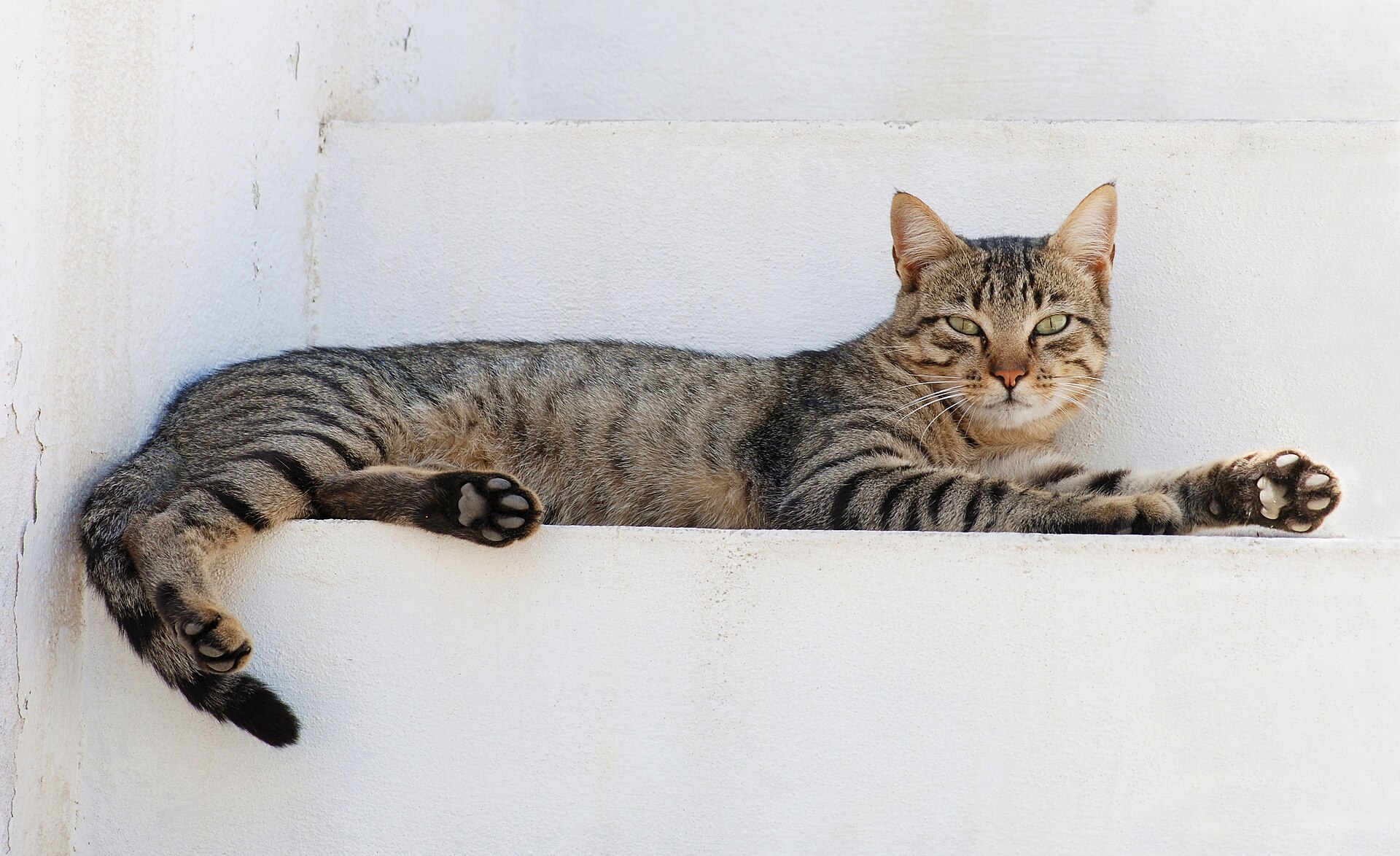
The domestic cat, Felis catus, is the most numerous small carnivore on Earth, with something over six hundred million individuals. It is also barely domesticated: its genome differs from its wild ancestor's far less than a dog's does from a wolf's, and it retains the equipment and the behaviour of a solitary hunter. Both of those facts matter, the second one considerably.
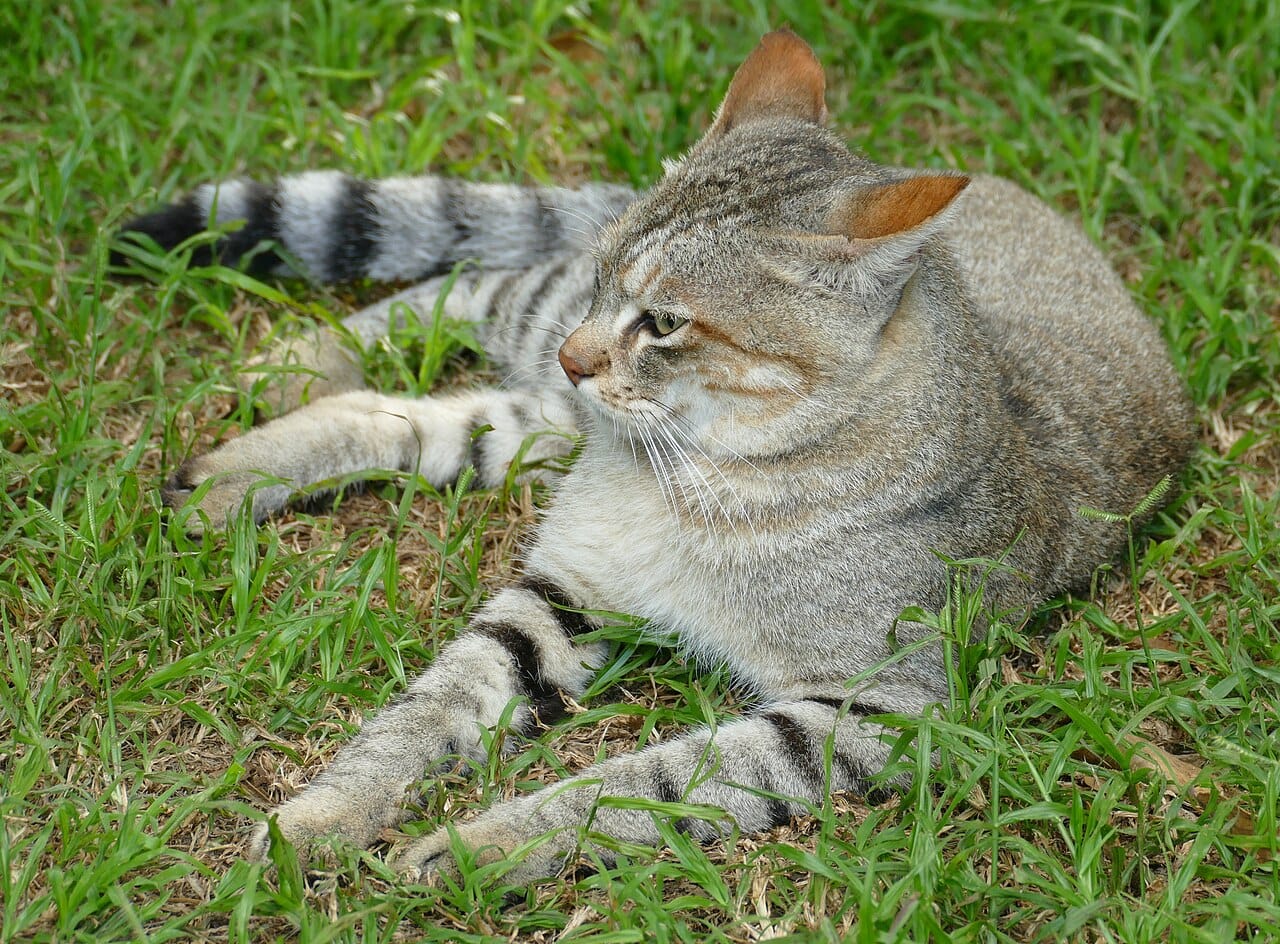
Every domestic cat descends from the African wildcat, Felis lybica, of the Near East and North Africa. The European wildcat, Felis silvestris, despite the resemblance and the overlapping range, contributed essentially nothing.
The process began with agriculture. Grain stores in the Fertile Crescent around ten thousand years ago concentrated rodents, rodents attracted wildcats, and the cats that tolerated human proximity fed better. Nobody selected them; they moved in. This is the commensal pathway to domestication, and it is why cats show none of the signs of an animal bred for a task.
The earliest firm evidence is a burial at Shillourokambos in Cyprus, roughly 9,500 years old, in which a cat was interred beside a human. Cyprus has no native cats, so it had been carried there deliberately by boat, which puts the relationship earlier than the Egyptian material that usually gets the credit. Egypt's contribution came later and was cultural rather than originating: the cult of Bastet, mass cat mummification, and a genuine role in spreading the animal around the Mediterranean.
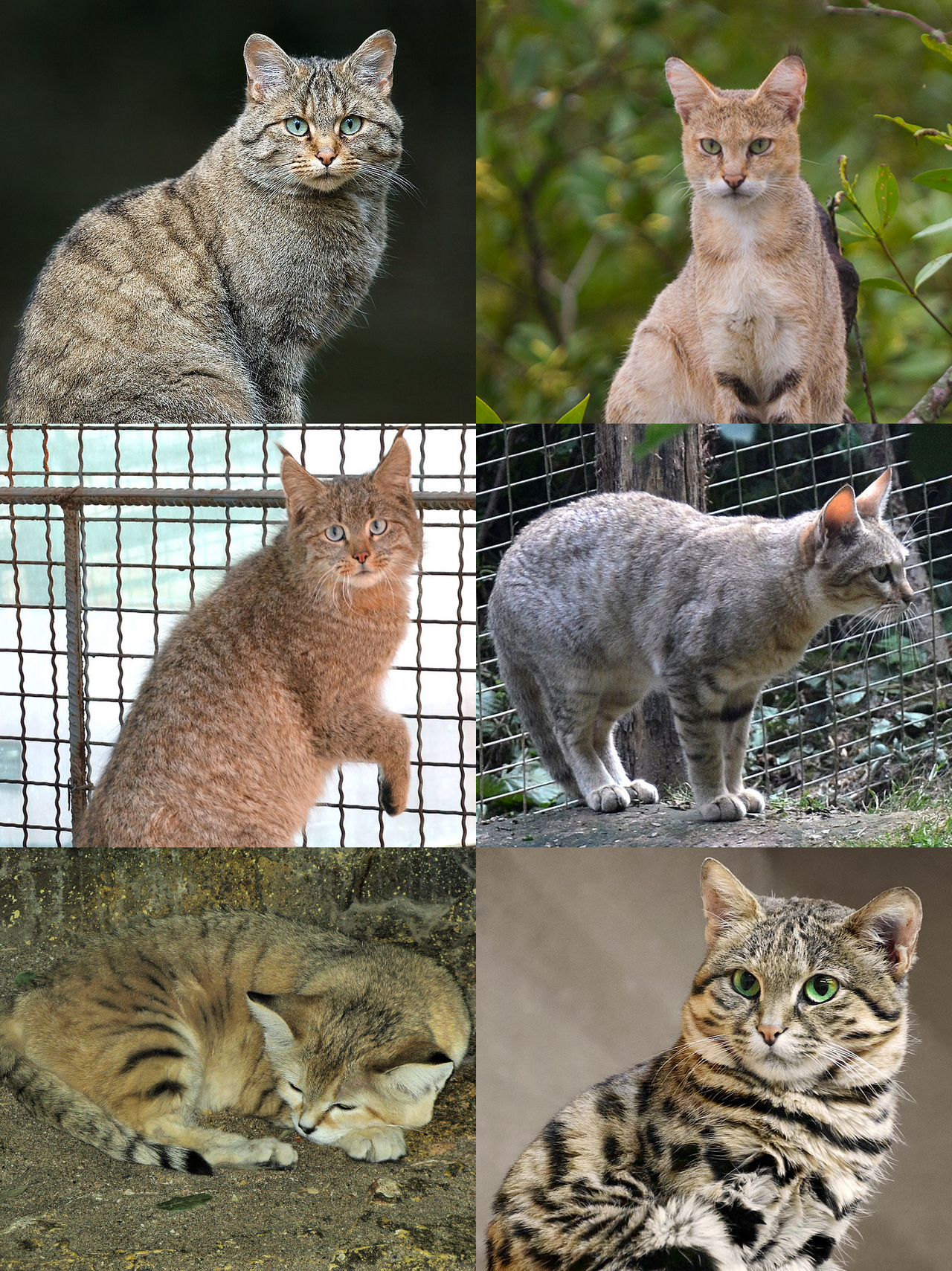
A 2014 genome analysis found the domestic cat differs from the wildcat at a surprisingly small number of loci, and the ones under selection cluster around memory, fear conditioning and reward: the neural circuitry of tameness rather than body shape, behaviour or metabolism.
Compare this to the dog, which was reshaped in size, skull, coat, temperament and digestion, including the ability to digest starch. Cats were not reshaped. They kept the solitary hunting behaviour, the obligate carnivore metabolism, the body plan and, in most of the world, the ability to live entirely without people. Selective breeding for appearance is a nineteenth-century development and touches a small fraction of the population.

The genetics of coat colour are unusually well characterised, and one long-standing gap closed recently. Orange colour in cats is sex-linked, on the X chromosome, which is why most orange cats are male and why tortoiseshell and calico cats are almost always female, each patch reflecting which X was inactivated in that cell line. The gene responsible had resisted identification for over a century; in 2025 two independent teams reported it as ARHGAP36, a gene not previously associated with pigment.
Cats cannot be vegetarian in the way dogs can. They require nutrients that occur in useful quantities only in animal tissue, and they have lost the machinery to make them.
Taurine must come from the diet; a deficient cat develops retinal degeneration and dilated cardiomyopathy. This was discovered the hard way in the 1980s when commercial foods were found to be causing heart failure in cats, and taurine supplementation largely eliminated it. Cats also cannot convert beta-carotene to vitamin A, cannot make arachidonic acid, and cannot synthesise enough niacin.
They also cannot taste sweetness. The Tas1r2 gene, one of the pair encoding the sweet receptor, is a pseudogene in cats and in several other obligate carnivores, inactivated because a diet of meat gave no reason to keep it.
The senses are built for low-light hunting. The tapetum lucidum, a reflective layer behind the retina, gives light a second pass through the photoreceptors and is what makes cat eyes shine; vision is dichromatic and comparatively poor in detail but very good in dim conditions and at detecting movement. The whiskers are vibrissae, deeply innervated mechanoreceptors that map airflow and gaps.
Purring is produced by rapid cycling of the laryngeal muscles driven by a neural oscillator, at frequencies typically between about 25 and 150 hertz, and it happens on both inhalation and exhalation, which is what distinguishes it from vocalisation.
It is not simply contentment. Cats purr while injured, while giving birth, and while dying, which points to a self-soothing or communicative function rather than a straightforward signal of pleasure. The popular claim that purring frequencies promote bone healing is a hypothesis built on the observation that those frequencies are therapeutically useful in other contexts, and it has not been demonstrated in cats.
Adult cats meow at humans and almost never at each other, which is a behaviour developed specifically for us.
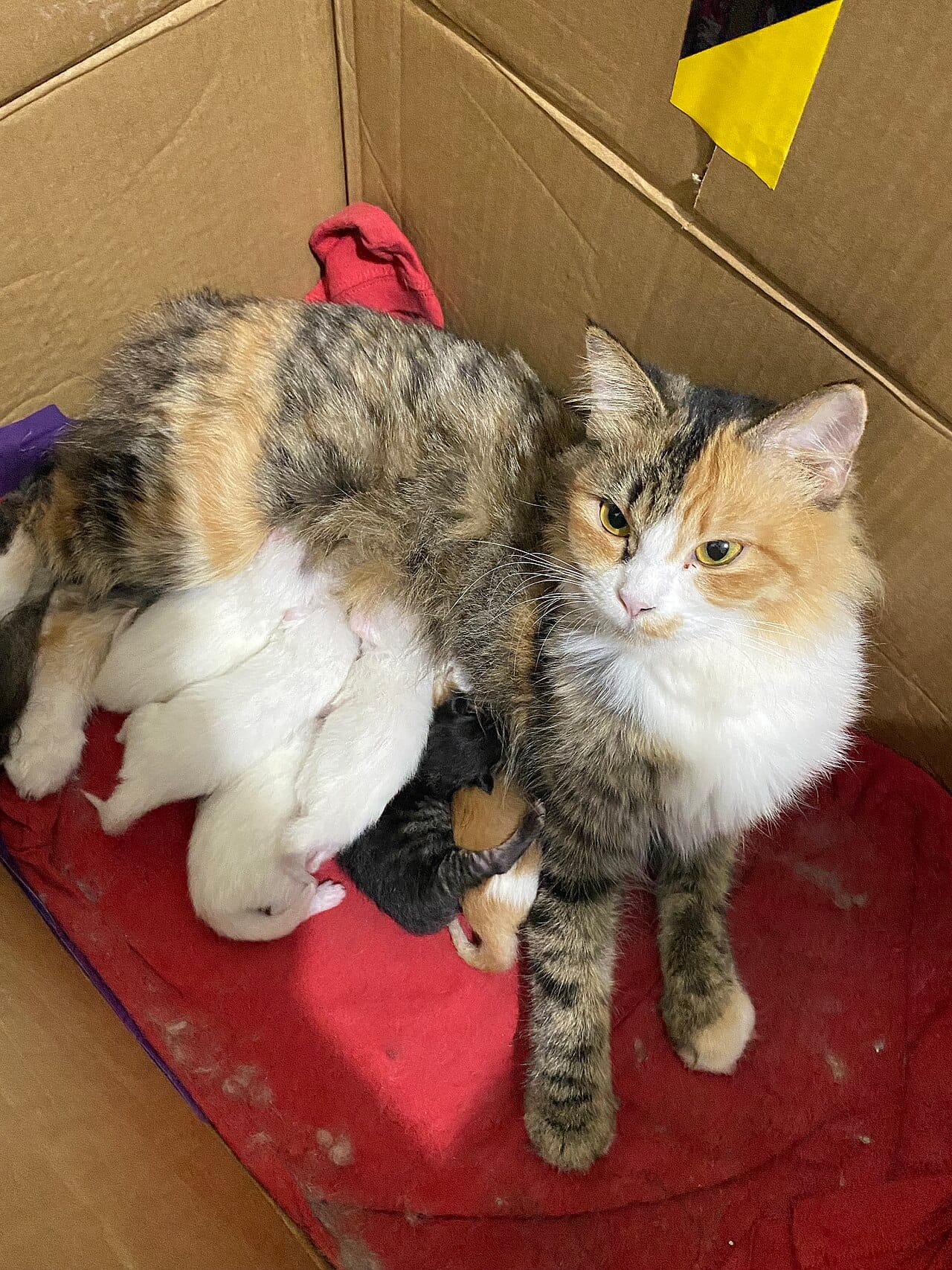
Cats are induced ovulators, so mating triggers ovulation and conception rates are high. A female can have several litters a year and kittens mature within months. That arithmetic is the reason unmanaged populations grow so fast and the reason neutering programmes are the core of every management approach.
This is the genuinely contested subject, and the two sides are arguing about different things.
What is not in dispute: cats are effective predators, and on islands they have been catastrophic. Cats are implicated in the extinction of dozens of island bird, mammal and reptile species, and island eradication programmes have produced clear, measurable recoveries. Australia, where native fauna evolved without a comparable small predator, has documented severe impacts and has an explicit national cull programme.
What is disputed is the continental estimate. A widely cited 2013 analysis put United States mortality at 1.3 to 4.0 billion birds and 6.3 to 22.3 billion mammals a year, mostly attributed to unowned cats. That figure drove a great deal of policy and a great deal of criticism. The objections are methodological: it extrapolates from a small number of local studies with wide variance, the unowned cat population it assumes is itself an estimate with a large range, and the resulting interval spans a factor of three. Critics also argue that predation is partly compensatory, falling on animals unlikely to survive anyway, which is plausible for some species and demonstrably wrong for others.
Trap-neuter-return is contested on the same evidence. Its advocates report colony reduction over time and better welfare than culling; its critics note that it only reduces a colony if the sterilisation rate stays very high, that abandonment continually resupplies colonies, and that the cats keep hunting throughout. The studies showing success generally involve intensive, sustained, well-funded programmes, which is not what most TNR is.
The one intervention nearly everyone agrees on is keeping owned cats indoors or contained, which reduces predation, and also roughly doubles the cat's own life expectancy.
Cats are the only definitive host of Toxoplasma gondii, a protozoan parasite that can complete sexual reproduction nowhere else. Infected rodents lose their aversion to cat odour, which is well established experimentally and is a genuine case of a parasite altering host behaviour to complete its own life cycle.
The extension of this to humans should be treated carefully. Roughly a third of people worldwide carry latent infection. Studies associating it with risk-taking, traffic accidents, schizophrenia and entrepreneurship exist, and the effect sizes are small, the confounding severe, and several large well-controlled studies have found nothing. The established human risk is specific and serious rather than diffuse: primary infection during pregnancy can cause congenital toxoplasmosis, and infection is dangerous in immunocompromised people. It is more commonly acquired from undercooked meat than from cats.
The cat is the only major domestic animal that domesticated itself, kept nearly all of its wild equipment, and is not economically dependent on us. That is what makes it both an unusually successful animal and an unusually difficult conservation problem: it thrives in our landscapes, hunts whether or not it is fed, and belongs to nobody in the numbers that matter.