The proposal that a comet or asteroid struck or exploded over North America about 12,800 years ago, triggering an abrupt return to glacial conditions, wiping out the continent's large mammals, and ending the Clovis culture. It has been argued for since 2007 with unusual heat on both sides.
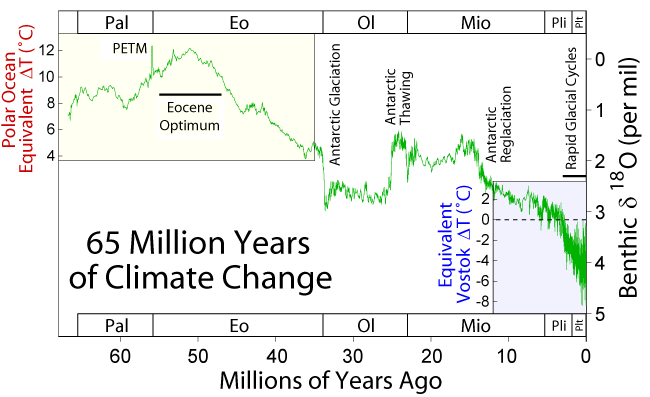
The Younger Dryas is a real and dramatic event. Around 12,900 years ago, as the world was warming out of the last glacial period, the North Atlantic region abruptly returned to near-glacial cold. Greenland ice cores record temperature drops of several degrees within decades, possibly within a few years. The cold persisted for about 1,200 years before ending equally abruptly.
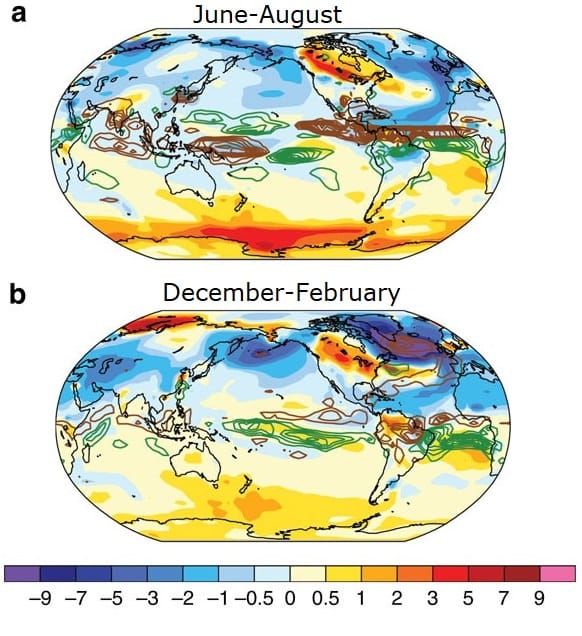
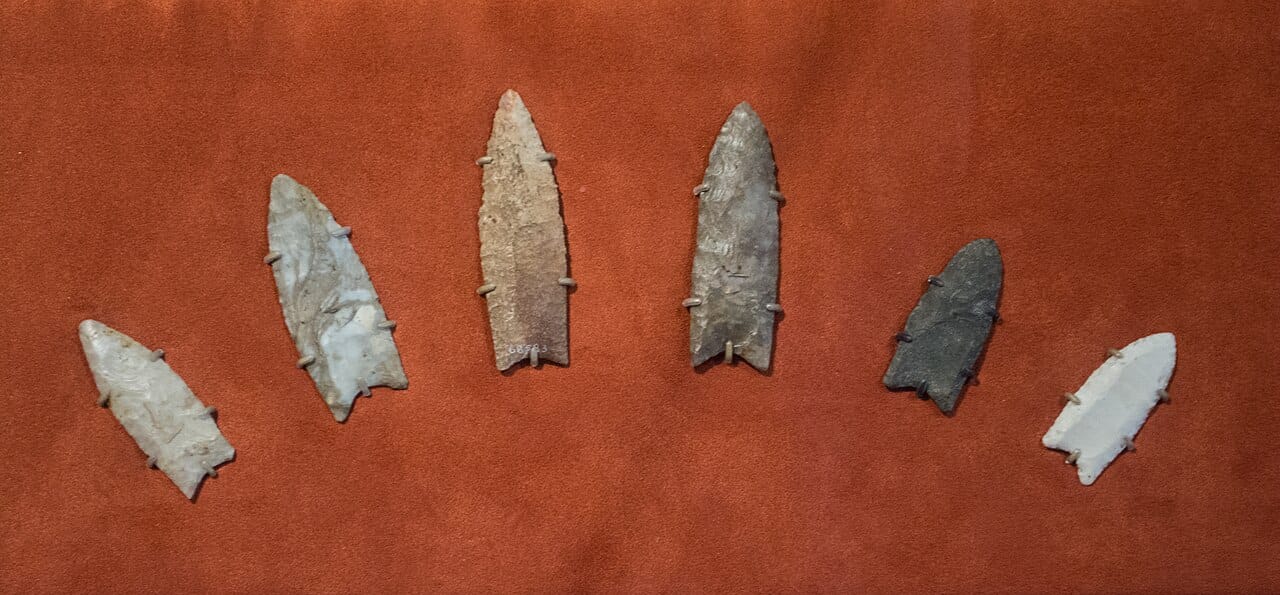
Roughly coincident with its onset, North America lost most of its large mammals: mammoths, mastodons, giant ground sloths, dire wolves, sabre-toothed cats. The Clovis archaeological tradition, distinctive fluted points found across the continent, disappears from the record around the same time.
Three notable things happening at once invites a single cause.
The mainstream account of the cooling is meltwater. As the Laurentide ice sheet retreated, enormous volumes of fresh water accumulated in proglacial lakes, principally Lake Agassiz. A sudden release into the North Atlantic would reduce surface salinity, suppress the sinking that drives the Atlantic overturning circulation, and cut the northward heat transport.
This mechanism is physically sound and is supported by modelling. Its difficulty has been the outflow route: the expected drainage channel through the St Lawrence has not yielded unambiguous evidence, and alternative routes north through the Mackenzie have been proposed and contested.
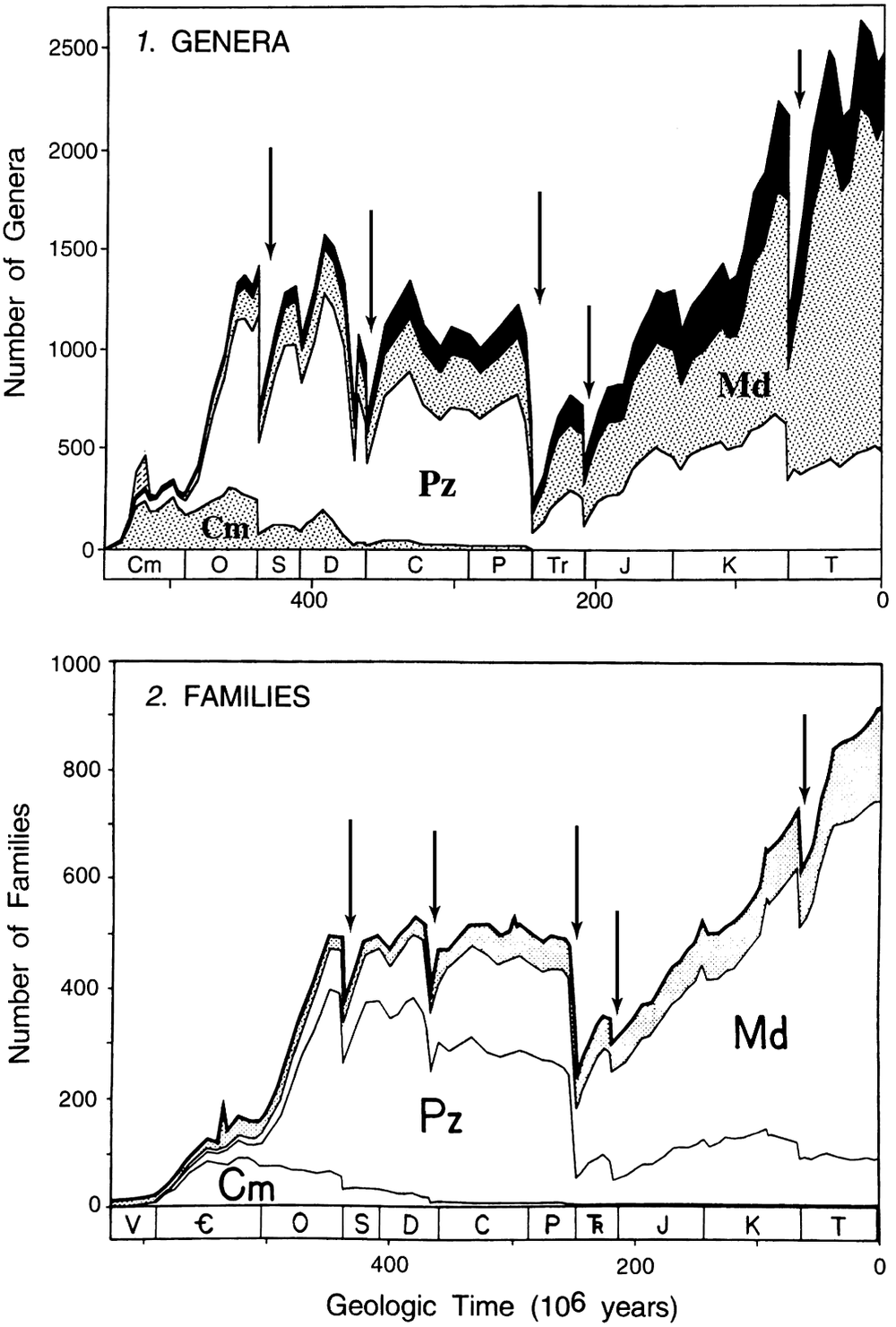
Megafaunal extinction is generally attributed to a combination of climate change and human hunting, with the balance between them argued continent by continent.
Richard Firestone and colleagues proposed in 2007 that an extraterrestrial object exploded over or struck the Laurentide ice sheet, and that the resulting airbursts, wildfires and dust triggered the cooling and the extinctions directly.
The claimed evidence is a thin layer at the Younger Dryas boundary, found at sites across several continents, containing markers said to indicate impact: magnetic spherules, nanodiamonds, elevated platinum, high-temperature melt glass, and carbon spherules interpreted as evidence of continental-scale fire.
Supporters have added findings over time, including a platinum anomaly reported in Greenland ice and at numerous North American sites, and melt glass at Abu Hureyra in Syria interpreted as evidence of an airburst.
The criticism has been sustained and specific.
No crater has been found. Proponents answer that an airburst, or an impact onto two kilometres of ice, would leave none, which is possible and also unfalsifiable in its current form. A crater identified beneath the Hiawatha Glacier in Greenland in 2018 was initially suggested as a candidate and was subsequently dated to about 58 million years ago, removing it.
Replication of the markers has been inconsistent. Several independent groups reported failing to find nanodiamonds, spherules or the other indicators in samples from the same sites and horizons, and disagreements have arisen over identification methods, particularly whether the reported nanodiamonds are correctly identified.
The dating has been challenged. A 2020 analysis by David Meltzer and colleagues examined the chronology at the claimed sites and concluded that only a minority could be shown to date to the boundary at all, with others differing by centuries or more, which undermines a synchronous continental event.
The wildfire evidence is disputed, with critics arguing the charcoal record is consistent with ordinary regional fire regimes rather than a hemispheric conflagration.
And the extinction timing does not fit cleanly. Several of the species said to have been destroyed have remains dated after the boundary, and extinctions in other continents occurred at different times without any corresponding impact.
The hypothesis has not died despite two decades of critical papers, and the reason is that its proponents continue to publish new material rather than restating old material. Work published from 2024 reported airburst proxies, platinum, microspherules, meltglass and shock-fractured quartz, at sites in New Jersey, Maryland and South Carolina.
That publication record now has to be read alongside a retraction record, which is the most important development since this capsule was first written and which counts heavily against the hypothesis.
A paper reporting shocked quartz at the Younger Dryas onset has been retracted. A paper reporting cometary dust, microspherules and a platinum anomaly in Baffin Bay cores has been retracted. And a widely publicised paper by members of the same research group, claiming an airburst destroyed the Bronze Age settlement of Tell el-Hammam, was retracted in 2025 after image manipulation was identified, the second retraction that journal has issued involving that group.
The shocked quartz claims are separately criticised on their merits: shocked quartz is diagnostic of crater-forming impacts, is not expected from an airburst that leaves no crater, and the examples advanced have been argued to fail the established petrographic criteria.
A comprehensive review published in 2023 concluded that no self-consistent impact scenario has been produced, that no crater of the right age exists, and that the hypothesis has not converged on a reproducible account.
The debate has also become unusually acrimonious, with accusations of poor method in both directions, which has made a clean assessment harder rather than easier. But retraction is not an accusation, and three of them in a body of evidence this small is a serious problem for the claim rather than a dispute about tone.
The decisive evidence would be an impact structure or ejecta layer of unambiguous origin, securely dated to the boundary, found by a group with no prior position. Failing that, independent replication of the marker layer under a blinded protocol, at sites selected in advance, would resolve most of the disagreement.
Neither has happened. Until one does, the hypothesis remains what it is: a specific, testable proposal for which the evidence is contested by competent researchers on both sides, and which the mainstream of the relevant fields does not accept.