If an industrial civilisation had existed on Earth millions of years before our own, would we be able to tell? Gavin Schmidt and Adam Frank asked the question seriously in 2018, and their answer is that we probably would not, which turns out to say more about geology than about aliens.
The hypothesis is not a claim that a prior civilisation existed. Schmidt and Frank say so explicitly in the paper, and the point is regularly lost.
It is a question about the resolution of the geological record, posed as a thought experiment. The authors are climate scientists, Schmidt directs NASA's Goddard Institute for Space Studies, and the exercise came out of a discussion about how one would detect industrial activity on an exoplanet. Applying the same question to Earth's own past turned out to be a sharper test.
The name is a joke, taken from a species of reptilian civilisation in Doctor Who, and it is geologically wrong: the Silurian period predates the necessary complex land life.
The argument rests on how little of the past is preserved and on how briefly anything lasts.
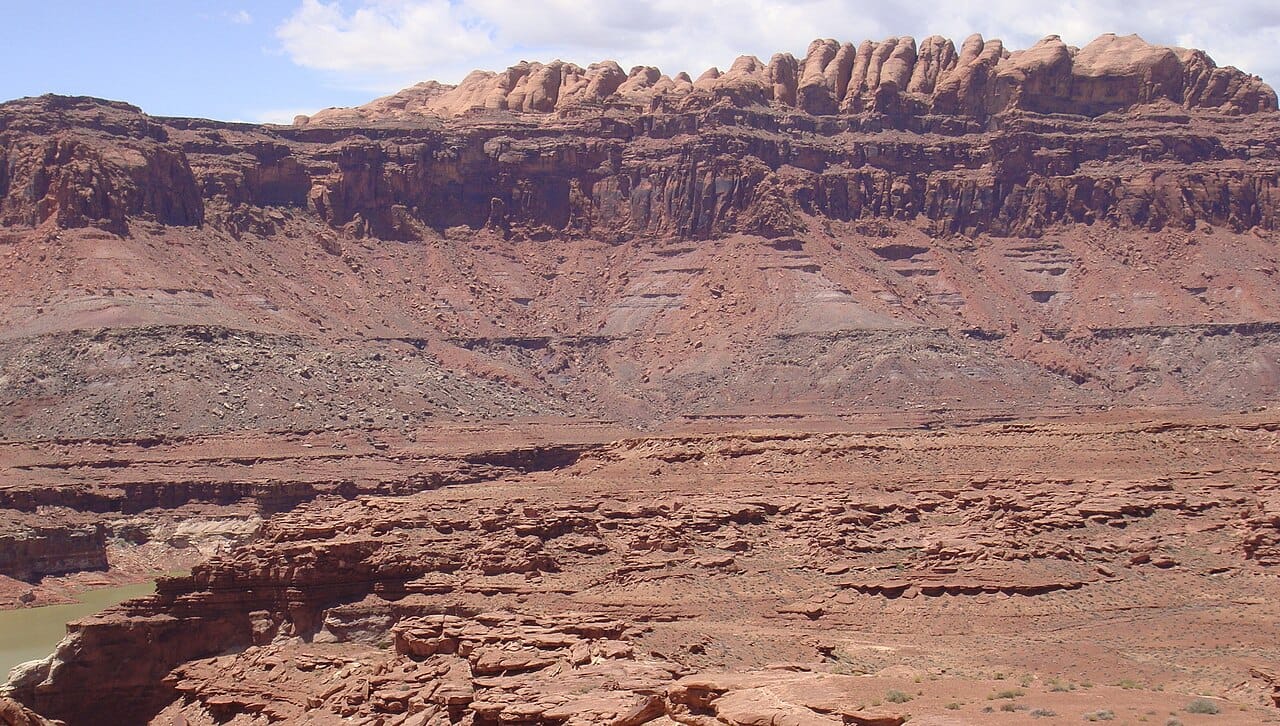
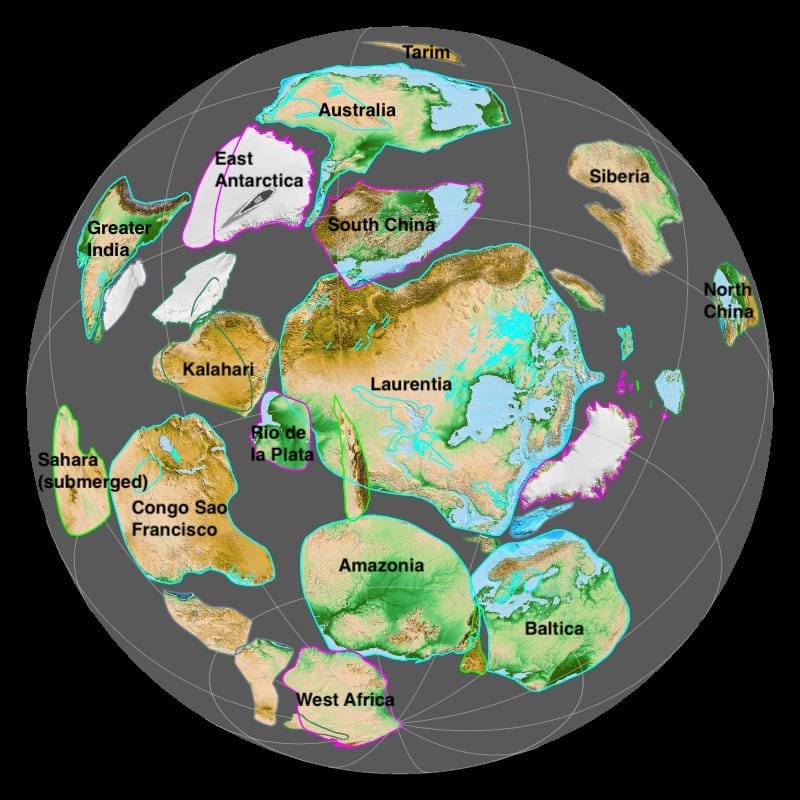
Only a small fraction of Earth's surface at any past moment is preserved as rock, exposed, and accessible. Plate tectonics recycles ocean floor entirely on a timescale of about two hundred million years, so nothing older survives there at all. Continental surfaces erode.
Civilisation occupies a vanishingly small fraction of the surface, and the parts that leave durable traces are smaller still. Cities are concentrated in coastal lowlands, which erode preferentially.
Time destroys everything at human scale. Buildings, roads and machinery would be gone within a few million years. Fossilisation is rare, and the number of individuals of any species that becomes a fossil is minute: dinosaurs ruled for over a hundred and fifty million years and are known from a modest number of specimens. A civilisation lasting a few thousand years, or even a hundred thousand, would leave a layer far thinner than the resolution at which most of the record can be read.
The authors argue that the detectable signature would be chemical and would look like a climate event.
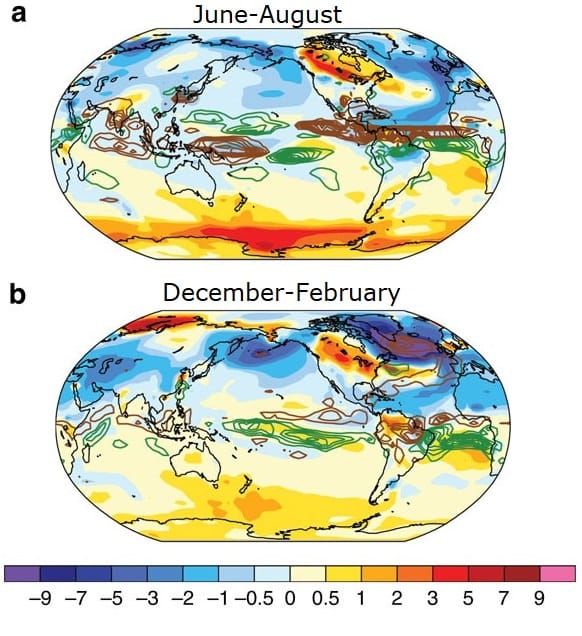
Their reference case is the Paleocene-Eocene Thermal Maximum, about 56 million years ago: a rapid injection of carbon into the atmosphere, several degrees of warming, a distinctive shift in carbon isotope ratios, ocean acidification and extinctions, lasting a hundred thousand years or so.
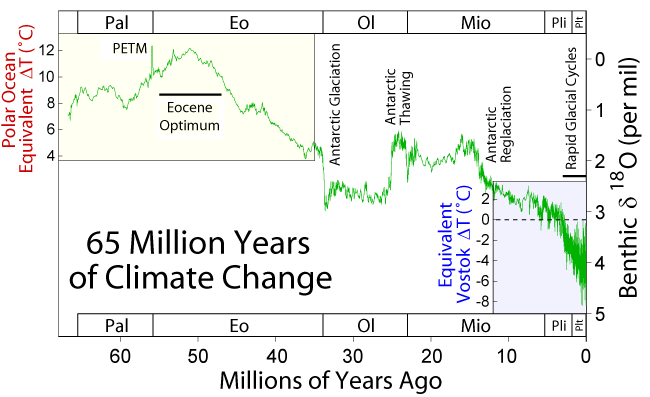
That is close to what current industrial activity is producing. Fossil fuel carbon carries a distinctive isotopic signature because it comes from ancient biological material. Nitrogen fertiliser has altered the nitrogen cycle measurably. Synthetic materials, persistent organic pollutants, transuranic elements from nuclear testing and elevated rare earth concentrations would all leave chemical traces.
The difficulty the paper identifies is that these signatures would be hard to distinguish from natural events. Several past hyperthermals exist in the record, their causes are debated, and no one has examined them for markers of the kind a technological society would leave. The authors note that the analysis has simply not been done.
The paper has been criticised as unfalsifiable and as an invitation to pseudoarchaeology, and the second concern is not unreasonable given how the idea has been used since publication by people making claims the authors explicitly do not make.
Its defenders point out that the paper's actual contribution is methodological. It proposes specific chemical markers, it identifies which past events would be worth examining for them, and it makes a testable prediction: if such markers are looked for in past hyperthermal layers and are absent, that is evidence. Nobody had specified what to look for before.
There is also a serious point about our own record. The paper's implication is that industrial civilisation's most durable legacy is a chemical layer in the sediment, and that this layer is what an observer millions of years hence would have to work with. That is a striking frame for the Anthropocene, and it is arguably the paper's most useful result.
The distinction is worth drawing carefully, because the subject invites the wrong kind of interest.
The hypothesis is a well-posed question about detection limits, published in the International Journal of Astrobiology, with a specific proposed test. It makes no positive claim, and its authors state that they consider a prior industrial civilisation on Earth unlikely.
What it establishes is a genuine and slightly uncomfortable result: the absence of evidence for such a thing is weak evidence of absence, because the record could not preserve it. That is a statement about geology, and it holds whether or not anyone was here.