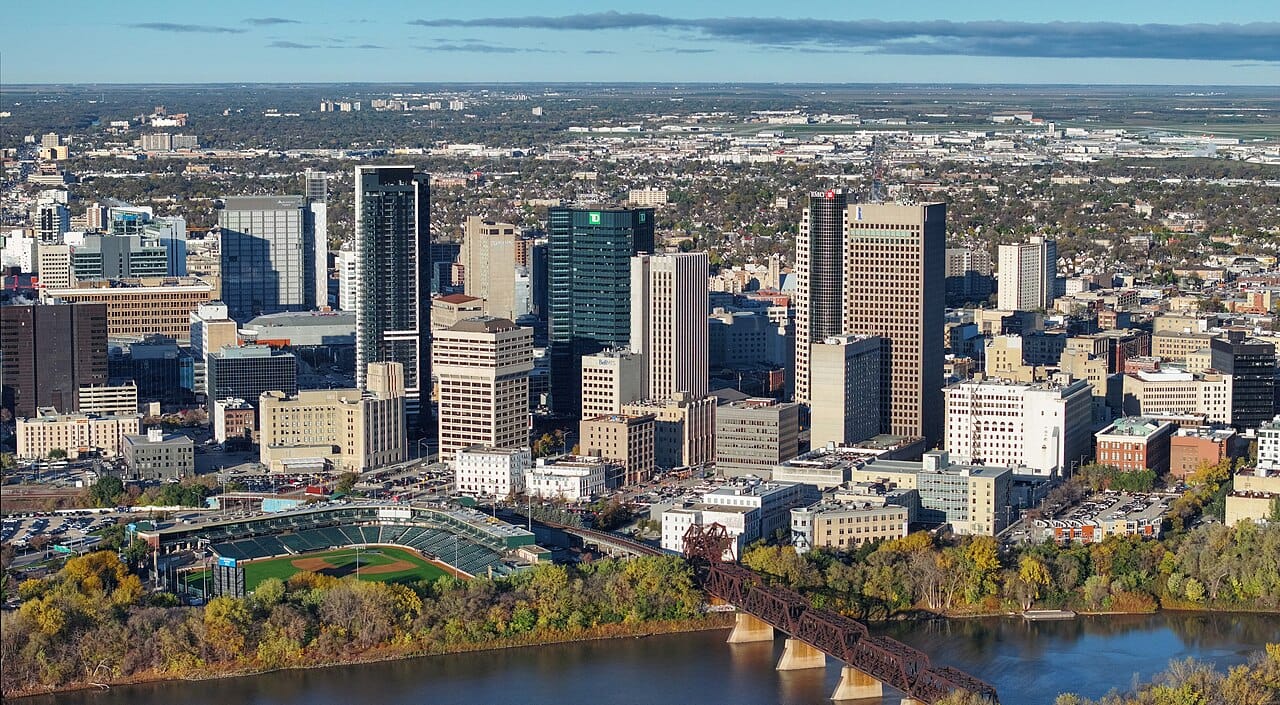
Winnipeg is the capital and largest city of the Canadian province of Manitoba, built where the Red and Assiniboine rivers meet near the longitudinal centre of North America. With 749,607 people at the 2021 census it holds well over half of Manitoba's population, and it has been the commercial and cultural centre of the Canadian prairies' eastern edge for more than a century. It is a city of long winters, wide rivers, a remarkable stock of early twentieth century warehouses, and one of the largest urban Indigenous populations in Canada.
Winnipeg exists because of a river junction. The Forks, where the Assiniboine flows into the Red, was a meeting and trading place for thousands of years before any European arrived, and everything the city later became followed from that geography.
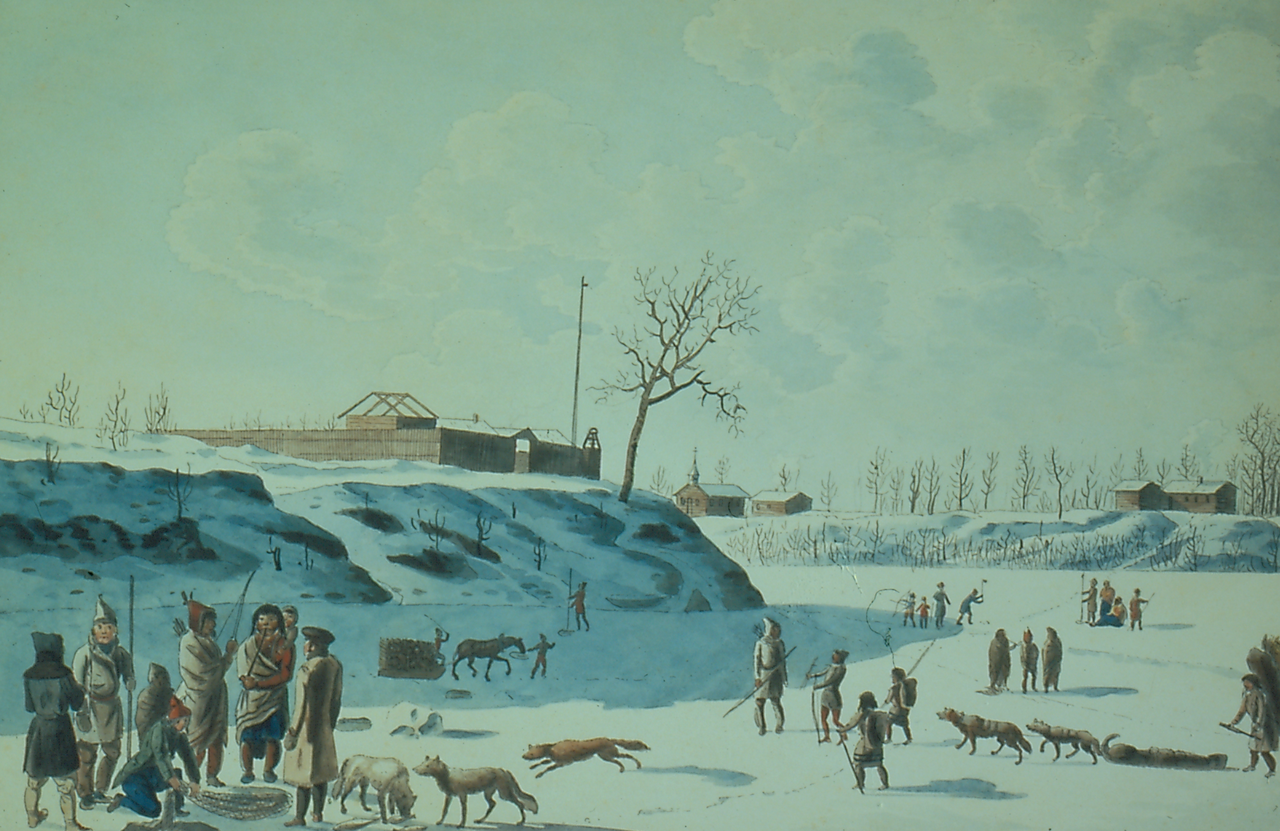
Anishinaabe, Cree, Assiniboine, Dakota and later Metis people used the confluence as a gathering point long before written records. French traders built posts in the area from the 1730s, and the rivalry between the Hudson's Bay Company and the North West Company played out here through the early nineteenth century.
The Red River Colony, established from 1812 under Lord Selkirk, brought Scottish and Irish settlers into a landscape already occupied by a large and well organised Metis community. The relationship between the two was uneasy and at times violent, and the tension over land and authority did not resolve when Canada bought the territory in 1869.
The Red River Resistance of 1869 and 1870, led by Louis Riel, was the direct cause of Manitoba's creation as a province rather than a territory. Riel remains among the most contested figures in Canadian history, regarded by many as a founder of Manitoba and by others through the lens of his execution for treason in 1885.
Winnipeg was incorporated as a city in 1873 with fewer than two thousand people. The Canadian Pacific Railway crossed the Red here in 1881 rather than at Selkirk downstream, and that single decision made the city. Grain, immigration and wholesale trade poured through it, and by 1911 it was the third largest city in Canada.
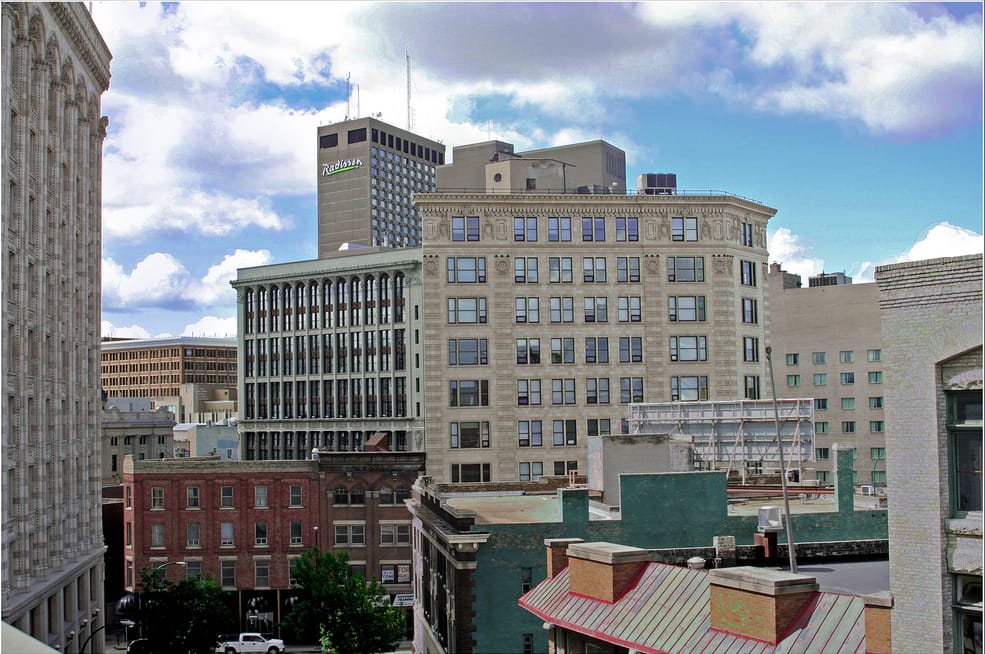
The boom left a physical legacy that is still the city's most distinctive feature. The Exchange District's terracotta and cut stone warehouses were built for a city expecting to become the Chicago of the north, and when that future did not arrive the buildings were never demolished to make room for it.
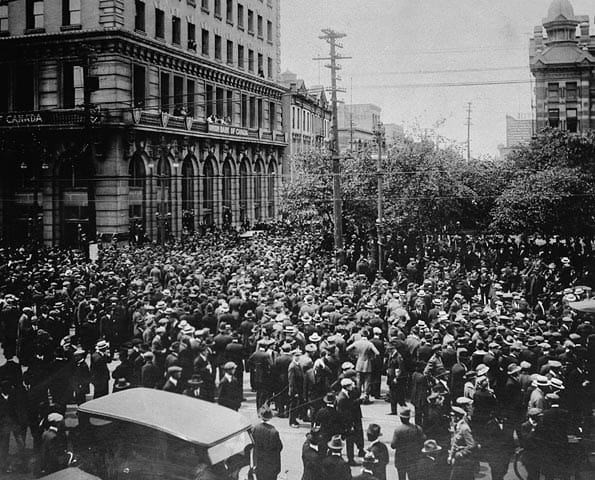
The Winnipeg General Strike of 1919 is the event the city is best known for nationally. Some thirty thousand workers walked out for six weeks over wages, collective bargaining and the right to organise. It ended when the state intervened, strike leaders were arrested, and mounted police charged a crowd on 21 June, killing two. Several strike leaders were later elected to public office, and the strike is a fixed reference point in Canadian labour history.
The opening of the Panama Canal in 1914 quietly ended the city's position as the necessary crossing point for western trade, and Winnipeg's share of national growth slowed from then on.
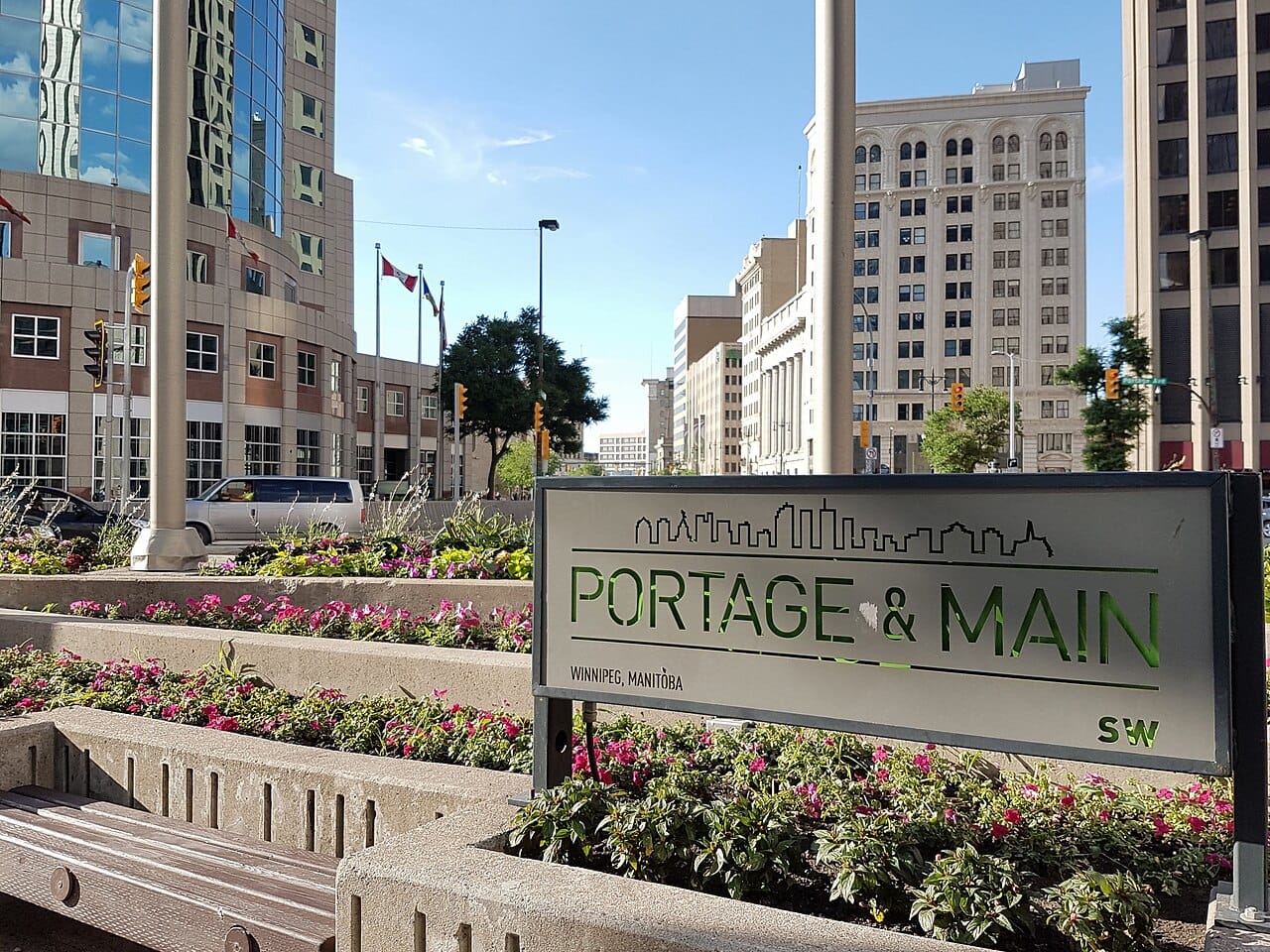
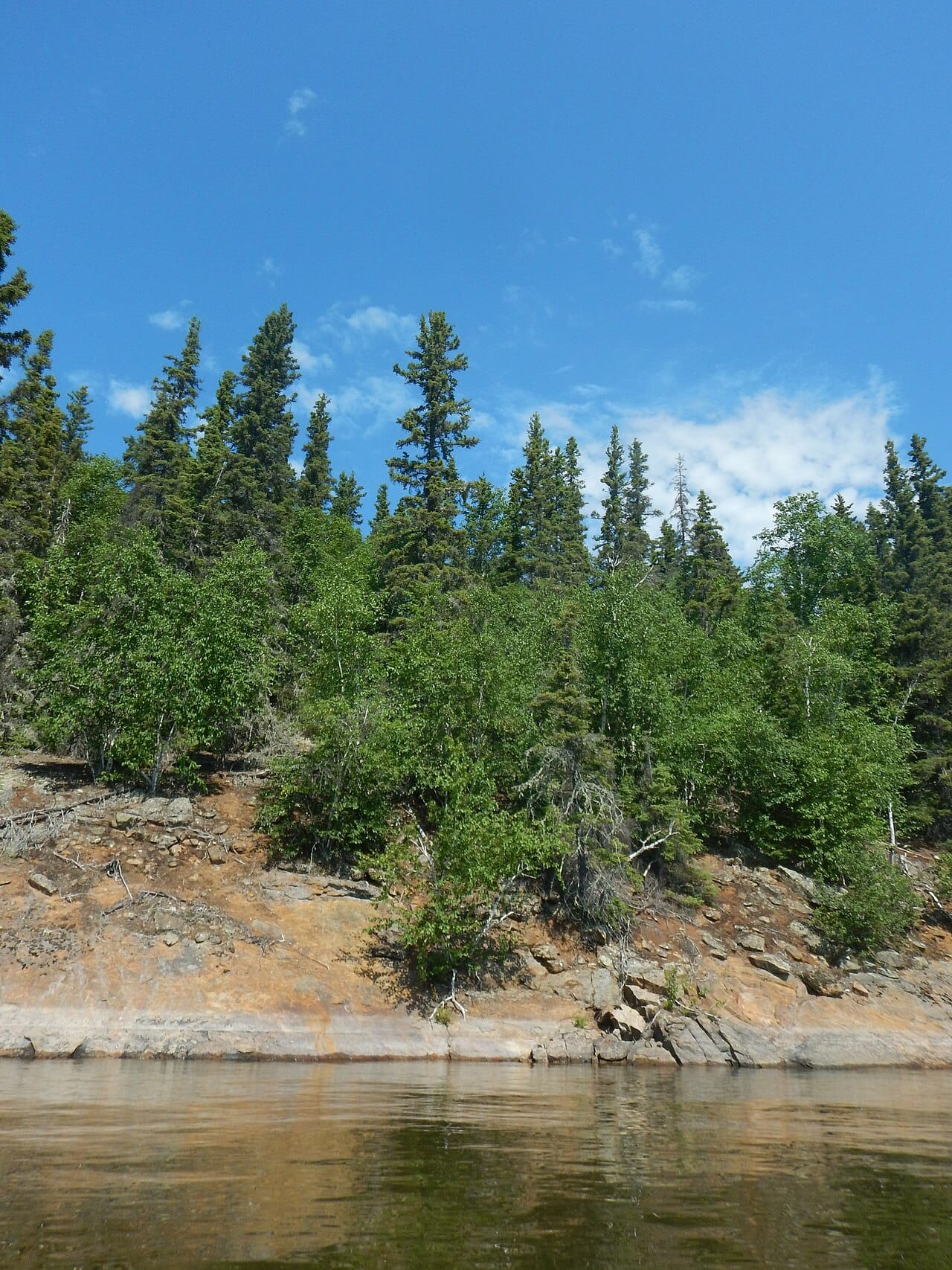
Winnipeg sits on the flat bed of glacial Lake Agassiz, which drained about eight thousand years ago and left behind some of the most fertile and least drained soil in North America. The city is almost perfectly level, which is why the rivers matter so much to its shape and why flooding has been a recurring threat.
The Red River flows north, which is the root of the problem: the southern reaches thaw first and send meltwater into channels still blocked by ice. The 1950 flood drove around one hundred thousand people from their homes. The response, the Red River Floodway completed in 1968 and expanded in 2010, diverts water around the city through a channel nearly fifty kilometres long. It was mocked at the time as an extravagance and has since prevented damage many times its cost.
The climate is genuinely extreme. Winnipeg is among the coldest large cities in the world, with January means well below minus fifteen degrees Celsius and recorded lows beyond minus forty, while July regularly passes thirty. The annual swing exceeds seventy degrees.
Winnipeg is governed by a mayor and fifteen city councillors elected by ward. The current boundaries date from the 1972 amalgamation known as Unicity, which merged twelve surrounding municipalities into a single administration and remains a reference case in Canadian municipal reform.
The Manitoba Legislative Building, completed in 1920, sits on the south bank of the Assiniboine. Its dome is topped by the Golden Boy, a gilded bronze figure cast in France that spent part of the First World War in the hold of a ship being used as ballast.
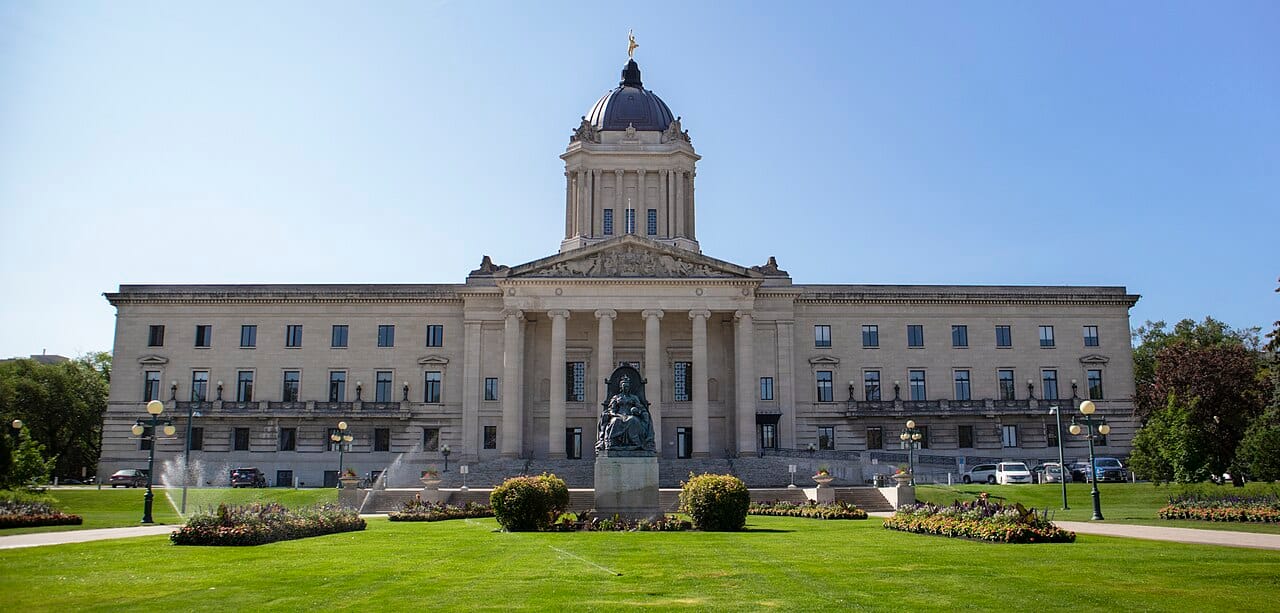
The city is also the seat of the Manitoba courts and the provincial civil service, and its economy carries the stability that a capital's public payroll provides.
Winnipeg's economy is unusually diversified for a prairie city, which is a large part of why it has been stable rather than spectacular.
Transportation and warehousing remain central. The city sits on the main east to west rail corridor and holds an inland port and foreign trade zone, and CentrePort Canada is the country's largest such development.
Manufacturing covers aerospace, bus building, agricultural machinery and food processing. Winnipeg's aerospace sector is among the largest in Canada by employment.
Finance and insurance have a long presence, with several national insurers headquartered here.
Agriculture underpins much of the rest. The Canadian Grain Commission and the historic grain trade are Winnipeg institutions, and the surrounding region is among the most productive farmland in the country.
Public administration, health care and education together employ a very large share of the workforce, which cushions the city against commodity cycles.
The University of Manitoba, founded in 1877, is western Canada's oldest university and the province's largest, with its main campus in Fort Garry in the city's south. The University of Winnipeg occupies the downtown, and the Universite de Saint-Boniface serves the francophone community from the east bank of the Red.
Red River College Polytechnic is the province's largest applied learning institution, and the Manitoba Institute of Trades and Technology serves the skilled trades.
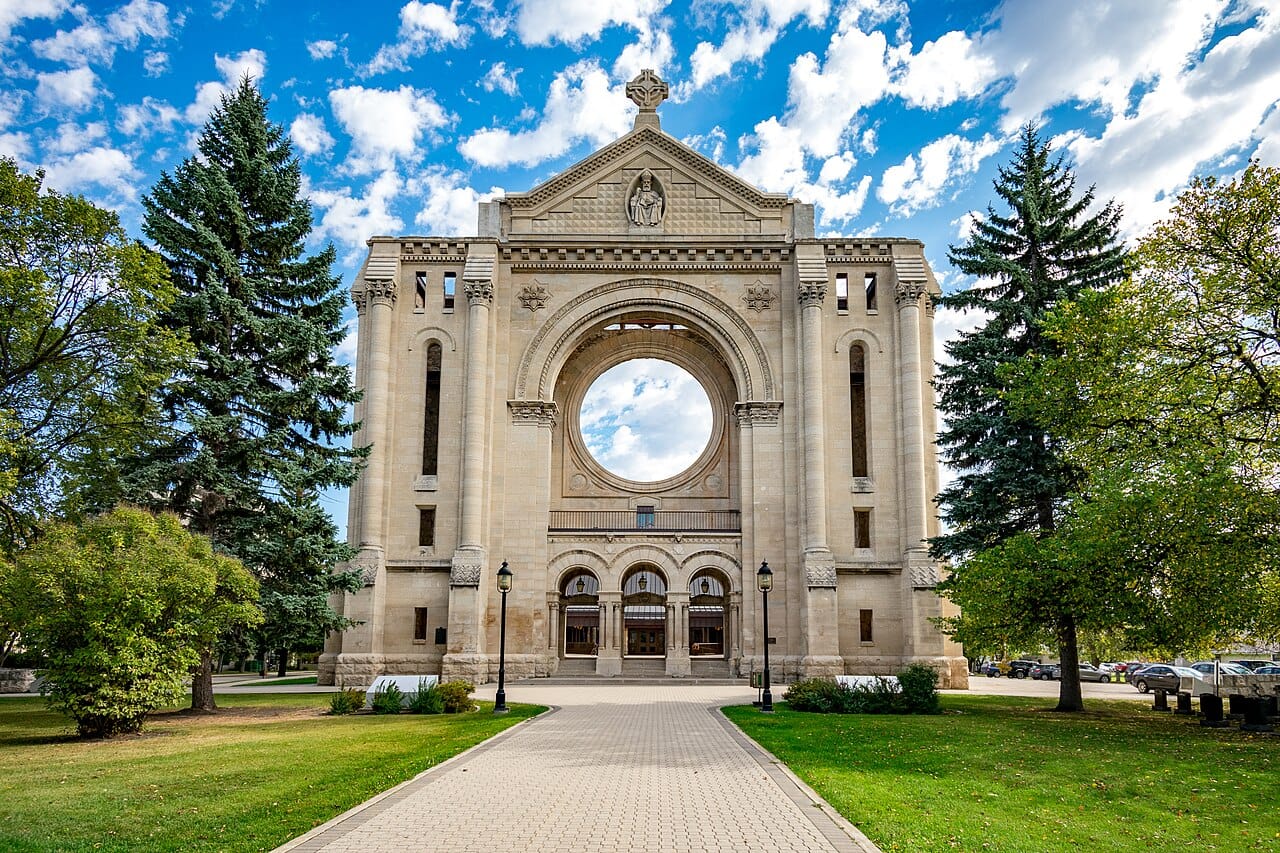
Saint Boniface, on the east bank, is the heart of one of the largest French-speaking communities in western Canada, with its own institutions, hospital and cathedral. Louis Riel is buried in the cathedral churchyard.
Winnipeg has a disproportionate cultural output for its size. The Royal Winnipeg Ballet is the oldest continuously operating ballet company in North America. The Winnipeg Symphony Orchestra, the Manitoba Theatre Centre, the Winnipeg Art Gallery with the world's largest public collection of contemporary Inuit art, and the Winnipeg Folk Festival are all long established.
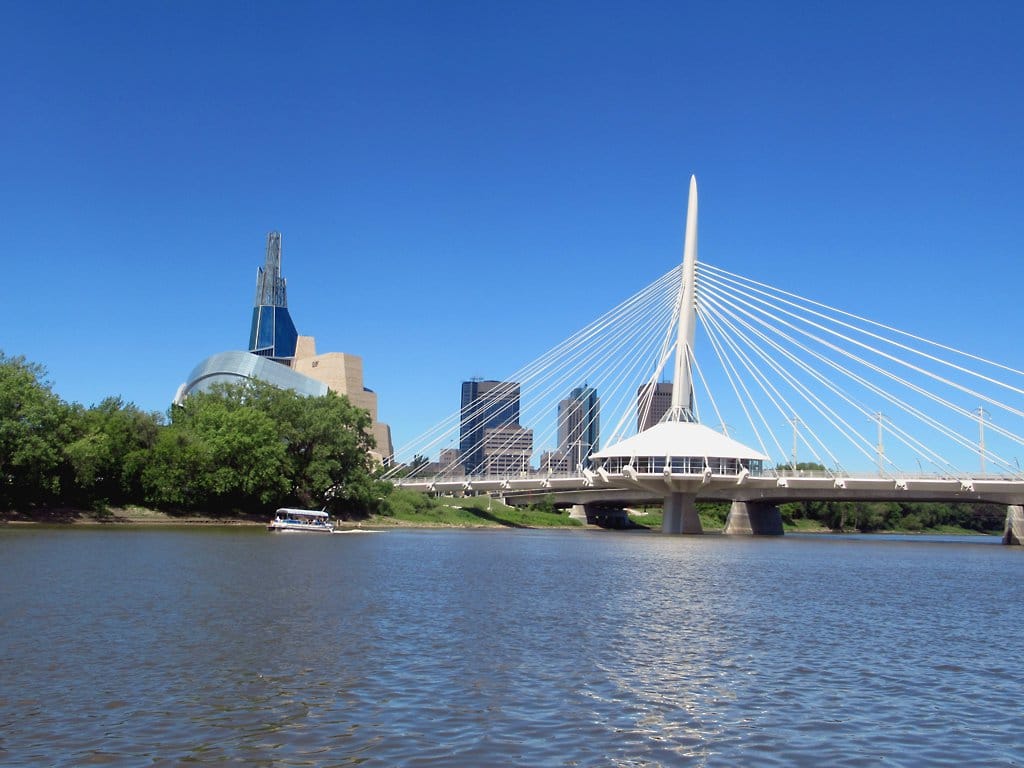
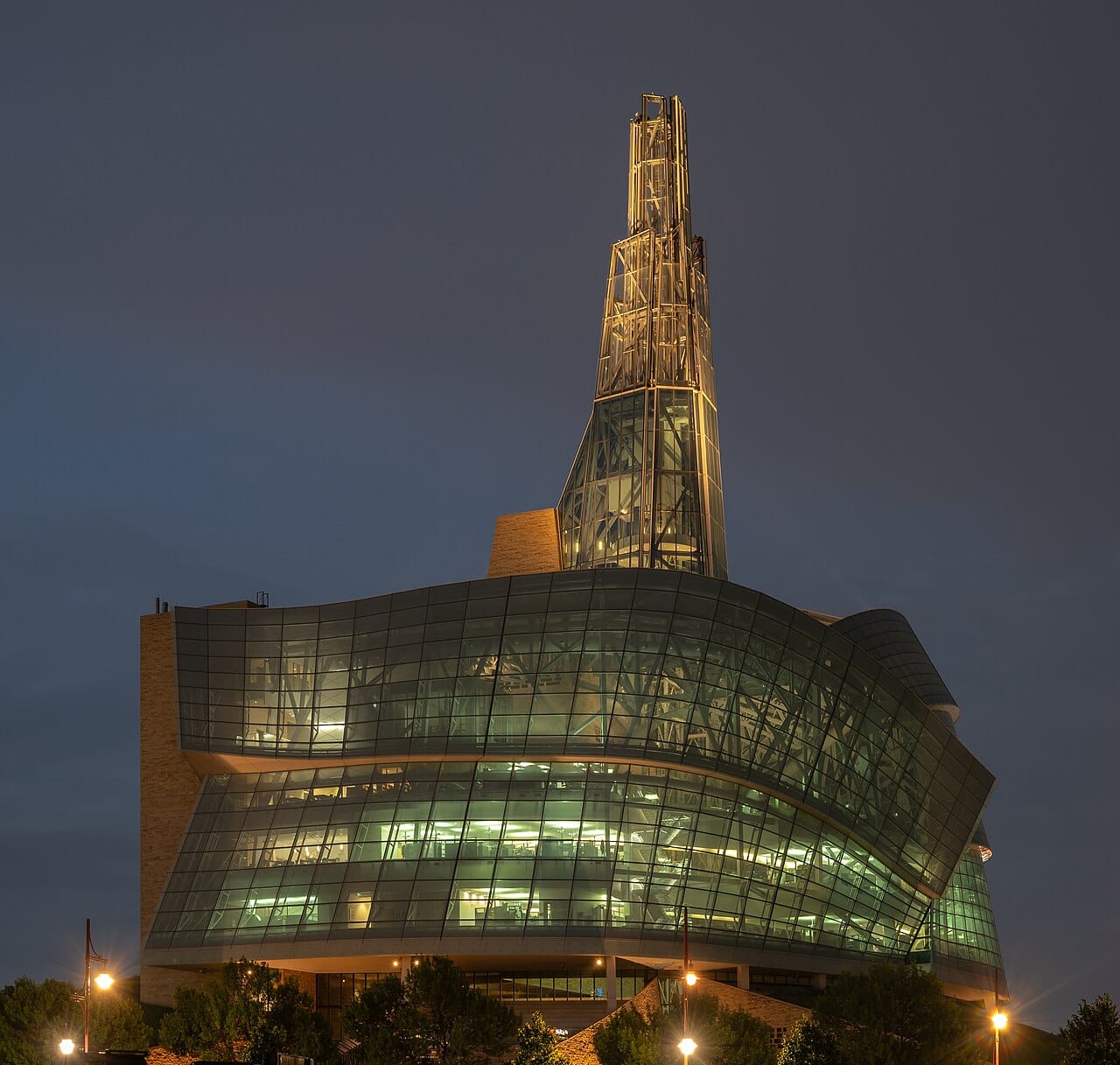
The Canadian Museum for Human Rights opened at The Forks in 2014. It has drawn both praise and criticism, the latter largely over how it represents the treatment of Indigenous peoples in Canada, a debate the museum has engaged with publicly.
The city has one of the largest urban Indigenous populations in Canada, and its social and political life reflects that in ways that distinguish Winnipeg from other cities of its size. It has also faced sustained and documented problems with poverty, racism and violence against Indigenous women and girls, matters treated at length in Canadian national inquiries.
Winnipeg's winters shape its culture as much as its geography. The Forks maintains one of the world's longest naturally frozen skating trails on the rivers when conditions allow, and Festival du Voyageur in Saint Boniface is a February celebration of the fur trade era held outdoors in deep cold.
The Winnipeg Jets returned to the National Hockey League in 2011 after the original franchise left for Phoenix in 1996, an event of considerable civic significance.
At the 2021 census the city had 749,607 residents, with the metropolitan area above 830,000. That is more than half of Manitoba's entire population, a concentration matched by few Canadian provinces.
Winnipeg is among the most ethnically diverse cities in Canada. Filipino Canadians form one of the largest communities, and there are long established Ukrainian, Icelandic, Jewish, Mennonite, German, Polish and French populations, alongside more recent arrivals from India, Nigeria and elsewhere. The Icelandic connection is particularly distinctive, since Manitoba received the largest Icelandic emigration outside the United States.