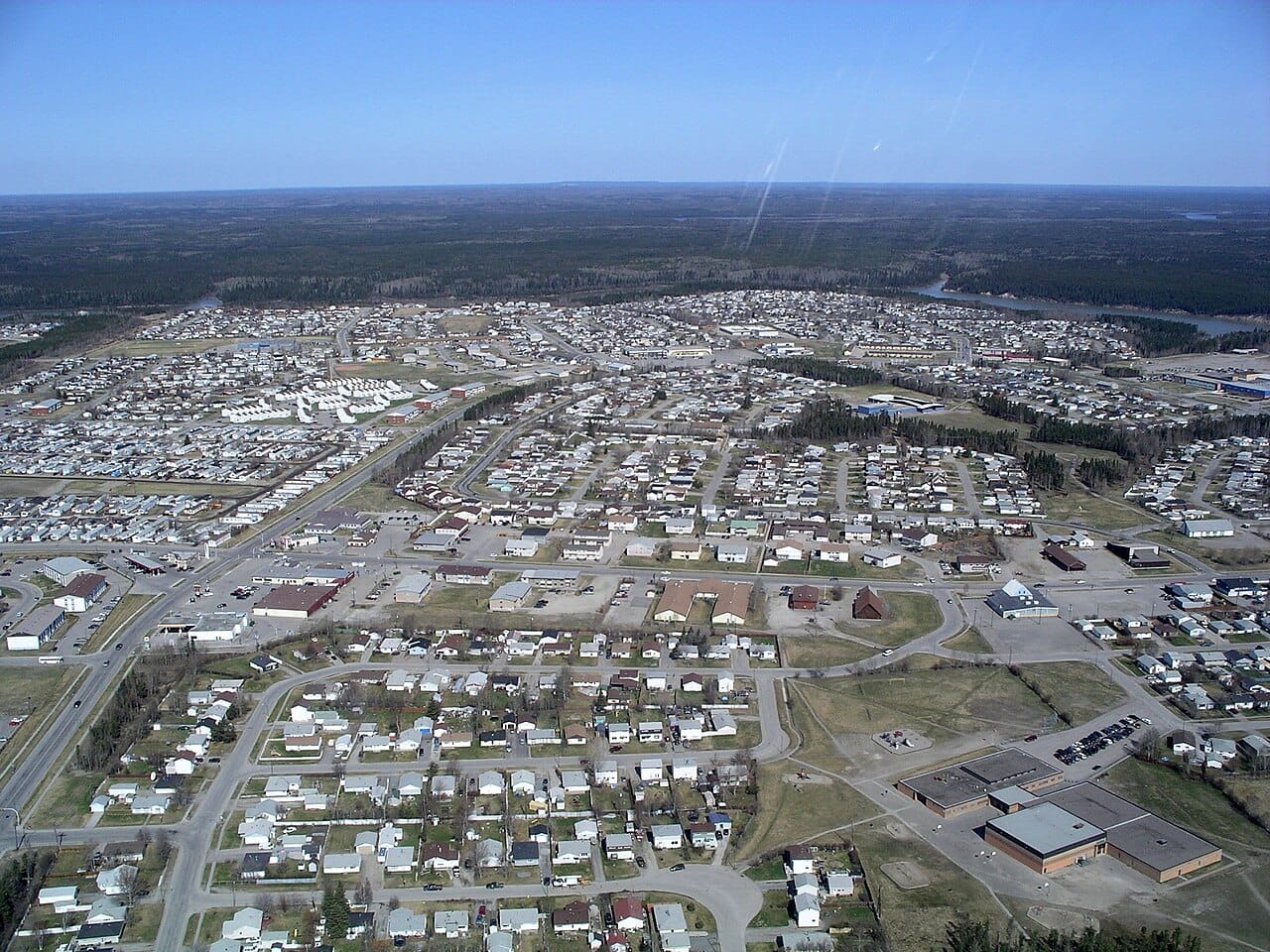
Thompson is the largest city in northern Manitoba, roughly 650 kilometres north of Winnipeg on the Burntwood River, with 13,035 residents at the 2021 census. It was built from nothing in the late 1950s around a nickel discovery, and it remains a mining town, a regional service centre for a vast and thinly populated north, and the point where road, rail and air connections for northern Manitoba converge. It is known as the Hub of the North.
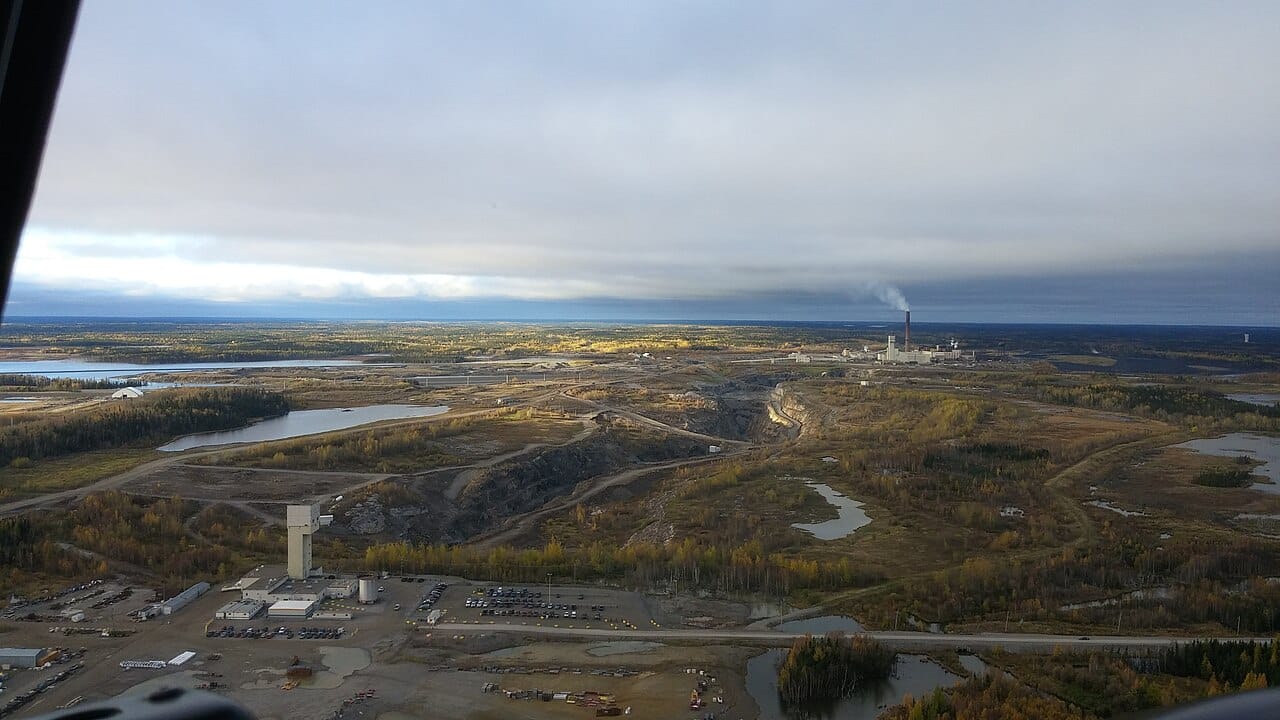
There was no settlement here before 1956. In that year the International Nickel Company of Canada, then known as Inco, confirmed a major nickel sulphide deposit after an exploration programme using airborne electromagnetic surveying.
What followed was unusual. Rather than let a camp grow, Inco and the province signed an agreement to build a planned city: mine, smelter, refinery, roads, rail spur, housing, schools and hospital, developed together. Thompson was named for John F. Thompson, then chairman of Inco.
The first residents arrived in 1957, the mine began production in 1961, and the community was incorporated as a city in 1970, thirteen years after the first building.
Thompson's population peaked in the 1970s at around twenty thousand and has declined since, in step with the mine's changing fortunes. The 2018 closure of smelting and refining operations removed several hundred jobs and marked the end of the integrated operation the city was built around, leaving mining and milling.
The city's response has leaned on its regional role rather than the mine: health, education, transport and government services for northern Manitoba are concentrated here.
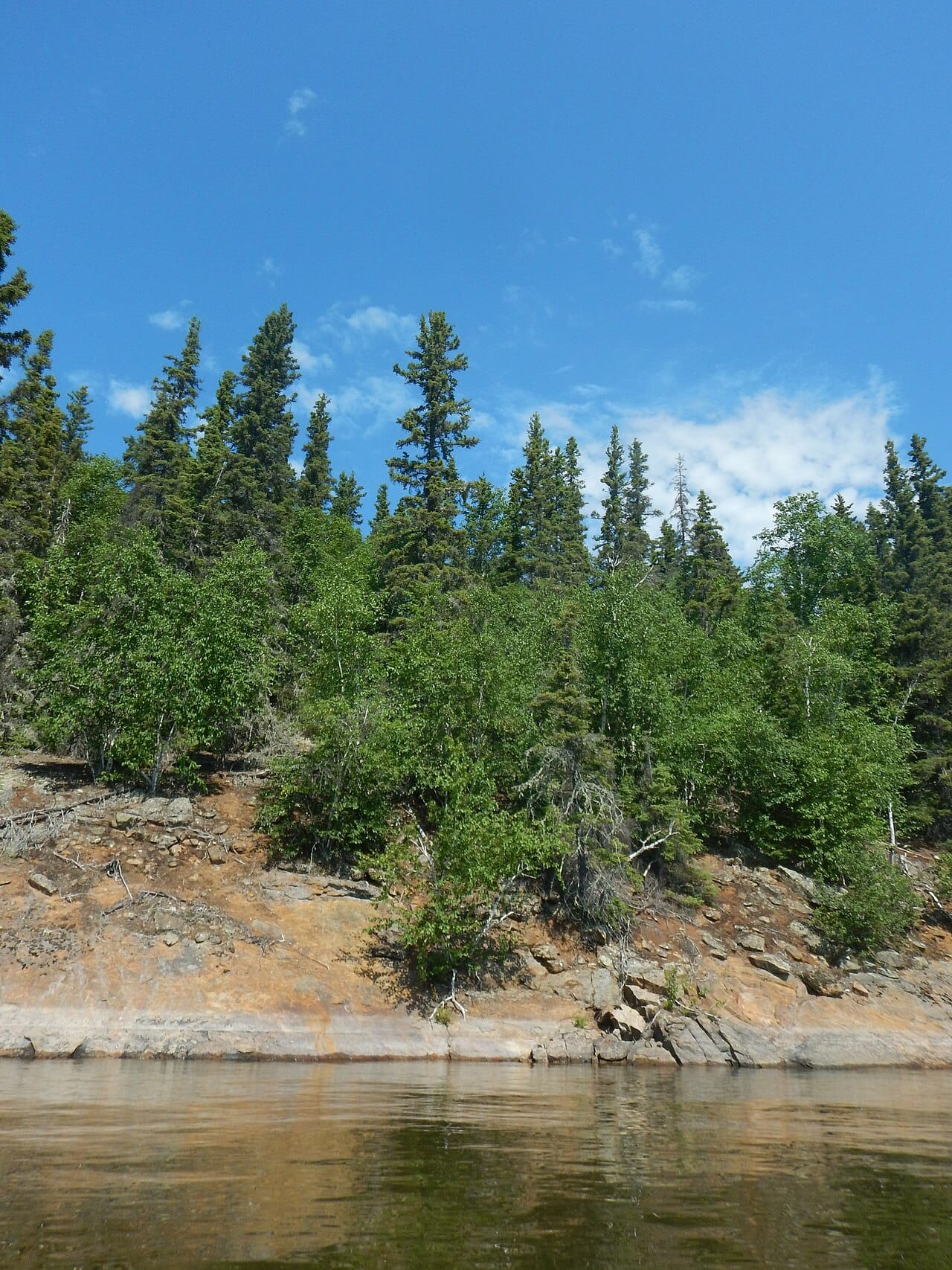
Thompson lies in the boreal forest on the Canadian Shield, in a landscape of black spruce, muskeg, exposed Precambrian rock and an extraordinary density of lakes. There is no agriculture to speak of.
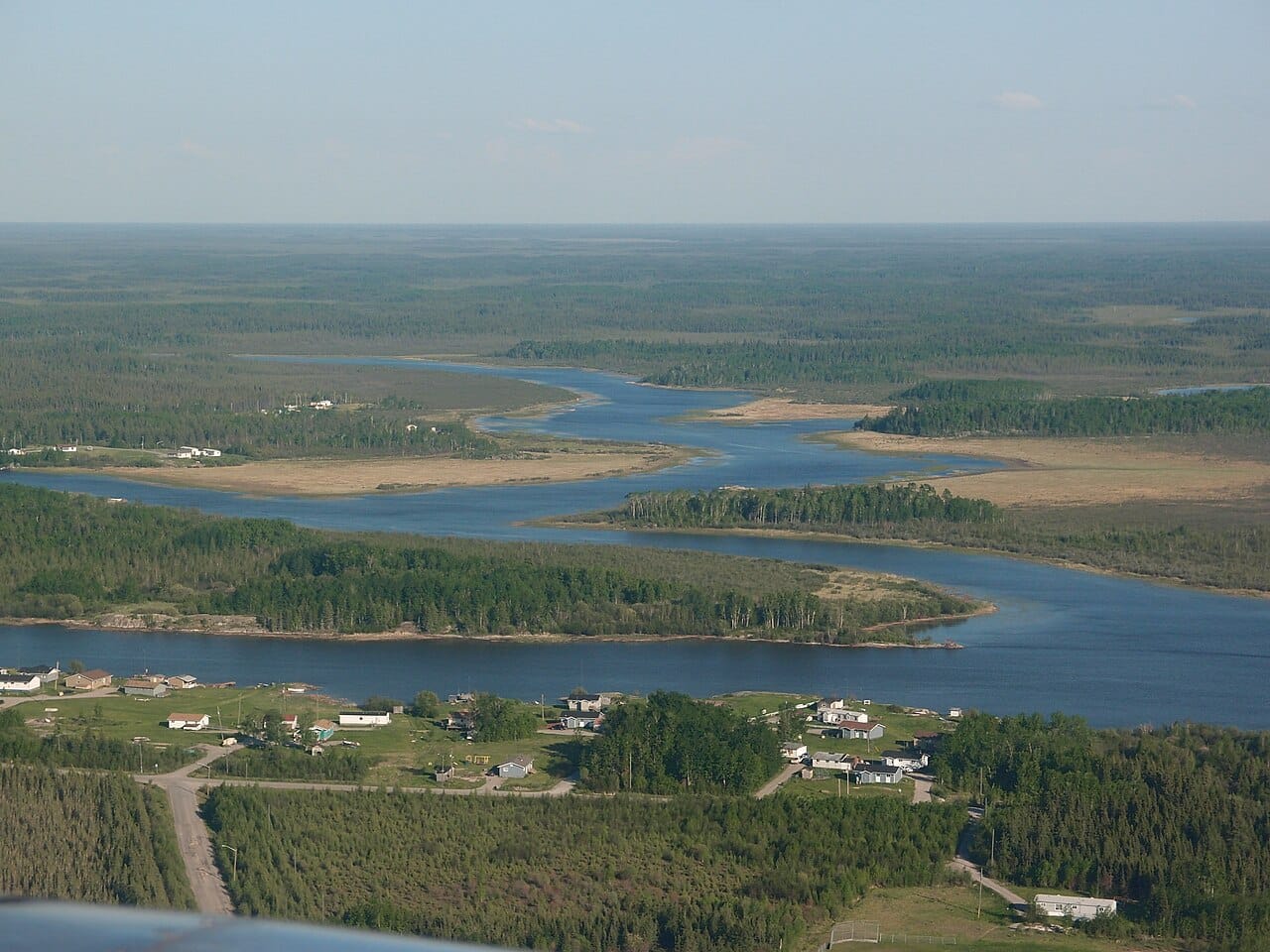
The Burntwood River runs through the city and joins the Nelson, which carries the drainage of a continental basin to Hudson Bay. That river system is the basis of Manitoba Hydro's northern generating stations, which supply most of the province's electricity and much of what it exports.
The climate is subarctic. Winters are long and severe, with January means below minus twenty-four degrees Celsius, and summers short and warm. The aurora is visible frequently, and Thompson markets itself accordingly.
Thompson is governed by a mayor and eight councillors. It is the administrative centre for much of northern Manitoba, hosting regional offices of provincial departments, the Northern Regional Health Authority, and courts serving surrounding communities.
Nickel mining remains the largest private employer, with Vale operating the mine and mill. The industry's cycles set the rhythm of the local economy and always have.
Beyond mining, Thompson functions as the service hub for northern Manitoba: health care, education, retail, transport and government. The Thompson General Hospital serves a catchment far larger than the city.
Transport is a substantial sector in its own right. Thompson is the northern terminus of the paved provincial highway network and a rail and air junction; communities further north depend on it for freight, medical travel and connection to the south.
University College of the North, headquartered in Thompson with campuses and centres across the north, was established to deliver post-secondary education in northern communities and has a strong focus on Indigenous students. The School District of Mystery Lake serves the city.
Thompson's population is substantially Indigenous, with a large Cree presence, and the city serves as the urban centre for many surrounding First Nations. That relationship shapes its institutions, its schools and its politics.
It has also faced serious and well documented social challenges, including addiction, violence and housing pressure, tied in part to its role as the point where people from remote communities arrive to access services that do not exist closer to home.

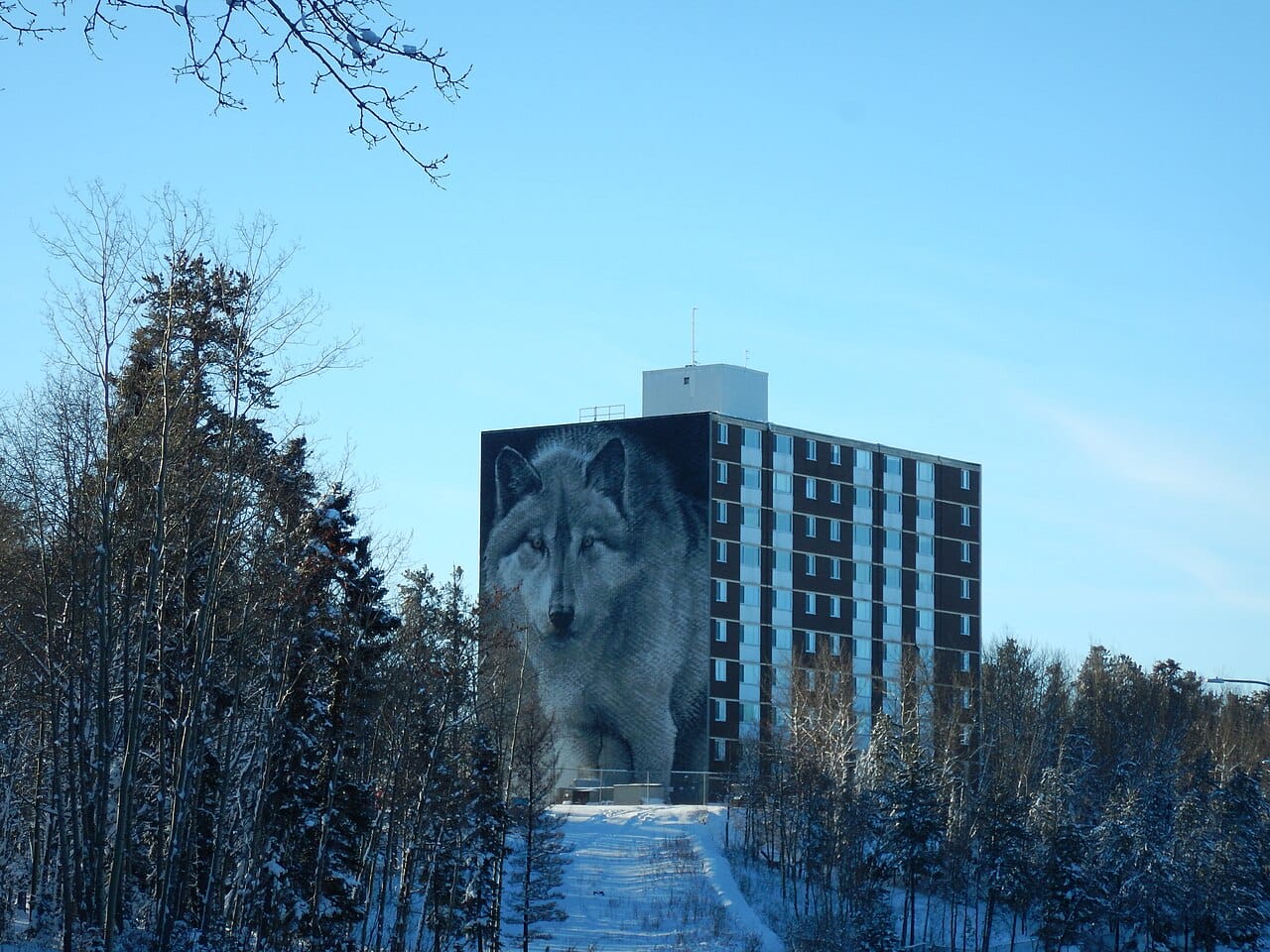
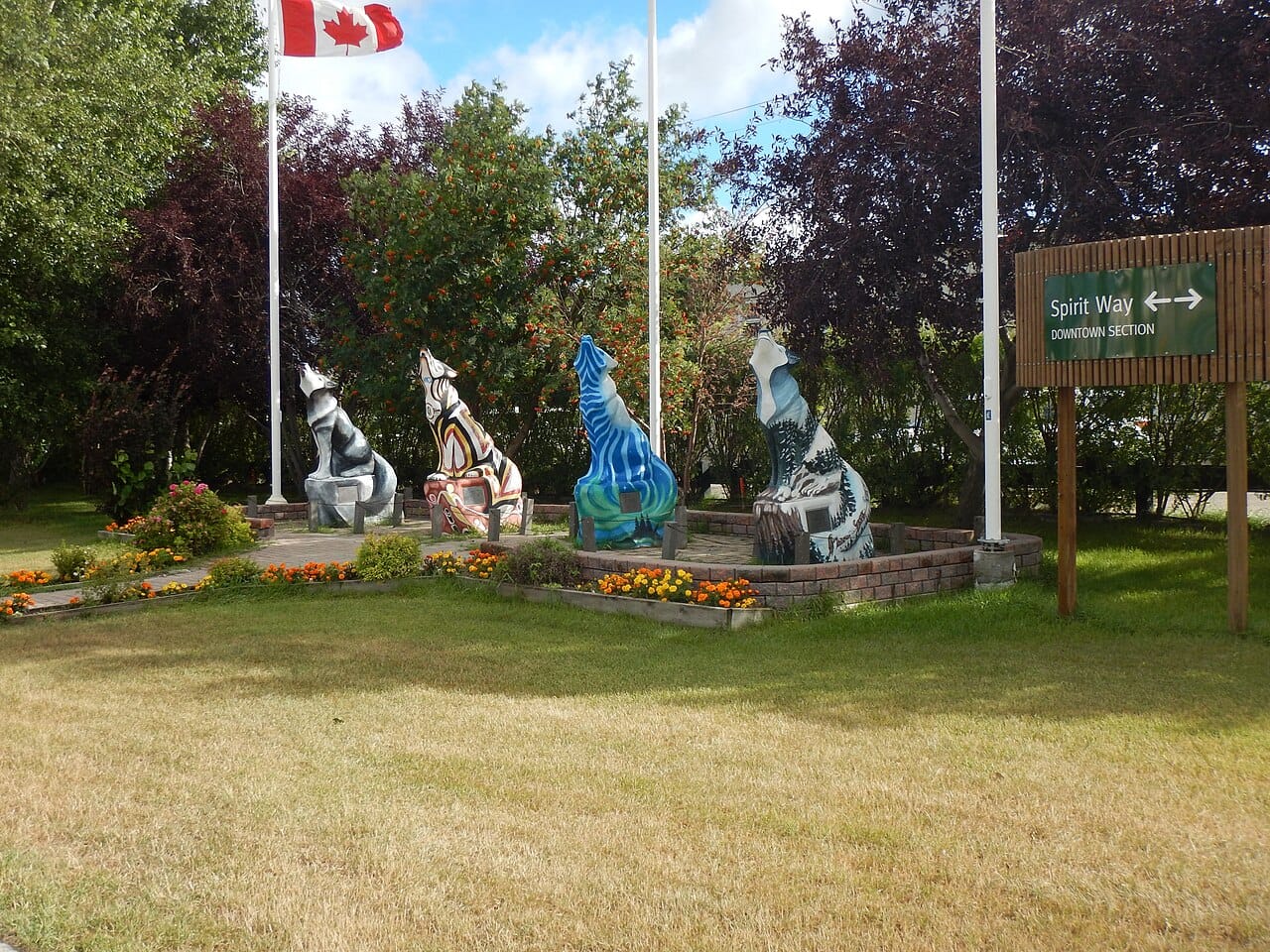
The Spirit Way is the city's signature public project: a walking route linking landmarks with wolf murals, including one painted on the side of a building at a scale visible from a distance, and monuments to the city's history.
The 2021 census recorded 13,035 residents, down from a peak above twenty thousand in the 1970s. The city is markedly younger than the Manitoba average and has a high proportion of Indigenous residents, and it serves a regional population several times its own size.