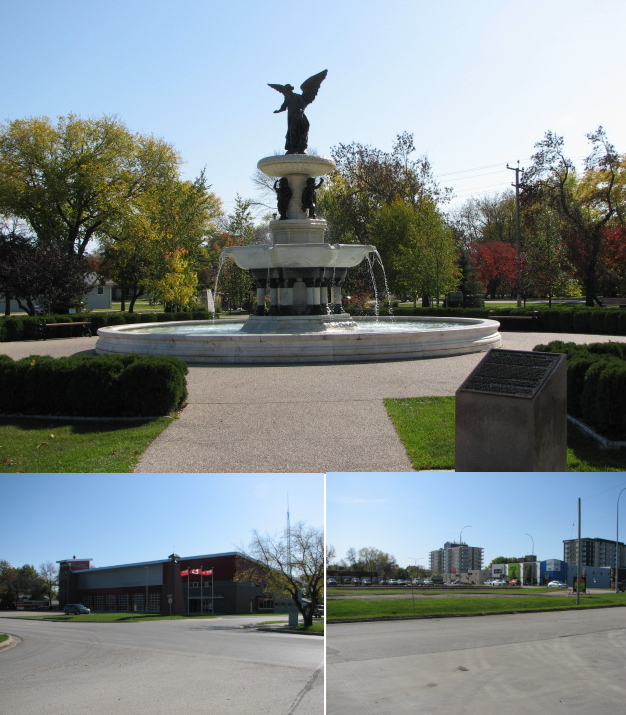
Winkler is the fourth-largest city in Manitoba, in the Pembina Valley about twenty kilometres north of the United States border, with 13,745 residents at the 2021 census. Like Steinbach it was founded by Russian Mennonite settlers, and like Steinbach it has become a manufacturing and commercial centre far busier than its size suggests. It has been among the fastest growing communities in Canada by percentage for much of the past three decades.
Winkler owes its existence to a land deal. When the Canadian Pacific Railway pushed a branch line through the Pembina Valley in 1892, the nearby settlement of Hoffnungsfeld had no station. A farmer named Valentine Winkler traded land for the right to have the townsite named after him, and the community relocated to the tracks.
Winkler himself became a member of the Manitoba legislature and later provincial Minister of Agriculture, and the town grew as the shipping point for a productive farming district.
The surrounding countryside had been settled from 1875 by Mennonites on the West Reserve, a block of land set aside by the Canadian government. As in the southeast, the community was granted control of its own schools and exemption from military service, and as in the southeast, the schooling promise did not survive Manitoba's shift to English-only public education.
The result was the same split: a conservative emigration to Latin America in the 1920s, and a remaining community that adapted. Winkler's institutions, businesses and churches still reflect that inheritance.
Winkler lies on the flat, exceptionally fertile floor of the Red River valley, in the area sheltered by the Pembina Escarpment to the west. The soil and a relatively long growing season make this among the most productive agricultural land in Manitoba, supporting crops that struggle further north, including maize, sunflowers and edible beans.
Water has been the constraint rather than soil. The region draws on aquifers and on the Pembina Valley Water Cooperative, and supply has been a recurring limit on growth.
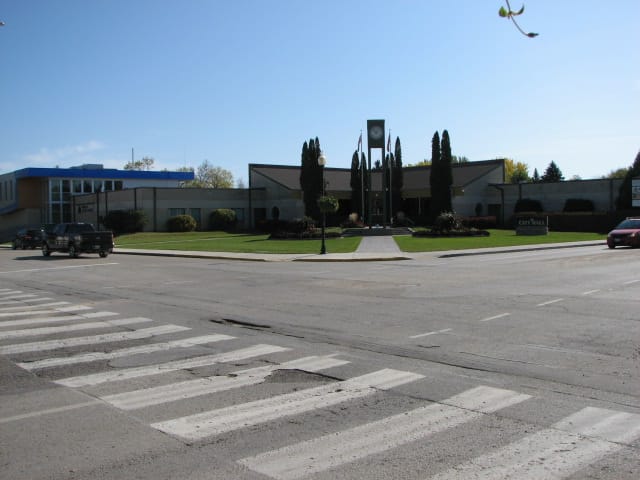
Winkler was incorporated as a village in 1906, a town in 1954, and a city in 2002. It is governed by a mayor and six councillors.
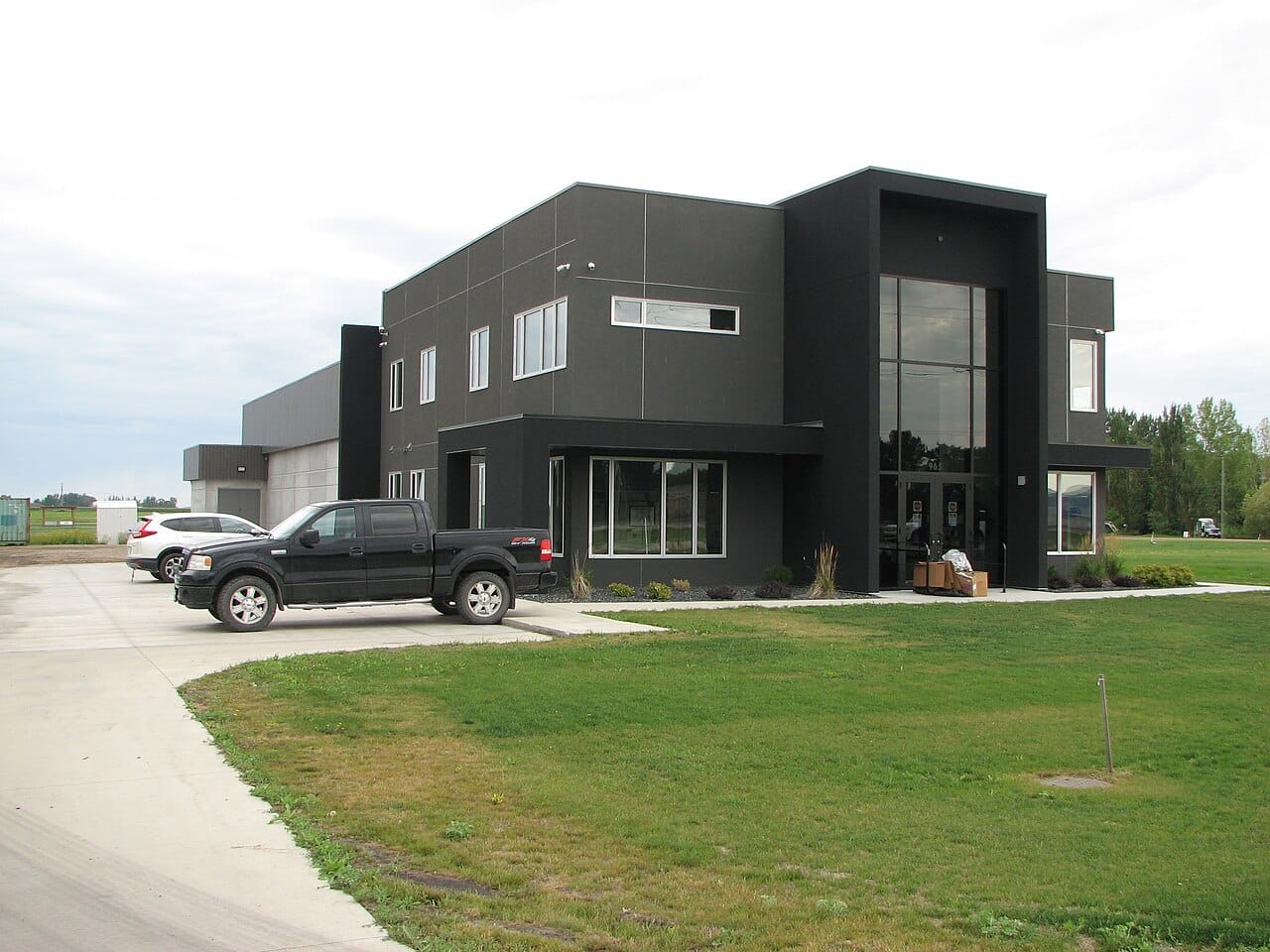
Winkler's economy is built on manufacturing to a degree unusual for a prairie city. Agricultural equipment, recreational vehicles, windows and building products, and food processing all have significant local production, much of it by firms founded and still owned in the area.
Agriculture remains the foundation beneath that. The city serves as the processing and shipping centre for the Pembina Valley's farms.
Retail draws from a wide catchment on both sides of the provincial boundary and, historically, from across the international border.
The Garden Valley School Division serves the city and surrounding area.
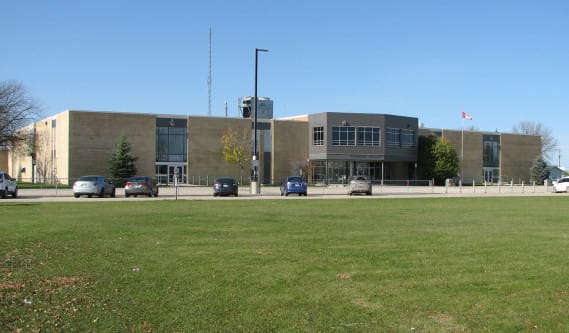
The division has faced the practical consequences of fast growth and heavy immigration, including a large English-as-an-additional-language cohort and repeated pressure on school capacity.
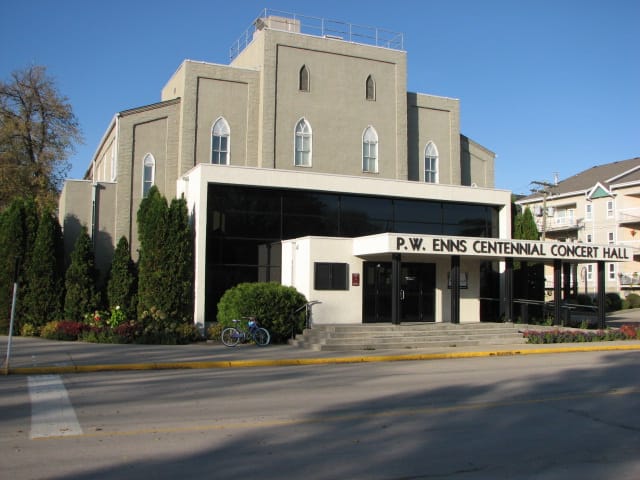
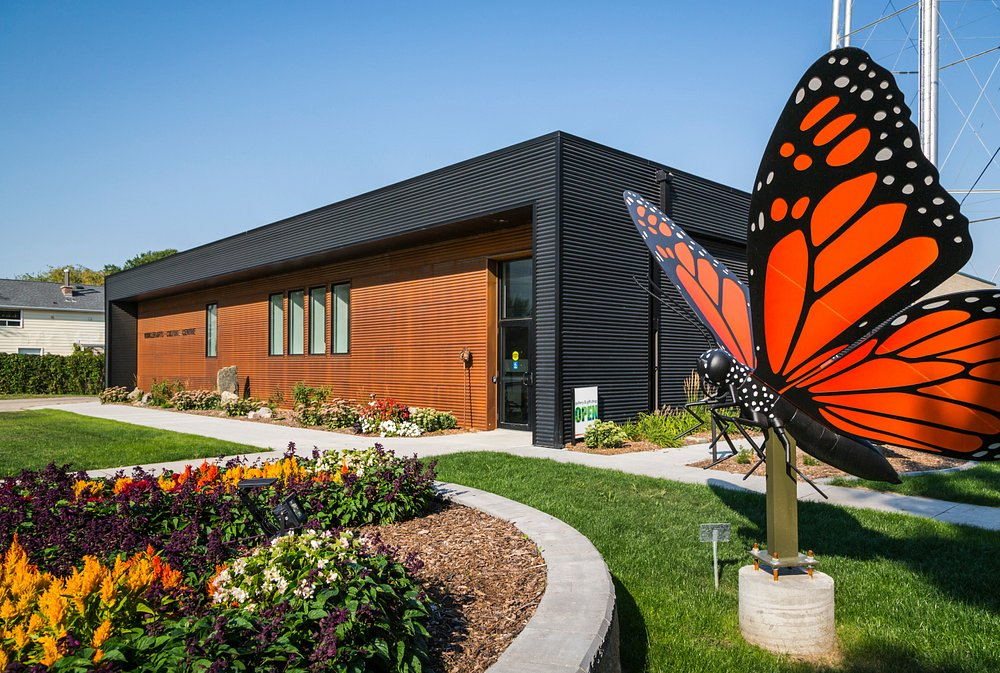
Winkler's civic life, like Steinbach's, runs substantially through its churches, and the city retains a conservative religious character. It also has one of the highest proportions of German-speaking residents in Canada, sustained by continuing arrivals from Mennonite communities in Mexico, Paraguay and Bolivia, many of whom are Canadian citizens by descent.
That migration has given Winkler an unusual demographic profile: rapid growth, a young population, and a large community whose first language is Plautdietsch, the Low German dialect of the Russian Mennonites.
The Winkler Harvest Festival and Exhibition each August is the principal annual gathering.
The 2021 census recorded 13,745 residents. Winkler's growth rate has repeatedly placed it among the fastest growing municipalities in Canada, driven far more by immigration than by internal migration from elsewhere in Manitoba.