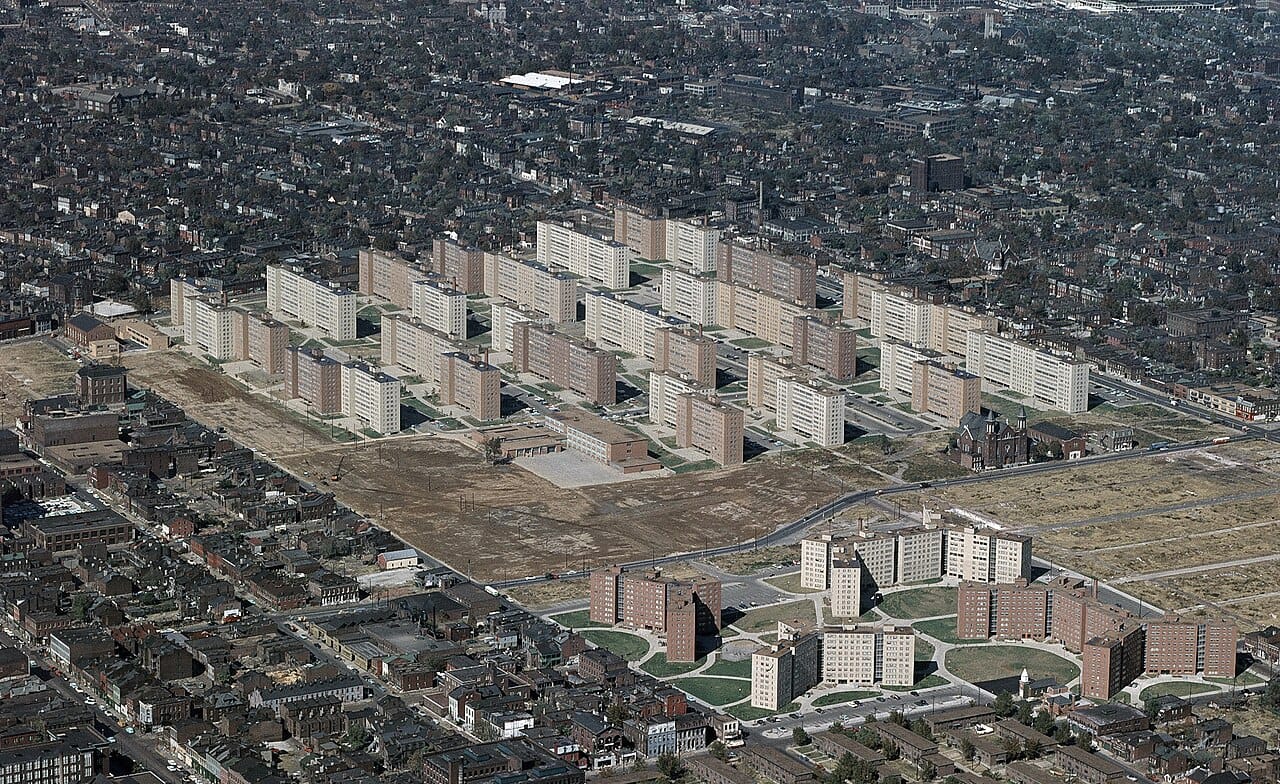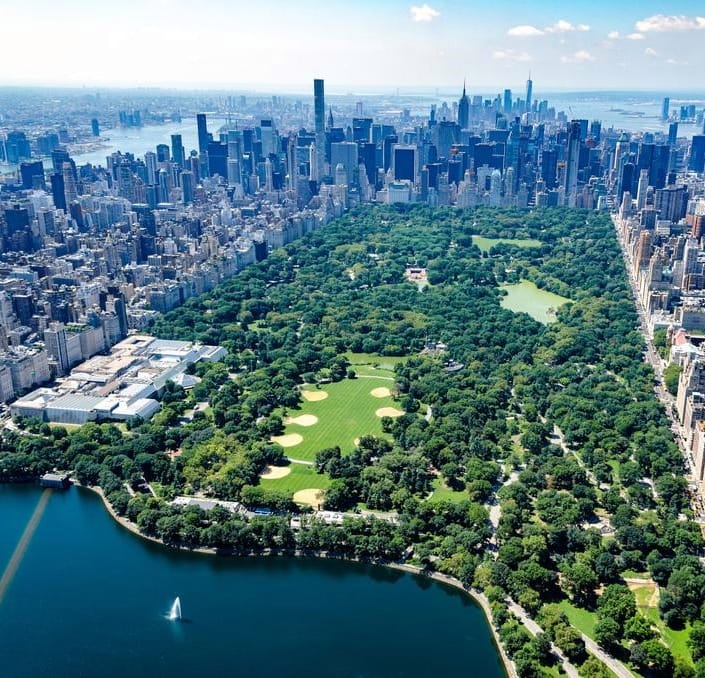
Public open green space within a city, maintained for recreation and amenity. They were created deliberately as a response to industrial urban conditions, and the evidence that they affect health is stronger than for most planning interventions.
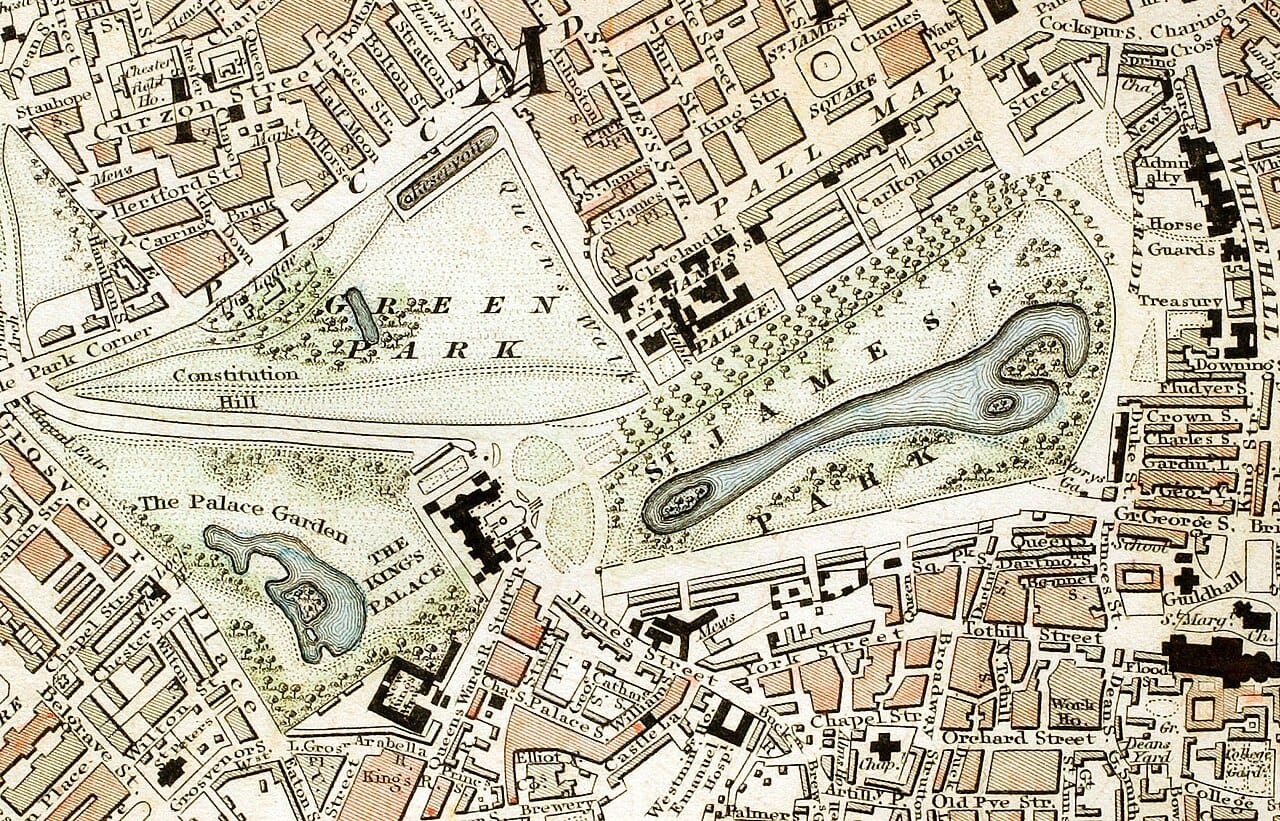
Enclosed gardens are ancient, and the public park as a civic institution is a nineteenth century development.
Several early examples were former royal or aristocratic grounds opened to public access rather than purpose-built, including several of the London parks.
The purpose-built public park arose from a specific argument. Industrial cities were crowded, polluted and unhealthy, and reformers held that access to open air and greenery would improve both physical health and public order.
That argument was partly about disease. Under miasma theory, described in its own capsule, foul air caused illness, and parks were understood as ventilating the city. The theory was wrong and the intervention was beneficial for other reasons.
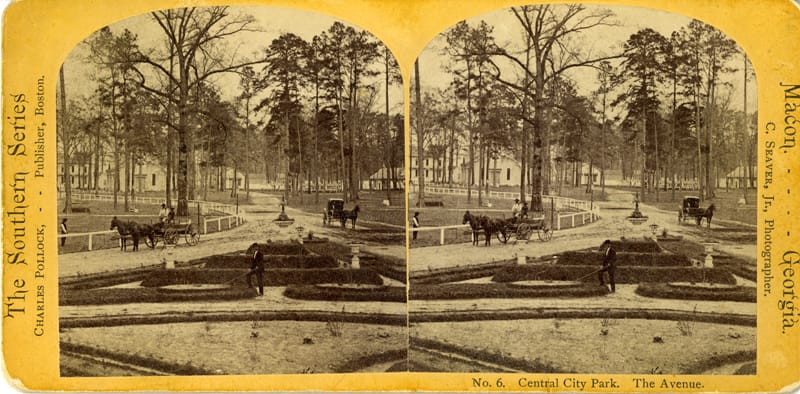
Birkenhead Park, opened near Liverpool in 1847, is generally identified as the first publicly funded park designed for the purpose. Frederick Law Olmsted visited it and was influenced by it in designing Central Park in New York from 1858.
Olmsted's arguments were explicitly social. He held that parks should be accessible to all classes, that they served a democratic function by bringing people together, and that their design should provide relief from the city rather than reproduce it.
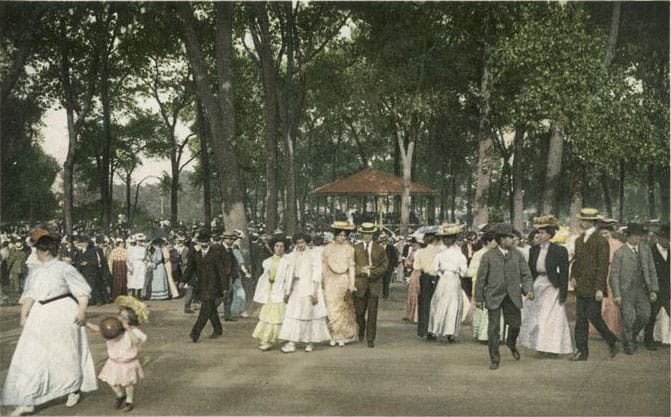
Recreation and exercise, both organised and informal.
Social contact, including deliberate gathering and incidental encounter between people who would not otherwise meet.
Environmental function, which is substantial and often understated. Vegetation and shade reduce the urban heat island effect measurably, with differences of several degrees recorded between parks and surrounding built areas. Permeable ground absorbs rainfall and reduces flooding. Trees intercept particulate pollution, though the effect on air quality is smaller than often claimed.
Habitat, since urban green space supports a considerable range of species and connects fragments of habitat.
Property value, which rises with proximity to good parks, a relationship consistent enough to be used in valuing them.
The association between access to green space and health outcomes is among the more robust findings in urban research.
Studies across many countries and populations find associations with lower all-cause mortality, better cardiovascular measures, lower rates of depression and anxiety, and better birth outcomes.
The relationship persists after adjustment for income and other confounders, though observational studies cannot fully remove them.
Several mechanisms are proposed and are not mutually exclusive: increased physical activity, reduced stress, greater social contact, reduced heat exposure and reduced air pollution.
Experimental work supports the stress mechanism specifically, with measurable differences in cortisol, blood pressure and self-reported mood after time in green space compared with urban environments.
A frequently cited finding is that the association is strongest for the least advantaged, which implies that green space reduces health inequality rather than benefiting everyone equally.
The clearest current dispute concerns who benefits.
Creating or improving a park raises surrounding property values, which raises rents, which can displace the existing residents the improvement was intended to serve.
This has been documented in several cities, and the term green gentrification describes it. The New York High Line is the most cited case, where a disused railway converted to a park was followed by substantial increases in surrounding property values.
The response in planning practice has been to pair green investment with measures to retain existing residents, including affordable housing requirements and tenant protections, on the reasoning that the improvement and the displacement can be separated if the policy is designed for it.
Distribution of existing green space is also uneven. Studies in many cities find less green space and lower quality provision in poorer areas and in areas with larger minority populations, a pattern that frequently traces to historical planning decisions.
Urban parks are among the few planning interventions with a substantial and consistent evidence base for health effects, which is unusual in a field where most claims rest on argument rather than measurement.
They also demonstrate that a correct intervention can follow from an incorrect theory. Nineteenth century reformers built parks to disperse miasma, and the parks improved health for reasons they did not identify and could not have.