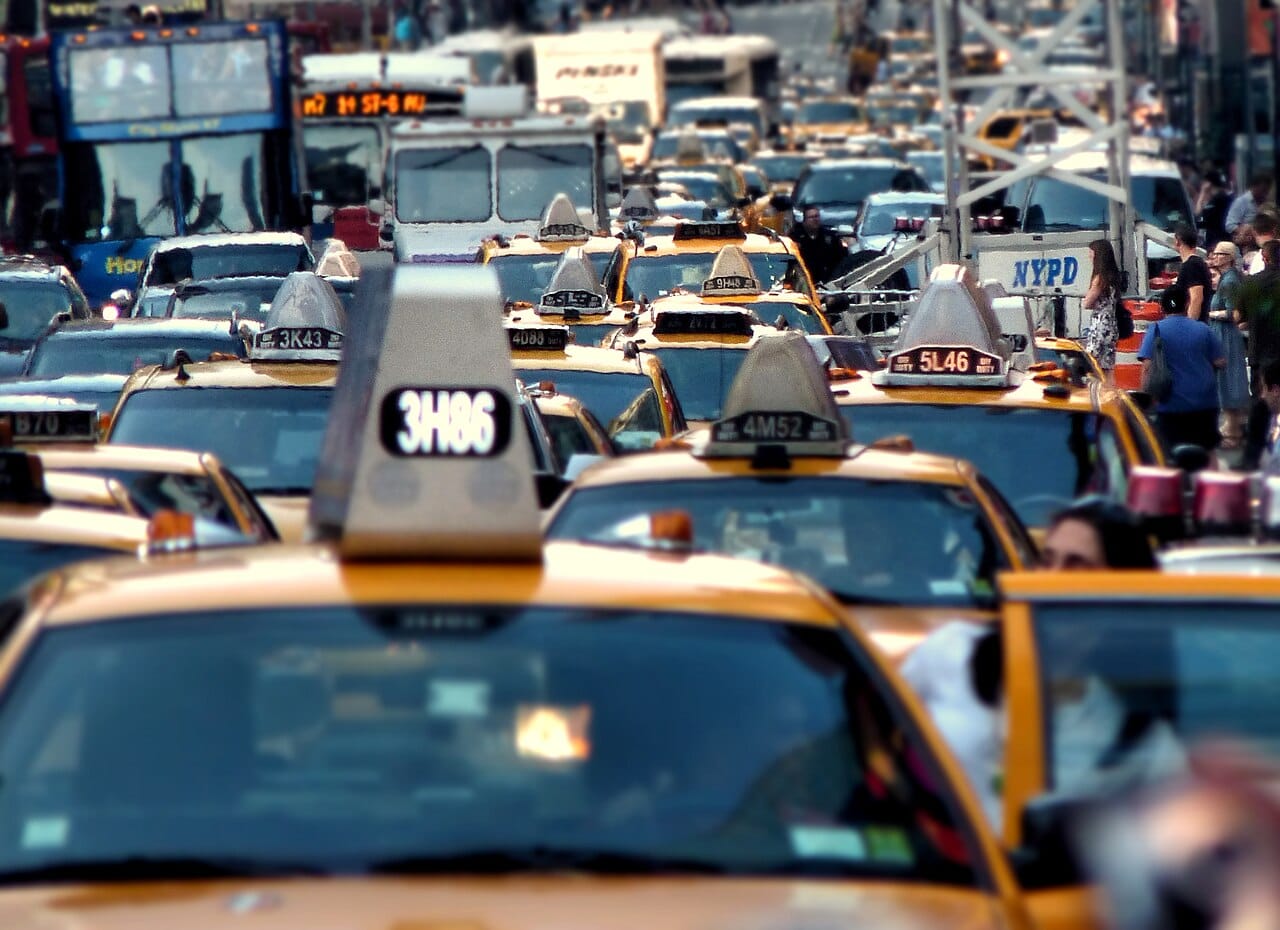
Adding road capacity generates additional traffic that fills it, so congestion returns to roughly its previous level. The effect is well measured, it has been known for over sixty years, and highway expansion continues to be justified on the assumption that it is not real.
Congestion is a price. A trip that takes ninety minutes in traffic is not worth making for many people who would make it if it took thirty. When capacity is added and speeds rise, the price falls, and the quantity demanded rises, which is ordinary economics rather than anything specific to roads.
The additional traffic comes from several sources. People who were travelling at other times shift to the convenient time. People taking other routes switch. People using transit switch to driving. People make trips they would not otherwise have made. And over a longer period, development follows the new capacity, so housing and employment relocate to places that only work with the road.
The first four fill a road within a few years. The fifth is slower, larger, and effectively permanent, since land use cannot be undone when the traffic returns.
Anthony Downs described the effect in 1962 as the law of peak-hour traffic congestion. Systematic measurement came later.
Gilles Duranton and Matthew Turner's 2011 study in the American Economic Review is the standard reference. Using American metropolitan data from 1980 to 2000, and instrumenting road construction with historical routes to address the objection that roads are built where traffic is already growing, they found an elasticity of vehicle kilometres travelled to lane kilometres of close to one. A ten percent increase in road capacity produced roughly a ten percent increase in driving.
They called it the fundamental law of road congestion. Later work in Europe and elsewhere has found values somewhat below one but still substantial, generally between 0.6 and 1.0 over the long run.
The Katy Freeway in Houston is the case most often cited. Widened at a cost of over two billion dollars and completed in 2011 at up to twenty-six lanes across, it is among the widest highways in the world. Travel times measured afterwards were longer than before the expansion.
If capacity generates traffic, removing capacity should remove traffic, and it does.
Cathy Cairns and colleagues reviewed around seventy cases of road capacity reduction in 1998 and found that a substantial fraction of the traffic did not reappear elsewhere. It disappeared, as people changed routes, times, modes and destinations, or made fewer trips.
Well documented removals support this. San Francisco's Embarcadero Freeway, damaged in the 1989 earthquake and demolished rather than rebuilt, did not produce the predicted gridlock. Seoul's Cheonggyecheon expressway was removed in 2003 and replaced with a restored stream, and traffic in the corridor fell.
Traffic behaves less like a fixed volume of water needing somewhere to go, and more like a gas expanding to fill the space available.
That the effect exists is not seriously disputed among transport researchers. What to do about it is.
The strong reading is that road expansion cannot relieve congestion and should be abandoned as a purpose, with money moved to transit, walking, cycling and land use that shortens trips.
A more moderate reading holds that induced demand is not automatically a loss. The additional trips are trips people wanted to make and now can, which has value. The mistake, on this account, is the justification rather than the project: expansion delivers access, not free-flowing traffic, and should be argued for and evaluated on that basis.
Both readings agree that congestion pricing addresses the problem more directly, by charging for road space at the times it is scarce. Singapore, London and Stockholm have done it, with measured reductions in traffic. It is also politically difficult wherever it has been proposed, which is the main reason it remains rare.
Highway agencies forecast future traffic and size projects to meet it, using models that in many cases do not include induced demand at all. A model assuming traffic is fixed will always conclude that more capacity reduces congestion, and will be wrong in a consistent direction.
The institutional incentives point the same way. Funding is often allocated for construction rather than for outcomes, project appraisal counts time savings that induced demand later erases, and the appraisal is rarely revisited after the road opens.