The capacity to attribute mental states, beliefs, desires and intentions, to oneself and to others, and to recognise that another's beliefs may differ from one's own and from reality. The construct is central to developmental and comparative psychology, and the tasks used to measure it are much disputed.
The phrase was introduced by David Premack and Guy Woodruff in 1978 in a paper asking whether a chimpanzee has a theory of mind. They called it a theory because mental states cannot be observed, so attributing them is inferring unobservables to predict behaviour.
The standard test is the false belief task. In the Sally and Anne version, a child watches Sally place a marble in a basket and leave. Anne moves it to a box. The child is asked where Sally will look for her marble.
Answering the basket requires representing Sally's belief as separate from reality. Answering the box indicates that the child cannot yet hold the two apart. Typically developing children reliably pass at around four years old, with performance improving sharply between three and five.
The task is elegant because it has an unambiguously correct answer that depends on nothing except the ability to model another mind.
The developmental picture is less settled than the standard account suggests.
Explicit verbal false belief tasks are passed at around four, consistently across cultures, though the age varies somewhat with language and family environment.
Implicit measures tell a different story. Studies using anticipatory looking, in which infants' eye movements are recorded to see whether they look where an agent falsely believes an object to be, reported success in children as young as fifteen months. This was taken as evidence that the underlying competence is present far earlier and is masked by the verbal and executive demands of the explicit task.
That literature has since run into serious replication difficulty. A large multi-laboratory replication attempt published in 2018 failed to reproduce the anticipatory looking findings, and several other attempts have produced null results. Whether infants possess an early implicit competence is now genuinely open.
The competing interpretation is that passing the explicit task at four reflects the emergence of the capacity itself, or alternatively the development of executive function and language sufficient to express a capacity already present. Distinguishing these has proved difficult because the task loads on all three.
Baron-Cohen, Leslie and Frith reported in 1985 that autistic children performed worse on false belief tasks than comparison groups, and proposed a specific difficulty with attributing mental states, later described as mindblindness.
The account was influential and is now regarded by most researchers, including many who developed it, as too strong. Several points count against it.
Many autistic people pass false belief tasks, including a majority of autistic children above a certain verbal ability, so the difficulty is neither universal nor definitional.
Performance on these tasks correlates strongly with verbal ability, so a group difference may reflect language demands rather than mentalising as such.
The framing has been criticised as describing a deficit located in one party when the difficulty is bidirectional. The double empathy problem, articulated by Damian Milton, points out that autistic and non-autistic people both have difficulty reading one another, and that autistic people communicate effectively with other autistic people. Studies of information transfer along chains of participants support this, finding that autistic to autistic transmission is as effective as non-autistic to non-autistic.
The current position is that differences in social inference exist and are real, and that describing them as an absent capacity in one group misrepresents what has been measured.
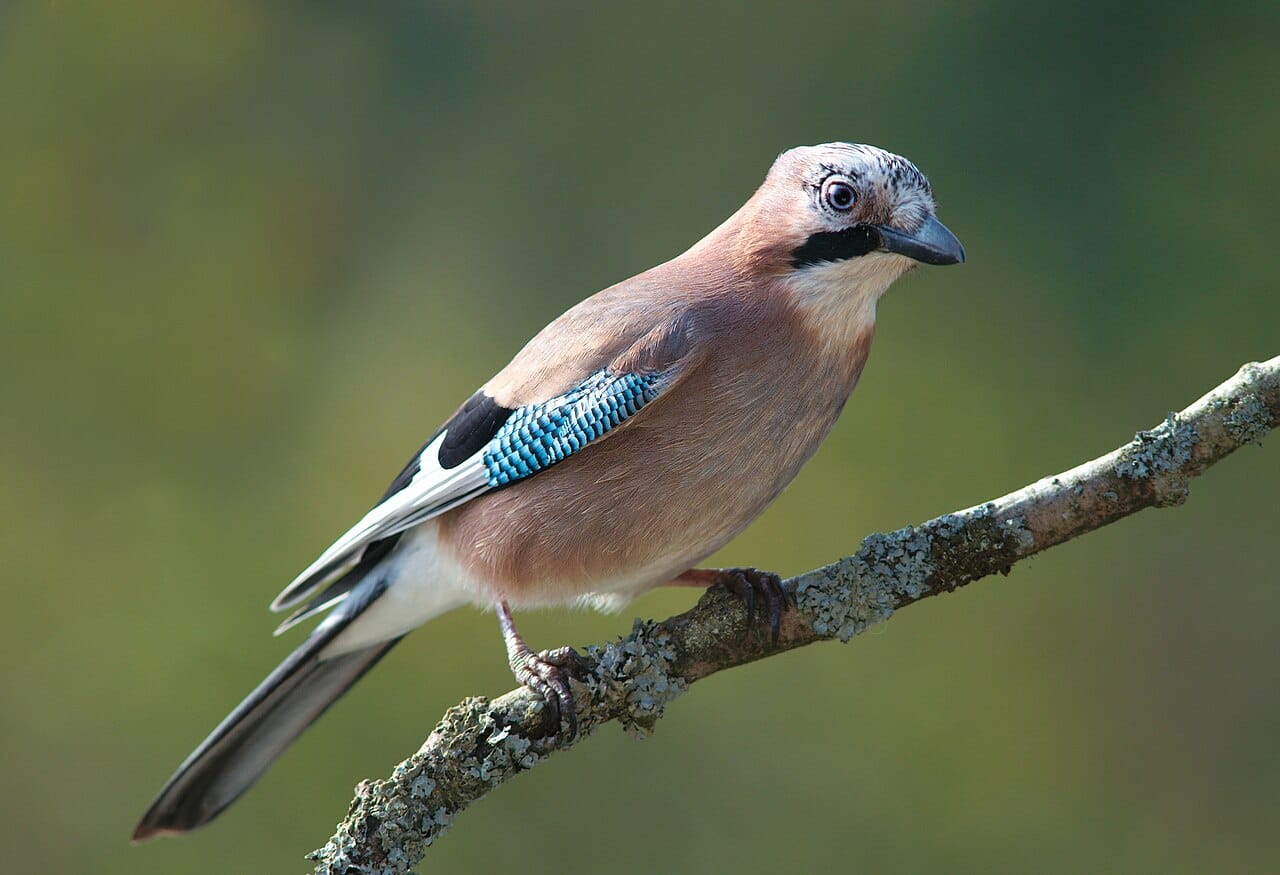
Whether non-human animals have this capacity depends heavily on which component is asked about.
Chimpanzees clearly track what others can and cannot see, and adjust their behaviour in competitive settings accordingly, which indicates an understanding of perception and knowledge.
False belief is harder. A 2016 study using anticipatory looking reported that great apes anticipated an agent's actions based on a false belief, and the finding sits under the same methodological cloud as the infant work using the same measure.
Corvids provide some of the most striking evidence. Scrub jays that have previously stolen from other birds' caches re-cache their own food when they have been observed, and do so selectively, which is difficult to explain without some representation of what the observer knows.
The persistent difficulty across all this work is that behaviour readable as mind-reading is usually also explicable by learned associations between observable cues and outcomes, and designing a task that separates the two has proved extremely hard.
Theory-theory holds that people deploy something like an implicit theory of psychology, inferring mental states through causal generalisations.
Simulation theory holds that people model others by running their own cognitive machinery offline, imagining themselves in the other's position.
The evidence does not decisively favour either, and hybrid accounts are common. Neuroimaging identifies a consistent network including the temporoparietal junction and medial prefrontal cortex that activates during mentalising tasks, which constrains the accounts without settling between them.
The capacity underlies cooperation, deception, teaching, storytelling and most of ordinary social life, and its absence would make nearly all of these unintelligible.
It is also a case where the measurement instrument became the construct. A great deal has been inferred from performance on one task, and much of the current dispute follows from that task carrying more weight than any single measure can bear.