The range of distances from a star within which a planet could hold liquid water on its surface. It is the standard first filter in the search for life beyond Earth, and it is a much cruder tool than its use in headlines suggests.
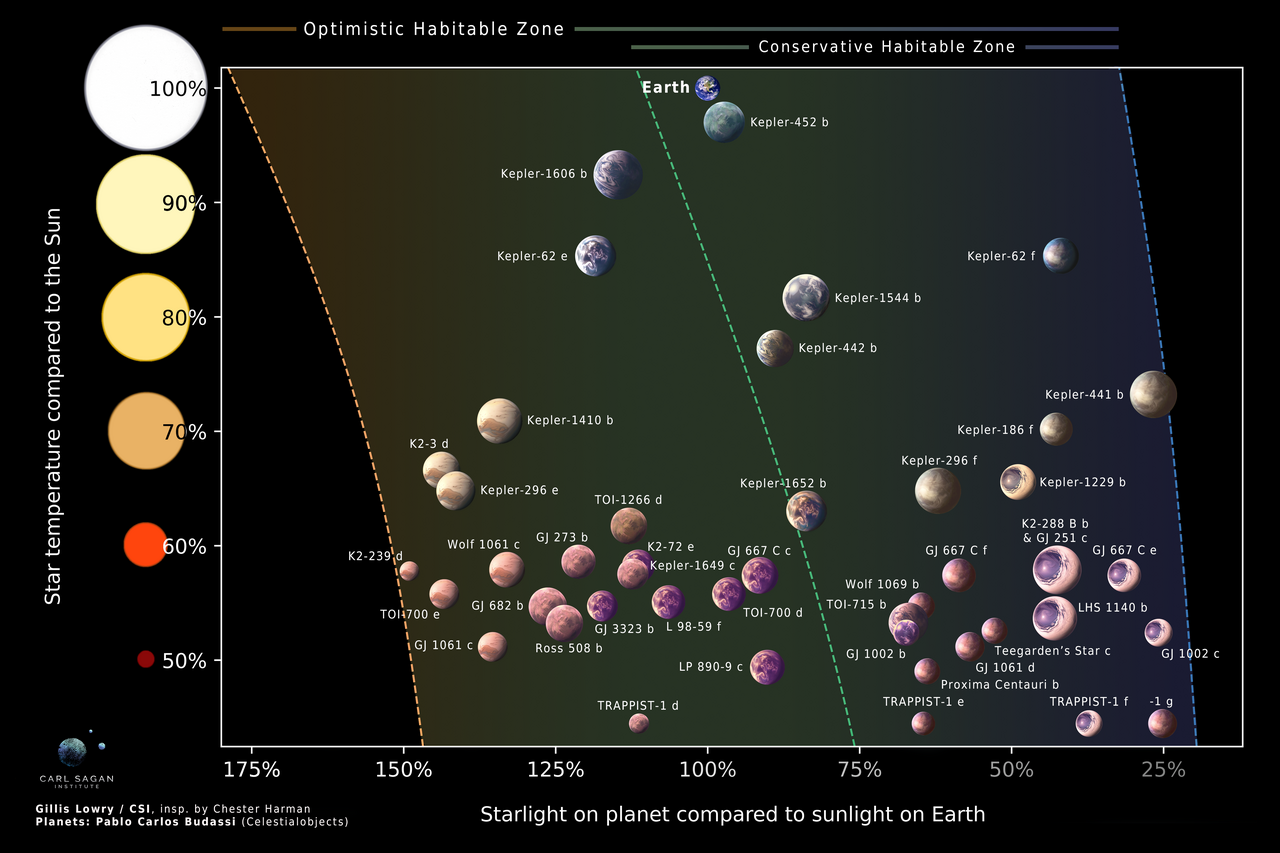
The zone is bounded by two limits.
The inner edge is where a planet receives enough radiation that water evaporates and is lost. Water vapour is a greenhouse gas, so evaporation warms the planet further, which evaporates more, in a runaway that ends with the oceans gone and the hydrogen escaping to space.
The outer edge is where carbon dioxide condenses and the greenhouse effect can no longer keep the surface above freezing, however much of it accumulates.
Both limits depend on the star. A cool red dwarf has a zone close in; a hot bright star has one far out. In the solar system the zone is usually placed roughly from just inside Earth's orbit to somewhere between Mars and the asteroid belt, with the exact figures depending on assumptions.
The zone also moves. Stars brighten as they age, so the zone migrates outward, and a planet comfortable early may not be later. The Sun is around thirty per cent brighter now than when it formed.
The choice is deliberate and defensible rather than arbitrary.
Water is an unusually good solvent for the chemistry life is known to use, it is liquid across a wide temperature range, and its solid form floats, which prevents bodies of water freezing solid from the bottom.
Its constituent elements are among the most abundant in the universe, so water is common wherever conditions allow it.
Every known organism requires it.
The criterion is nonetheless a bet on life resembling the only example available. Alternative solvents have been proposed, including liquid methane, which exists on Titan's surface, and reasoning from one instance is a recognised limitation rather than a hidden assumption.
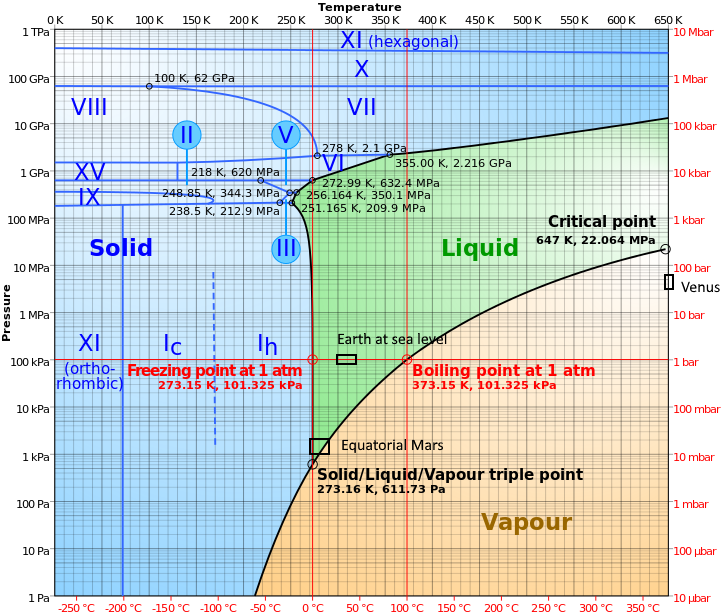
Being in the zone is necessary on this definition and nowhere near sufficient, and the solar system demonstrates it directly.
Venus sits at the inner edge and has a surface hot enough to melt lead, because a runaway greenhouse left it with a dense carbon dioxide atmosphere. Mars sits in or near the zone and lost most of its atmosphere, so water cannot be stable as a liquid at the surface despite the distance being suitable.
Atmosphere is therefore at least as important as orbit, and atmospheric composition is far harder to measure on a distant planet than distance is.
Other factors matter and are not captured. A magnetic field protects an atmosphere from stripping by stellar wind. Plate tectonics recycles carbon and appears to stabilise climate over long periods. A large moon may stabilise axial tilt. Planetary mass determines whether an atmosphere is retained at all.
Red dwarf systems, which are the most numerous and the easiest to survey, have specific complications. Their habitable zones are so close in that a planet is likely to be tidally locked, with one face permanently lit, and these stars produce frequent violent flares that may strip atmospheres entirely.
The concept concerns surface water, and several of the most promising places for life in the solar system are outside the zone by that definition.
Europa and Enceladus have subsurface oceans of liquid water kept warm by tidal heating rather than by sunlight, and Enceladus vents material from its ocean into space where it has been sampled directly by spacecraft.
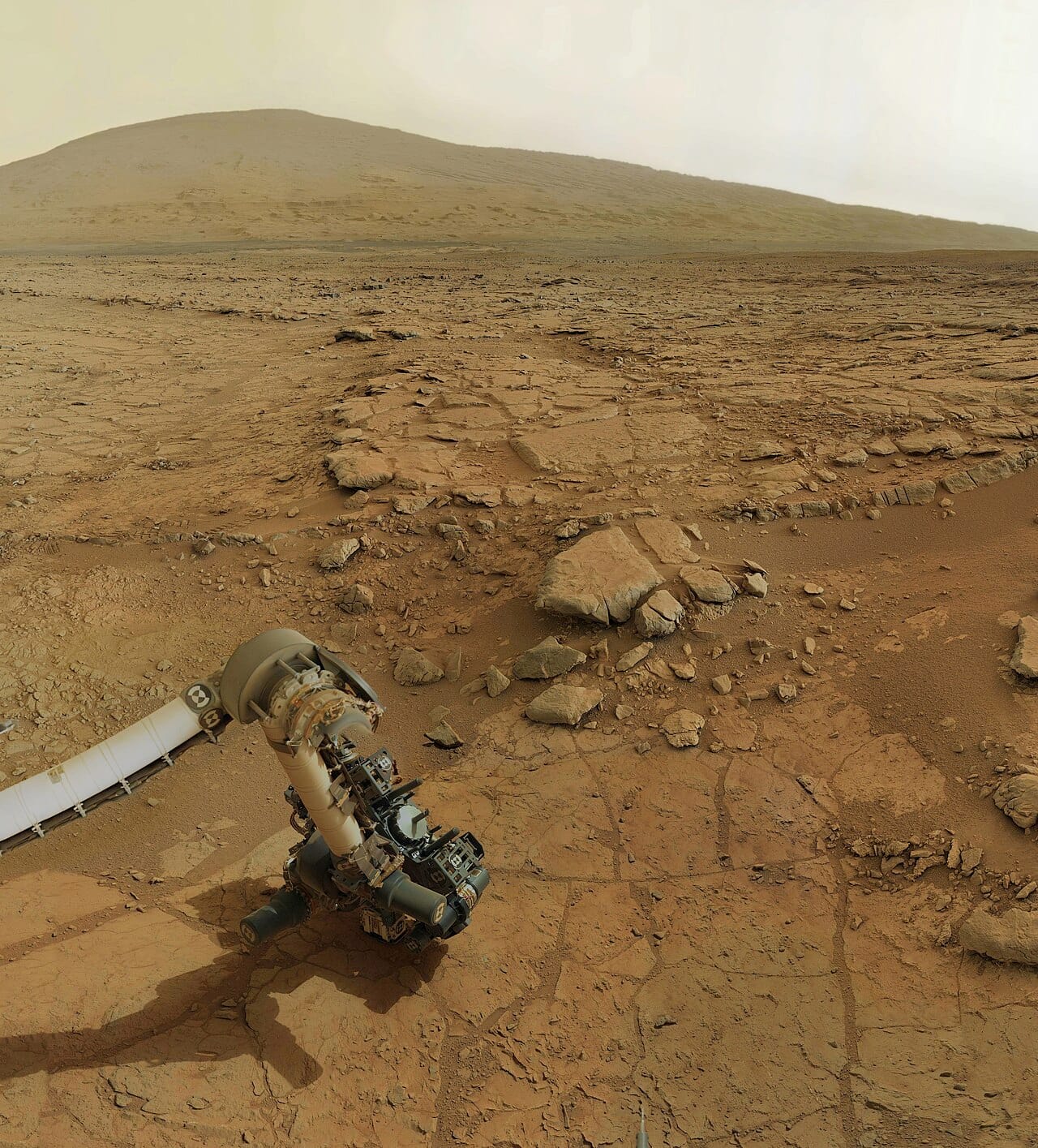
Mars may hold liquid water underground, shielded from radiation and from the thin atmosphere.
If subsurface oceans count, the volume of liquid water in the solar system beyond the habitable zone considerably exceeds that within it, which is an argument for treating the zone as a convenient filter rather than a boundary.
The zone remains the standard first cut in exoplanet surveys because its two inputs, orbital distance and stellar brightness, are precisely what transit and radial velocity methods measure well.
Several thousand exoplanets are known, and the subset that are roughly Earth-sized and within their star's zone numbers in the dozens. These are the priority targets for atmospheric characterisation by the James Webb Space Telescope and its successors, which look for spectral signatures of water, carbon dioxide, methane and oxygen.
Detecting an atmosphere is the step that converts a candidate into something assessable, and it is far harder than finding the planet.
The habitable zone made the search for life a tractable observational programme rather than a speculation, by supplying a criterion that can be applied to catalogues of thousands of planets.
Its limitations are equally instructive. A planet in the zone is a place worth examining and not a place where anyone expects to find life, and the frequency with which reporting collapses that distinction is a reasonable measure of how much work the phrase is being asked to do.