Measurable indicators that life is or was present. They are how the search for life beyond Earth is actually conducted, since organisms cannot be observed directly at interstellar distances, and every candidate has a non-biological explanation that must be excluded.
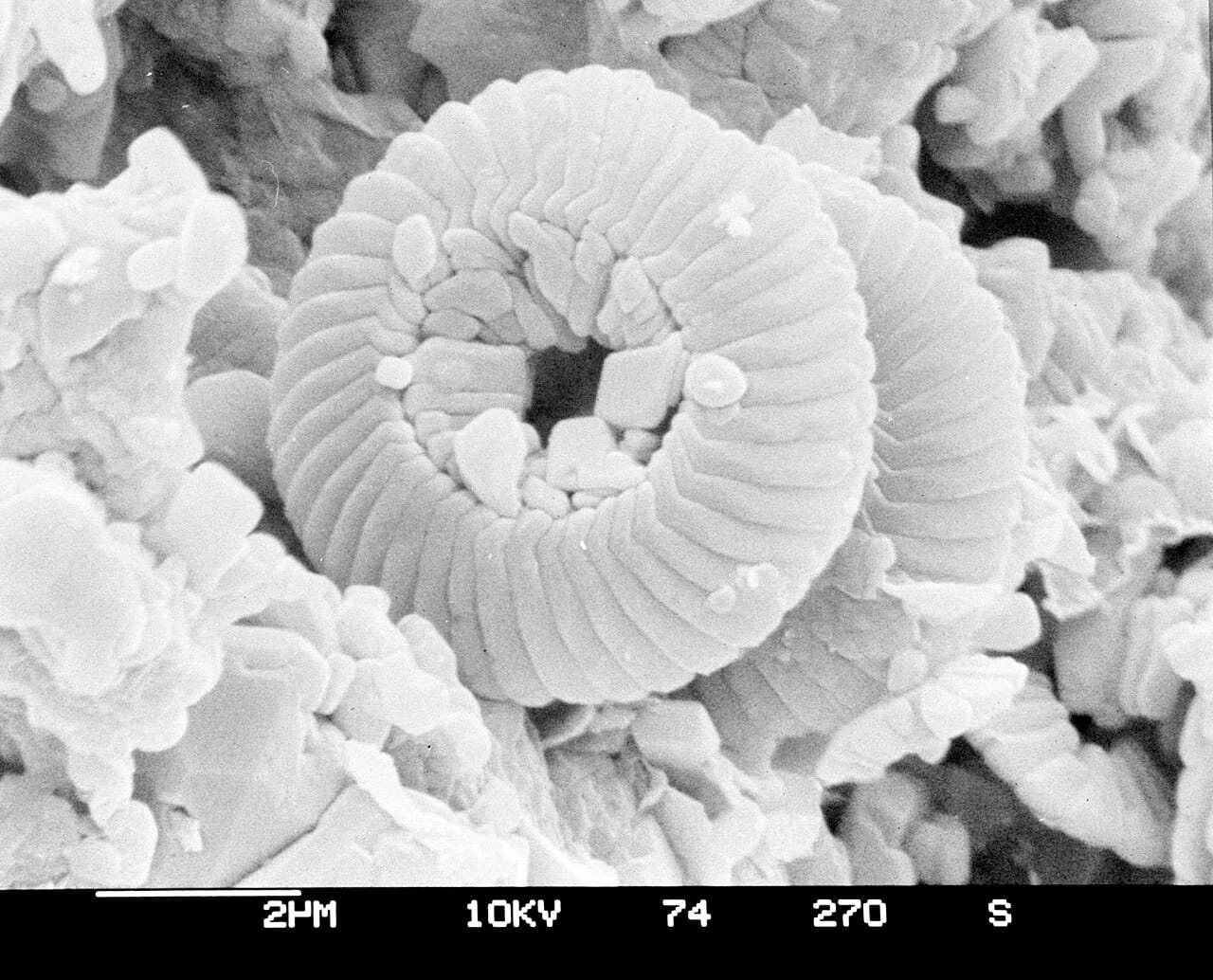
Chemical signatures are compounds whose presence is difficult to explain without biology, or whose abundance is far from what chemistry alone would produce.
Isotopic signatures exploit the fact that organisms discriminate between isotopes. Photosynthesis preferentially incorporates the lighter carbon isotope, so biological carbon is measurably depleted in carbon-13, and this ratio is the principal evidence for life in the oldest rocks.
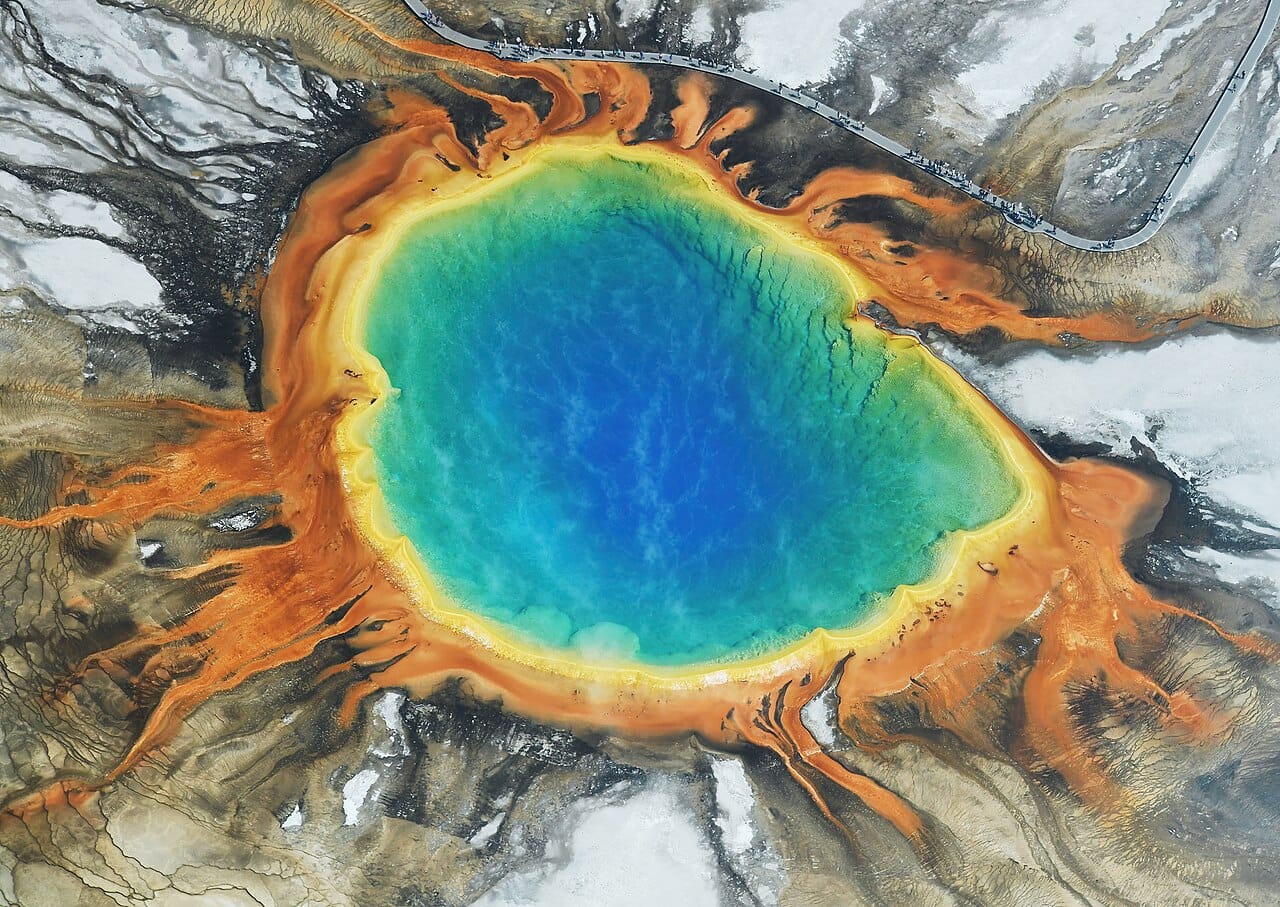
Morphological signatures are structures apparently produced by organisms, including microfossils and layered mats.
Atmospheric signatures are gases in a planetary atmosphere maintained out of chemical equilibrium.
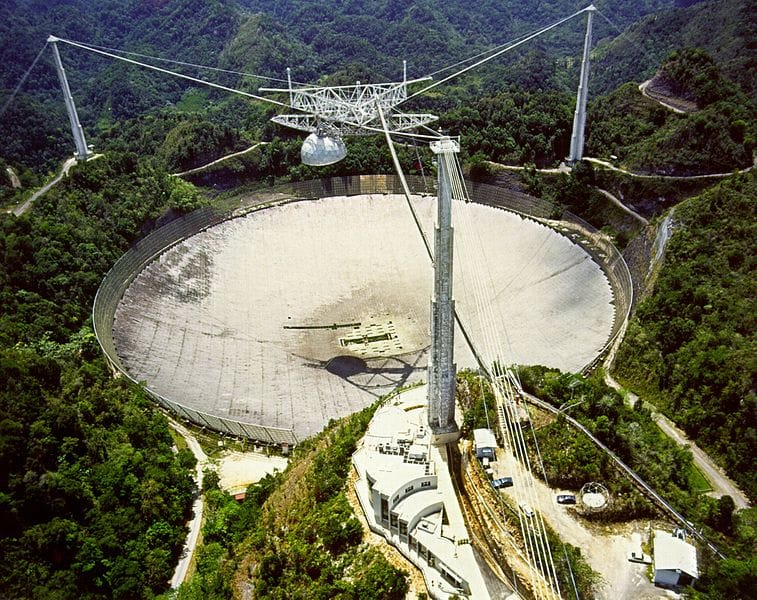
Technosignatures are indicators of technology rather than of life as such, including radio emissions and industrial pollutants.
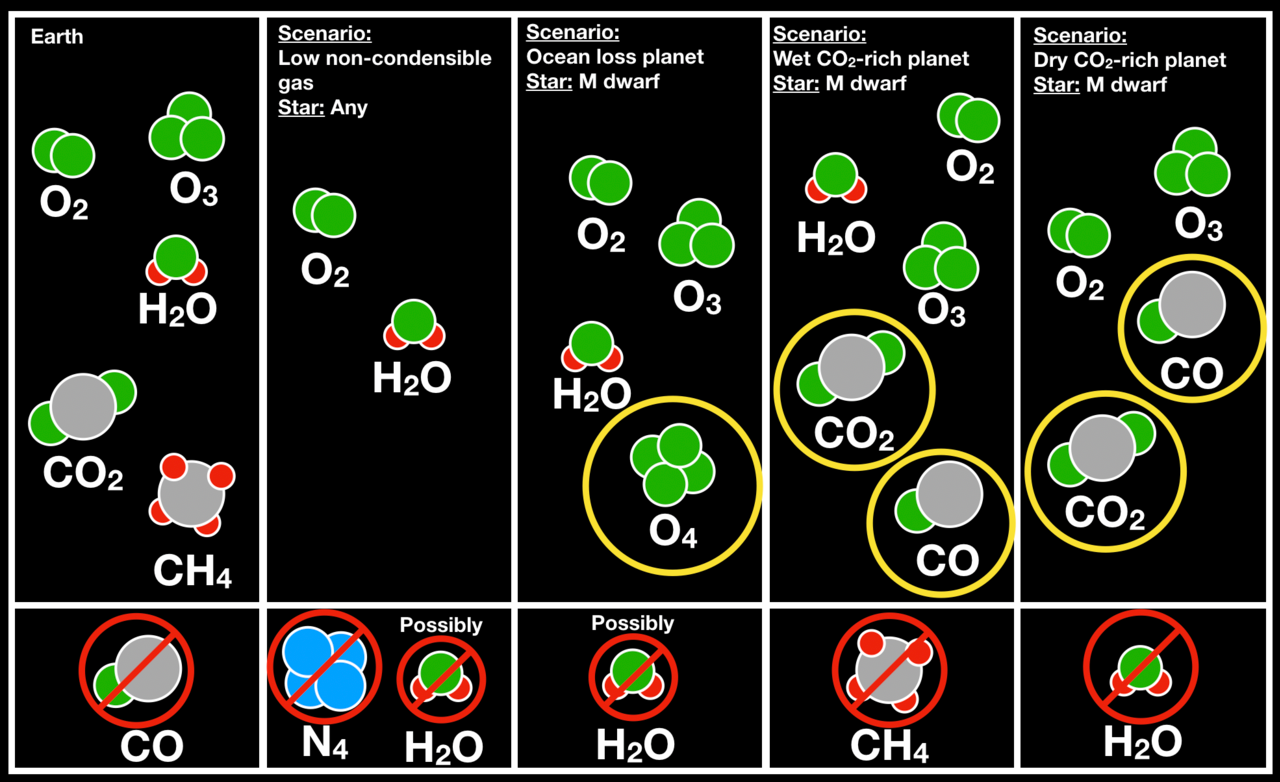
The strongest chemical argument is not the presence of any single compound but a combination that should not persist.
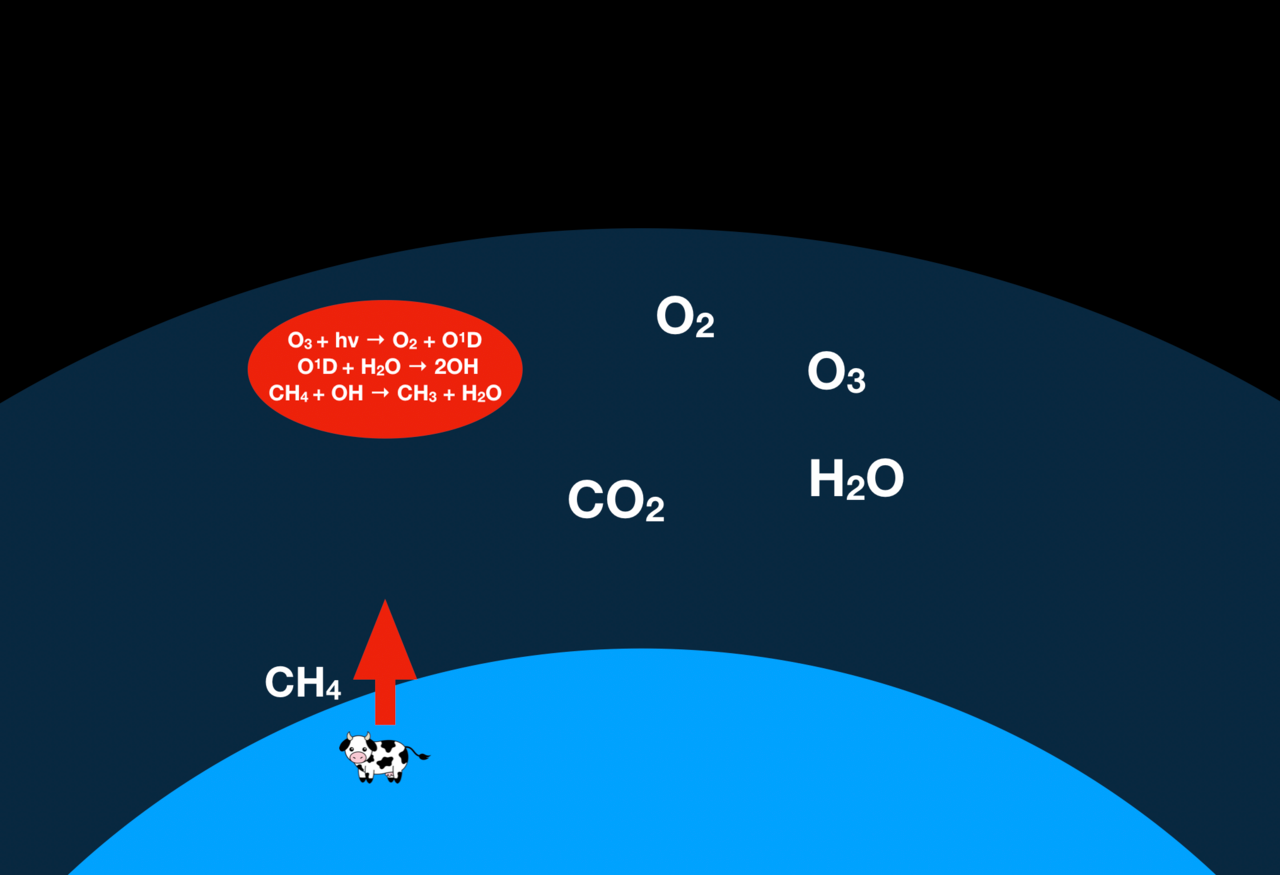
Earth's atmosphere contains both oxygen and methane in quantity. They react with one another, so both being present at their observed levels requires continuous replenishment. Without resupply, the methane would be consumed within about a decade.
On Earth, life supplies both: photosynthesis produces the oxygen and microorganisms produce the methane. The combination is therefore proposed as a signature detectable across interstellar distance.
James Lovelock proposed the reasoning in the 1960s while considering how to detect life on Mars, and the argument that a lifeless planet tends toward chemical equilibrium remains the basis of atmospheric searches.
Every proposed signature has abiotic explanations, and identifying them is the discipline's main technical work.
Oxygen can accumulate without life. Ultraviolet radiation splits water vapour, and if the hydrogen escapes to space the oxygen remains. Planets around certain stars, or those that lost oceans, can develop oxygen-rich atmospheres with no biology at all.
Methane is produced geologically by reactions between water and rock, and by volcanism.
Organic molecules occur in meteorites and in interstellar clouds, so their presence indicates chemistry rather than life.
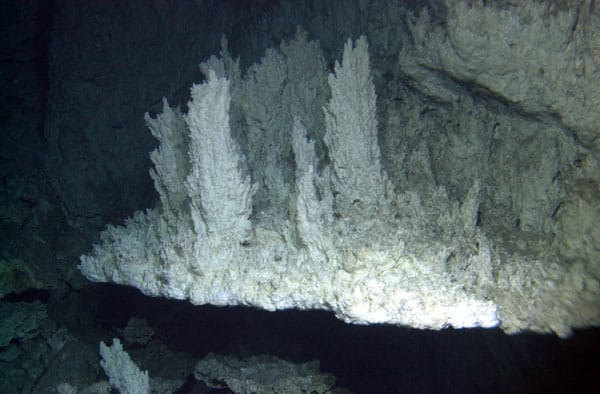
Morphology is the least reliable. Mineral processes produce structures resembling microfossils closely enough that claims of the oldest microfossils are routinely contested, and the 1996 announcement of possible fossil life in the Martian meteorite ALH84001 was not sustained, with each line of evidence found to have a non-biological explanation.
The phosphine detection reported in the atmosphere of Venus in 2020 illustrates the pattern. The compound was proposed as difficult to produce abiotically, the measurement itself was then disputed on data-processing grounds, and abiotic routes were subsequently proposed. The episode is unresolved and is a fair example of how such claims proceed.
Mars is examined directly. Rovers analyse rock chemistry and organic content, and sample return is intended to allow laboratory analysis that no instrument sent to the surface can match.
Icy moons with subsurface oceans, particularly Enceladus and Europa, are targets because material from those oceans reaches space, and Cassini flew through Enceladus's plume and detected organic compounds and hydrogen.
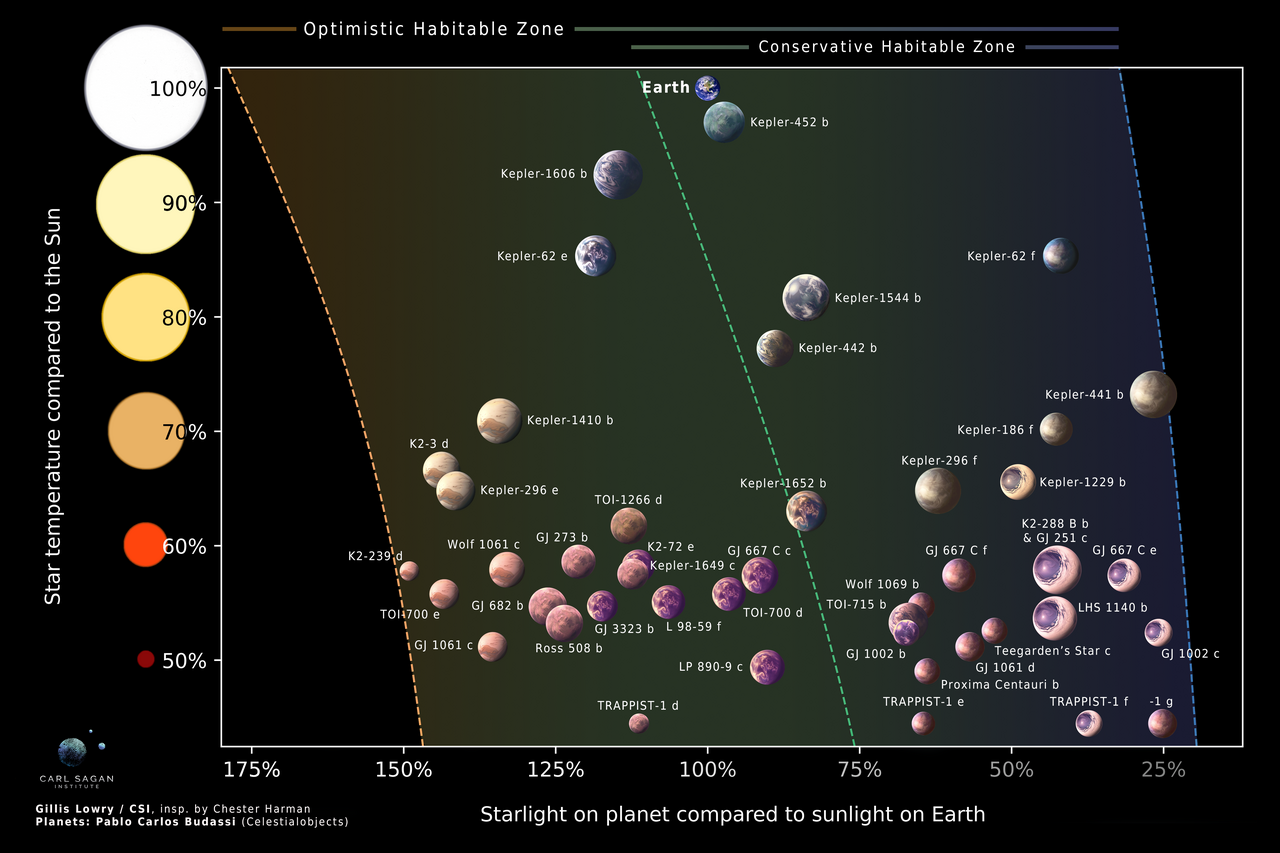
Exoplanet atmospheres are studied by transmission spectroscopy, measuring starlight filtered through an atmosphere during transit. The James Webb Space Telescope has made this practical for some planets, and detecting a biosignature requires distinguishing a small spectral feature from noise and from stellar variability.
Ancient terrestrial rocks are studied for the same reason, since establishing when life began on Earth uses the same isotopic and morphological methods and faces the same false positives.
The standard now generally accepted is that no single detection suffices.
A claim requires multiple independent signatures, an environment in which the abiotic explanations can be excluded, and confirmation by independent instruments and teams.
Frameworks proposing a confidence scale rather than a binary announcement have been adopted in the field, partly in response to episodes where preliminary results were reported as discoveries.
Biosignatures are the operational form of the question of whether life exists elsewhere, converting it from speculation into a measurement problem with defined criteria.
They also impose a discipline that is useful beyond astrobiology. The requirement to enumerate and exclude every non-biological explanation before claiming a biological one is a general standard for inference from indirect evidence, and the field's repeated false alarms are what produced it.