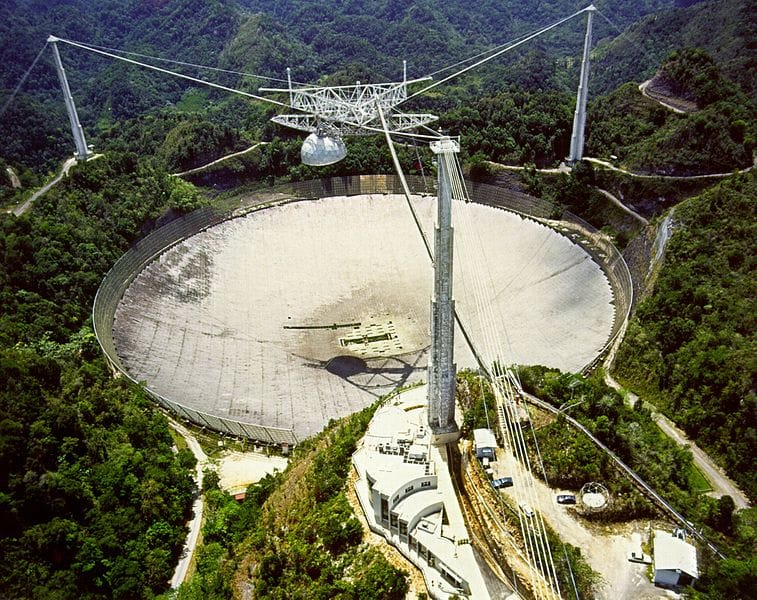
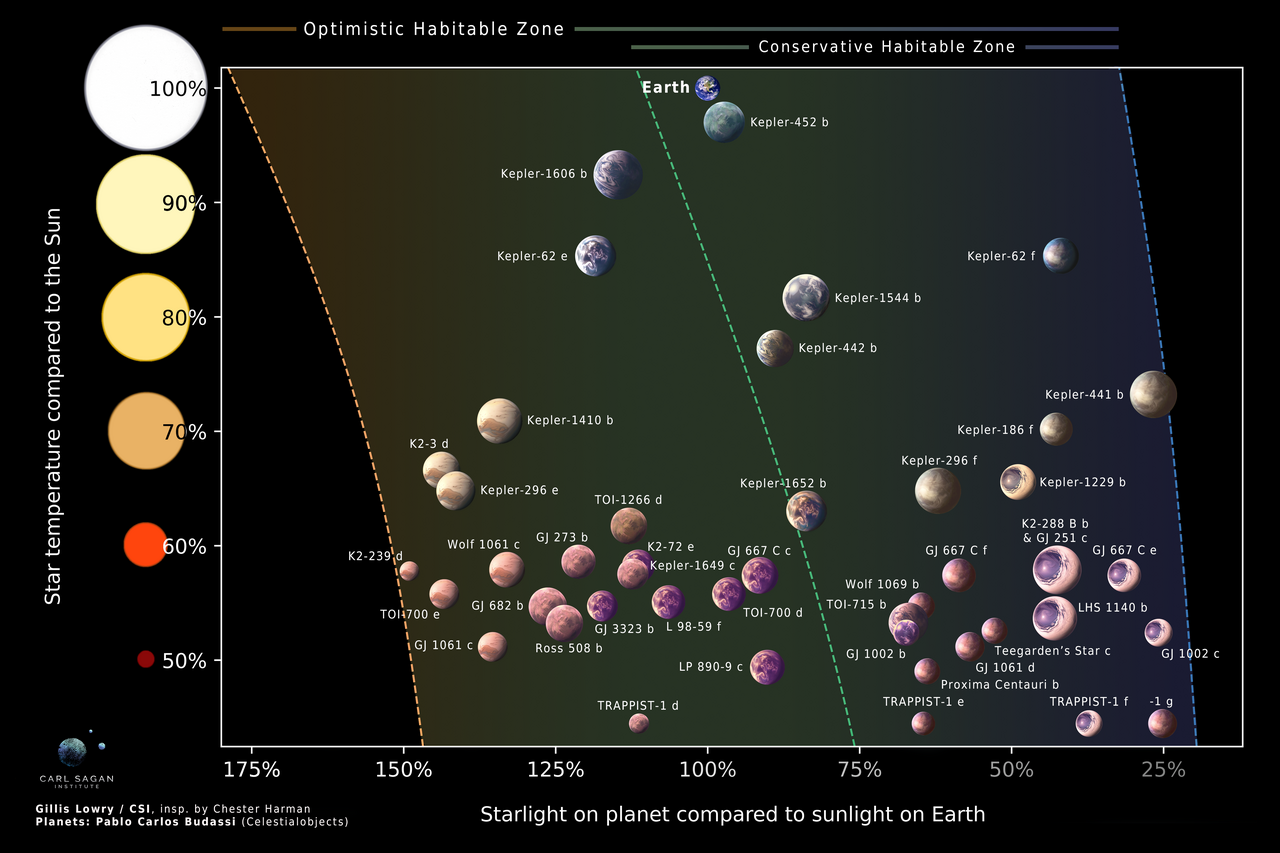
If the universe should be full of civilisations and appears empty, something must be preventing them. Robin Hanson's proposal is that at least one step between dead matter and a visible interstellar civilisation is extraordinarily improbable, and that the important question is whether humanity has already passed it.
This capsule concerns a proposed resolution rather than the puzzle itself, which is treated in the capsules on the Fermi paradox and the Drake equation.
The Drake equation decomposes the expected number of communicating civilisations into a chain of factors: stars, planets, habitable planets, planets where life begins, where it becomes intelligent, where it becomes detectable, and how long that lasts.
Since the equation is a product, one very small factor makes the result very small regardless of the others. Hanson's 1996 argument names that factor the Great Filter and asks where in the chain it sits.
The steps between a lifeless planet and an expanding interstellar civilisation can be listed: a habitable world, self-replicating molecules, simple cells, complex cells, multicellular life, animals with nervous systems, tool use, technological civilisation, and expansion beyond the home system.
Nine steps or so. Empirically, the end of the chain appears empty. Therefore the product of the probabilities is tiny, and at least one step must be an extremely hard barrier.
The important part is what follows. Whether the filter is behind us or ahead of us determines what our own future looks like, and the two possibilities have opposite implications.
If the filter is behind, then some early step, the origin of life, or the origin of the eukaryotic cell, is so improbable that it essentially never happens twice in a galaxy. We are past it. The silence is expected and carries no threat.
If the filter is ahead, then reaching our stage is not especially hard, and something reliably destroys civilisations at or shortly after this point. Everything that got this far has been stopped, and there is no reason to expect an exception.
Several early steps are genuinely singular in the record available.
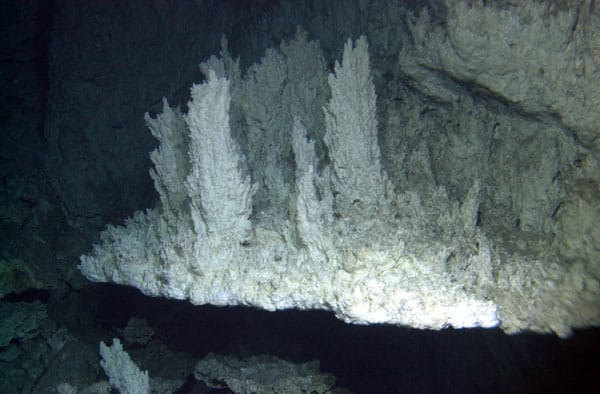
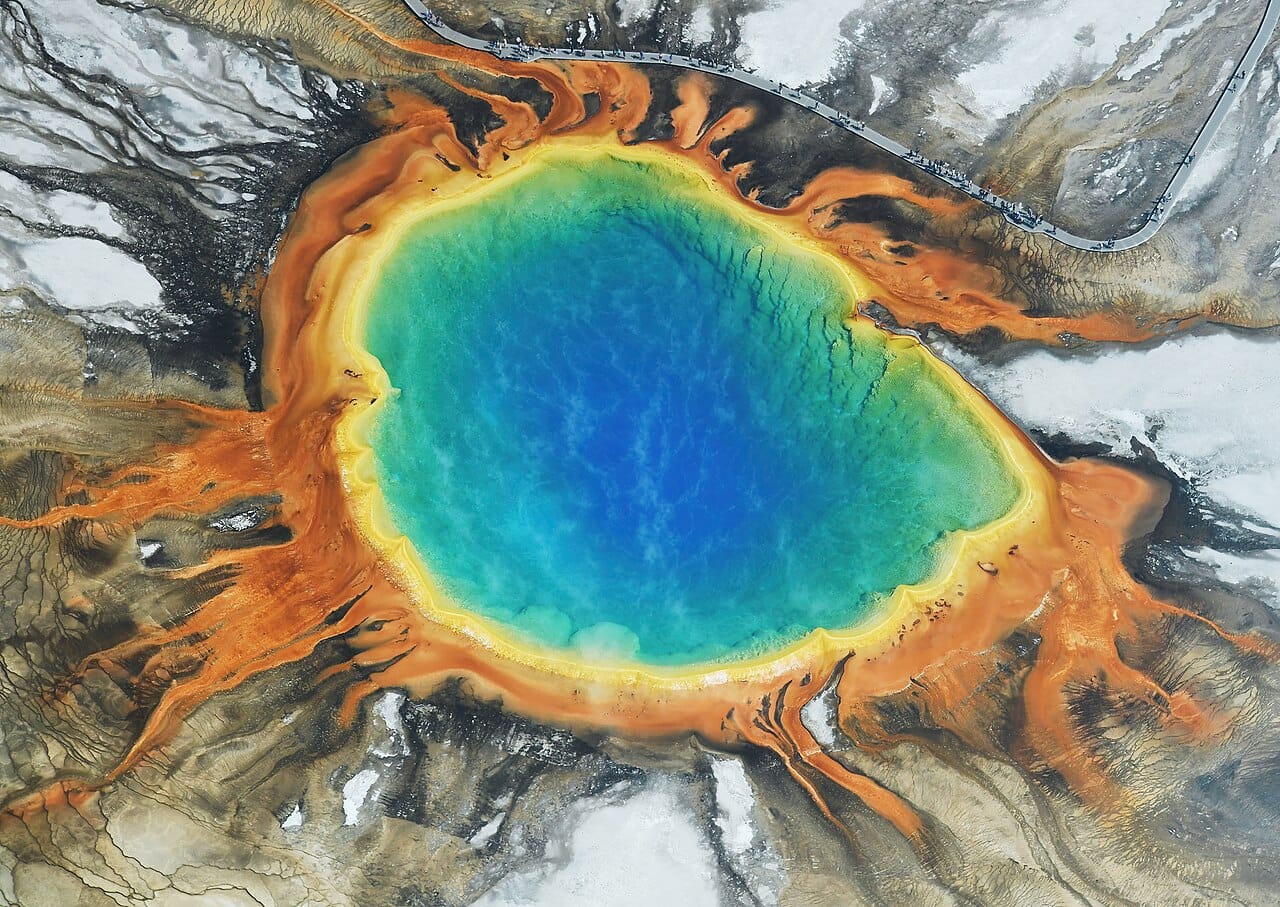
Abiogenesis happened once as far as anyone can tell, and all known life shares one biochemistry. It also happened early, within a few hundred million years of the Earth cooling, which is usually read as evidence that it is easy, though a single sample supports that reading weakly.
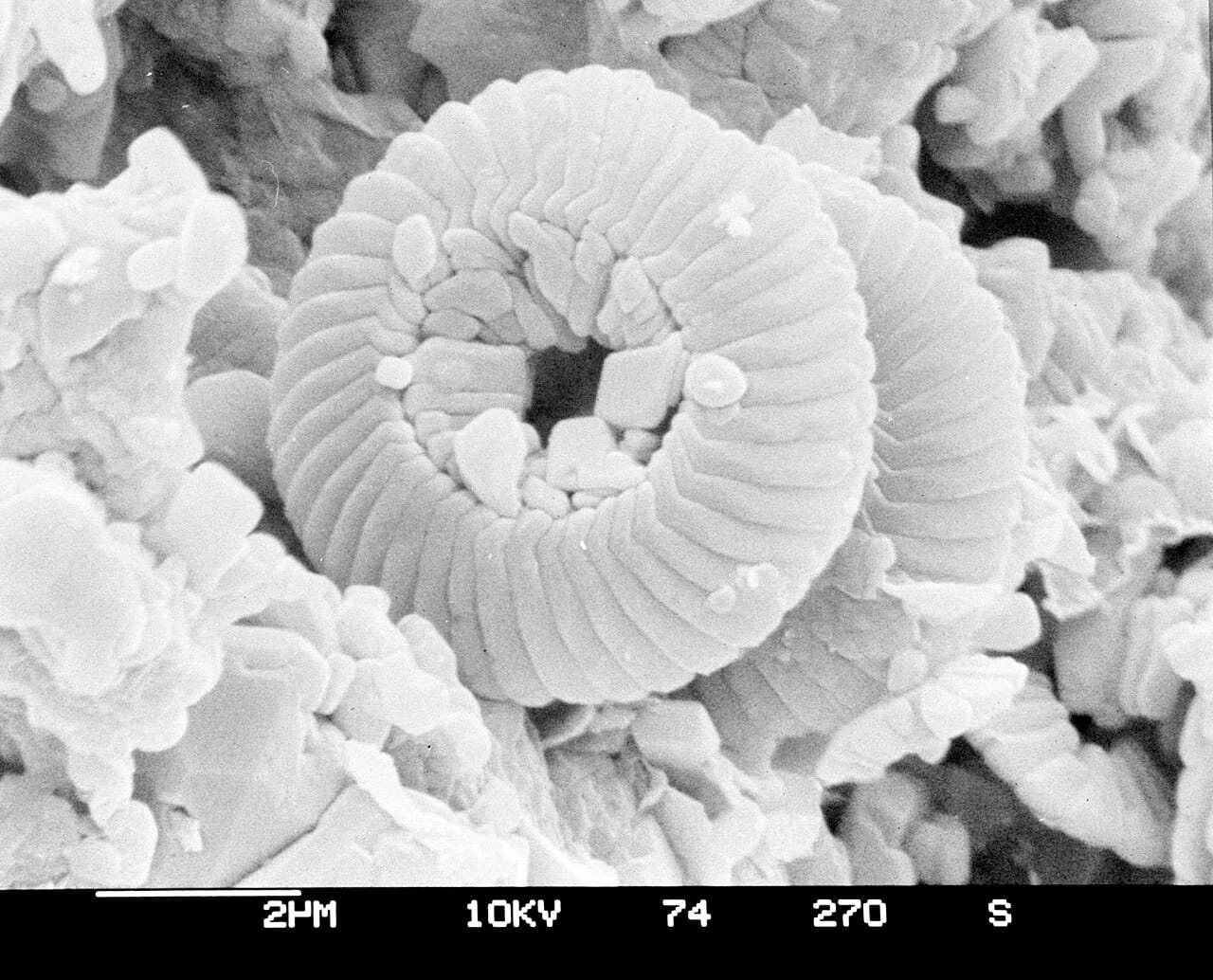
The eukaryotic cell appears to have arisen exactly once, through one endosymbiotic event, after roughly two billion years of prokaryotic life. Nick Lane and others have argued this is the strongest candidate for a hard step, since it is the only step in the chain with no independent repetition anywhere.
Complex multicellularity, by contrast, evolved independently many times, which argues against it being a filter.
Intelligence of the technological kind arose once, late, and is not obviously the endpoint of any trend, since most lineages have not moved toward it in half a billion years of animal life.
Hanson's argument leads to a conclusion that runs against intuition: discovering extraterrestrial life would be bad news.
Nick Bostrom made the point sharply in 2008. Every discovery of life elsewhere, particularly complex life, removes a candidate early filter and shifts probability toward the filter being ahead of us. Finding microbial life on Mars would be significant; finding evidence of complex life would be worse; finding ruins would be worst of all.
On this reading the empty sky is reassuring rather than lonely.
The argument rests on the paradox being real, and several responses dissolve it before the filter is needed. Interstellar travel and colonisation may simply be impractical at any technology level, in which case civilisations exist and stay home. Detection methods may be inadequate; we have surveyed a small fraction of the sky at a narrow range of frequencies for a few decades. Civilisations may be common but short-lived in their detectable phase, since our own radio leakage is already declining as transmission becomes more efficient.
The probability reasoning is also fragile. A 2018 analysis by Anders Sandberg, Eric Drexler and Toby Ord argued that the Drake factors carry uncertainties spanning many orders of magnitude, and that propagating those uncertainties properly rather than using point estimates yields a substantial probability that we are alone in the observable universe with no filter required. On that account the paradox is an artefact of multiplying best guesses.
There is one sample of everything. Reasoning about the probability of steps from a single realisation is a known statistical difficulty, and the anthropic complication is severe: we could only be observing from a branch where every step succeeded, whatever their probabilities.
The Great Filter is not testable in any direct way, and it is classified as a hypothesis rather than as speculation because it makes a specific structural claim with identifiable evidence bearing on it: the discovery or non-discovery of life at each stage of complexity elsewhere shifts the probability distribution over where the filter lies.
Its practical value is as an argument about existential risk. If there is any chance the filter is ahead, the things that could constitute it, nuclear war, engineered pathogens, unaligned artificial intelligence, environmental collapse, are worth attending to on those grounds independently of whether the argument is correct.