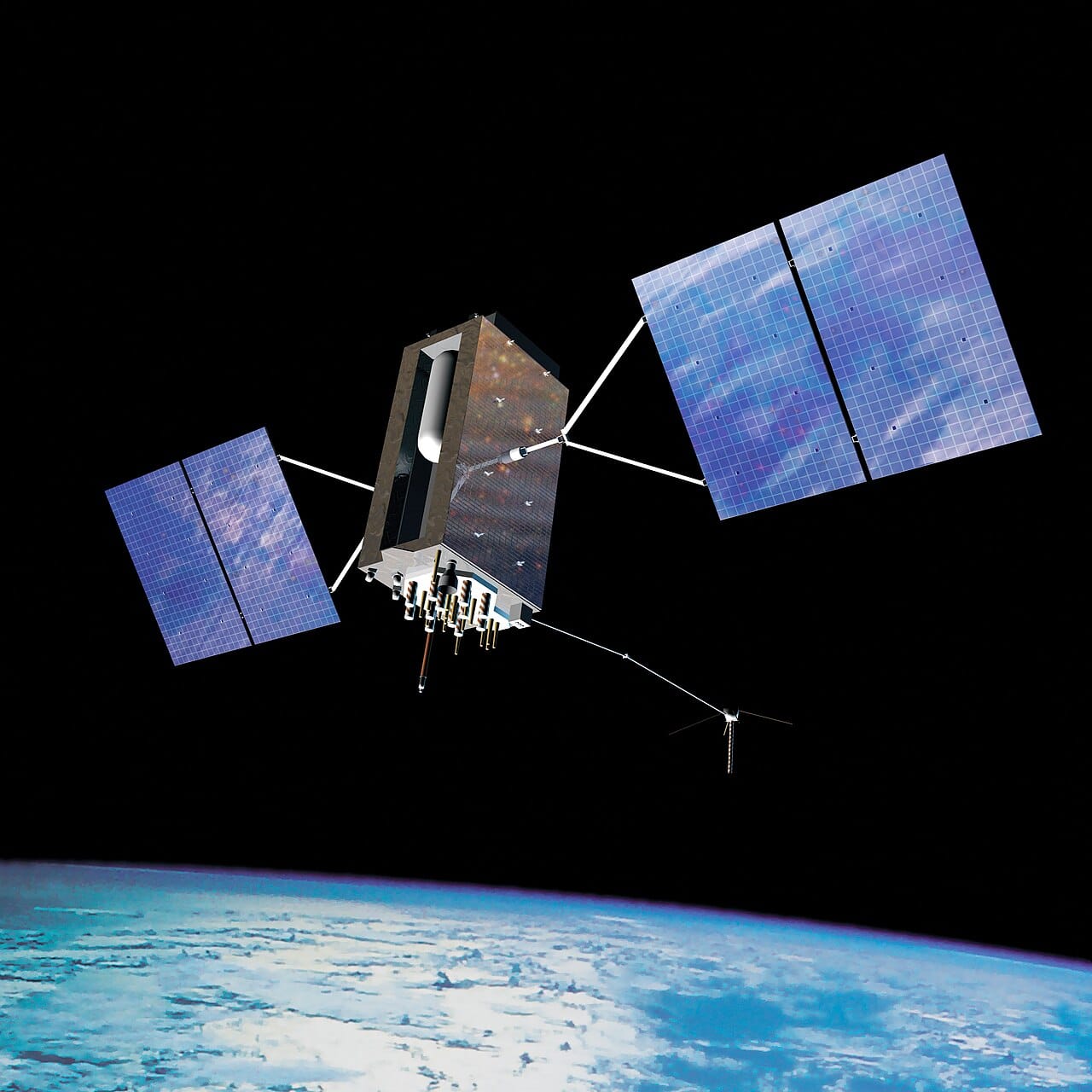
The network generating, transmitting and distributing electrical power. It is the largest machine ever built, it must balance supply and demand continuously, and almost nothing else in modern life works without it.
Electricity is generated and consumed at the same moment. The grid stores almost nothing, so generation must match demand continuously, second by second.
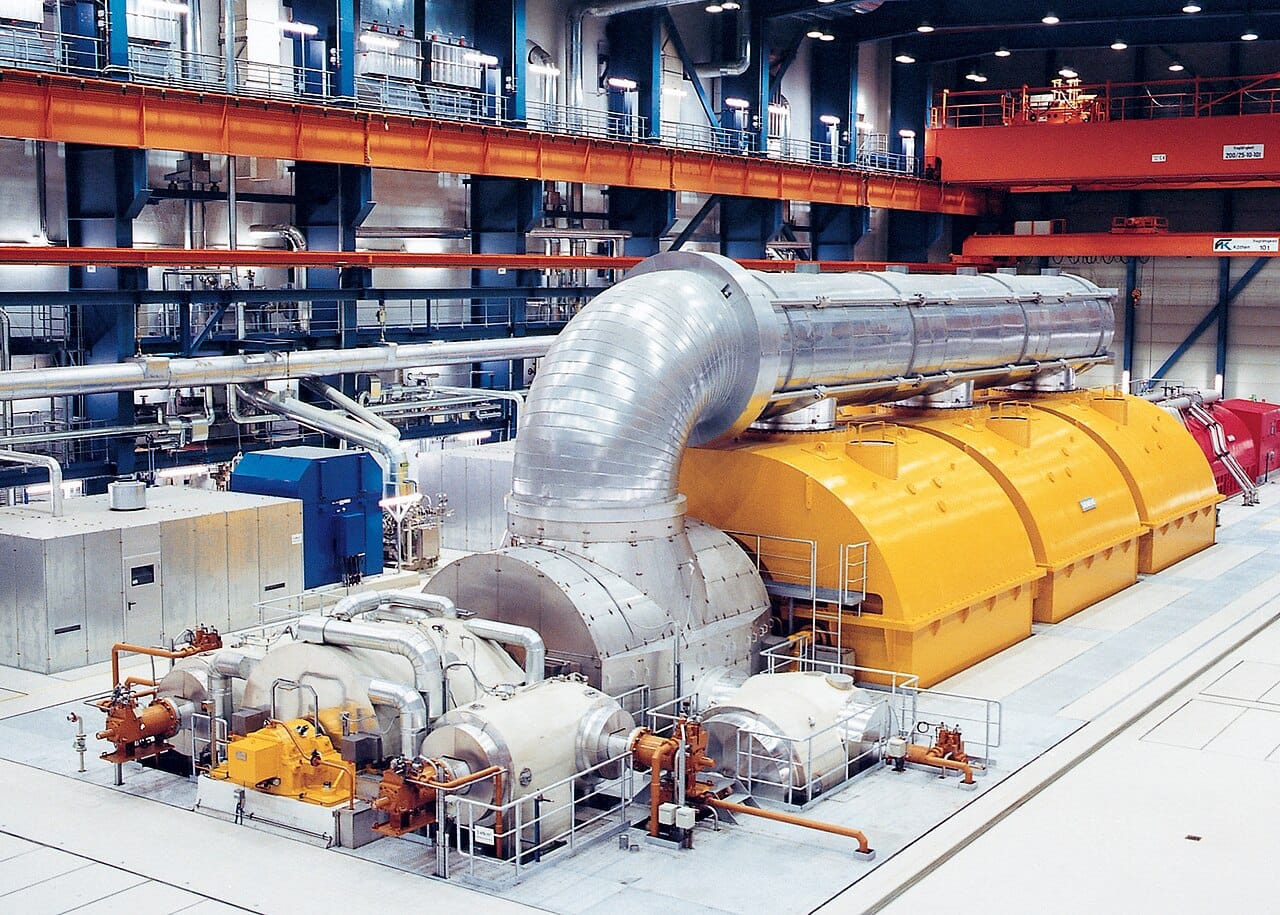
The balance is visible in frequency. Generators across a synchronised network turn in step, and their combined rotation sets the frequency, nominally fifty or sixty hertz. If demand exceeds generation the machines are loaded and slow slightly; if generation exceeds demand they speed up.
Frequency is therefore a real-time measure of balance, monitored continuously, and holding it within a narrow band is the grid operator's central task.
The rotating mass of large generators provides inertia, resisting sudden frequency change and buying seconds for control systems to respond. This matters increasingly because wind and solar connect through power electronics and provide no inherent inertia, so operators are having to supply it synthetically or accept faster frequency excursions.
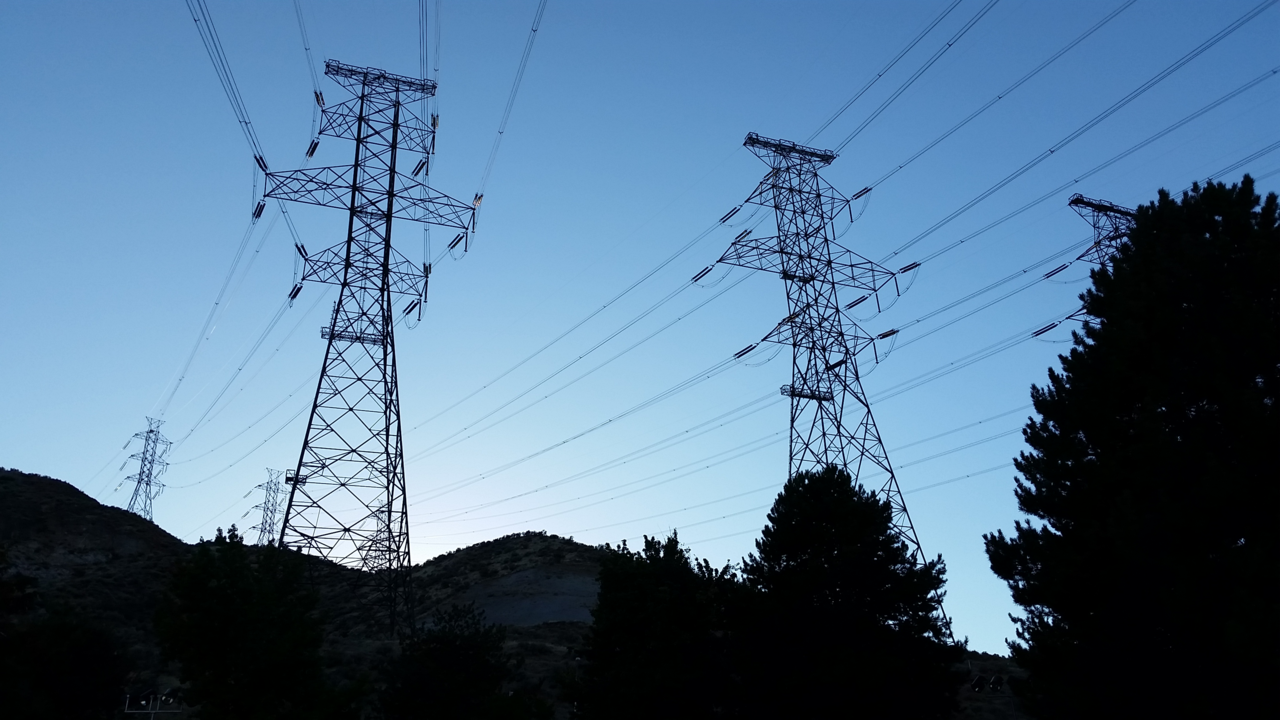
Power lost as heat in a conductor depends on the square of the current. Transmitting the same power at higher voltage means lower current, so losses fall sharply.
Transmission therefore operates at hundreds of kilovolts, stepped down through substations to distribution voltages and finally to the voltage delivered to buildings.
This is what settled the current wars of the 1880s. Direct current, promoted by Edison, could not be transformed to a different voltage easily, so generation had to be close to consumption. Alternating current, promoted by Westinghouse and Tesla, could be transformed readily, which made long-distance transmission practical, and it won for that reason.
High voltage direct current has since returned for specific applications, including very long distances and undersea links, because modern power electronics can convert it and it avoids some losses that alternating current incurs.
Generation feeds transmission, which carries power at high voltage over long distances, which feeds distribution, which delivers it locally.
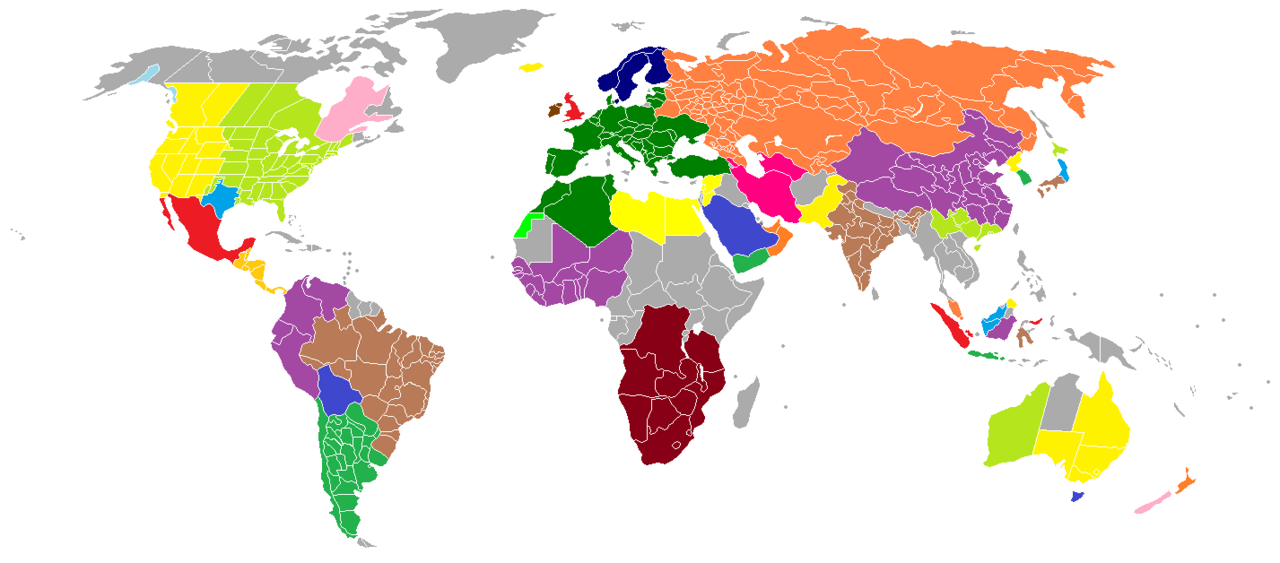
A synchronous area is a region whose generators run in step. Continental Europe operates as one, and North America is divided into several. Areas are connected by controlled links rather than by direct synchronisation, because synchronising very large areas increases the extent of a possible disturbance.
Dispatch decides which generators run. Plants are ordered by operating cost, with the cheapest run first, and demand determines how far up the order the system goes. The most expensive plant running sets the price in most market designs.
Reserve capacity is held for failures. A grid must survive the sudden loss of its largest single generator without interruption, which requires spare capacity ready to respond within seconds.
Cascading failure is the characteristic mode. A line trips, its load transfers to others, which overload and trip in turn, and the failure propagates faster than operators can respond.
The Northeast blackout of 2003 in North America began with a generation loss and untrimmed trees contacting lines, compounded by a software fault that suppressed alarms, and left around fifty five million people without power.
Protection systems disconnect equipment automatically to prevent damage, which is why failures spread as a sequence of protective actions rather than as physical destruction.
Black start is the difficulty of restarting from nothing, since most power stations need electricity to start. A small number of plants are maintained with independent starting capability specifically for this.
Variable renewable generation is the largest change. Wind and solar output depends on conditions rather than dispatch, which shifts the problem from matching generation to demand toward matching demand and storage to generation.
Storage is expanding, principally batteries for short-duration balancing and pumped hydro for longer periods, and the economics of long-duration storage remain unresolved.
Demand response manages load rather than generation, shifting flexible consumption to when power is plentiful.
Distributed generation reverses the assumed direction of flow, since rooftop solar exports into distribution networks designed to deliver power outward only.
Transmission expansion is the recurring constraint. Renewable resources are frequently distant from demand, and building long transmission lines is slow and locally contested nearly everywhere.
The grid is the infrastructure on which water treatment, communications, finance, medicine, heating and transport all depend, which means its failure is not one failure but the simultaneous failure of everything downstream.
It is also the system whose transformation determines whether electricity can be decarbonised. Generation technology is largely solved; integrating variable output into a system that must balance instantly, and building the transmission to move it, is the harder part.