The process of removing contaminants from wastewater before returning it to the environment. It is among the least discussed and most consequential public health technologies, and it saves more lives than most medicine.
Domestic wastewater is mostly water, typically over ninety nine per cent, carrying organic matter, nitrogen and phosphorus compounds, suspended solids, pathogens and, increasingly, pharmaceutical residues and microplastics.
Two things make it dangerous. It carries the organisms that cause cholera, typhoid, dysentery and hepatitis A, so untreated discharge near a water supply transmits disease directly. And its organic content consumes oxygen as it decomposes, which suffocates rivers.
That second effect is measured as biochemical oxygen demand, the oxygen microorganisms will consume while breaking the material down. Discharge with high demand strips oxygen from a river faster than the water can reabsorb it, and fish die.
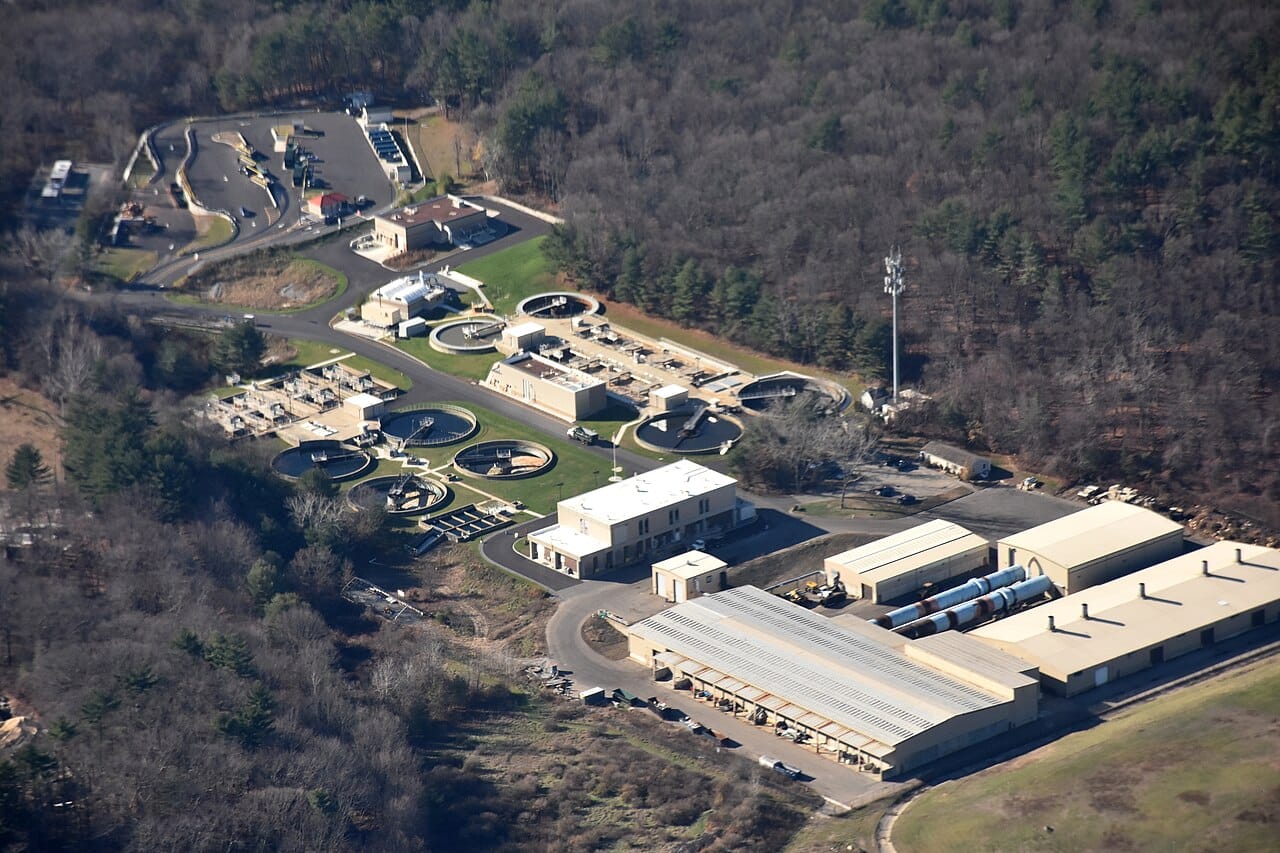
Preliminary treatment removes what would damage the plant: screens catch rags, plastics and debris, and grit chambers let sand and gravel settle out.
Primary treatment is settlement. Wastewater is held in large tanks and gravity separates it, with solids sinking as sludge and grease floating to be skimmed. This alone removes roughly half the suspended solids and around a third of the oxygen demand, and it is purely physical.
Secondary treatment is biological and is where most of the remaining organic load is removed. Microorganisms are given the wastewater as food under controlled conditions, and they convert dissolved organic matter into more microorganisms, which can then be settled out.
The commonest method is activated sludge, in which air is blown through the tank to supply oxygen and a population of microorganisms is retained by returning settled sludge to the inlet. Trickling filters achieve the same by running wastewater over a bed of media carrying a microbial film.
Secondary treatment typically removes around ninety per cent of the oxygen demand and suspended solids, and in most countries this is the required standard for discharge.
Tertiary treatment addresses what remains. Nitrogen and phosphorus are removed where the receiving water is vulnerable to eutrophication, in which nutrient enrichment causes algal blooms that then decay and consume oxygen. Disinfection, by chlorine, ultraviolet light or ozone, reduces pathogens before discharge or reuse.
The solids removed are a large part of the problem and a large part of the cost.
Sludge is usually digested anaerobically, in sealed tanks where microorganisms break it down without oxygen. This reduces its volume, kills many pathogens, and produces biogas, largely methane, which many plants burn to supply a substantial share of their own energy.
The digested residue can be dewatered and applied to land as a fertiliser and soil conditioner, incinerated, or landfilled. Land application is the most resource-efficient route and is constrained by heavy metals, pathogens and, increasingly, by persistent industrial chemicals.
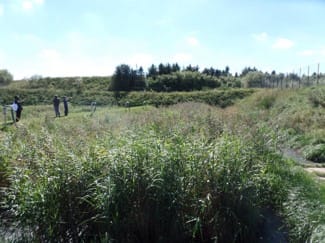
Constructed wetlands pass wastewater through planted beds where plants, soil and microorganisms do the work. They need land and little else, and they suit small communities.
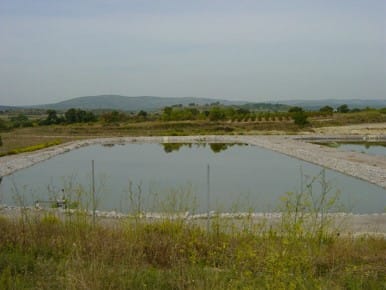
Waste stabilisation ponds use a series of shallow lagoons and rely on sunlight, algae and long retention times. They are cheap and effective in warm climates and are widely used where land is inexpensive.
Anaerobic reactors treat wastewater without aeration, which removes the largest energy cost, and produce biogas. They perform well in warm climates and are common in parts of South America and Asia.
Septic tanks serve individual properties, providing settlement and partial digestion, with the liquid discharged to a soakaway. They are appropriate where a sewer network is impractical and are a pollution source when poorly maintained.
The sanitary reforms of the nineteenth century, driven by cholera epidemics and by the recognition that disease travelled in water, produced the sewer networks of industrial cities. The resulting fall in waterborne disease is among the largest health improvements ever recorded, and it preceded antibiotics and most vaccines.
Coverage remains far from universal. A substantial share of the world's population lacks safely managed sanitation, and a large volume of the world's wastewater is discharged without treatment. Diarrhoeal disease from contaminated water remains a leading cause of death in young children.
Sewage treatment is the clearest example of infrastructure whose success is measured by the absence of events. A city with functioning treatment has no cholera outbreaks, and the absence is attributed to nothing in particular, which is part of why the systems are chronically underfunded relative to what they deliver.