The ocean below roughly 200 metres, where sunlight fails. It is the largest habitat on Earth by volume, it is under extreme pressure and permanent darkness, and it is less thoroughly surveyed than the surface of the Moon.
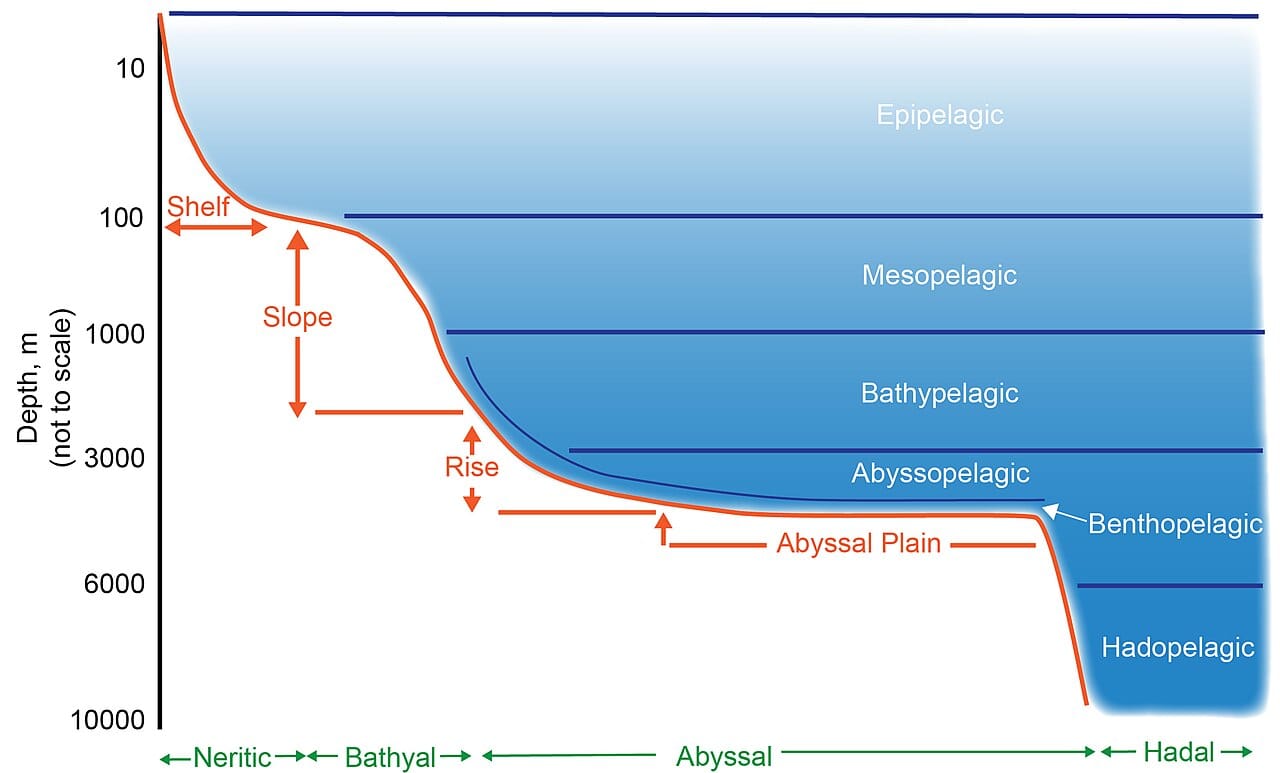
The epipelagic or sunlit zone extends to about 200 metres and contains essentially all photosynthesis.
The mesopelagic or twilight zone extends to about 1000 metres. Some light penetrates, too little for photosynthesis. It holds an enormous biomass of small fish, and its inhabitants perform the largest daily migration on the planet, rising toward the surface at night to feed and descending at dawn to avoid predators. The mass of the migration is visible on sonar as a false sea floor.
The bathypelagic zone extends to about 4000 metres in complete darkness.
The abyssopelagic zone extends to about 6000 metres and covers most of the ocean floor.
The hadal zone comprises the trenches below that, reaching nearly 11,000 metres in the Mariana Trench.
Pressure increases by about one atmosphere per ten metres, so at the deepest points it exceeds a thousand atmospheres, equivalent to the weight of a large mass concentrated on a fingernail.
Organisms living there are not crushed because they contain no gas spaces and their tissues are mostly water, which is nearly incompressible. Their proteins and membranes are adapted to function under pressure that would disable those of surface organisms, and many deep-sea animals die when brought up rather than when taken down.
Temperature is near freezing throughout, typically between zero and four degrees Celsius, apart from at hydrothermal vents.
Food is scarce. Almost all energy arrives as marine snow, the continuous fall of dead organisms and waste from above, of which only a small fraction of surface production reaches the sea floor.
The consequences follow directly. Deep-sea animals are typically slow-growing, long-lived, and reproduce late and infrequently, because energy is limited. This makes deep-sea populations extremely slow to recover from disturbance.
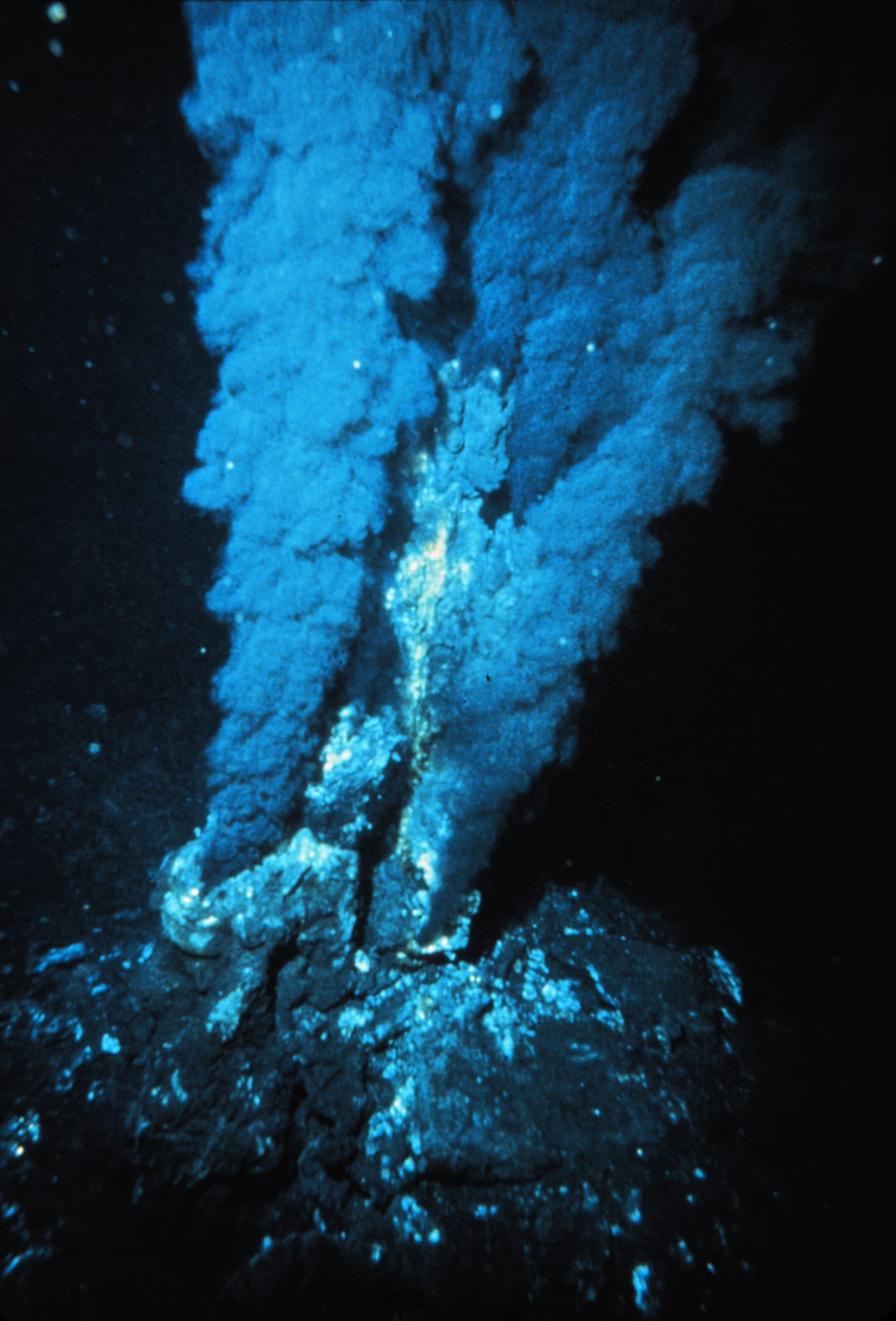
The discovery of hydrothermal vent communities in 1977, at the Galapagos Rift, was among the most consequential biological findings of the century.
Vents emit superheated, mineral-rich water. Bacteria there derive energy from oxidising hydrogen sulfide, and entire communities of tube worms, clams and crabs are built on that production.
The significance is that these ecosystems do not depend on sunlight at all. Before this, photosynthesis was assumed to be the base of every food web on Earth.
The implications reach beyond oceanography. If life can be sustained by chemical energy in darkness, the requirements for habitability are far broader than had been supposed, which is a large part of why the subsurface oceans of Europa and Enceladus are considered candidates, as the extremophiles and habitable zone capsules describe.
Cold seeps, where hydrocarbons escape from the sea floor, support similar communities without the heat.
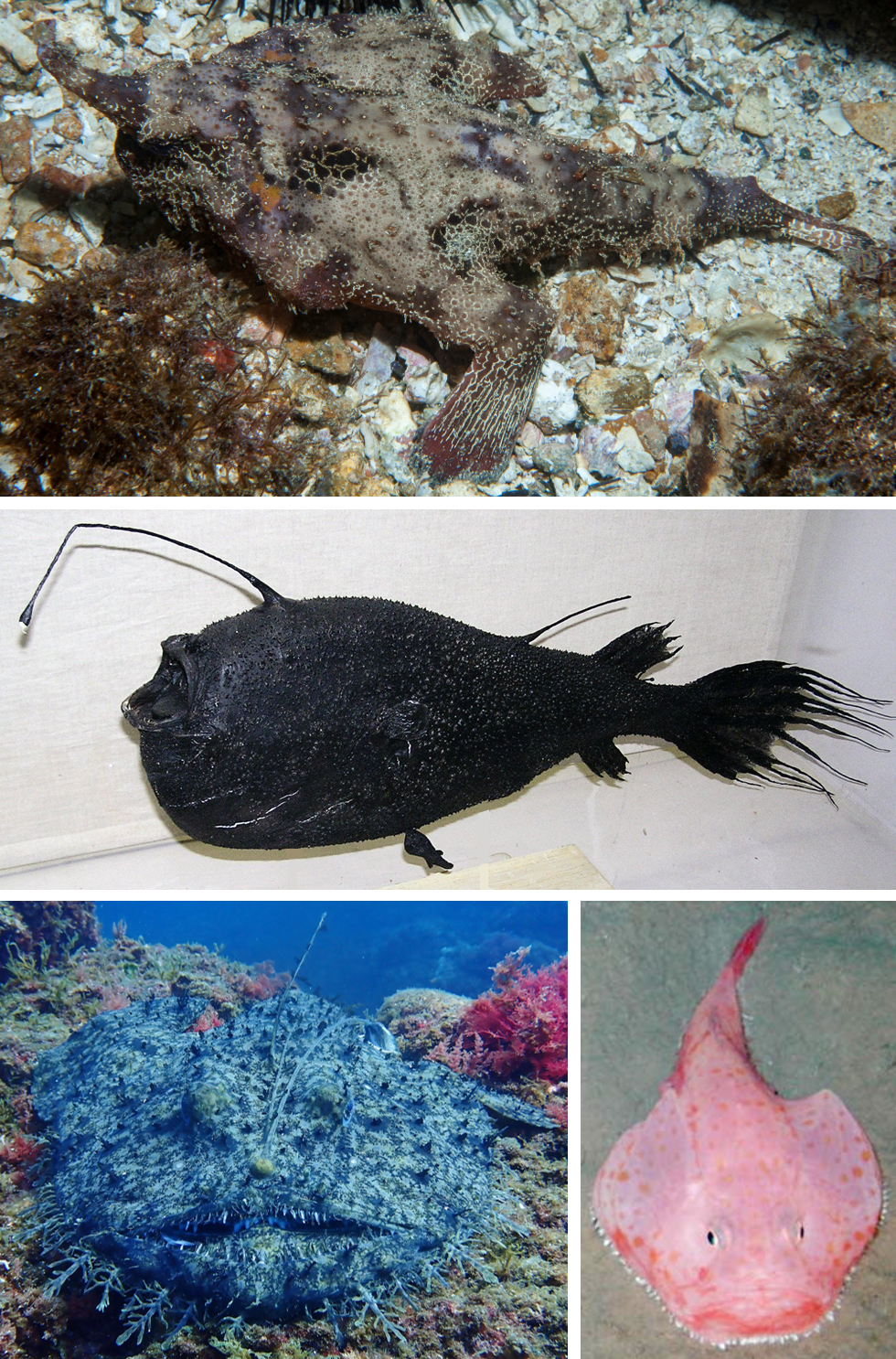
Bioluminescence is the norm rather than the exception. The majority of deep-sea organisms produce light, used for luring prey, for signalling, for camouflage by matching faint light from above, and for startling predators.
Adaptations to scarcity are conspicuous. Large mouths and expandable stomachs allow an animal to consume prey larger than itself when the opportunity arises, since the next meal is uncertain.
Reproductive adaptations address the difficulty of finding a mate in a vast dark space. In some anglerfish the male is a fraction of the female's size, attaches to her permanently and fuses with her tissue, becoming a source of sperm supported by her circulation.
Gigantism occurs in some groups, with giant squid and colossal squid among the largest invertebrates, and the reasons are not fully established.
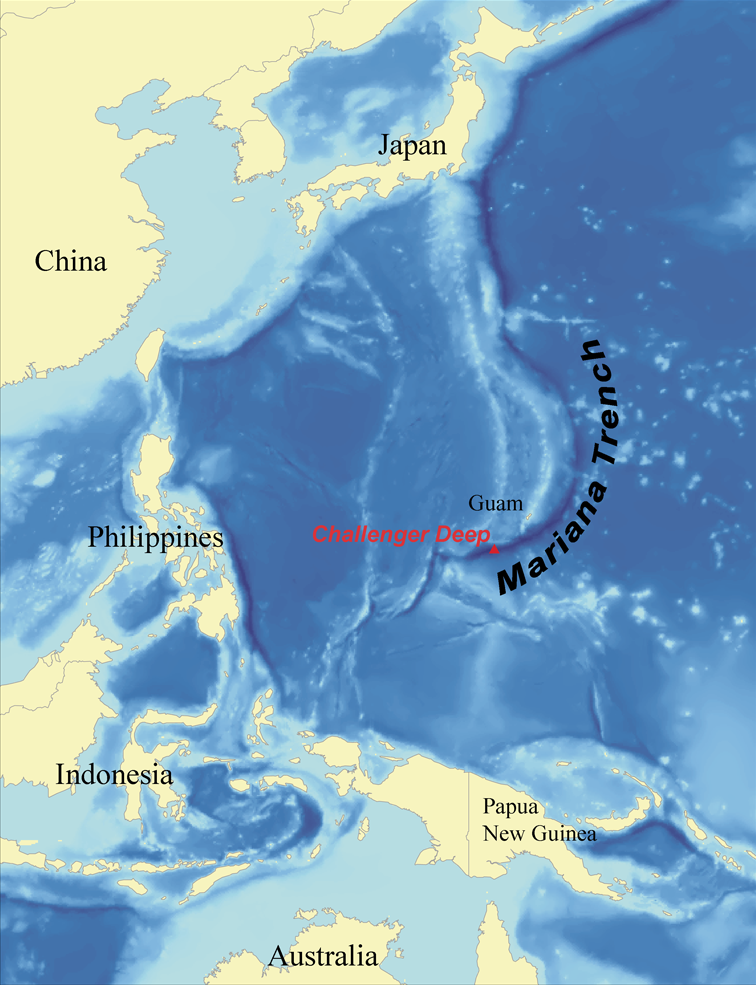
The Challenger expedition of 1872 to 1876 conducted the first systematic deep-sea survey, dredging samples worldwide and establishing that life exists at depth, which had been doubted.
The Trieste reached the bottom of the Mariana Trench in 1960 with two people aboard. Crewed descents to that depth have remained rare.
Most exploration now uses remotely operated and autonomous vehicles. A large majority of the sea floor has been mapped only at coarse resolution by satellite altimetry, and the proportion surveyed at high resolution remains small.
Deep-sea mining for metal-rich nodules and crusts is under active development, and the environmental argument concerns the slow growth and recovery of these communities, since disturbance is expected to persist for decades or longer. Regulation is being negotiated internationally and is unresolved.
Deep-sea fishing has depleted several long-lived species rapidly, since fish that mature at twenty or thirty years cannot sustain the catch rates that shallow-water species tolerate.
The deep sea is the largest living space on the planet, and the assumption that it was a barren desert persisted well into the twentieth century, which is a reminder of how recently the basic inventory of Earth's habitats was completed.
It also holds the discovery that changed the definition of where life is possible. Ecosystems running on chemical energy in total darkness were found on this planet before anyone proposed looking for them elsewhere, and they are the reason the search for life beyond Earth now includes places that never see the sun.