Organisms that drift in water rather than swimming against currents. They include the base of the marine food web and produce a large share of the world's oxygen, and the category is defined by behaviour rather than by relationship.
Plankton is a functional category, not a taxonomic one. The word derives from a Greek term meaning wanderer, and it covers any organism carried by currents.
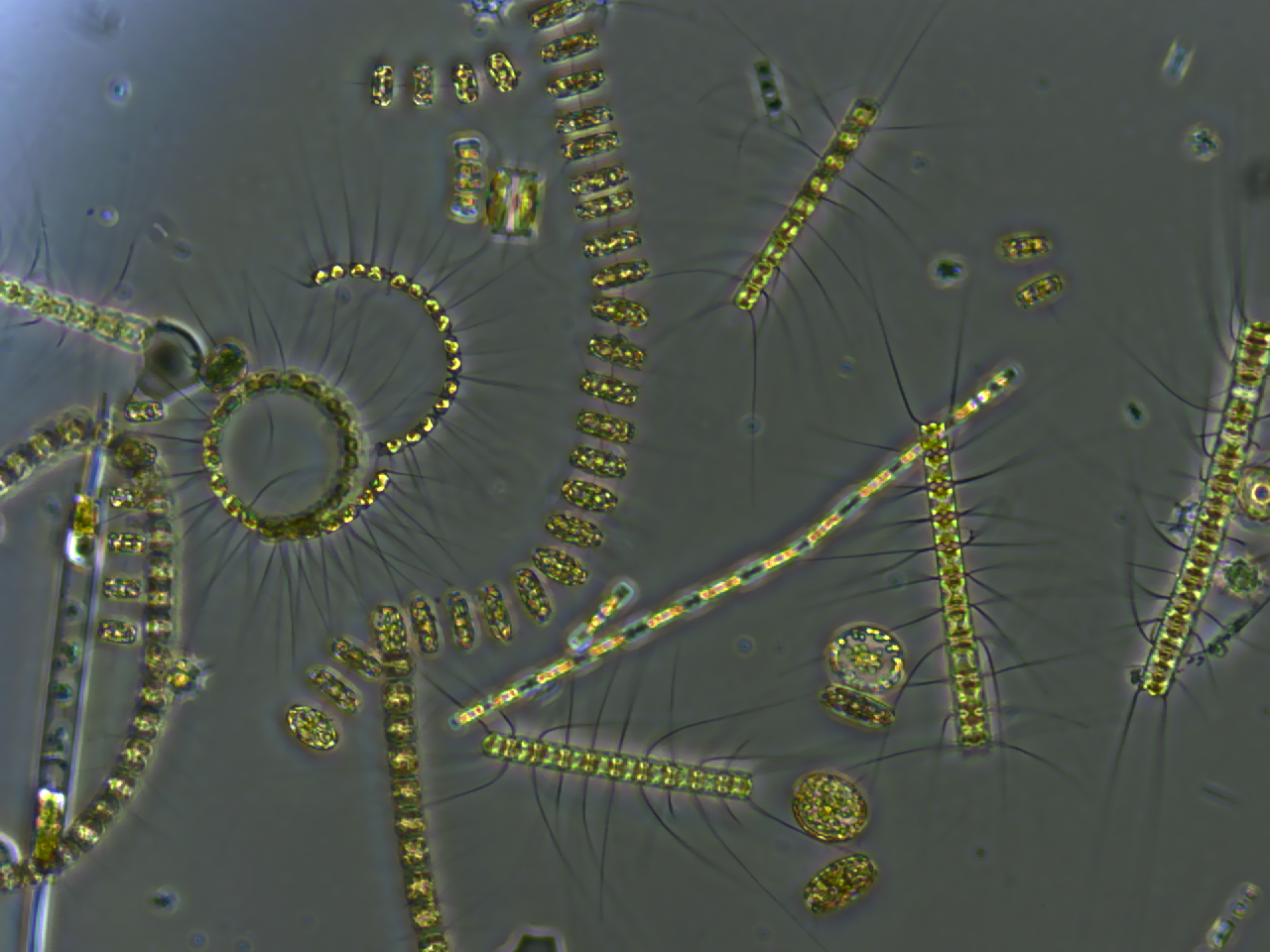
Phytoplankton are photosynthetic and comprise diatoms, dinoflagellates, coccolithophores and cyanobacteria among others. They are the primary producers of the ocean.
Zooplankton are animals, from single-celled protists to copepods, krill and jellyfish. Copepods are among the most numerous multicellular animals on Earth.
Bacterioplankton and virioplankton comprise the bacteria, archaea and viruses, which are enormously abundant and were largely invisible to earlier methods.
Meroplankton are temporary members: the larvae of animals that will later settle, including most fish, crabs and molluscs. Much of the ocean's animal life passes through a planktonic stage.
The organisms are not necessarily small, and jellyfish several metres across are plankton because they cannot swim against currents.
Photosynthesis in the ocean is performed almost entirely by phytoplankton, and it accounts for roughly half of global primary production despite the standing biomass being a tiny fraction of that on land.
The apparent contradiction is explained by turnover. Land plants accumulate biomass over years; phytoplankton are consumed within days and replaced, so a small standing stock supports an enormous throughput.
The consequence is that roughly half the oxygen produced by photosynthesis comes from the ocean, and the frequently repeated attribution of most of it to any single organism or region is generally an overstatement of a real point.
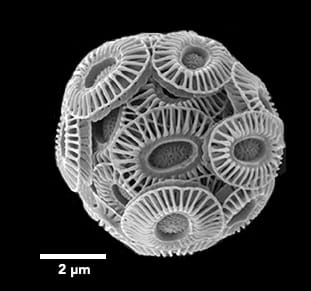
Coccolithophores build plates of calcium carbonate, and their accumulated remains over geological time form chalk, including the deposits that give the White Cliffs of Dover their name and colour.
Diatoms build silica shells, and diatomaceous earth is their accumulated remains.
Because these organisms build mineral structures, they are directly affected by ocean acidification, treated in its own capsule.
Nearly all marine life depends on phytoplankton directly or indirectly, as the food webs capsule describes.
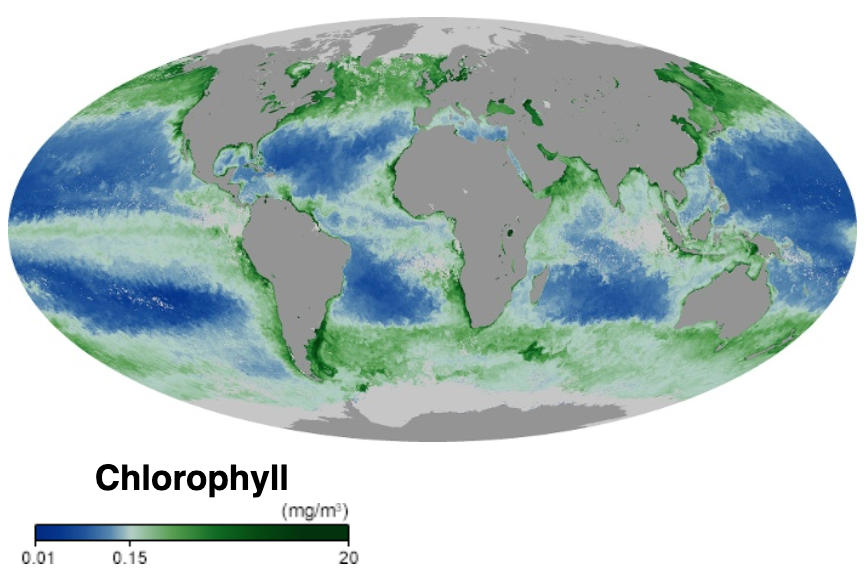
Productivity is unevenly distributed and the pattern is determined by nutrients rather than by light. The tropical open ocean has abundant light and is stratified, so nutrients from below do not reach the surface, and it is comparatively barren.
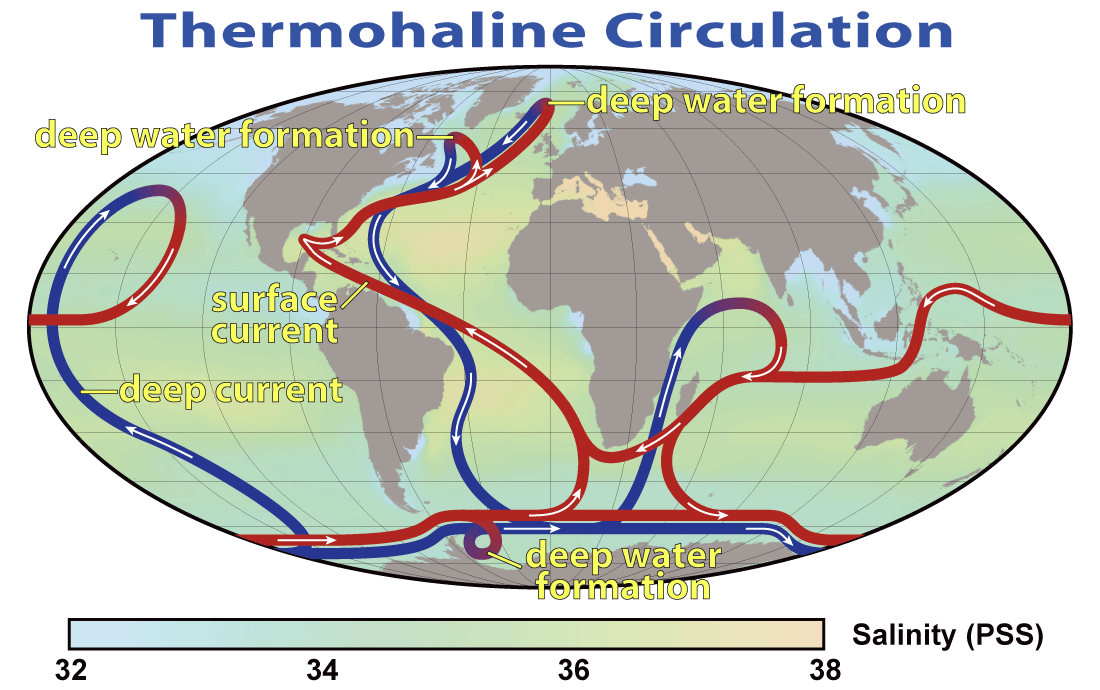
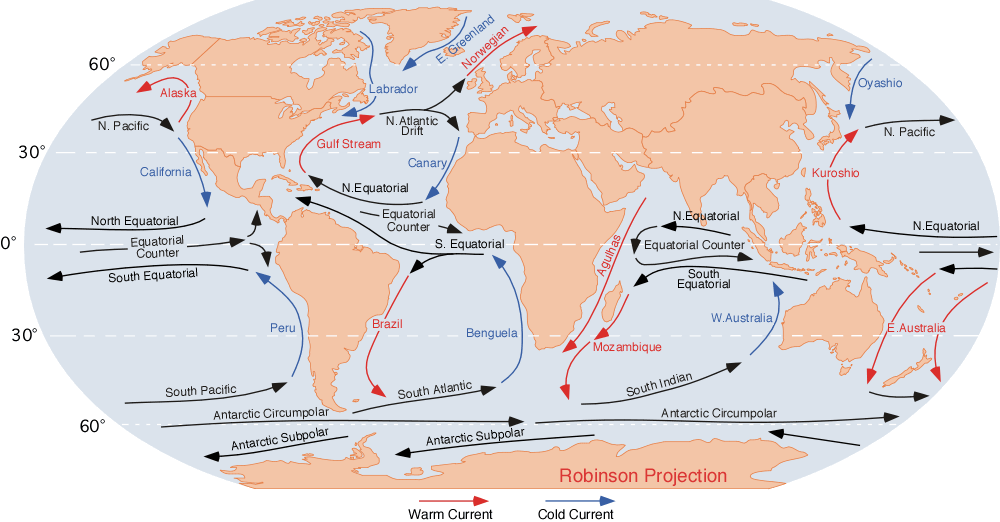
The productive regions are those where nutrients are supplied: coastal upwelling zones, high latitudes where winter mixing brings nutrients up, and areas near river outflow. The ocean currents capsule describes the physical processes involved.
Iron is a limiting nutrient across large areas of ocean that have adequate nitrogen and phosphorus but almost no productivity. Experiments adding iron to such waters produce blooms, which established the limitation directly and prompted proposals for iron fertilisation as a means of removing carbon dioxide, the effectiveness and side effects of which remain disputed.
The biological pump transfers carbon from the surface to the deep ocean. Phytoplankton take up carbon, and a fraction of the resulting material sinks before being consumed, carrying carbon below the depth at which it exchanges with the atmosphere.
Without this process, atmospheric carbon dioxide would be considerably higher, and the pump is a significant term in the carbon cycle described in its own capsule.
Some phytoplankton produce dimethyl sulphide, which oxidises in the atmosphere to form particles that seed cloud droplets. This links marine biology to cloud cover and therefore to the planet's reflectivity, and the strength of the link has been argued about since it was proposed.
Warming increases stratification, which reduces the mixing that supplies nutrients to the surface, and would be expected to reduce productivity in already stratified regions while potentially increasing it at high latitudes.
Reported trends in global phytoplankton biomass have been contested. A 2010 analysis reporting a substantial long-term decline was disputed on methodological grounds concerning the comparability of historical measurement techniques, and the current position is that regional changes are better established than any global trend.
Satellite measurement of ocean colour provides consistent global coverage only since the late 1990s, which is short relative to natural variability.
Plankton perform roughly half of global photosynthesis, support essentially all marine food webs, and transfer carbon from the surface to the deep ocean, which makes them consequential for climate as well as for ecology.
They also illustrate how much of the biosphere is invisible. The most abundant photosynthesising organisms on the planet were largely uncharacterised until recently, and Prochlorococcus, thought to be the most numerous photosynthetic organism on Earth, was described only in 1988.