An alloy of iron with a small and controlled quantity of carbon. That small addition transforms a soft metal into the most widely used structural material in the world, and controlling it precisely was the central metallurgical problem for two thousand years.
Pure iron is relatively soft. Adding carbon, generally between about 0.05 and 2 per cent, hardens and strengthens it substantially.
Above roughly 2 per cent the material becomes cast iron, which is hard, brittle and cannot be forged, and which was far easier to produce historically because it melts at a lower temperature.
The mechanism is structural. Carbon atoms occupy spaces in the iron lattice and impede the movement of dislocations, which is how metals deform. Obstructing that movement raises strength and reduces ductility, and the balance between them is set by the carbon content.
Heat treatment changes the result further without changing composition. Quenching, cooling rapidly from high temperature, traps carbon in a hard brittle structure. Tempering, reheating gently afterwards, relieves some of that brittleness. The same steel can therefore be made hard or tough depending on treatment, which is why a blade and a spring can share a composition.
Iron smelting produced a spongy mass mixed with slag, which was worked by hammering. Carbon content was difficult to control and varied within a single piece.
Several traditions solved it partially. Wootz steel, produced in southern India from around the sixth century BCE, was made in sealed crucibles and produced a high-carbon material with a distinctive pattern, traded widely and used for the blades known as Damascus steel. Japanese swordsmiths folded and welded steels of different carbon content to combine a hard edge with a tough body.
These were skilled, slow and small-scale. Steel remained expensive and was used for tools, weapons and springs rather than for structures.
The Bessemer process, introduced in 1856, changed this by blowing air through molten pig iron, oxidising the excess carbon and generating enough heat to keep the metal liquid. It produced steel in tonnes rather than kilograms and cut its price by a large factor within two decades.
The open hearth process and later basic oxygen steelmaking, which uses pure oxygen rather than air, improved control and scale further. Basic oxygen steelmaking now produces the majority of the world's steel from ore.
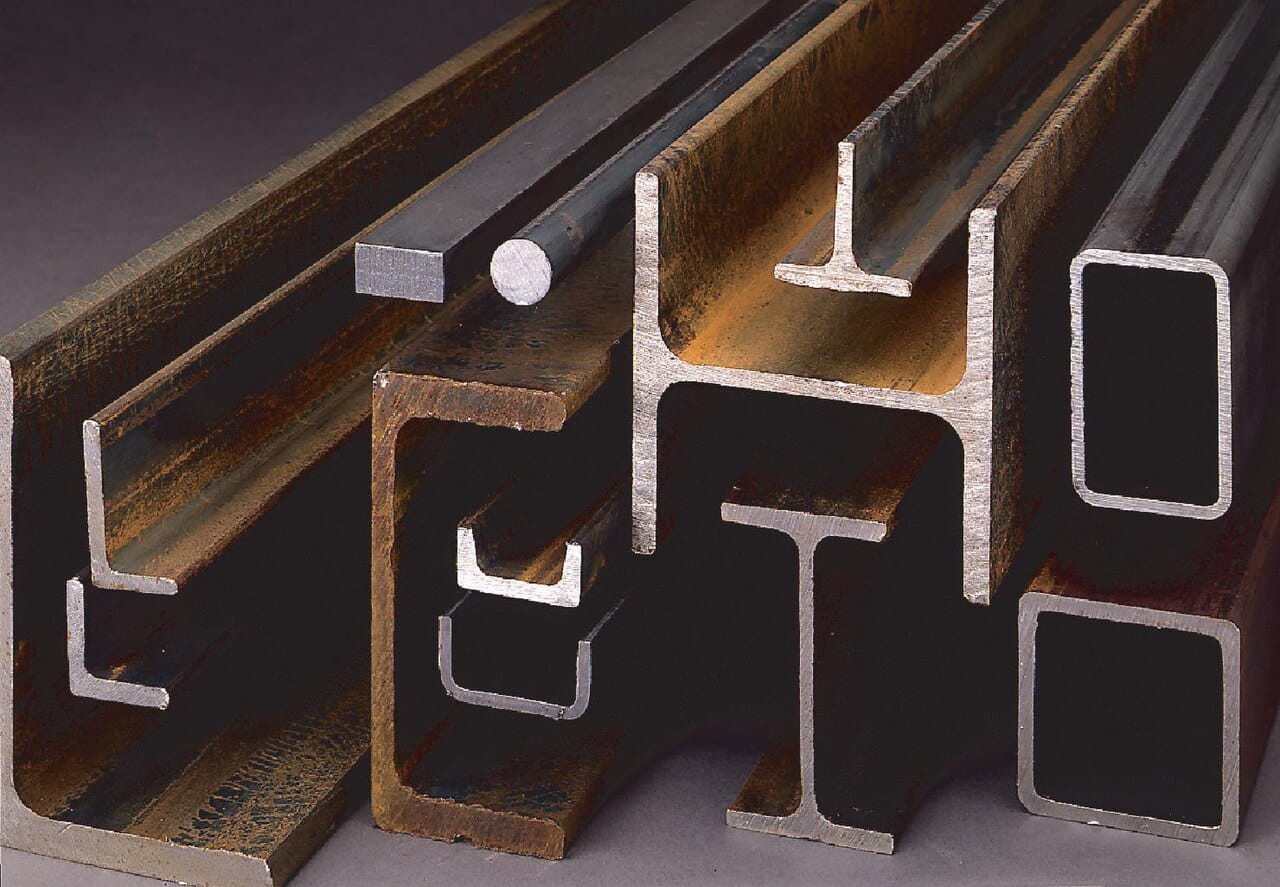
Carbon steels are iron and carbon with little else, and account for most production. Low-carbon or mild steel is ductile and weldable and is used for structures and sheet. High-carbon steel is harder and is used for tools and springs.
Alloy steels add other elements for specific properties. Manganese improves toughness, chromium and molybdenum improve strength and heat resistance, and vanadium refines grain structure.
Stainless steel contains at least around eleven per cent chromium, which forms a thin passive oxide layer that reforms if damaged, protecting the metal beneath. This is the material's defining property: it is not that stainless steel does not oxidise but that its oxide is coherent and self-repairing, unlike rust, which flakes and exposes fresh metal.
Tool steels, weathering steels and electrical steels are formulated for particular applications.
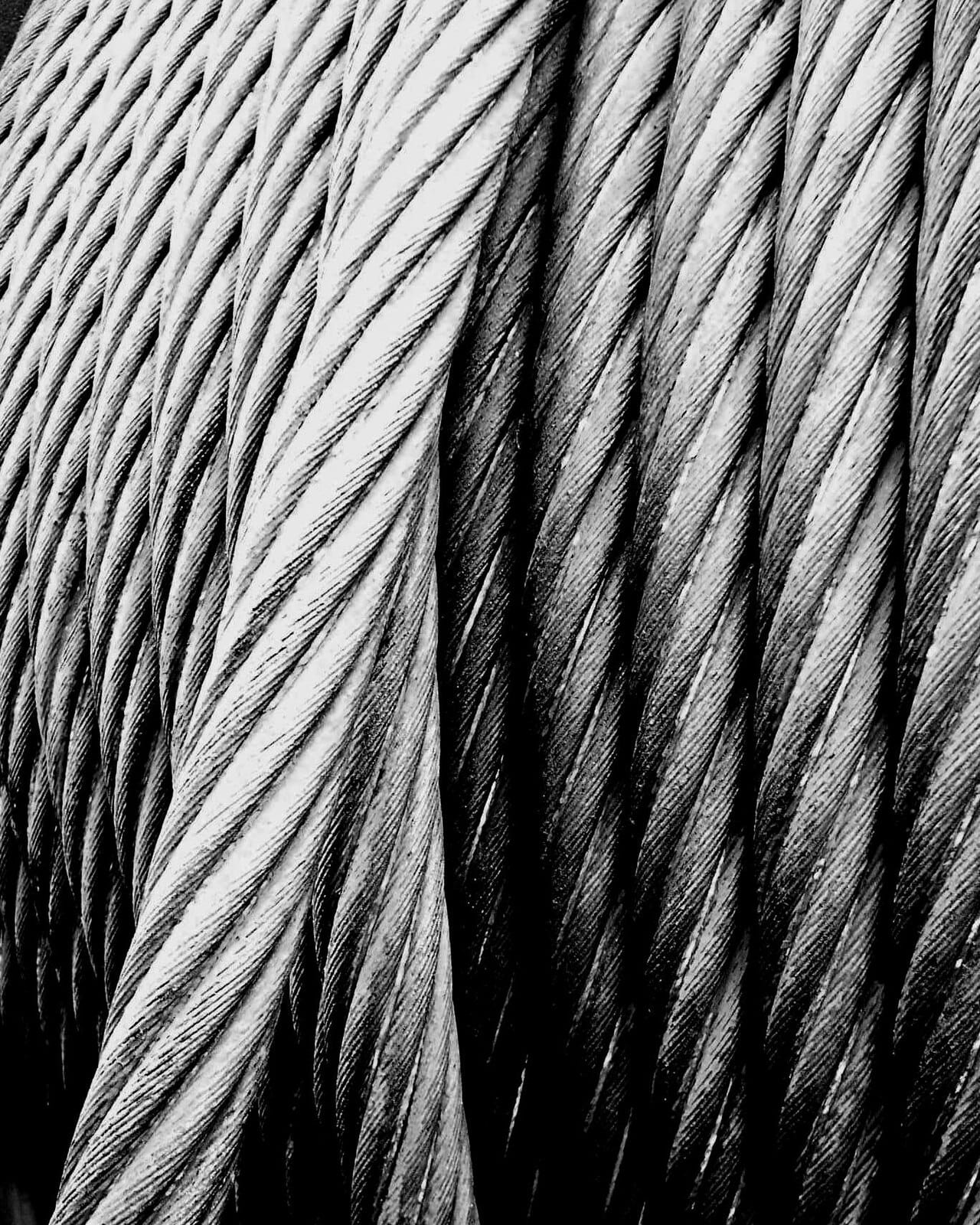
Steel is produced in greater quantity than all other metals combined, at roughly two billion tonnes per year.
Its dominance follows from a combination that no other material matches: high strength, high stiffness, ductility rather than brittle failure, weldability, and a raw material that is among the most abundant elements in the crust.
It is also the most recycled material by mass. Steel is magnetic, which makes separation from mixed waste straightforward, and it can be remelted repeatedly without degradation. Electric arc furnaces melting scrap account for a substantial and rising share of production.
Steelmaking accounts for roughly seven to nine per cent of global carbon dioxide emissions, comparable to cement as described in the concrete capsule.
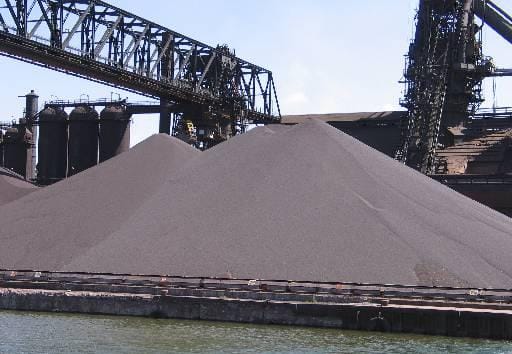
The emissions have two sources. Energy is required to reach the necessary temperatures. And the chemistry itself uses carbon: iron ore is iron oxide, and conventional reduction uses coke to strip the oxygen, producing carbon dioxide as a direct product of the reaction rather than of the fuel.
That second component cannot be removed by changing the energy supply, which is what makes the problem hard.
Approaches under development include hydrogen direct reduction, which uses hydrogen instead of carbon and produces water, and electrolytic reduction. Both require very large quantities of low-carbon electricity, and several pilot plants are operating.
Recycling avoids the reduction step entirely, which is why increasing the scrap share is the most immediately available reduction.
Steel is the material the industrial world is built from, and the availability of cheap steel from the 1860s is directly responsible for railways, skyscrapers, ships and machine tools at the scale they reached.
It is also, with cement, one of the two materials whose decarbonisation is genuinely difficult, because the carbon is doing chemical work rather than merely supplying heat.