The proposal that human ancestors left the forest for open grassland, and that walking upright, losing body hair and much else followed from that move. It was the standard account for most of the twentieth century and the fossils have steadily undermined it.
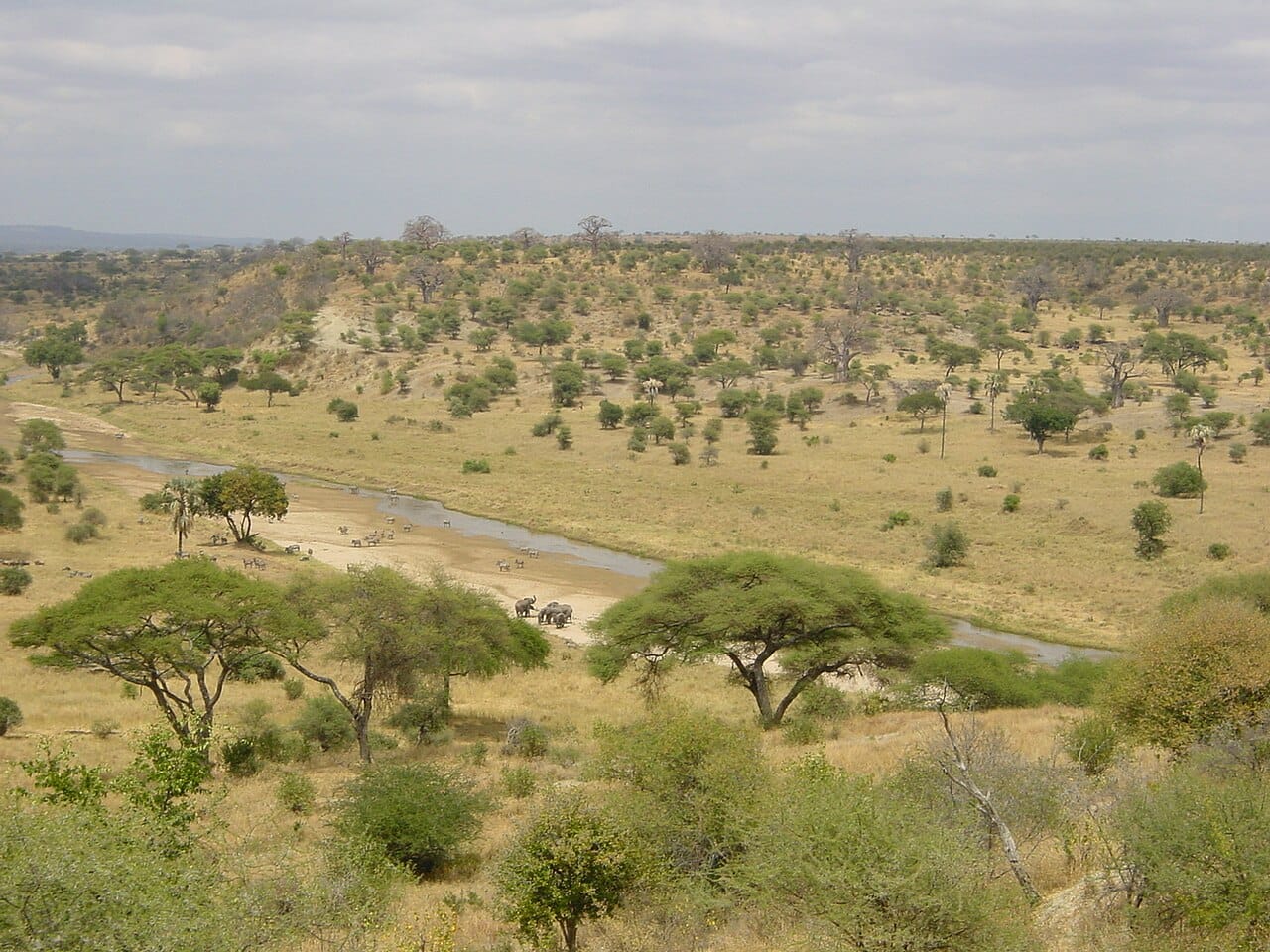
The reasoning is straightforward and was accepted for decades.
Climate drying in Africa from around eight million years ago reduced forest and expanded grassland. Ape ancestors were pushed out of shrinking forests into open country. Bipedalism followed as an adaptation to that environment, offering several proposed advantages: seeing over tall grass, carrying food and tools, freeing hands, covering ground efficiently, and reducing the body surface exposed to overhead sun.
Loss of body hair and the development of sweating were attributed to thermoregulation in open sun. Tool use, hunting, larger brains and social cooperation were all fitted into the same frame as consequences of leaving the trees.
Raymond Dart argued for the connection after describing the Taung child in 1925, and the account hardened into orthodoxy through the mid twentieth century.
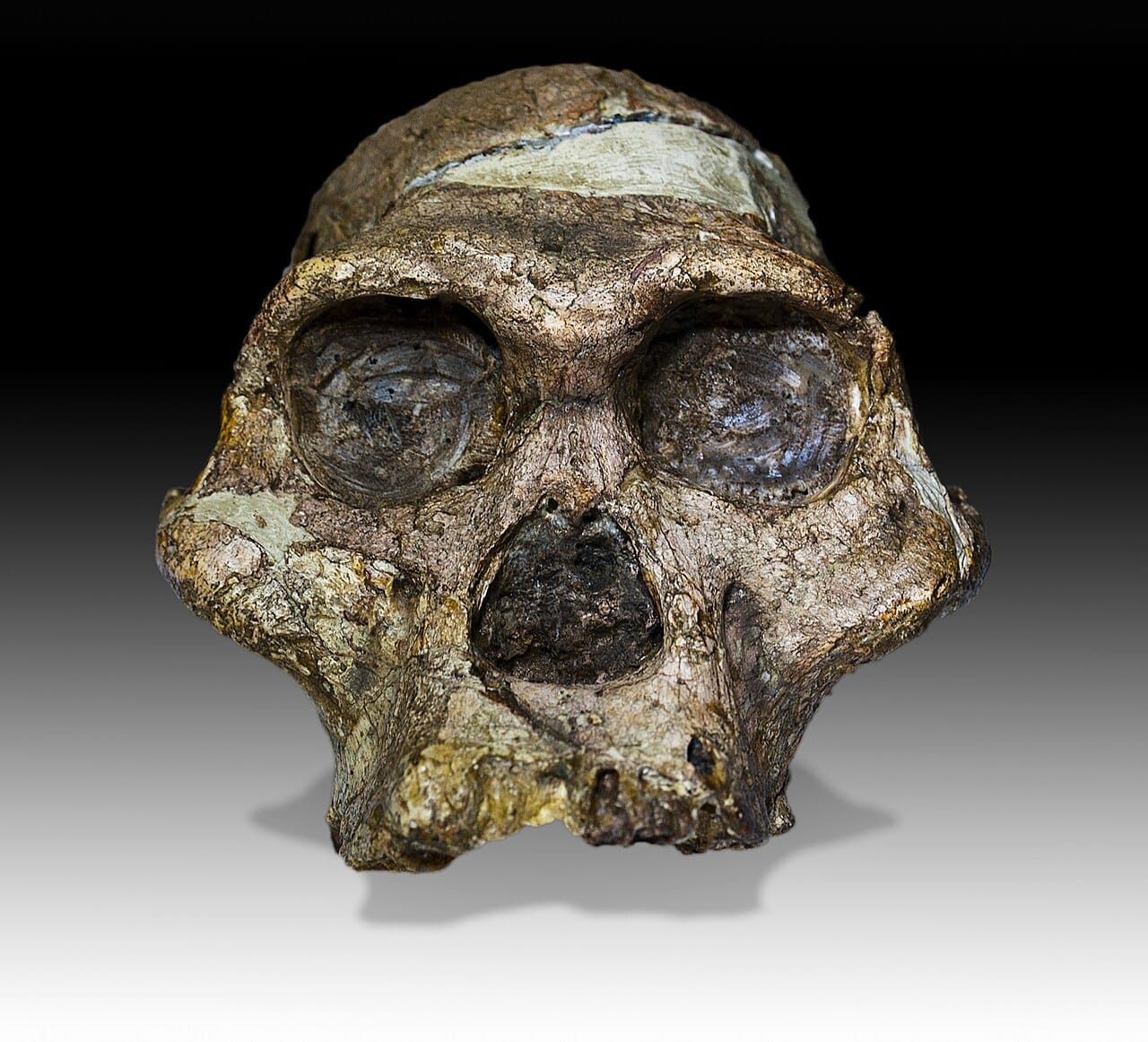
The hypothesis makes a testable prediction: early bipeds should be found in open grassland. They are not, consistently.
Ardipithecus ramidus, dated to 4.4 million years and described in detail in 2009, shows adaptations for upright walking together with a grasping big toe suited to climbing. The associated fauna, seeds and soil chemistry indicate woodland rather than open savanna.
Orrorin tugenensis at six million years and Sahelanthropus tchadensis at around seven million, both with claimed bipedal features, are similarly associated with wooded or mosaic environments.
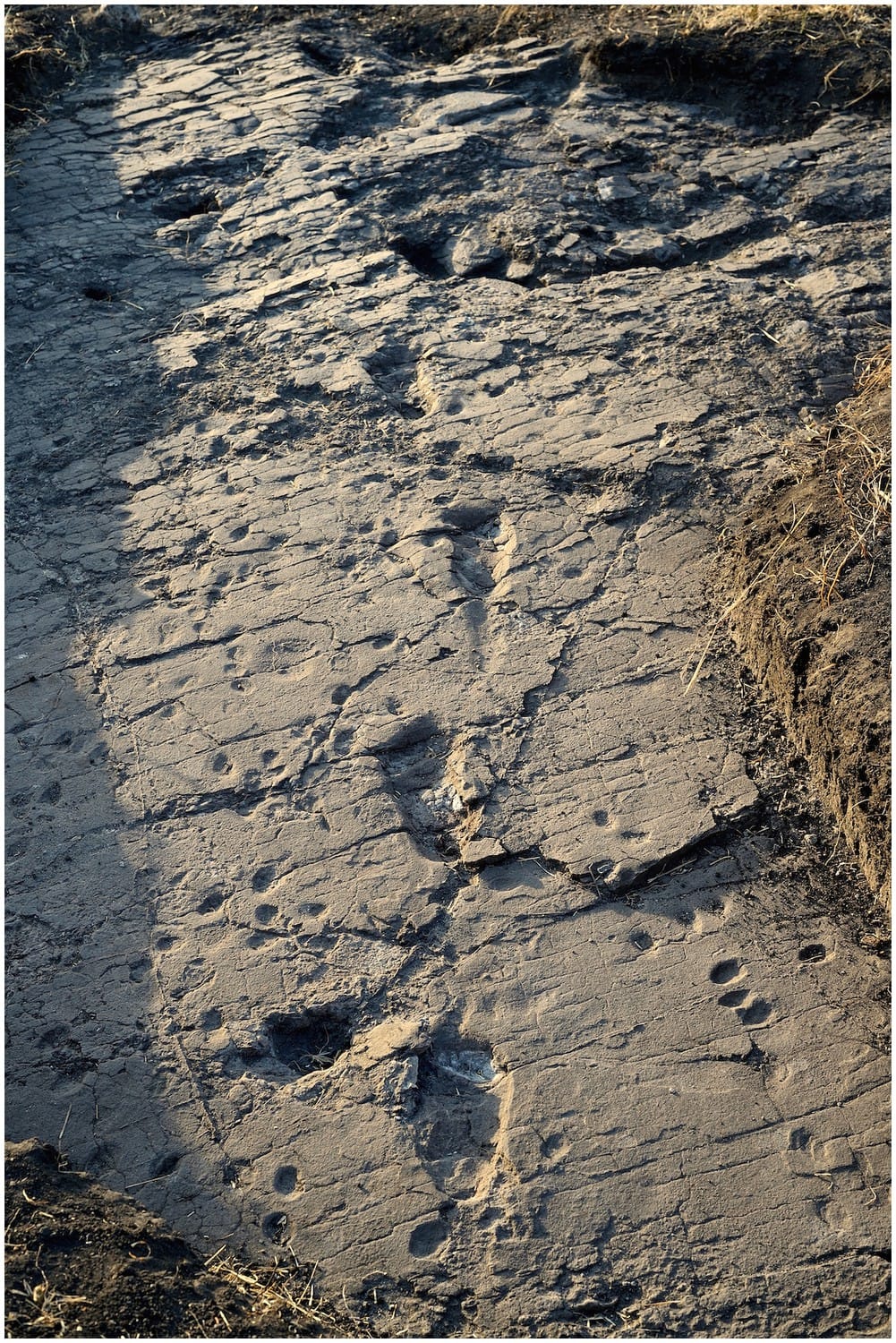
The Laetoli footprints, at 3.6 million years, show a fully modern striding gait, and the site was a mosaic of woodland and grassland rather than open plain.
Isotopic analysis of early hominin teeth indicates diets containing substantial woodland resources, shifting toward grassland foods considerably later than bipedalism appears.
The pattern is that upright walking predates the savanna rather than following it. That is the reverse of what the hypothesis requires.
Several proposals now compete, and none is established.
Woodland origins. Bipedalism arose in wooded environments, possibly for moving between trees across gaps, for reaching food while standing on branches, or for feeding on low vegetation while upright. Ardipithecus supports this most directly.
The postural feeding hypothesis, from Kevin Hunt, notes that chimpanzees stand upright most often when feeding from low branches, and proposes that habitual upright feeding preceded upright travel.
Provisioning models, from Owen Lovejoy, connect bipedalism to carrying food to mates and offspring, tying it to changes in social and reproductive organisation rather than to habitat.
Thermoregulation survives in modified form, since standing reduces the body area exposed at midday, but as an advantage in mosaic environments rather than a response to open plain.
Energetic efficiency is well measured. Human walking is markedly more efficient than chimpanzee knuckle-walking over distance, which is a genuine advantage that does not require any particular habitat.
The hypothesis is not simply wrong, and the shift is one of emphasis and timing rather than wholesale rejection.
African climate did dry and grassland did expand, which is well documented. Later human evolution, particularly the emergence of Homo erectus around two million years ago with its long legs, larger brain and evidence of ranging widely, does correspond to more open environments. The endurance running and cooking hypotheses both belong to that later period and are not affected by this argument.
What has failed is the specific claim that the move to open country caused bipedalism. Bipedalism appears earlier, in wooded settings, in animals that were still climbing.
The savanna hypothesis is still taught as settled in many places and appears constantly in popular accounts, which is a reasonable measure of how long a displaced idea persists once it has entered general knowledge.
It also carried assumptions worth noticing. The account made hunting central and placed male activity at the origin of human distinctiveness, and it was formulated in a period when that framing went unexamined. The alternatives now under discussion give more weight to feeding, carrying and provisioning, which is a different picture of what mattered and arrived partly through critics asking why the first version had looked so obvious.