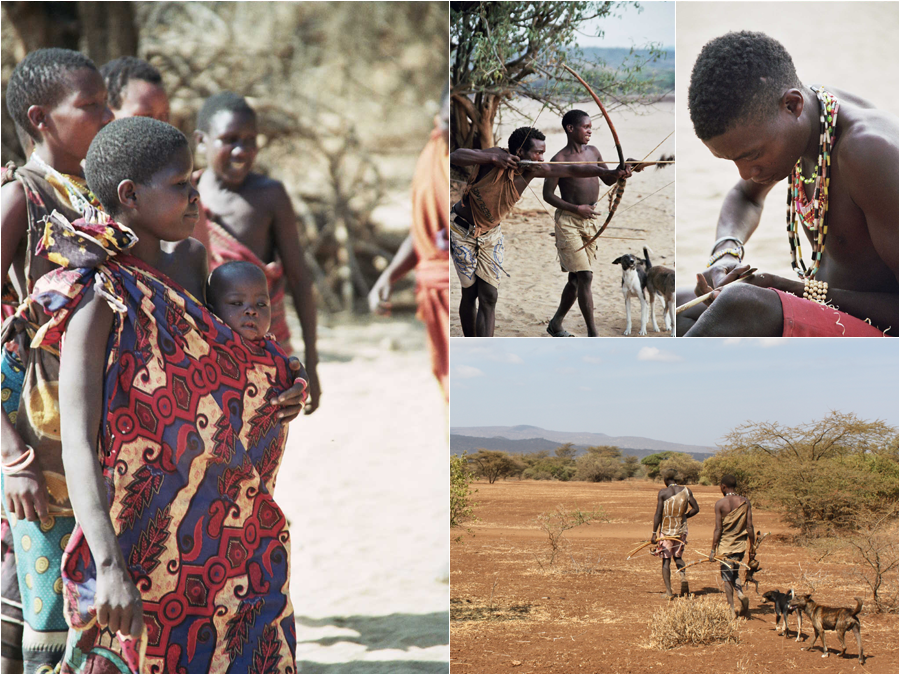
The proposal that human childbirth is difficult because walking upright narrowed the pelvis while brains grew larger, leaving birth as a compromise between two irreconcilable demands. It is the standard textbook explanation, and much of the evidence for it has not held.
Human birth is genuinely unusual among primates. The fit between the infant's head and the maternal pelvis is extremely tight, with clearances of a few millimetres at the narrowest points.
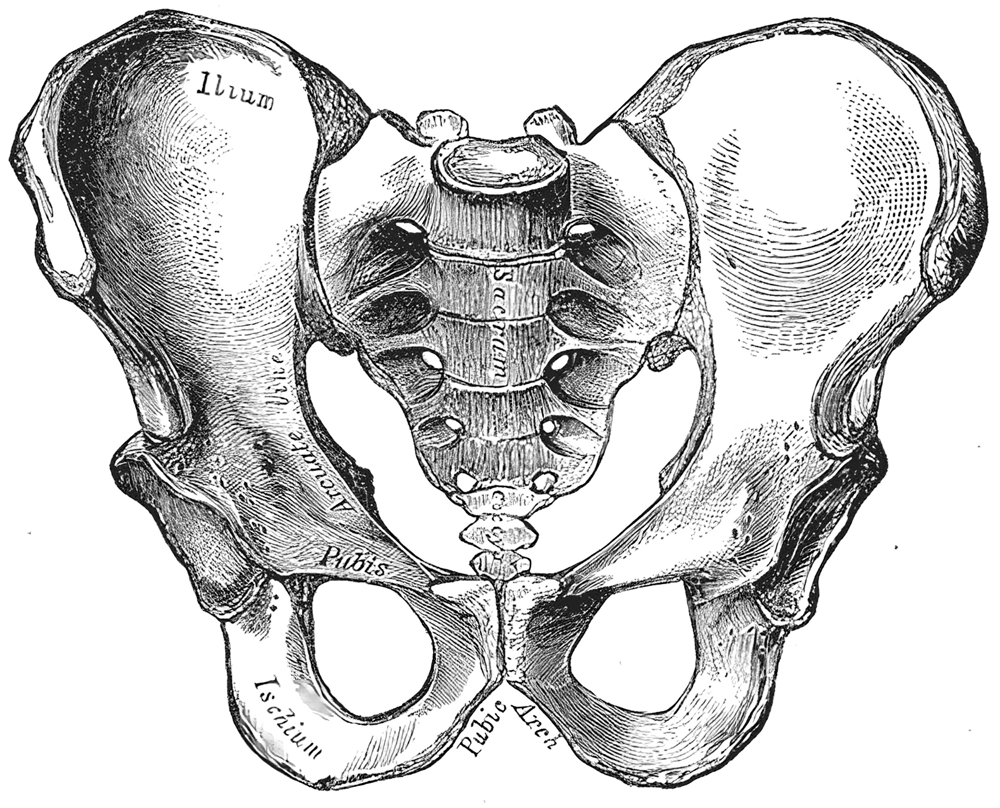
The birth canal also changes orientation along its length, so the infant must rotate during descent and typically emerges facing away from the mother. This makes unassisted delivery difficult, and it is a plausible reason why humans are essentially alone among primates in having assistance at birth be normal rather than exceptional.
Maternal mortality in childbirth, before modern obstetrics, was high by mammalian standards.
Sherwood Washburn set out the argument in 1960.
Bipedal walking requires a narrow pelvis. The hip abductor muscles must stabilise the body over one leg during each stride, and a wide pelvis makes this mechanically inefficient. Selection for efficient walking therefore constrains pelvic width.
Encephalisation pushes the other way. Human brains roughly tripled in size over the last two million years, and the head must pass through the pelvis.
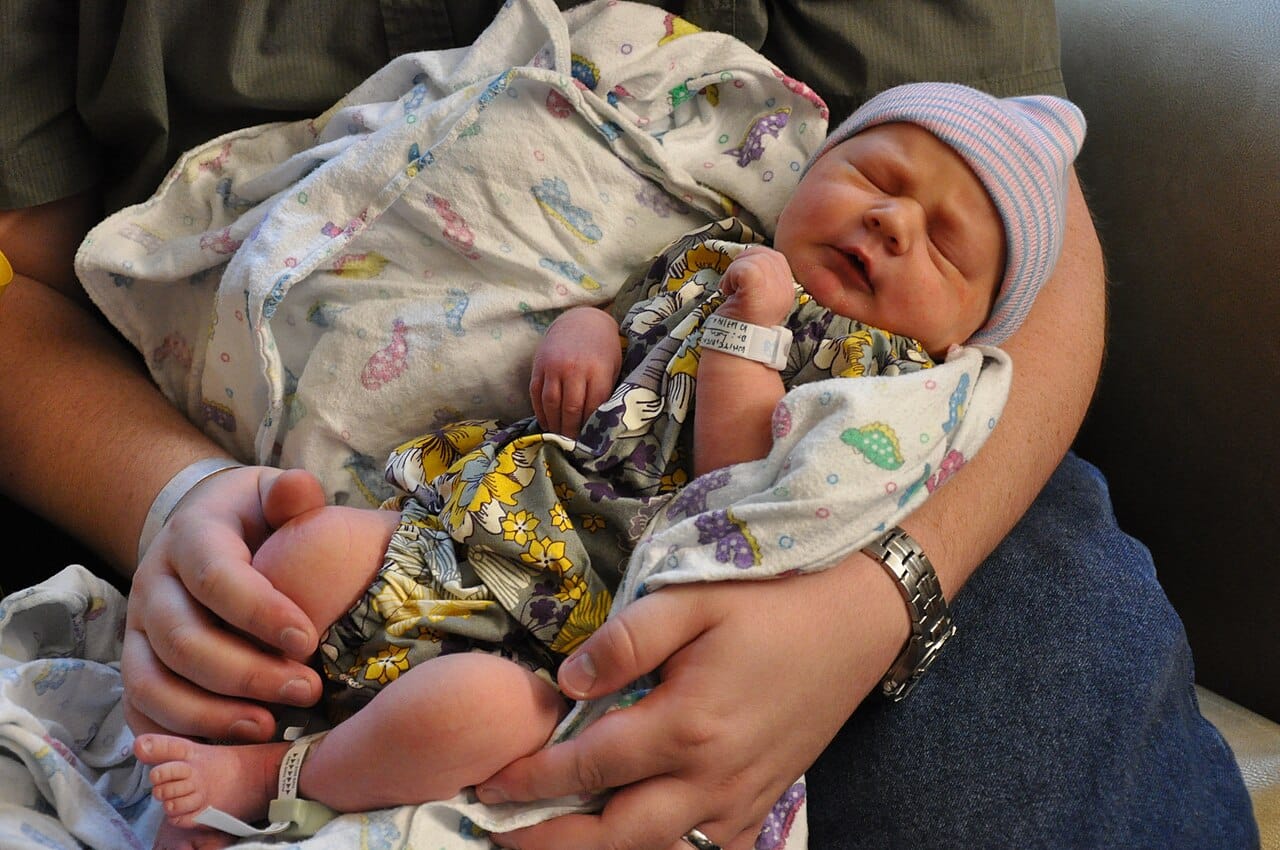
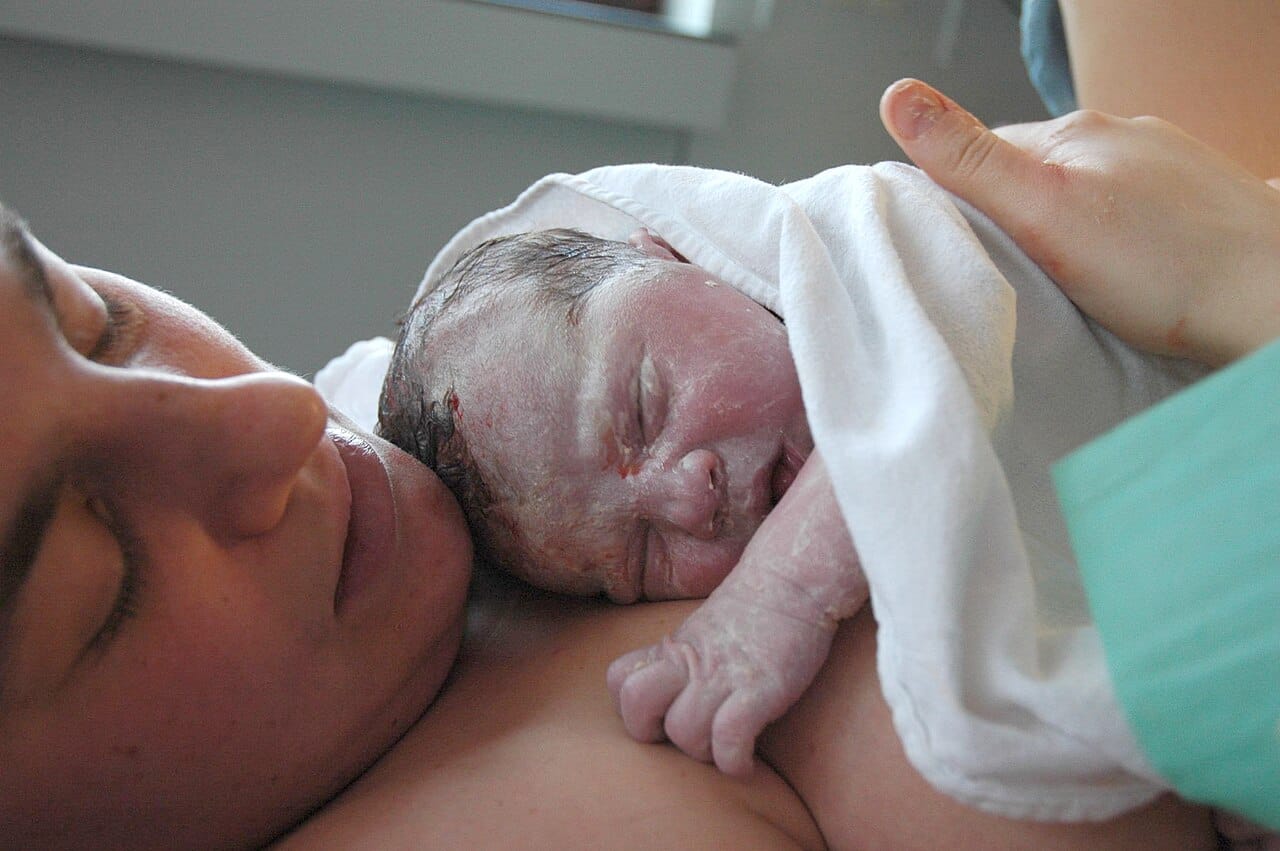
Birth is where the two constraints collide, and the resolution proposed was to deliver infants early. Human newborns are strikingly helpless compared with other primates, and Washburn argued this secondary altriciality is the compromise: give birth before the head grows too large, and complete development outside.
The gestation figure often quoted alongside this, that humans would need twenty-one months to be born at the developmental stage of a newborn ape, comes from extrapolating primate growth curves.
Three lines of evidence have gone against it.
The locomotion premise does not hold. Anna Warrener, Herman Pontzer and colleagues measured the energetic cost of walking and running in people with a range of pelvic widths in 2015, and found no relationship between pelvic width and locomotor efficiency. If a wider pelvis costs nothing to walk with, there is no constraint to trade against.
The gestation premise has been challenged. Holly Dunsworth and colleagues argued in 2012 that human gestation is not short for a primate of our body size but somewhat long, and that human neonates are large rather than premature. On their account the limit on gestation is metabolic: fetal energy demand approaches the maximum a mother can sustain at around nine months, and birth follows that ceiling rather than a pelvic one. This is the energetics of gestation and growth hypothesis.
The comparative evidence is weaker than assumed. Difficult birth is not unique to humans, occurring in some monkeys with tight fits of their own, and the tightness of the human fit varies considerably between populations in ways that do not track brain size neatly.
Several alternatives are live and are not mutually exclusive.
The metabolic ceiling account above locates the constraint on the mother's ability to supply energy rather than on her pelvis.
Pelvic floor function has been proposed as the countervailing constraint: a wider outlet compromises support of the abdominal organs and continence, which would trade against birth without involving locomotion at all.
Dietary and developmental change may be a substantial part of the modern picture. Cephalopelvic disproportion rates rose with agriculture, and are affected by maternal nutrition and by growth in stature, which suggests some of the difficulty is environmental rather than fixed.
There is also a proposal that the tight fit is not a stable compromise but an evolutionary cliff edge, maintained because interventions that improve infant survival at the margin also relax selection against large heads and narrow pelvises.
The hypothesis is intuitive, it explains several observations at once, and it has been taught for sixty years. Displacing it requires an alternative that explains as much, and the alternatives currently divide the explanatory work between them rather than replacing it wholesale.
It is classified as a hypothesis because the phenomenon is real and the proposed cause is not established. That birth is difficult is a fact. That the difficulty arises from a trade-off between bipedal locomotion and brain size is a claim whose central premise, that pelvic width costs locomotor efficiency, has been measured and not found.